Unexpected Victory
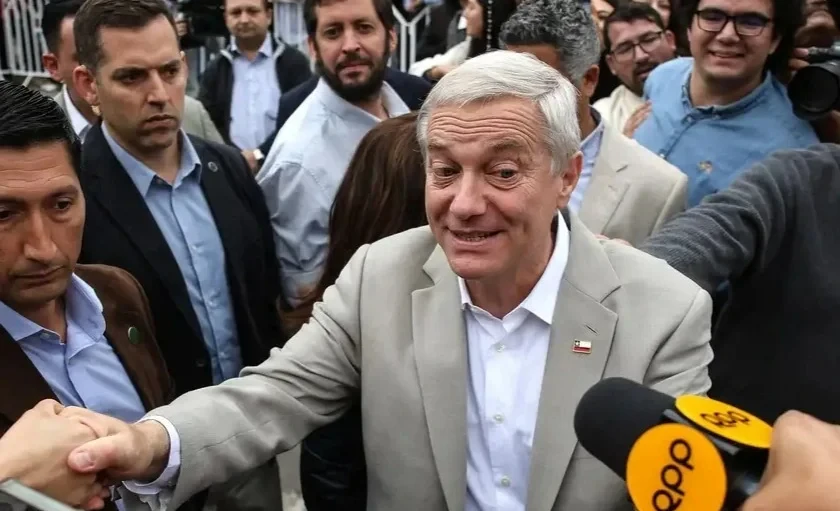
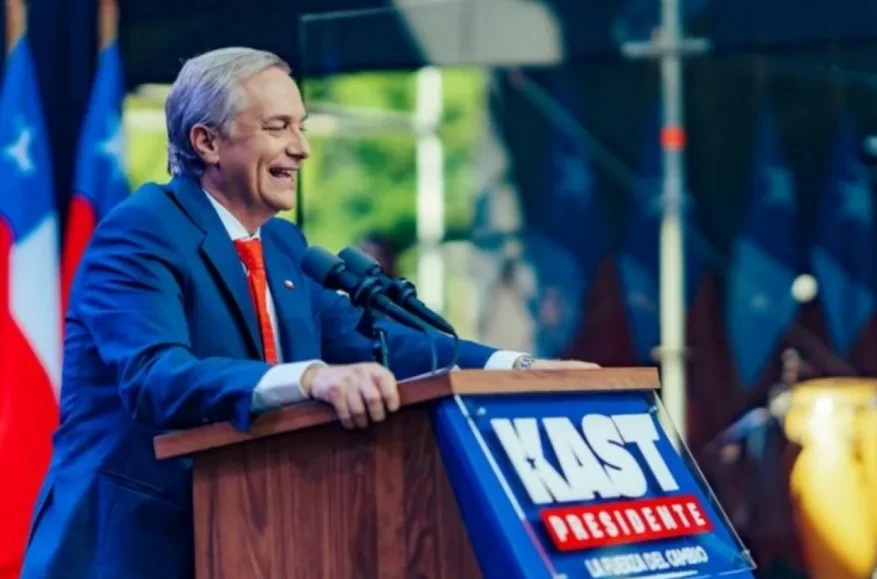
Kast's victory in the second round of the presidential elections in Chile was both unexpected and predictable. Despite finishing second to Jeanette Vega in the first round, he won the second round with a vote difference of 58.2% to 41.8%. Kast won in all 16 regions of the country, which is unprecedented in Chile's history.
No Chilean president has ever received such a number of votes — 7.2 million out of 18.5 million voters. Voter turnout was 85%, partly due to mandatory voting introduced at a referendum on a new constitution three years ago.
Two other right-wing candidates, Johannes Kaiser and Evelyn Matthei, together garnered about 26% of the votes and immediately supported Kast after the first round, which secured his victory.
The elections vividly showcased the polarization of society: many saw it as a choice between "communism and fascism." Populist Franco Parisi, who finished third, called for voting with invalid ballots to avoid choosing between these extremes.
The Idea of a New Constitution
What caused such a strong shift to the right? Many experts point to significant political events in the country over the past six years.
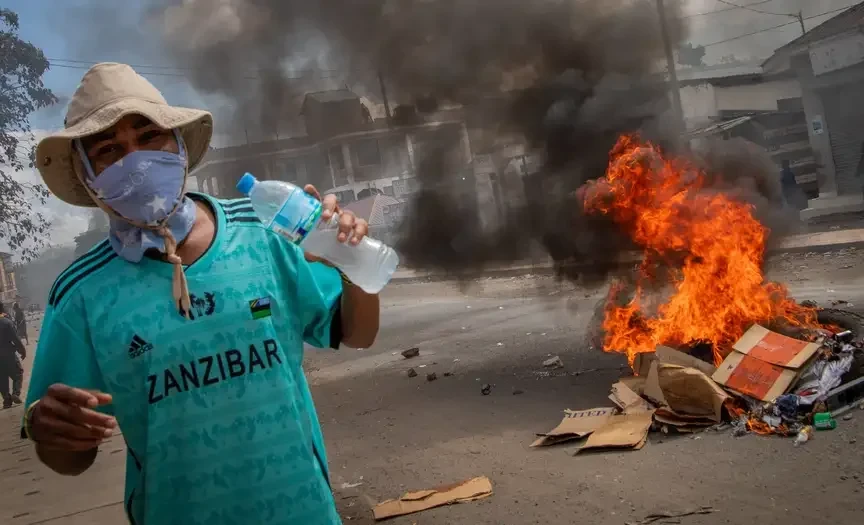
In October 2019, Chile was engulfed in mass protests known as the "Chilean October Revolution." They began due to a rise in metro fares and escalated into a nationwide strike demanding the president's resignation, the convening of a Constituent Assembly, and a new constitution. The imposition of a state of emergency only exacerbated the situation: on October 25, about two million people took to the streets, approximately 10% of the entire population.
The protests were accompanied by violence, resulting in dozens of deaths and thousands injured or arrested. The authorities, realizing the scale of the discontent, withdrew the military from the streets and began a dialogue with opposition forces and protesters. This led to an agreement to hold a referendum on a new constitution.
Discussion of the constitution became an important public event; books about it sold out, and debates took place everywhere — from political parties to football fans. Political scientists even compared this process to "direct democracy" in Switzerland.
The discussion of the constitution became an important event in Chilean public life
The planned referendum, originally scheduled for April 2020, was postponed to October due to the COVID-19 pandemic. Ultimately, 78% of citizens voted in favor of drafting a new constitution. In May 2021, a Constitutional Assembly of 155 members, predominantly from leftist forces, was elected, with quotas for women and indigenous peoples.
However, the situation in the country changed: protests and the pandemic severely impacted the economy. Chile's GDP fell by 5.8%, and the unemployment rate reached 13%. As a result of economic hardships, the idea of social protection took a back seat.
Work on the text of the constitution took over a year, and in September 2022, a new referendum was held. The document turned out to be complex and radical, earning the nickname "the constitution of minorities." 62% of citizens voted against its adoption, and many took to the streets with flags, celebrating the rejection of multiculturalism.
Interestingly, among the celebrants were those who had previously supported the idea of a new constitution but later voted for Kast in the elections.
In the 2021 elections, Kast and Gabriel Boric stood before voters as two polar candidates. Boric, representing the left coalition, managed to convince voters to support him in the second round, winning with 56% of the votes.
However, his administration did not yield the expected results, and after the failure of the referendum on the new constitution, the left was unable to propose alternative reforms.
In December 2022, the parties once again agreed to work on a new constitution, but without convening a special assembly. The new text turned out to be more conservative than the previous one.
In the referendum on December 17, 2023, 55.7% of citizens voted against the new draft. This process showed that Chileans do not want either a leftist or a rightist constitution, but seek a balanced document.
Chileans want a balanced document that guarantees social rights
As a result of three years of political disputes, Chileans felt fatigue and irritation, which gave Kast the opportunity to take advantage of the situation in the next elections.
Kast: The Most Right-Wing President Since Pinochet
In 2025, José Antonio Kast was nominated as a candidate from his Republican Party. He had previously been a member of the historical Pinochetist party and had worked in parliament for a long time but did not propose significant legislation.
Kast, having left the party, stated that it had become too moderate, and then ran as an independent candidate, later from his party. His views are largely shaped by his father's influence.
The Past of José Antonio Kast
Kast is the youngest of ten children of German immigrants. His father, Michael Kast, was a Wehrmacht officer and participated in World War II. After the war, he fled to Chile, where he founded a sausage factory. Journalistic investigations show that the Kast family collaborated with the Pinochet regime.
José Antonio actively supported Pinochet in his youth, and even in his election campaigns, he did not shy away from speaking about his merits. He also communicated with Nazi paramedic Paul Schäfer, the founder of the "Dignidad" colony.
During his first election campaign in 2017, Kast stated that he was proud of the legacy of the military government and promised to pardon all military personnel convicted of crimes against humanity.
Among such convicts is Miguel Krasnov Marchenko, found guilty of crimes against humanity.
Kast has nine children, and his eldest son has already been elected to parliament.
Kast's Political Slogans and Promises
During his second presidential campaign in 2021, Kast used the slogan "Let's Make Chile a Great Country," reflecting a shift in the views of the conservative population dissatisfied with traditional parties.
He proposed to abolish the Ministry of Women and Gender Equality, replacing it with the Ministry of Family Affairs.
In his current 2025 campaign, Kast softened his views and focused on the idea of an "extraordinary government," which allowed him to avoid mentions of Pinochetism. Nevertheless, he stated that the elections would be a crucial moment for the country's future.
After his victory on December 14, 2025, Kast chose a moderate tone in his first speech, promising respect for democracy and a willingness to dialogue with the opposition. However, his rhetoric contradicts the initial promises of his team.
Kast's rhetoric contradicts his initial promises
Kast announced the implementation of his plan within the first 90 days in office, which includes tax reform, deregulation, and cuts to government spending.
He intends to repeal the tax reforms enacted by the previous government and propose tax cuts for large companies, which will only exacerbate social inequality.
The system of labor rights will be restricted, strengthening the position of employers. Additionally, government spending is planned to be cut by $6 billion over the next year and a half.
Thus, Kast's initial measures are aimed at strict austerity, although the details remain uncertain. His government has already been dubbed the first democratic government of the Pinochet regime.
Kast's initial measures are an austerity program
The elections in Chile demonstrated a high level of democratic procedures: results were known within half an hour after polling stations closed. Jeanette Vega acknowledged her defeat and wished Kast good luck.
Election Results
Kast's victory marked the end of a turbulent period in the country's history. This was a significant defeat for the left, which, since the restoration of democracy in 1990, had attempted to implement slow reforms without addressing fundamental issues.
Chile faced issues of inequality, and as a result of the 2025 elections, Chileans once again chose Kast, finding themselves between two evils.
Thus, the election results reflect a general shift to the right in Latin America, which is also observed in other countries in the region, such as Argentina and Bolivia.
Kast made his first foreign visit to Argentina, to his "ideological brother" Milei, and both presidents proclaimed: "Freedom is advancing throughout Latin America!"

The Political Map of South America. Leftist governments are marked in red, rightist in blue
Kast's rise to power has become part of a broader trend of conservative turn in Latin America. This movement is also noticeable in Argentina and Bolivia, where right-wing parties are regaining power.
Kast, like his Argentine counterpart Milei, actively promotes ideas of freedom and right-wing liberalism, which is already generating interest among supporters.
While Kast's policies may not replicate the extremes of Pinochet, it is unlikely they will resolve the issues Chileans faced in 2019. He promises to tackle crime and migration, but cuts to social programs may provoke a new wave of discontent.
All of this depends on the state of the global economy and demand for copper, which may provide temporary improvements in the situation. Kast will have to implement his plan in the absence of elections, giving him more freedom of action until growing discontent begins to manifest.