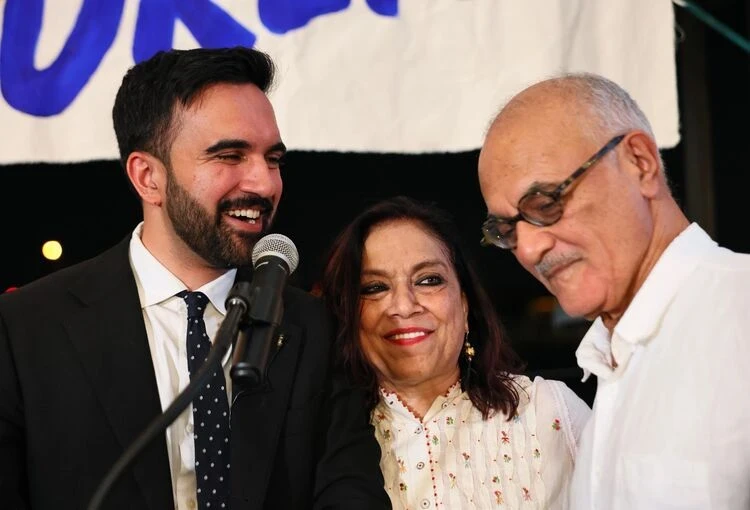
José Antonio Kast, an ultra-conservative and supporter of Donald Trump, has become the new president of Chile. His election victory marks a sharp shift to the right not seen since the end of the military dictatorship in 1990. Kast has openly expressed admiration for Chilean dictator Augusto Pinochet, highlighting his ideological stance, as reported by the BBC.
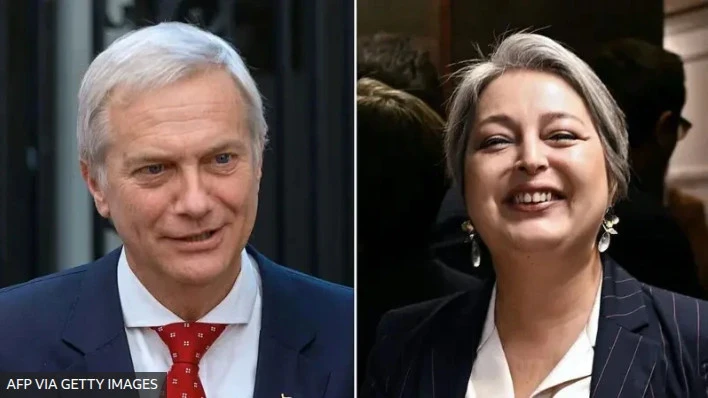
In the second round of the elections, Kast received over 58% of the votes, defeating Jeanette Vega, the candidate from the ruling leftist coalition, which had previously been leading. His success was largely made possible by the support of voters who had backed other right-wing candidates, such as Franco Parisi, Johannes Kaiser, and Evelyn Matthei, while Vega was the only representative of the left in this election.
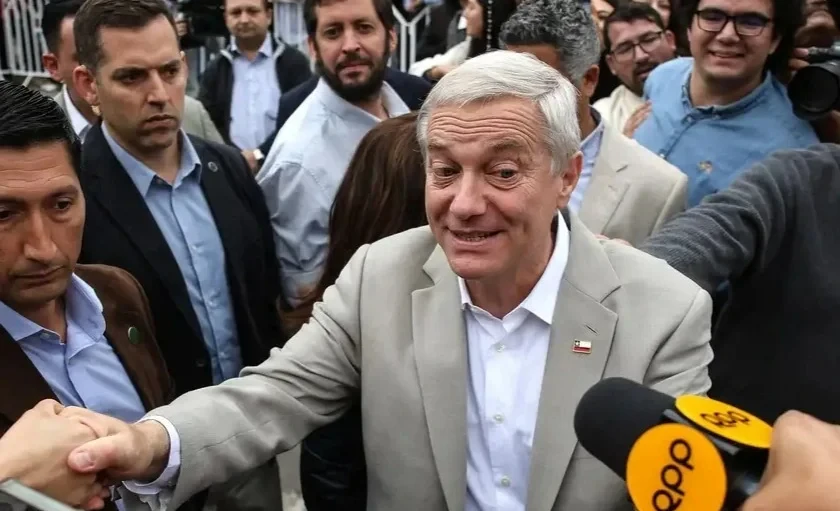
BBC correspondent in South America, Ion Wells, attended a rally of Kast's supporters in Santiago, where the crowd, wrapped in Chilean flags, joyfully chanted slogans and took selfies as news of the election results came in.
“I am glad that we can bring security and patriotism back to our country,” said Augustina Trancoso, a woman wearing a cap that read “Make Chile Great Again.”
“We have been trying to win the elections for a long time,” shared another Kast supporter, Belem Valdivieso. “In the past, it was safe to walk in Chile, but now we are facing serious security issues. I hope he keeps his promises and focuses on ensuring safety.”
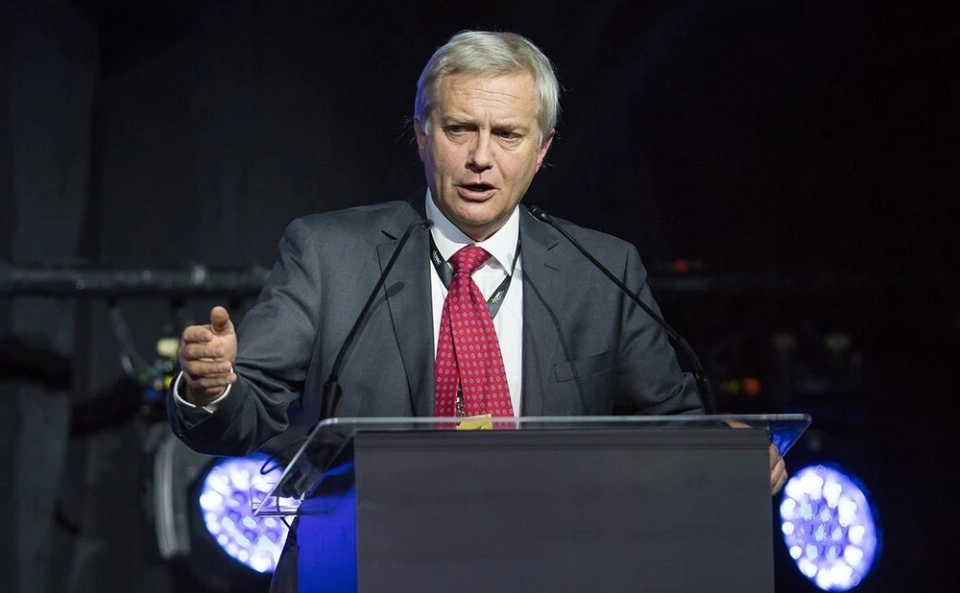
In his first speech as the new president, Kast stated: “Chile will once again be free from crime, fear, and anxiety.” He promised to actively pursue criminals and offenders. During the campaign, Kast portrayed Chile as a country on the brink of chaos and promised to restore order, combat illegal immigration, and cut government spending.
Despite Chile being considered one of the safest countries in South America, there has been a recent rise in immigration and organized crime, which Kast links together.
His policies closely align with Trump’s approach. Kast promised to build a wall on the borders with Peru and Bolivia, as well as create maximum-security prisons and conduct mass deportations of illegal migrants, many of whom have come from Venezuela.
For many voters, Kast has become a symbol of the fight against rising insecurity.
“We are turning into Colombia — a lot of crime and robberies, society is becoming increasingly unsafe,” noted Max Struber, who voted for Kast. “It may sound harsh, but we need to continue Pinochet's work. Yes, there were human rights violations, but the government back then ensured order and tranquility.”
However, not all Chileans agree with this viewpoint. Critics argue that the security problem is exaggerated. The murder rate in the country is declining, and some studies show that immigrants, on average, commit fewer crimes.
Javiera Carrasco, a Santiago resident, supported some of Kast's initiatives but ultimately voted for Jeanette Vega. She believes that “a false sense of insecurity has become widespread.”
“In other countries, there are much more serious problems than we have,” she added.
After the election results were announced, Jeanette Vega expressed hope for “success for the good of Chile,” emphasizing that “democracy has spoken clearly and loudly.”

Photo by Reuters. Jeanette Vega from the Communist Party was Kast's main opponent
Who is José Antonio Kast?
Kast, 59, is a lawyer and former congressman who has previously run for president twice. In 2021, he lost the election to leftist candidate Gabriel Boric, whose approval ratings have recently been low, which may have affected Jeanette Vega's results, as she was seen as a continuation of his policies.
Kast proposes a concept of “emergency government” to address issues such as security, immigration, and economic development, but he tries to reassure those who fear a return to dictatorship.
“Emergency government does not equal authoritarianism,” he asserts.
He is the father of nine children and is a staunch opponent of abortion, even in cases of rape. Kast also sharply criticizes environmental initiatives and human rights movements.
His brother, Miguel Kast, was part of the “Chicago Boys” — economic advisors to Pinochet, holding positions as Minister of Labor and head of the Central Bank. Kast's father, Michael, served in the Wehrmacht during World War II and later fled to South America to avoid denazification.
Kast claims that his father was drafted into the army against his will to avoid a military tribunal.
“Our family history is as far from Nazism as possible,” he said during his 2021 election campaign.
However, journalistic investigations have uncovered a 1942 document indicating that Michael Kast was a member of the NSDAP from the age of 18. While there are questions about whether this refers to the same person, the coincidences in date and place of birth confirm this information.
Kast does not consider himself far-right but has repeatedly expressed sympathy for Pinochet's regime and stated that if he were alive, he would vote for him.
Pinochet's dictatorship is remembered for widespread human rights violations, including torture and disappearances. Kast claims he does not condone such actions, adding that under Pinochet, Chile made a “transition to democracy,” unlike Cuba, Venezuela, and Nicaragua.
Last year, he visited a mega-prison in El Salvador to study its operations. This prison, opened in 2023, has become a symbol of the “war on criminal gangs” conducted by Salvadoran President Nayib Bukele. In conditions of strict isolation, there are often complaints of human rights violations.
According to BBC correspondent Daniel Garcia Marco, Kast relies on Bukele's principle of “strong hand,” and his economic proposals resonate with the program of Argentine libertarian President Javier Milei. He promises a market approach, reduced government intervention, and deregulation. Among his plans is a budget cut of $6 billion over one and a half years under the slogan “cut political spending.” However, critics doubt the feasibility of this plan and the promises to deport 360,000 illegal migrants.
The Choice of the “Least Evil”
Chile is becoming part of a broader trend in Latin America, where there is a shift to the right following elections in countries such as Argentina, Ecuador, Costa Rica, and El Salvador.
These were the first mandatory presidential elections, where voter registration was automatically conducted for all eligible voters.
One factor of uncertainty was how more than five million Chileans, who typically do not participate in elections, would vote. Mandatory voting partly explains the record 7 million votes for Kast, which is the highest number of votes for a candidate in the country's history.
Some voters felt they had to choose the “least evil.”
“I don’t know if it can be called a choice between two evils, but I believe that Chile needs change,” said Claudio Sanués, who voted for Kast. “I see him as that alternative.”
“Both candidates represent two extremes,” believes Cynthia Urrutia, who hoped for Jeanette Vega's victory as a more centrist candidate.
Kast will take office on March 11, 2026, and is already warning of “difficult decisions.” At his rallies, he often reminds illegal migrants that they should leave the country by that date if they ever hope to return.
As noted by BBC correspondent in Chile Cecilia Barriá, Kast will not have an absolute majority in Congress, so he will likely have to negotiate with parliament to implement some of his promises.