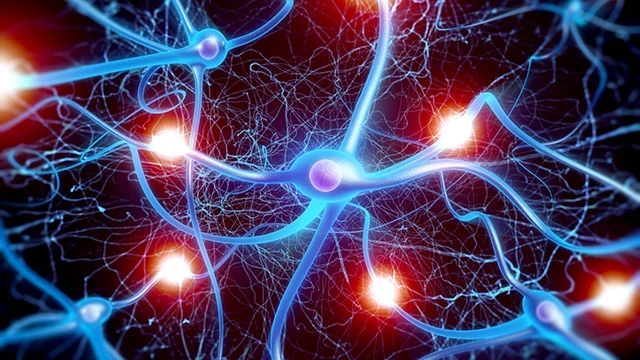
Youth lasts until 30: a new study has identified five stages of human brain age
This information is an adapted translation from material published on the BBC News website. The original can be found here.
As part of the study, around 4,000 participants under the age of 90 were examined, and their brains were scanned to study the connections between neurons.
The findings from the Cambridge researchers show that the brain retains its youthful phase until the age of 30 — this age is considered the peak of a person's physical and mental development.
According to the researchers, the results of this study will help explain how the risks of mental disorders and dementia change at different stages of life.
The results of the research group have been published in the journal Nature Communications.
Although the brain constantly changes with the accumulation of new knowledge and experience, the study shows that this is not a single smooth process, but consists of five distinct phases:
Childhood — from birth to 9 years;
Adolescence — from 9 to 32 years;
Adulthood — from 32 to 66 years;
Early aging — from 66 to 83 years;
Late aging — from 83 years and older.
The first phase is Childhood. At this stage, the brain rapidly increases in volume while simultaneously shedding excess synapses formed in early childhood.
During this period, the brain operates less efficiently, acting like an unorganized child wandering in a park without a clear goal, instead of moving straight from point A to point B.
Adolescence. Starting around age 9, the connections in the brain begin to reorganize for maximum efficiency. "This is a colossal shift," notes Dr. Mousley, emphasizing that this transition is one of the most significant in a person's life.
It is at this stage that the risk of developing mental disorders increases.
It is not surprising that adolescence begins with the onset of puberty. However, new research indicates that this period lasts significantly longer than previously thought.
For a long time, adolescence was perceived as limited to the teenage years; later, neurobiology showed that it continues until the age of 20, and now — until 30 and beyond.
This is the only phase when the brain's neural networks become more optimal. Dr. Mousley claims that brain efficiency peaks in the early years after 30, meaning at the end of the phase lasting from 9 to 32 years. The expert calls this prolonged period of development extremely interesting.
Adulthood. Next comes a stable stage, which is the longest in the brain's life, lasting about 30 years.
During this time, changes occur significantly more slowly compared to the tumultuous past years, and this is where the reverse development of the brain begins.
According to scientists, during this period we reach a "plateau of intelligence and personality."
Early aging. This stage begins around age 66 and does not represent a sharp decline in brain activity. Instead, changes occur in the connections between different areas of the brain.
The brain begins to work less coordinatedly, dividing into separate areas that continue to interact with each other, like musicians engaged in a solo project.
Although the study focuses on healthy brains, it is at this age that symptoms of dementia and hypertension may manifest, affecting its condition.
Late aging. At age 83, the final stage begins. Data on this age group is less extensive, as it is more difficult to find enough people with normal brain conditions for scanning. Changes in the brain at this stage resemble symptoms of early aging but manifest even more vividly.
Dr. Mousley was struck by how age-related "transitions" coincide with significant life moments — such as puberty, health in adulthood, and major changes like having children at 30.
"This is a remarkable study"
The findings of the study do not highlight differences in the functioning of male and female brains. However, scientists have questions regarding gender specificity, including the impact of menopause on the brain.
"Many mental and neurological disorders are related to how the connections in the brain are structured. Differences in 'wiring' among individuals can help predict difficulties with attention, language, memory, and various types of behavior," asserts Professor of Neuroinformatics at the University of Cambridge, Duncan Astle.
"This is truly a remarkable study that emphasizes how profoundly our brains change throughout life," adds Professor Tara Spires-Jones, director of the Centre for Brain Research at the University of Edinburgh (she was not an author of the study).
According to Spires-Jones, the results of the study "align well" with the current understanding of brain aging processes; however, she emphasizes that "not everyone goes through changes at the same ages as indicated in the study."
Read also:
Scientists have identified five stages of human brain age
Researchers from the University of Cambridge have identified that the human brain goes through five...
Study: "The 'Adolescent Period' of Brain Development Ends by Age 32"
In their work, scientists used neuroimaging to analyze brain activity in 3,802 healthy...
Scientists have identified a key age for protecting against the development of dementia
A study conducted by American scientists and published in JAMA Network Open showed that physical...
The brain knows how the world is structured even before a person is born
According to years of neurobiological research, neurons do not activate randomly but operate...
The Hidden Danger of City Life for Health Has Been Revealed
A study conducted by scientists from the University of Zurich (UZH) revealed that living in urban...
Depression May Accelerate the Deterioration of Memory and Cognitive Functions - Study
In a study conducted by scientists from China, it was found that depressive states may contribute...
Scientists have found a molecule that helps the heart recover after a heart attack
A group of scientists from the Temple University School of Medicine (USA) has identified a new...
The Children's Oncology Department Received a Device for Bone Marrow and Stem Cell Purification
The CliniMACS device, intended for the purification of bone marrow and stem cells, has been...
Scientists have found that a lack of free time increases the risk of dementia
According to information provided by Science Alert, scientists from the University of New South...
Scientists have determined how many steps elderly people need to take each day
A new study published in the British Journal of Sports Medicine debunks the myth that one must walk...
Mass Mutations Detected Among Uzbeks Due to Marriages Between Relatives
In Uzbekistan, the first large-scale study of the human genome in the country's history has...
"Shift Work Increases the Risk of Kidney Stone Disease, - Study"
According to Chinese scientists, those working non-standard hours face an increased likelihood of...
Early and Late Autism: Genetic Profiles and Their Impact on Development
Recent research has established that early and late diagnosis of autism is associated with...
Hypoxia in Combination with Alcohol, Tobacco, and Energy Drinks Requires Research. Review
A literature review on the mechanisms of adaptation of organs and systems to hypoxia has been...
Sharp pressure drops may be linked to accelerated brain aging, -study
A study conducted by specialists from the University of Southern California has shown that even...
How Many Steps Are Needed for a Healthy Heart? Results of a New Study
A study has shown that older women who walked at least 4,000 steps one to two days a week had a...
Scientists have discovered a new powerful antibiotic against superbugs
This new antibiotic, methylenomycin A, was discovered over 50 years ago; however, the...
Popular products linked to an increased risk of bowel cancer
A new study conducted by scientists from Mass General Brigham suggests that regular consumption of...
Dolphins in the Atlantic are living seven years less, study finds
Scientists from the University of Colorado Boulder conducted an analysis of 759 dolphins stranded...
The Matrix Does Not Exist: New Research Completely Refutes the Simulation Theory
International scientists have concluded that the structure of reality does not allow for the...
Generation Z has been found to be the most unhappy in the history of observations - research
According to a new study conducted by scientists from Harvard and Baylor universities, Generation Z...
Study: Some viruses may significantly increase the risk of cardiovascular diseases
According to a study conducted by the American Heart Association, certain viral infections, such as...
The Person Inside the Brain: Everyone Lives in Their Own Mental Umwelt
Curl error: Operation timed out after 120001 milliseconds with 0 bytes received...
Even Two Cigarettes a Day Increase the Risk of Heart Attack - Study
A recent study has shown that even smoking two cigarettes a day increases the risk of heart attack...
Study: The Number of Cancer Cases Related to Obesity is Rising
A recent global study indicates an increase in cancer cases among youth worldwide, with obesity...
A gel has been created that restores tooth enamel and changes the approach to dental treatment.
A research group from the University of Nottingham has introduced an innovative gel capable of...
Minister of Health: Every Tenth Kyrgyzstani Faces Mental Disorders
In a recent episode of the "Kabar" podcast, Minister of Health Erkin Checheybaev...
In Kyrgyzstan, the peculiarities of COVID-19 spread among medical workers were studied
A study was conducted in Kyrgyzstan focusing on the epidemiological aspects of COVID-19 infection...
Coping with Stress by Eating? You're Not Alone
Stress can have devastating consequences for health, including headaches, insomnia, and eating...
Scientists have created a neuroimplant that restores vision even in complete blindness
A team of international researchers has developed a neuroimplant measuring just 2×2 mm, which is...
A Simple Way to Improve Well-Being
A study conducted by scientists from the University of Texas at Arlington and Monash University...
Men in Kyrgyzstan More Often Seek Urologists for Potency Issues
According to information shared on "Birinchi Radio" by urologist-andrologist Kalyis...
How Many Steps Are Needed for a Healthy Heart? A Study
According to a new study, older adults do not need to walk a large number of steps daily to improve...
New archaeological site dating back to approximately the 2nd–1st centuries found in Kara-Suu
Employees of Osh State University conducted excavations at the Shut pasture, located in the rural...
High Rate of Marriages Among Relatives: Dozens of New Mutations Found in the DNA of Uzbeks
In Uzbekistan, scientists from the Center for Advanced Technologies conducted a unique study of...
Diabetes Medications Improve Memory in the Early Stages of Alzheimer's Disease
A study conducted by scientists confirmed the therapeutic benefits of two drugs in the fight...
Paleontologists have discovered a new predatory dinosaur in Argentina, dating back 231 million years.
According to a study published in the journal Nature Ecology & Evolution, an international...
Scientists from Japan have found that black cumin helps reduce weight and "bad" cholesterol
In an article published in the journal Food Science & Nutrition, a research group led by...
Global warming may unexpectedly trigger a new ice age
Research conducted by scientists from the MARUM Center for Marine Environmental Sciences at the...
Scientists Revealed a Simple "Longevity Formula"
A group of researchers from the United Kingdom concluded that the right combination of coffee,...
Even two cigarettes a day increase the risk of heart failure by 50%
An international team of researchers, led by Michael Blaha from the Johns Hopkins Ciccarone Center...
Scientists have found: fitness apps can demotivate and take away the joy of sports
A recent study conducted by scientists revealed that many popular apps for monitoring nutrition...