
With the development of technology, the speed of information dissemination has reached unprecedented heights. However, as is known, fake news can cause serious harm to this process. In this regard, Lemonpress shares the results of a joint study conducted by the IRIM Research Institute and the INCITEGov Center in the Philippines. This was reported by MiddleAsianNews.
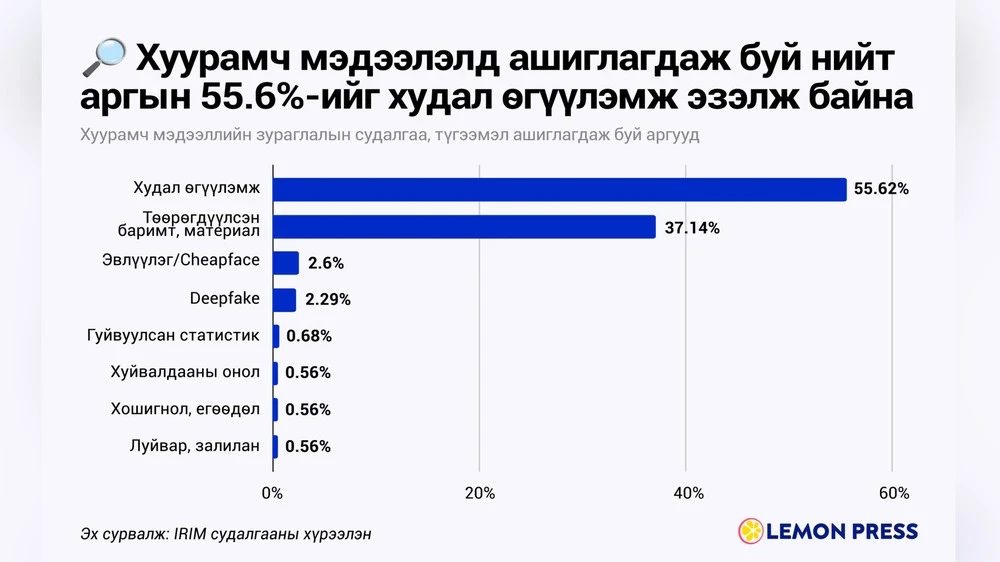
🎬 The majority of them are disinformation
Various methods are used to spread fake news, but the largest share consists of false claims, accounting for 55.6% of the total number of fakes. This data was obtained from the analysis of 1.6 thousand social media posts made between September 2020 and September 2025. Among other significant results:
Starting with the government: Government institutions and politicians play a crucial role in the dissemination of unreliable information. For example, in 2023, a former prime minister mistakenly claimed that he had managed to "emerge from a 12-year debt cycle" by paying off "Samurai" bonds worth $200 million. At that time, the external debt was $33.9 billion, which was about $20 billion more than it was 12 years ago.
Influence of neighbors: Neighboring countries actively spread politically motivated disinformation. A study of 20,000 posts from the 16 most influential Facebook accounts disseminating pro-Russian information showed that a large portion of the content supports Russia's actions in the context of the Russian-Ukrainian conflict.
Unedited websites: In Mongolia, it has become popular to create news websites managed by a single person, without an editorial team. Of approximately 390 registered news websites, 300 do not have a full-time editorial staff and mainly engage in spreading false information, according to industry sources.
Troll networks: Organized and funded by political or commercial interests, networks of fake accounts on social media are a primary tool for spreading disinformation. According to estimates from the Main Police Department, by 2023, there could have been around 400,000 fake accounts created in Mongolia.
In conclusion, using filters or a cautious approach to information is the best strategy for protection against fakes. It is recommended to obtain data only from reliable sources.