In addition, another scheme involved the employment of relatives of the CEO, which brought the family over a million dollars in two years.
Another company sent young people to work on a farm owned by one of the executives, as well as at a winery owned by a board member.
These companies exploited the State Department's cultural exchange program, the J-1 visas, which became a source of numerous cases of exploitation and conflicts of interest, as the U.S. government failed to effectively monitor the situation.
Sponsors, tasked with promoting diplomacy and spreading American culture, attract over 150,000 young people from abroad each year, helping them find jobs and ensuring their safety during their stay in the U.S.
However, as the investigation revealed, some sponsors charged unsuspecting applicants exorbitant fees, entered into agreements with employers they were supposed to monitor, and ignored facts about unsafe working conditions.
According to tax returns, the head of one such organization earned over a million dollars a year, while other sponsors created health insurance companies and required interns to purchase their services, generating additional profits.
Some companies sent employers on free international trips to recruit employees.
All these actions did not violate any laws. Sponsors were given a wide latitude in terms of charging fees and vetting potential employers.
Even a private investment firm was able to acquire a stake in one of the major sponsoring companies, which was presented as "expanding market presence and creating sustainable value for all parties."
Although the State Department has repeatedly raised concerns about profit-making within the program, it has not acted on its own warnings. An audit conducted in 2000 showed that some sponsors operate primarily for profit, and some aspects of the program "have gotten out of control."
More than 120 organizations participate in the program, ranging from universities to small non-profits, and many of them have good reputations. Representatives of the sponsoring industry argue that most participants have positive experiences, establish business connections, and are grateful for the opportunity.
“This program is brilliant,” emphasizes James P. Pellow, executive director of the Council on International Educational Exchange. “If it didn’t exist, foreign students wouldn’t come to America to learn about our values and help local businesses.”
Nevertheless, dozens of participants reported that they had to go into debt due to false promises made by sponsors.
Donho Kan, a student from South Korea, reported that in 2023 he paid nearly $5,000 to J-1 Visa Exchanges after reviewing promotional materials that promised a unique opportunity. However, instead, he was sent to a steel mill in Indiana, where he worked without proper training and was forced to clean septic tanks. When he complained, the sponsor did not assist him, and he was fired.
The sponsor declined to comment on the situation, citing ongoing litigation.
Despite the transformation of the program, which now resembles a scheme for attracting foreign workers, the government continues to protect it from rules applied to similar programs.
For example, workers with H-2B visas are prohibited from paying employment fees to avoid cases of forced labor. However, there is no such prohibition for the J-1 program, and sponsors can charge any amounts.
Many sponsors ignored workers' requests for help when problems arose at workplaces.
“It’s a whole conflict of interest when sponsors act both as labor recruiters and as enforcers of labor laws,” noted Daniel Costa, director of research in immigration law and policy. “Sponsors have a financial incentive to maintain relationships with employers.”
A State Department representative claims that the agency has implemented reforms and monitored sponsors, excluding those who violate the rules. However, many sponsors continue to lobby for the expansion of the J-1 program. Currently, over 300,000 people come to the U.S. on this visa each year, compared to 65,000 in the 1980s.
Among them is Ema Kurshumlia from Kosovo, who paid about $2,000 for an internship in New York in 2018. “We were promised a wonderful experience,” she said, adding that she worked 60 hours a week without training. “When we saw what awaited us, it was a big surprise.”
Business Emergence
In 1990, David Dahl, a former university wrestling coach, founded a non-profit organization called the World International Student Exchange Foundation, which soon began recruiting foreign students to work in the U.S.
Although his business thrived, he also faced accusations of mistreatment of young people. His strategy involved networking at international conferences and reaching out to American employers about their workforce needs.
In the early days, his organization barely made ends meet, but by 2007, its revenue had reached $3.5 million a year, and Dahl was earning $134,000 a year.
According to documents, by 2023, his organization was hiring over 3,300 employees annually on visas and generating $4.9 million in revenue, while his compensation exceeded $520,000.
The Dahl family held most of the board seats for many years. In 2012, reports emerged that the WISE Foundation was hiring foreign students to work in harsh conditions.
In 2018, program participants paid the WISE Foundation about $2,000 for an internship, after which they were sent to a greenhouse in New York, where they faced sexual harassment and injuries.

In 2019, a group of foreign interns reported that the foundation sent them to a pig farm in Nebraska, where they worked 12 hours a day without training and under threats of deportation.
“I had problems with the work schedule, with injuries at work, and I couldn’t go to the hospital,” said one participant.
Internal emails from the State Department confirm that interns felt like "slaves." When they requested an investigation, foundation representatives simply spoke with the employer and did not check the working conditions.
State Department officials were so concerned that they reached out to Dahl with questions about oversight by his group.
Dahl claimed that his group would advise the farm on cultural issues and would review program requirements, after which the number of students at the farm increased.
In an interview, Dahl stated that his group does not extract excessive profits and that the fee for attracting new participants was lower than that of other sponsors.
Nevertheless, to analyze the activities of sponsors, The Times examined over 120 organizations involved in major categories of the J-1 visa, such as internships and summer programs.
The investigation revealed that profit-making and conflicts of interest are commonplace. The executive director of the Council on International Educational Exchange, for example, received over $1.2 million last year.
Some sponsors also send hiring managers on paid trips to countries like Thailand and the Philippines to recruit students.
Some organizations have created profitable side businesses, including health insurance companies, and require participants to purchase insurance.
Sponsors are required to monitor employers to ensure worker safety, but some organizations identified in the investigation received money from the companies they were vetting, creating obstacles to combating misconduct.
In 2024, German student Leander Weig, hired on a farm in Oklahoma, sustained serious injuries when a tire on a truck blew out.
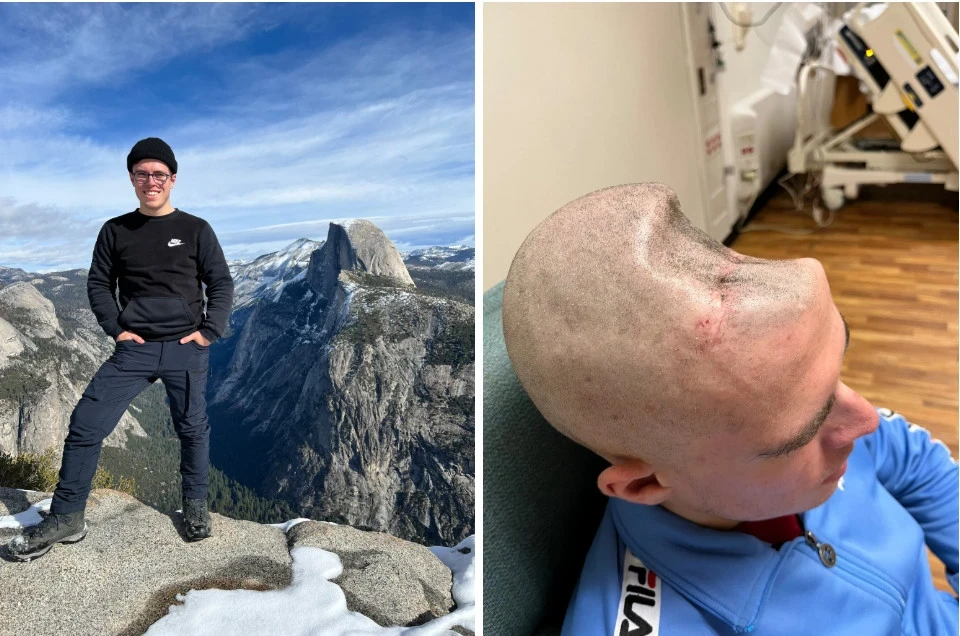
Leander, who paid the sponsor $900 for the internship, sustained a traumatic brain injury and returned home with hearing loss and speech problems. “I trusted CAEP. Working on that farm was a terrible experience. We were just cheap labor,” he said.
The sponsor did not respond to requests for comments.
“It Got Out of Control”
In 2000, the State Department's Inspector General noted that sponsors were failing to fulfill their duties and raised questions about profit-making.
Although alarms were raised again in 2012, little changed. Congress considered a bill prohibiting employment fees, but sponsors secured exemptions.
Currently, there are no limits on the amounts sponsors can charge. Although they are required to disclose information about expenses, this information is kept from the public.
More than a year ago, The Times submitted a request for access to data, but the State Department has yet to respond.
The full translation of the New York Times text "They Were Supposed to Protect Young Workers. Instead, They Cashed In."