Acknowledgment of the Problem
Bangladesh is no longer just external experts but also internal authorities have recognized that the country has found itself in a debt trap. This became evident during the statement by the head of the tax authority. The country, which joined China's Belt and Road Initiative (BRI), is facing serious consequences similar to those experienced by Sri Lanka.According to information, debt servicing has become one of the main areas of Bangladesh's budget expenditures, and the ratio of public debt to GDP has increased from 34% in 2017-2018 to 39% now. "We are already in a debt trap," noted the head of the tax agency at one of the seminars, adding that ignoring this reality will hinder progress.
Lack of Solutions Amid Awareness
Despite the awareness of the problems, leading economists and financial experts express their helplessness in finding solutions. Economist Mustafizur Rahman emphasized that agriculture and education used to take a significant share of the budget, but that is no longer the case. Financial Secretary M. Khairuzzaman Mozumder noted that the current budget is smaller than the previous one, which is an unprecedented case for the country.Worrying Data from the World Bank
According to the World Bank's International Debt Report for 2025, Bangladesh's external debt has increased by 42% over the past five years. By the end of 2024, the total amount of external loans reached nearly $105 billion, compared to $26 billion in 2010.Currently, external debt exceeds 192% of the country's export revenues, and servicing payments account for 16% of total exports, creating additional difficulties for the budget and balance of payments.
Comparison with Sri Lanka
Given the growing dependence on Chinese investments, Bangladesh is beginning to resemble the situation in Sri Lanka in the early 2020s, when after uncontrolled borrowing from China, Colombo faced a sovereign default in 2022.In contrast, Pakistan chose a different path, requesting $7 billion from the IMF to service its debts to China, while having obligations of about $30 billion.
Increase in Bangladesh's Obligations to China
Bangladesh, actively participating in BRI projects for over ten years, hopes to receive about $40 billion from China, of which $14 billion is intended for joint projects. In 2022, when the country's debt to China was about $4 billion, then-Finance Minister Mustafa Kamal expressed concerns about the risks associated with Chinese lending.However, in three years, Bangladesh's external debt to China has increased to $7 billion, exacerbating the economy's vulnerability.
Change of Course Under a Temporary Government
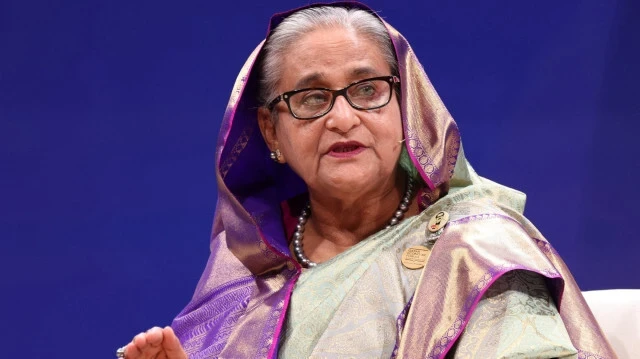
Bangladesh officially joined the Belt and Road Initiative in 2016, following a visit from Chinese President Xi Jinping. Under the leadership of the Awami League party and Prime Minister Sheikh Hasina, who had been cautious about Chinese loans, the country previously rejected the assertion that the Padma River bridge project was part of the BRI.However, under the new temporary government led by Muhammad Yunus, changes occurred. His first overseas visit in March 2025 to China resulted in $1.2 billion in investments and grants, with total Chinese investments in the country in 2024-2025 exceeding $42 billion.
Expansion of Chinese Influence
China is not limited to cooperation with the temporary government, actively engaging with other political forces in Bangladesh, including the Jamaat-e-Islami party, which has never criticized Beijing on human rights issues.In December 2024, leaders of Islamic political movements visited China at the invitation of the Communist Party of China, and the visit of the Chinese ambassador to the Jamaat office in September 2024 was the first of its kind since 2010.
Geopolitics Under the Guise of Infrastructure Projects
The BRI initiative is used by China to strengthen its influence in participating countries. Islamic groups in Bangladesh have begun to actively support the expansion of Chinese investments. On October 19, 2025, the student wing of Jamaat held a rally at Chittagong University, demanding the government accept China's proposal for managing the Teesta River.Located in northern Bangladesh, the Teesta project is of interest to China in the context of its strategy to access the Bay of Bengal. Beijing has also offered a $336 million loan for the development of the Mongla port, which could make the Chittagong port an important hub in China's "String of Pearls" concept.
As noted in the article from the International Journal of Applied Research and Sustainable Sciences, Chinese investments have improved infrastructure but simultaneously increased Bangladesh's debt burden and dependence on China.
There is an opinion that the strategic distribution of these investments may indicate geopolitical motives behind Chinese financing.
Consequences for Bangladesh
Thus, Bangladesh continues to pay the price for accepting Chinese loans, facing increasing debts, strategic vulnerability, and limited options for independent choice. Despite the experiences of its neighbors and alarming statistical data, Dhaka seems reluctant to learn lessons from the current situation.