However, it is important to note that the risks of worsening economic conditions remain significant. The impact on the country will primarily depend on the situation in global markets and partner countries.
Kaktus.media analyzed the forecasts of various financial organizations and the government regarding the economy of Kyrgyzstan in 2026.
Forecasts for 2026
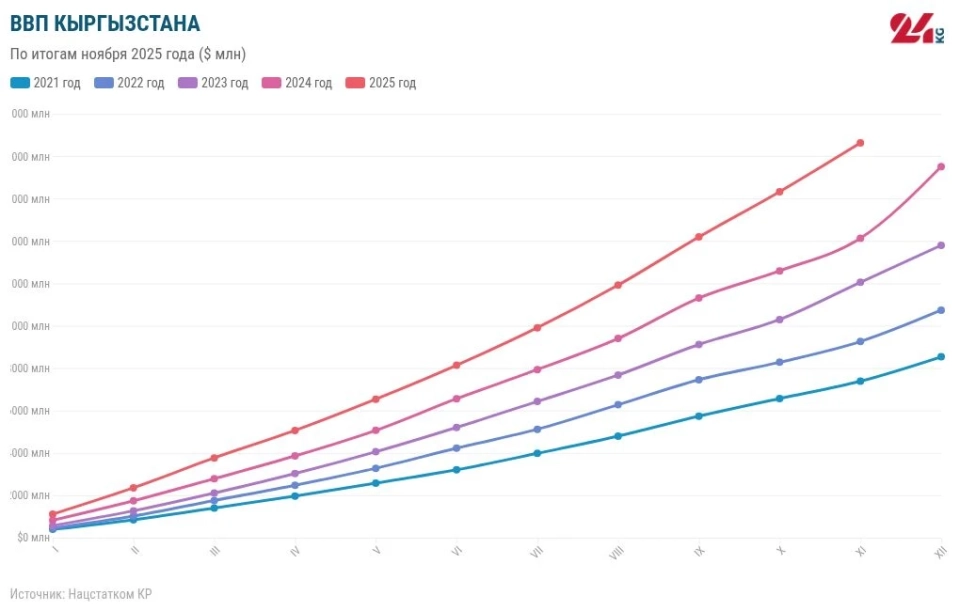
In the draft budget for 2025, it is assumed that the GDP growth of Kyrgyzstan will be 8.5%. Actual figures may even be higher, as the growth for the first 11 months of the current year already stands at 10.2%. For 2026, the Ministry of Finance forecasts growth at 8.6%.The growth, according to the ministry, will be supported by increased production volumes in the following sectors:
- services - 8.1%;
- construction - 16.6%;
- agriculture - 4.2%;
- industry - 7.5%.
The most optimistic forecasts have come from the Asian Development Bank and the Eurasian Development Bank, which align with the expectations of the Ministry of Finance and the National Bank.
Growth Slowdown Due to Inflation
According to the World Bank's forecasts, economic growth will continue in 2026. This is based on domestic demand, which will be stimulated by increased private consumption, government spending, and investments. In the real sector, growth will be supported by increased volumes in industry, construction, and services.Nevertheless, economic growth is expected to slow down due to pressure on price levels. "We predict that economic growth next year will be around 6.5%," noted World Bank Senior Economist Bakyt Dubashov, adding that this is related to inflation in consumer goods and services, as well as the growth of real wages.
Kyrgyzstan within the EAEU
The Eurasian Bank for Reconstruction and Development assesses the economy of Kyrgyzstan more optimistically. Despite some slowdown in growth, it will remain at a sufficiently high level. Consumer activity, according to the bank, will support economic growth longer than expected.High rates of consumer lending and positive dynamics in remittances will continue at the beginning of 2026, contributing to the growth of domestic trade. Investments that will come through the government program will positively impact the construction sector and manufacturing industries.
External Risks to the Economy
Bakyt Dubashov also emphasizes that the main risks for the economy of Kyrgyzstan in 2026 are related to external factors. A potential deterioration in the external economic situation will reflect on economic growth due to a reduction in foreign trade, investments, and monetary inflows.The Eurasian Development Bank also points out that any significant slowdown in global economic growth will affect Kyrgyzstan's foreign economic activity and, consequently, the growth rates of the economy. Risks may also arise from delays in the implementation of investment projects.