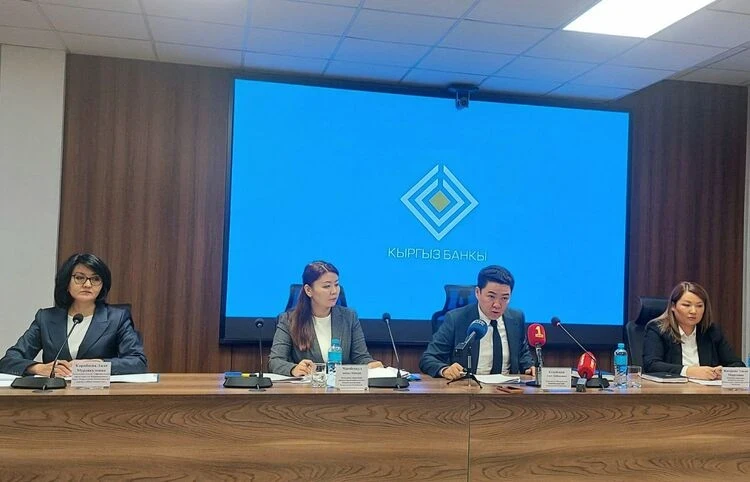
Fund analysts provided a detailed assessment of key macroeconomic indicators, suggesting that the country's economy will transition from a recovery phase to sustainable growth.
1
GDP Growth and Investments
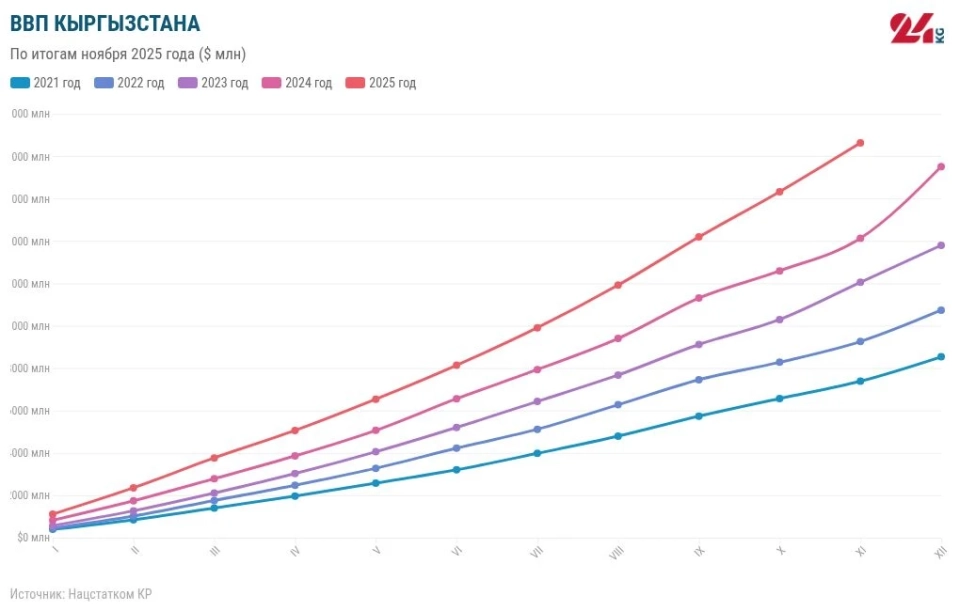
Inflation is catching up with the economic growth of Kyrgyzstan: results for the 11 months of 2025
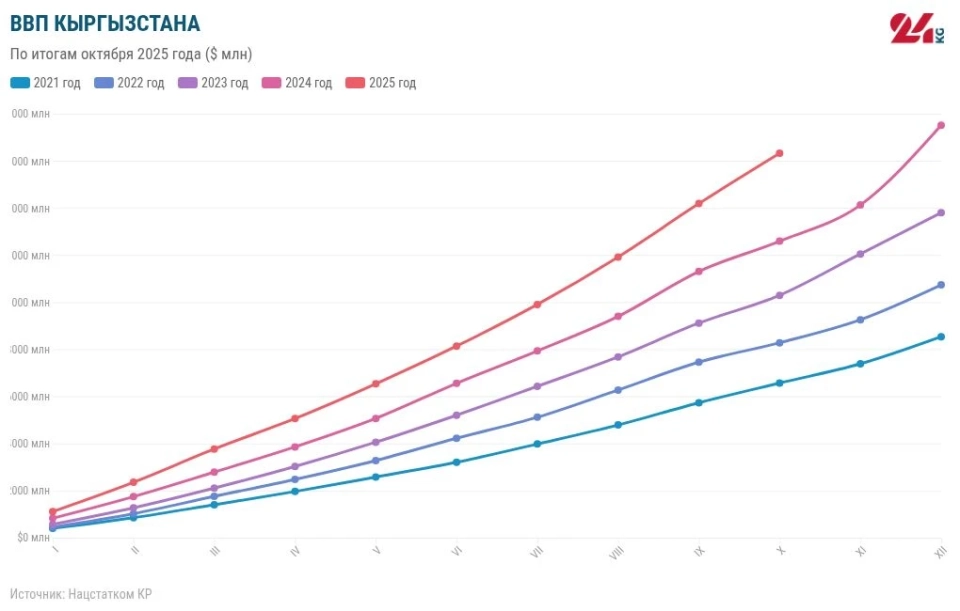
After reaching a peak of around 10% in 2025, GDP growth is expected to stabilize at 6.4% in 2026, and then be between 5.5-6% in 2027-2028.
Experts believe that the main driving force behind growth will be investment demand. Significant capital investments in energy, such as the Kambarata HPP-1 project, as well as in transport infrastructure, will create a multiplicative effect for the industrial sector. However, consumer activity may slow down due to strict monetary policy conditions.
2
Inflation and Monetary Policy
It is expected that the inflation rate in Kyrgyzstan will begin to decline, reaching 6.4% in 2026 and a target of 5.8% by 2028.
The National Bank of the Kyrgyz Republic raised the discount rate to 11 percent
The EFSD report emphasizes that the National Bank of the Kyrgyz Republic's policy played a significant role in controlling prices, as it increased the discount rate from 9% to 11%. This was a necessary step to minimize the impact of rising electricity and heating tariffs.
Nevertheless, analysts note that pro-inflationary pressure remains in the future, associated with annual increases in electricity tariffs, high food prices, and fuel and lubricants. A decrease in the inflation rate is only possible with reduced volatility in international markets and tightening monetary conditions.
3
Currency Market and Reserves
The exchange rate of the US dollar to the som is projected to be 96 in 2026, 97.5 in 2027, and 98.5 in 2028.
The state of external assets is assessed as "comfortable." The active strategy of the National Bank of the Kyrgyz Republic to accumulate gold and foreign exchange reserves has allowed it to reach a level that covers 5.9 months of imports, creating a reliable buffer against sharp fluctuations in the exchange rate.
4
Budget Policy and Government Expenditures
The state budget sector is characterized by a high share of government funding. In 2025, expenditures to support the public sector amounted to 11% of GDP.
The budget surplus of the Kyrgyz Republic in 2025 will exceed 10 billion soms — government
Previously, the main recipients of budget assistance were loss-making energy companies (such as the National Electric Network of Kyrgyzstan and Electric Stations OJSC), but in 2025, the number of recipients significantly increased. More than half of the budget support is now directed to the banking sector (for example, Eldik Bank OJSC, Aiyl Bank OJSC, Capital Bank OJSC, the State Development Bank of the Kyrgyz Republic), the construction industry (for example, the State Mortgage Company OJSC), and transport (for example, the National Company "Kyrgyz Temir Zholu"). According to the draft budget for 2026-2028, further expansion of the list of enterprises is planned, primarily due to companies in the financial sector.
The fund also points out the "expansionary nature" of fiscal policy. Although non-tax revenues remain at a high level, the budget deficit, considering quasi-fiscal operations (such as recapitalization of state banks and companies), is projected to be around 3.6% of GDP. Experts advise gradually transitioning to budget consolidation to ensure long-term sustainability.
5
Foreign Trade and Remittances
The trade balance deficit is expected to remain significant (imports will exceed exports), which will be partially offset by remittances. However, the fund warns of risks associated with dependence on the economic situation in partner countries. The stability of gold exports and the garment industry will be critical for the balance of payments.
6
Main Risks
In the EFSD report, three development scenarios are highlighted, among which the main negative factors include the potential deficit of irrigation water for agriculture and critically low water levels in the Toktogul Reservoir, which may limit export potential and lead to an increase in electricity imports.