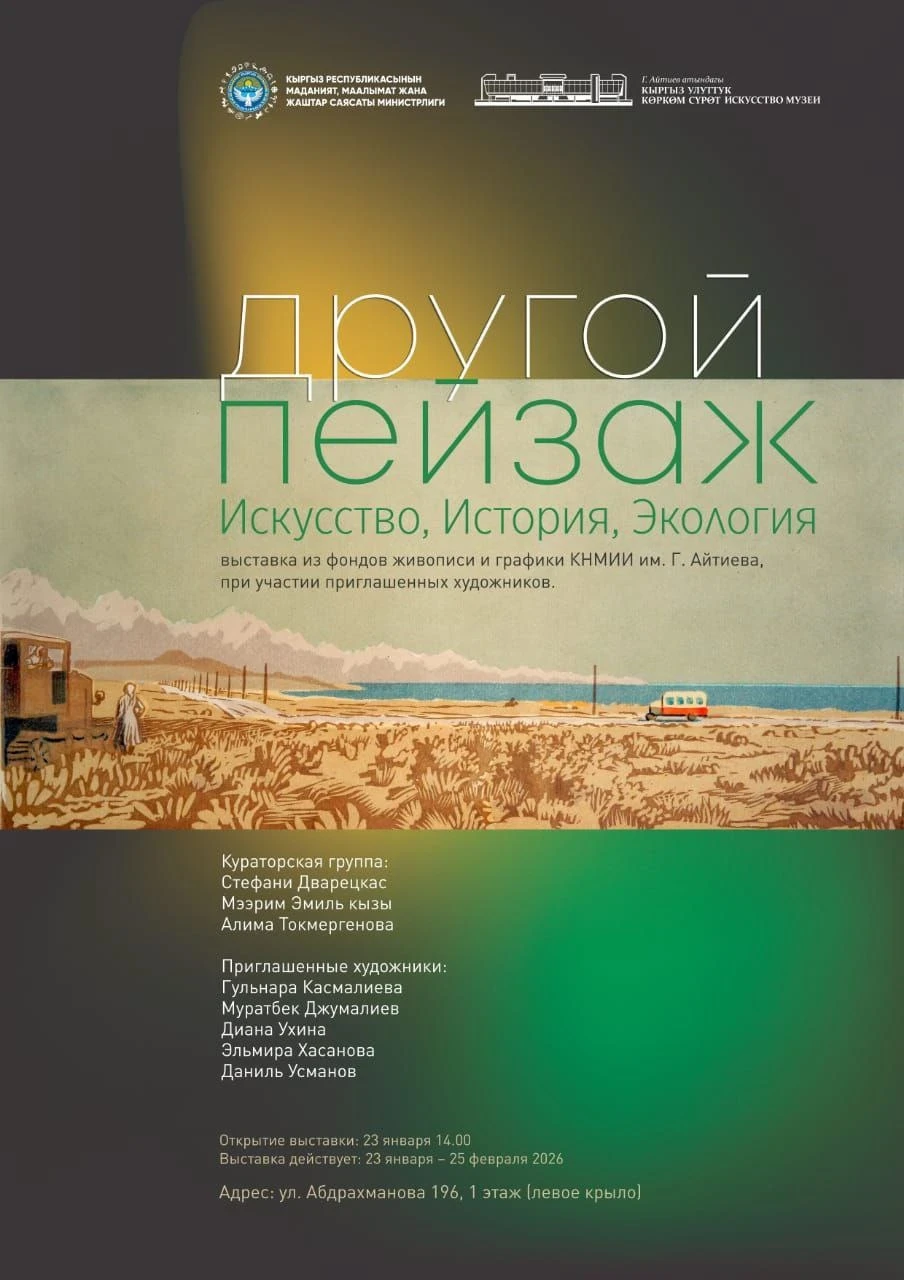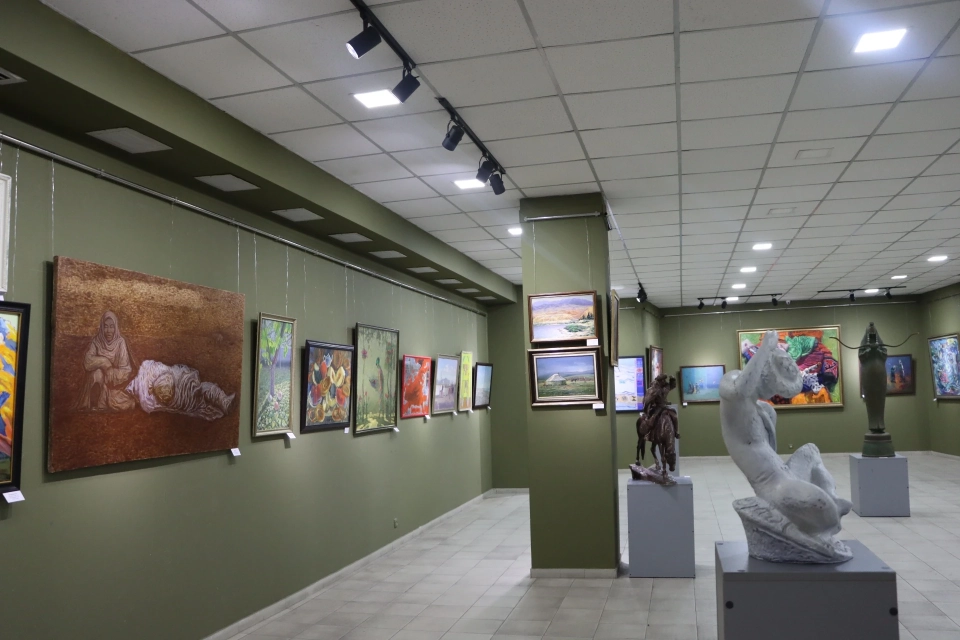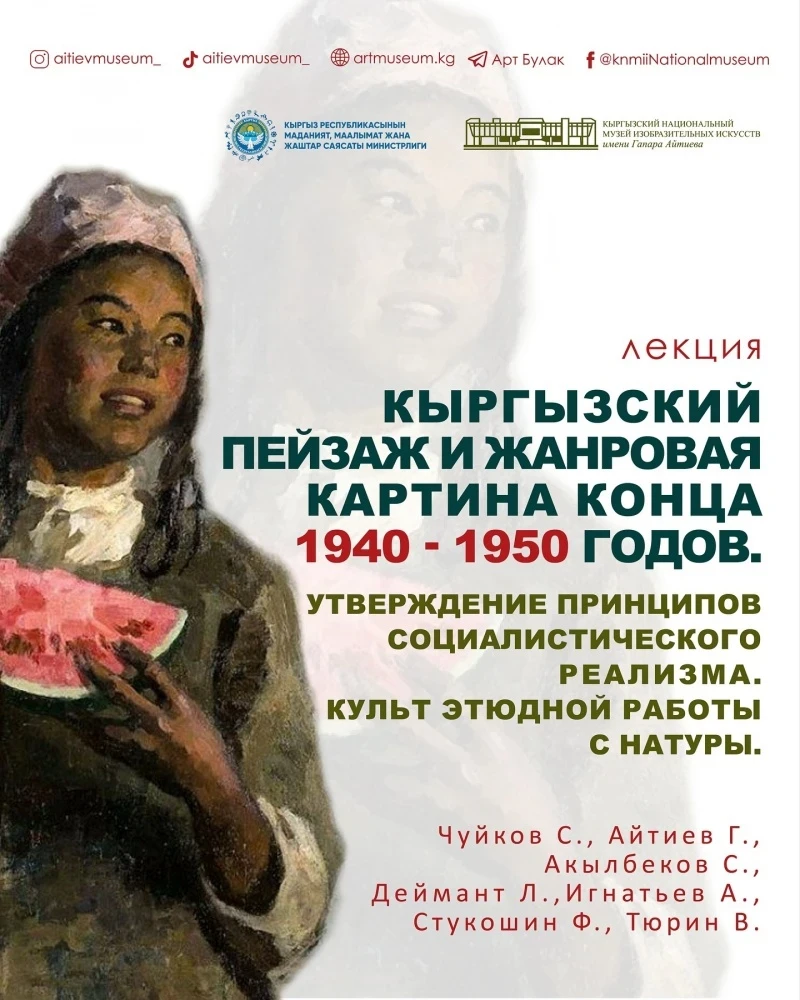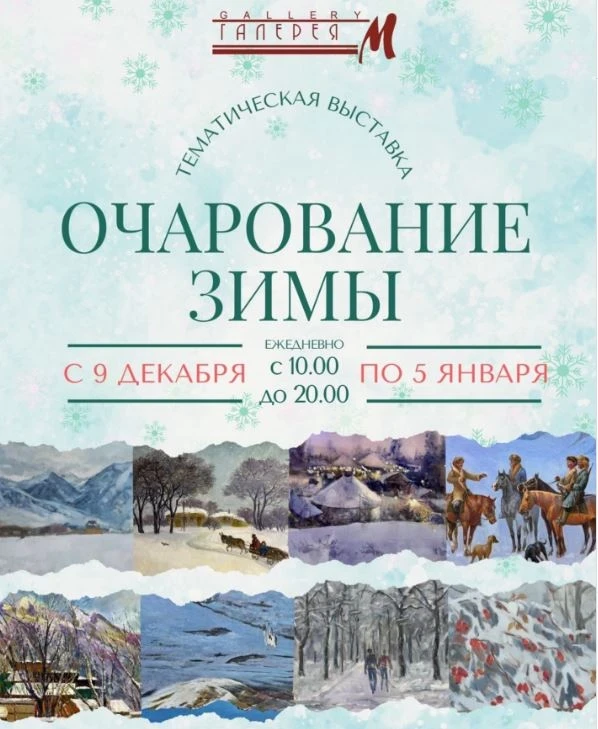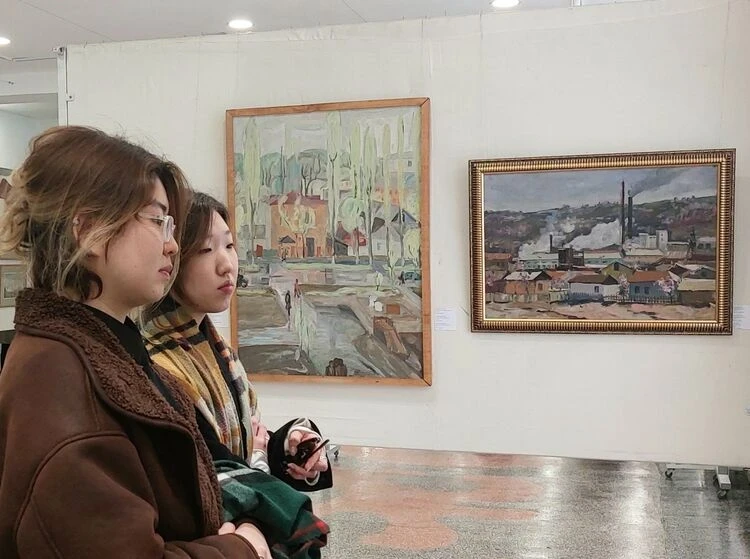
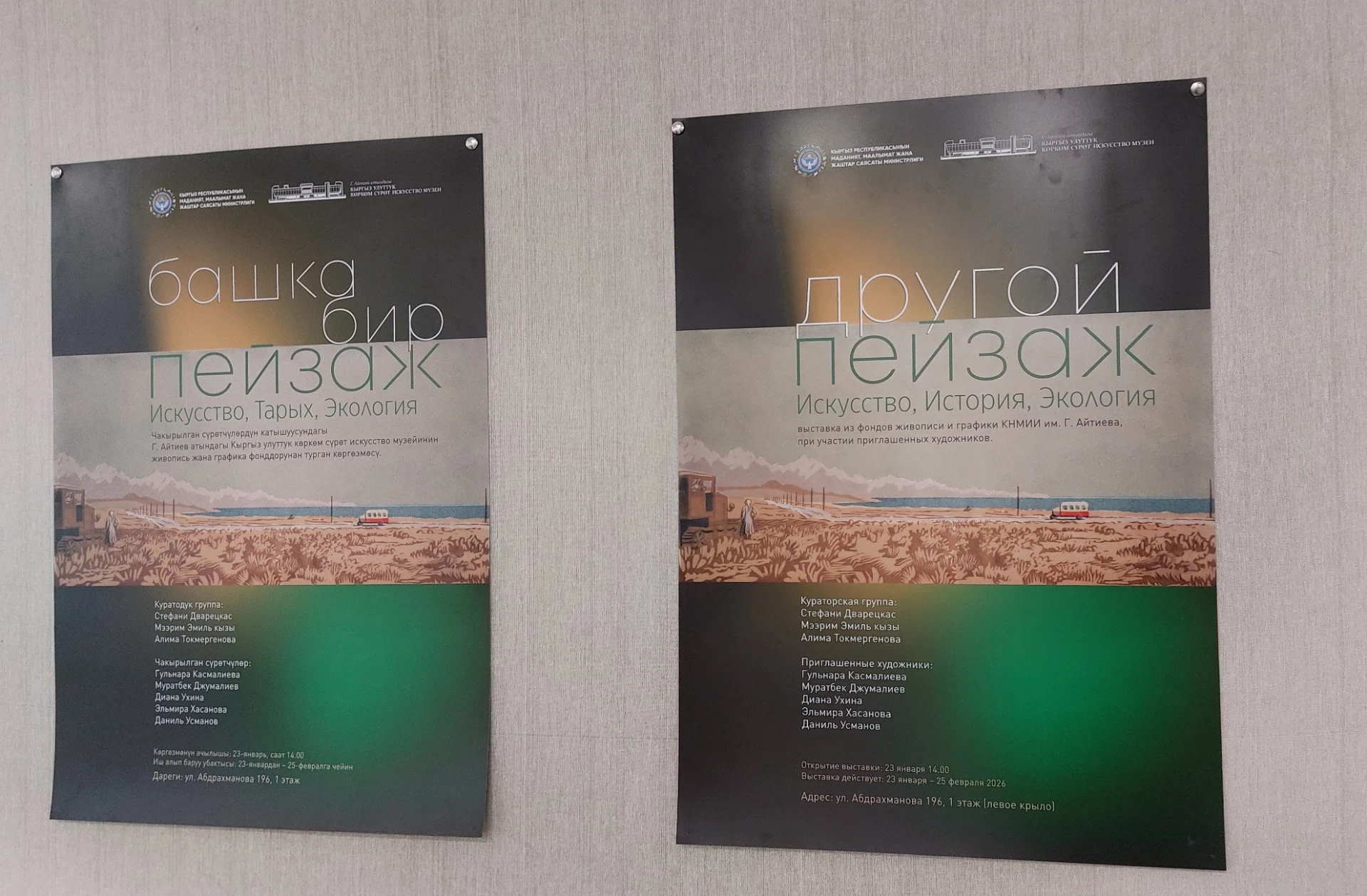
The exhibition "Another Landscape. Art, History, Ecology" opened at the Kyrgyz National Museum of Fine Arts named after Gapar Aitiev and offers viewers a unique perspective on nature as a reflection of human activity and its consequences. Here, landscape becomes not just a painting, but a testament to time, fostering a discussion about responsibility for ecological losses.
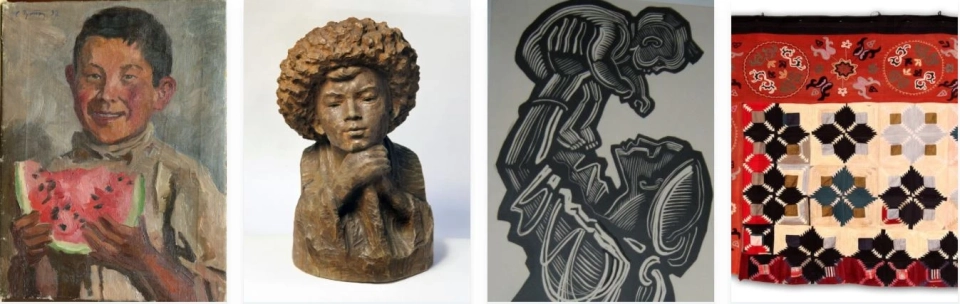
The exhibition is interesting in that it combines both classic works from museum collections and pieces by contemporary artists and photographers. It covers the development of the landscape genre from the 1930s to the present day, showing how its image has changed in art.
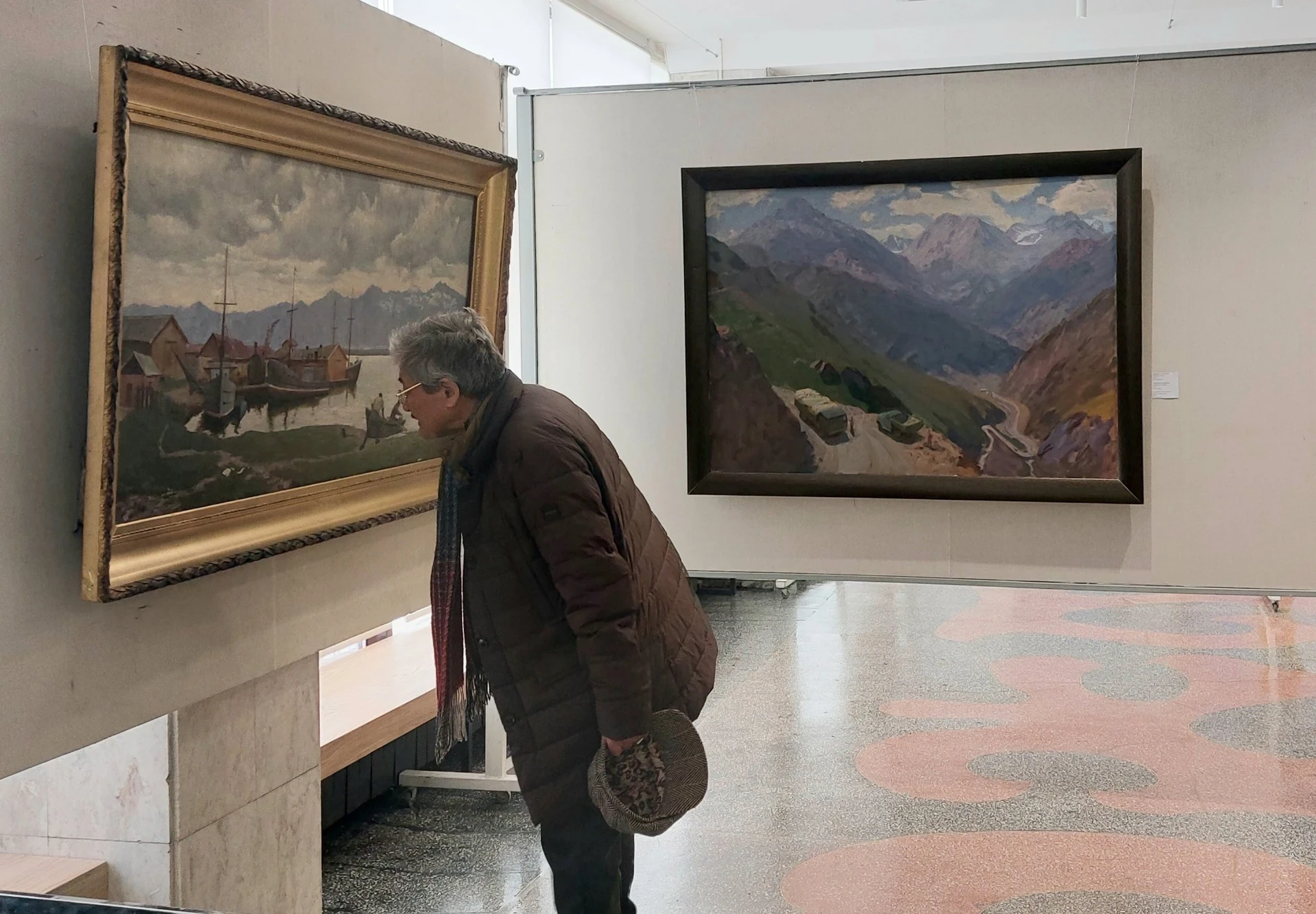
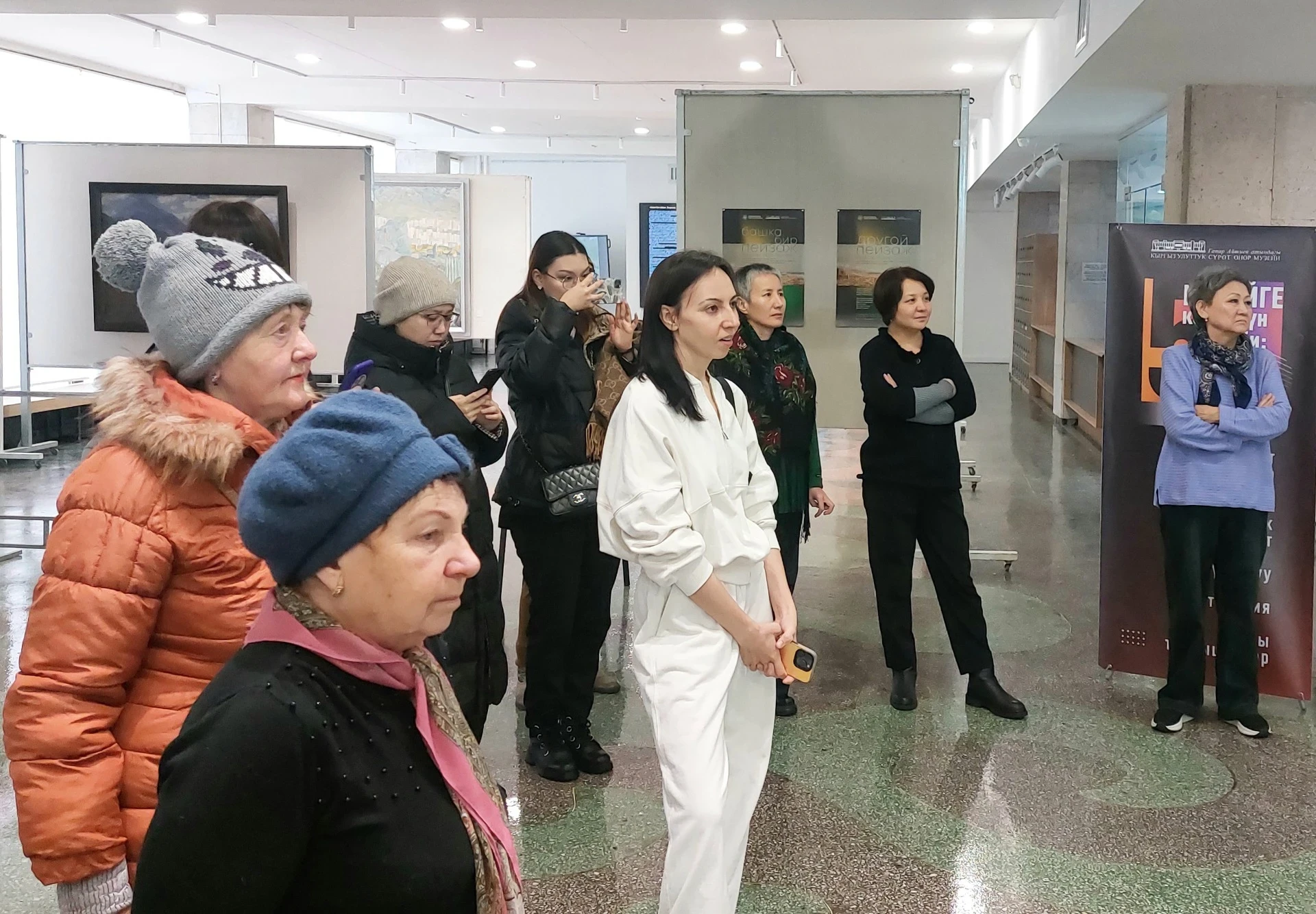
The exhibition is divided into five blocks, each examining landscape through the lens of various historical periods and contexts. In this dialogue, classic works are complemented by contemporary pieces created using various techniques.
Many of the exhibited works were created in the 1950s and 1960s and reflect significant changes in society at that time.
In these works, artists captured aspects such as infrastructure development, agriculture, urbanization, and scenes of everyday life that largely defined the appearance of Kyrgyzstan.
The exhibition includes five sub-themes related to human activity: settlements, agriculture, water resources, industry, and women's art. In addition to painting and graphics, it features photos and videos illustrating the consequences of urbanization and industrialization, particularly the damage inflicted on the ecology.
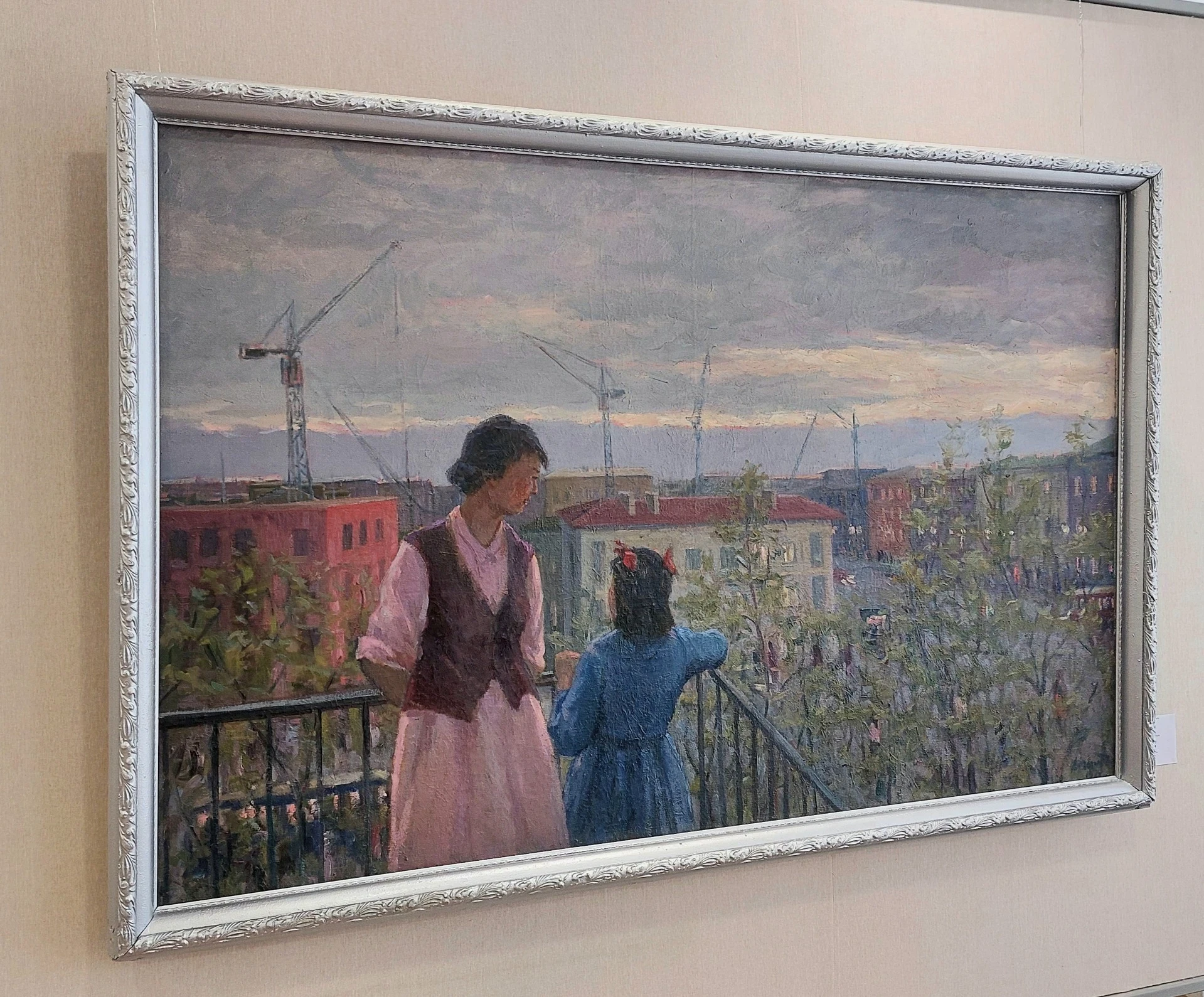
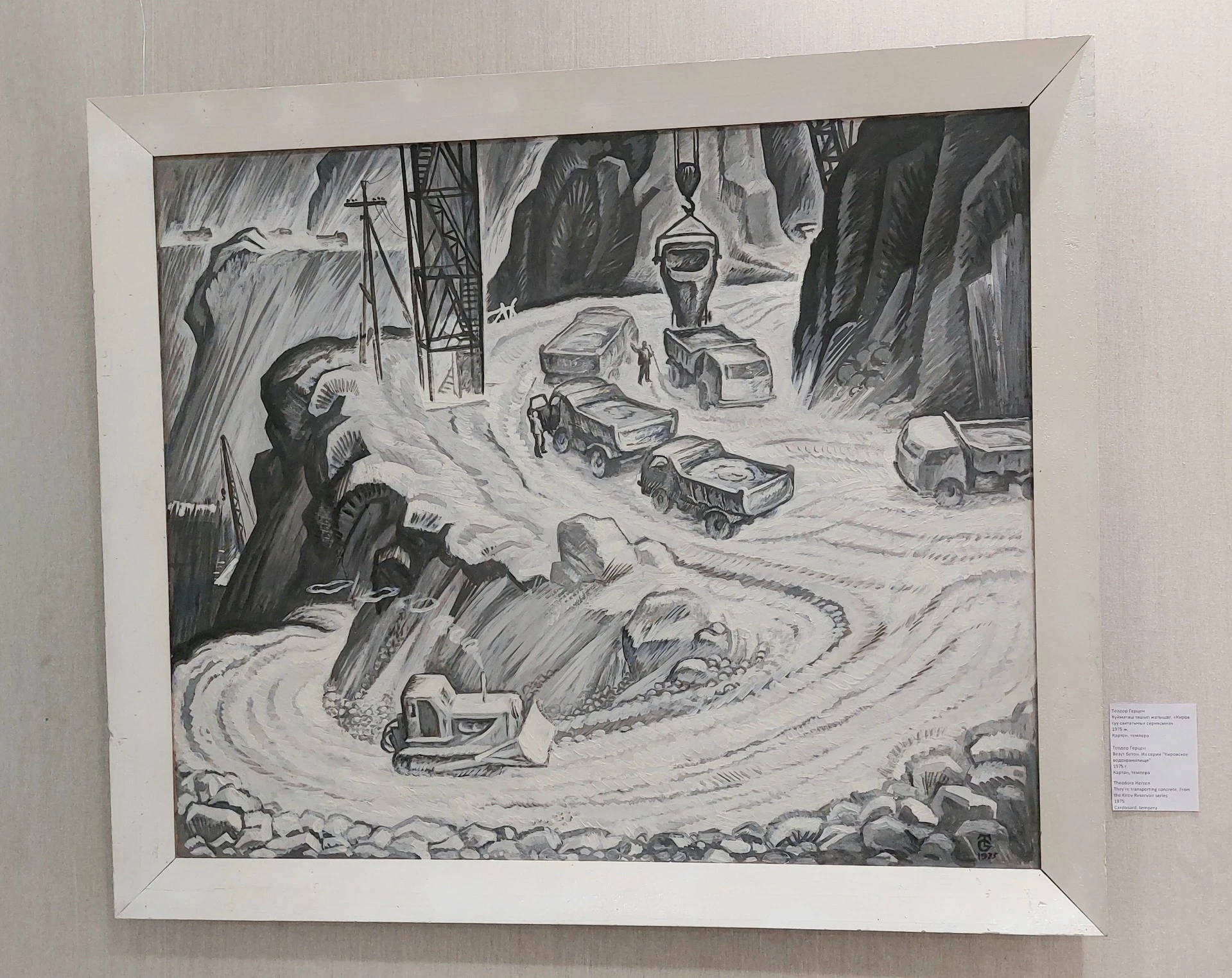
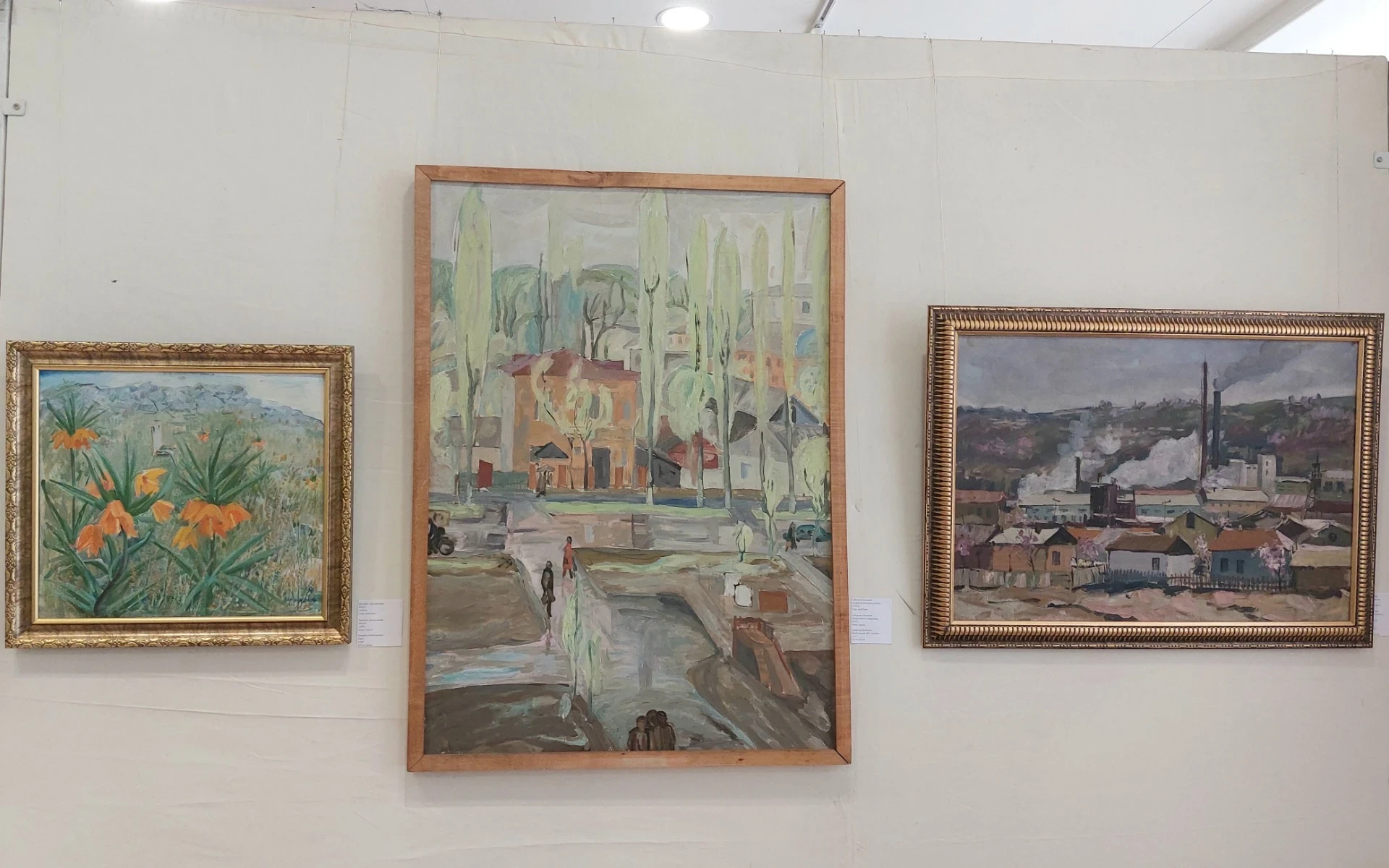
In the works of contemporary authors, humans are depicted not as harmonious creators, but rather as destructors or silent witnesses to the ecological catastrophe unfolding before their eyes.
Mountains and Disappearing Glaciers
Elmira Khasanova, a participant in the exhibition and an experienced guide, has been leading tourists to remote corners of Kyrgyzstan for 13 years. She is also actively engaged in photography, where, in addition to landscapes, she explores human stories and culture.“I am interested not only in landscapes but also in portraits of people,” says Elmira.
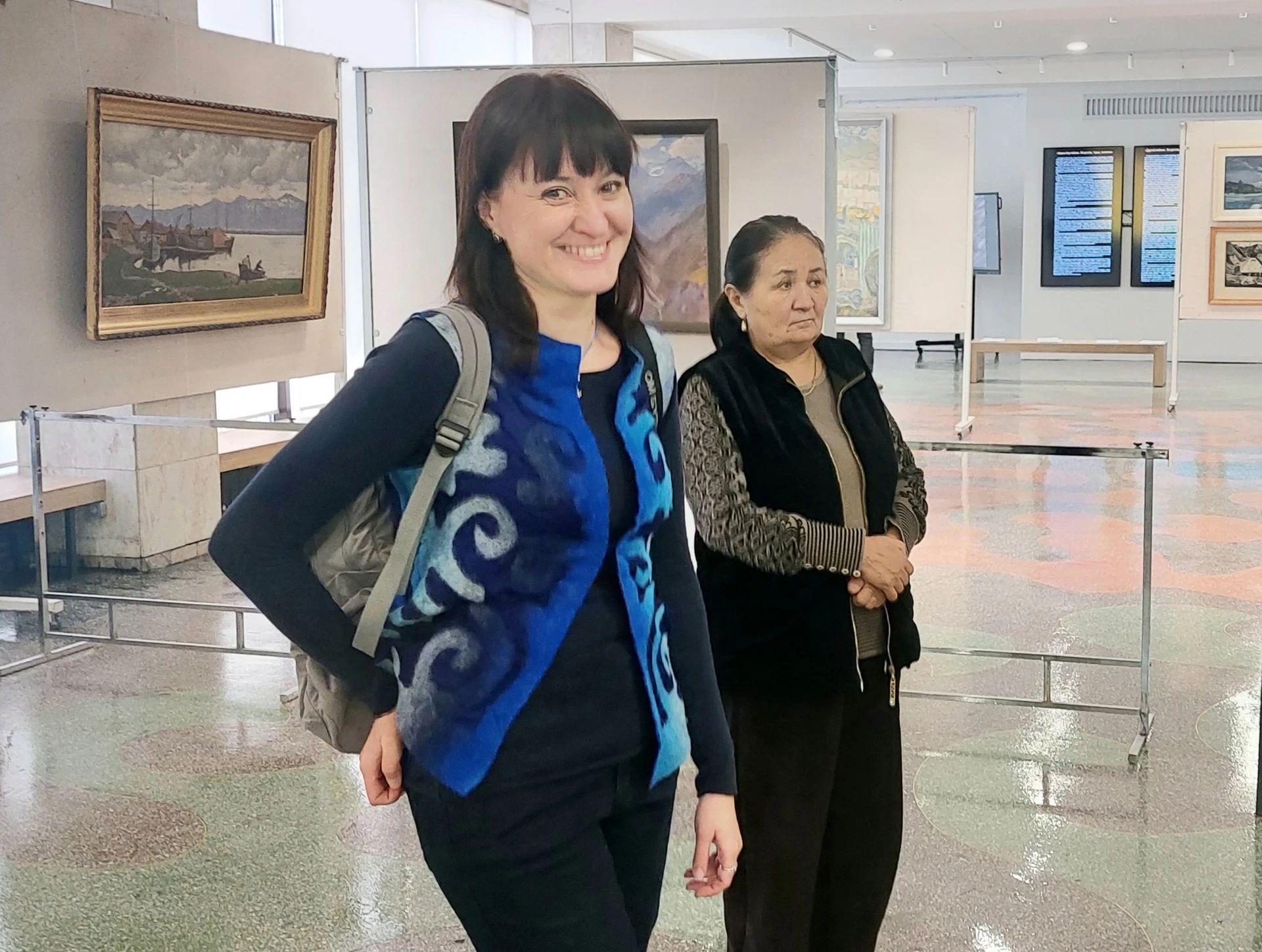
During the pandemic, when tourist activity decreased, Elmira tried to change direction but soon realized she could not give up traveling in her homeland.
The nature of Kyrgyzstan inspires her, and in the mountains, she sees a reflection of human character. She is closer to storms and changeable weather than to sunny calm.
Despite having visited many places, there is always something new to discover. I never cease to be amazed by this.
Elmira Khasanova
However, she also speaks about serious ecological problems, such as pollution in popular tourist spots. Trash left by people spoils even the most picturesque landscapes.
“Often tourists collect trash because it is impossible to be in filth,” she notes.
Discussing climate change, Elmira emphasizes the human factor: dust from dried-out deserts, including Kazakhstan, settles on glaciers and accelerates their melting.
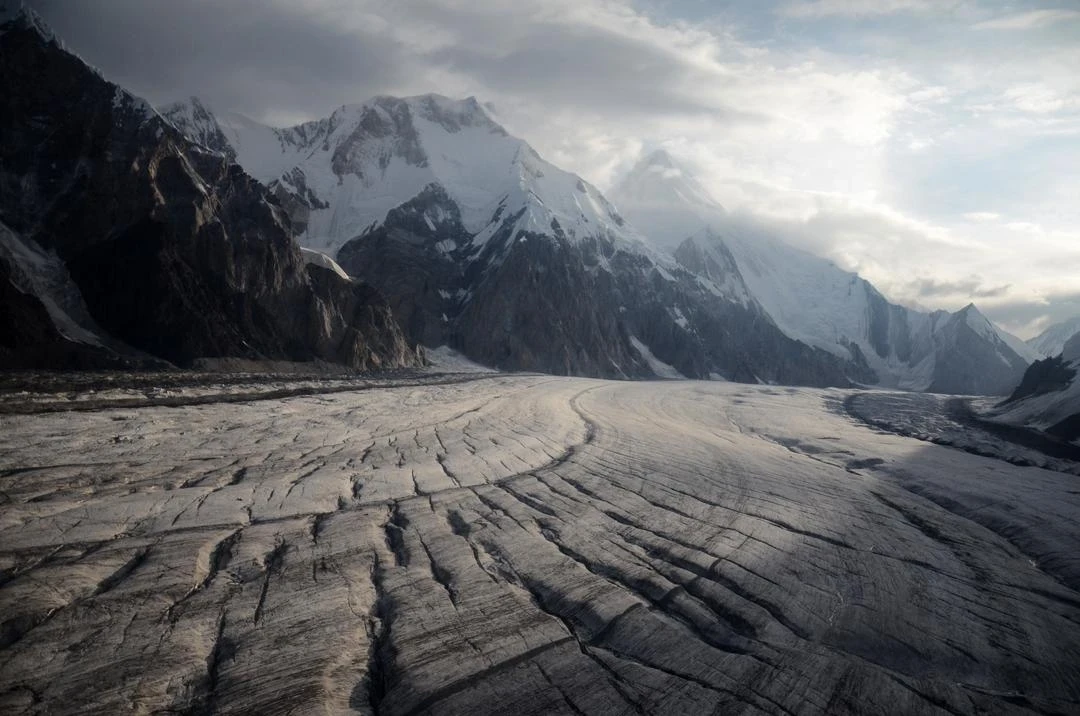
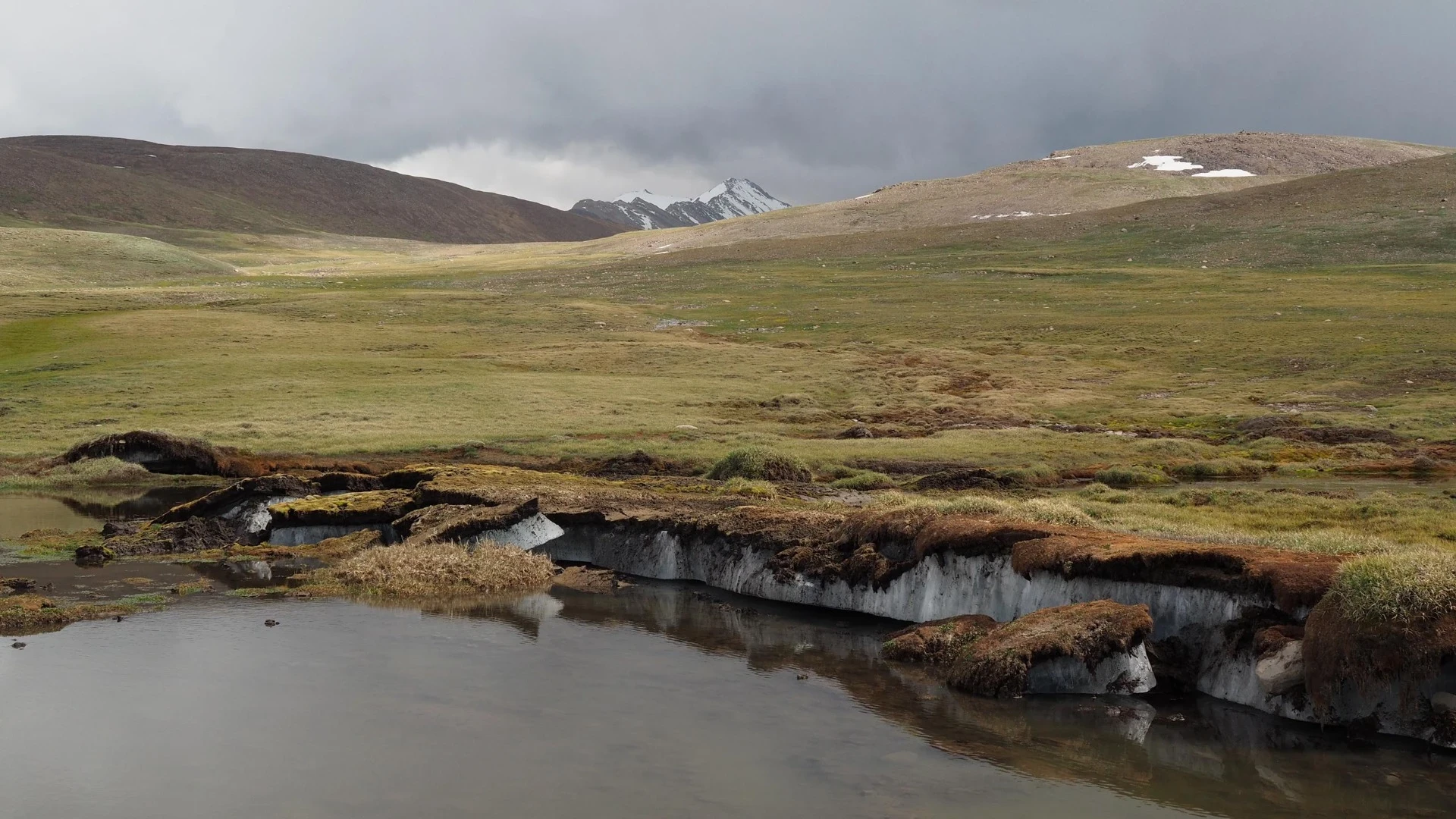
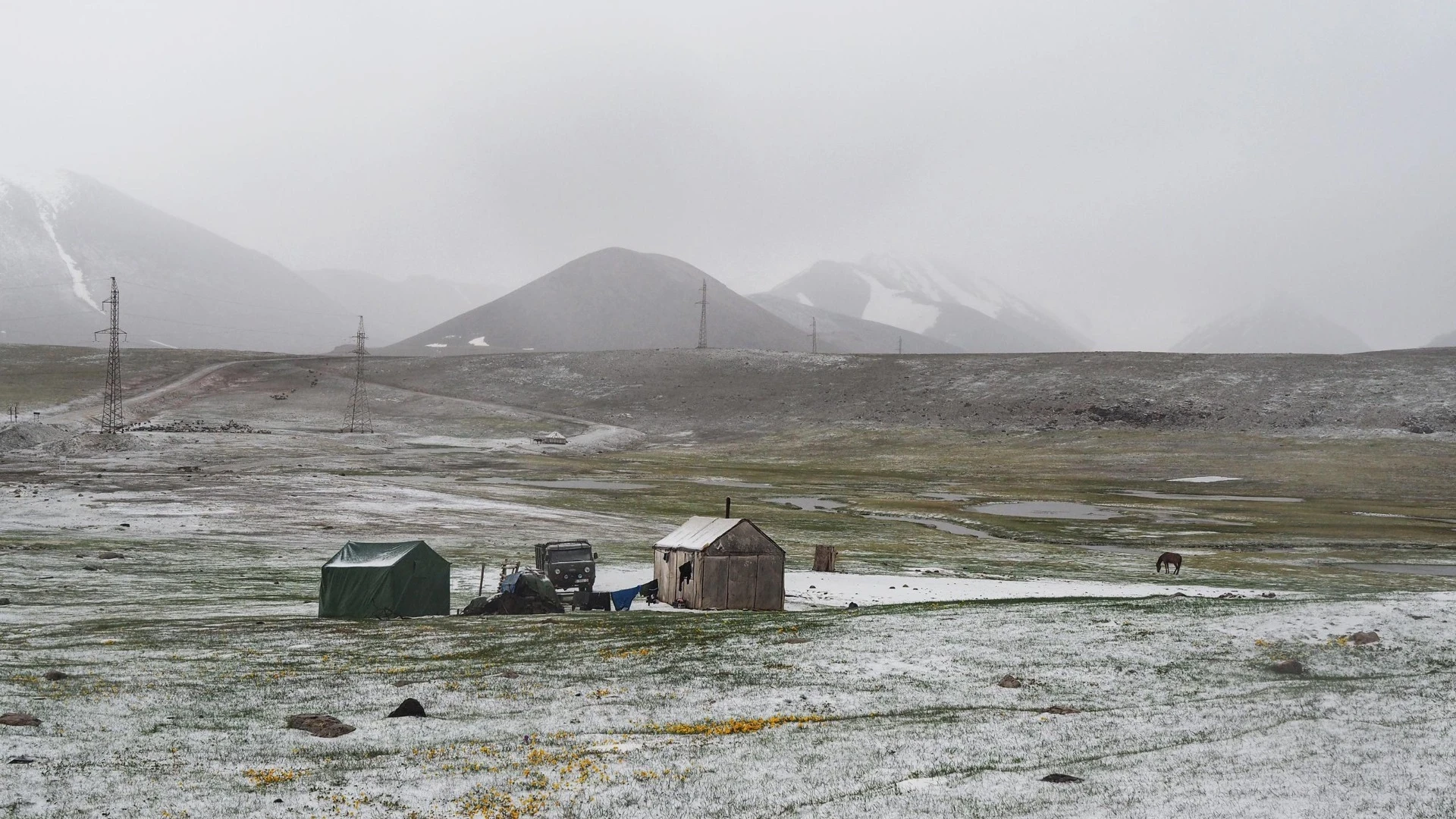
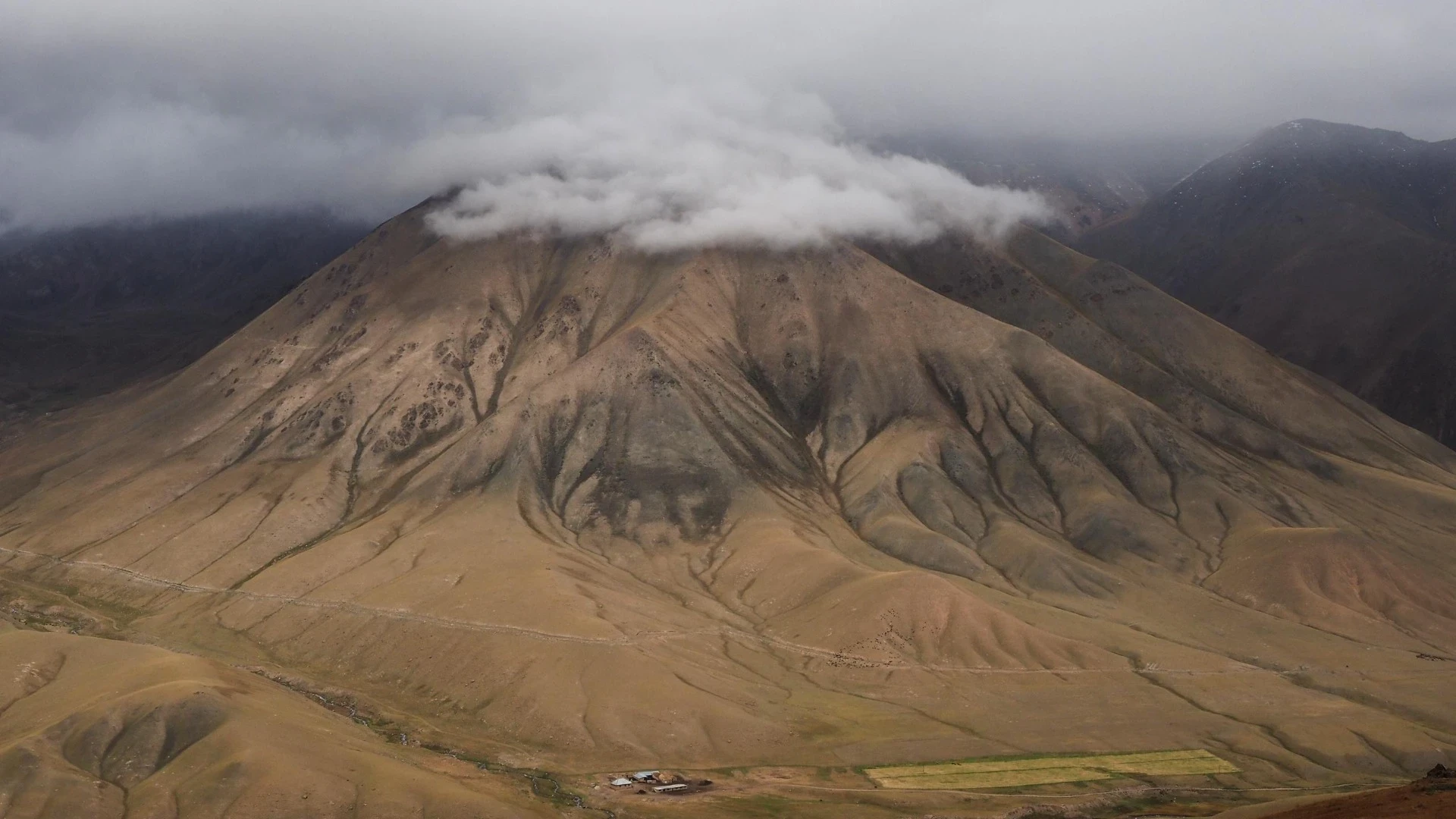
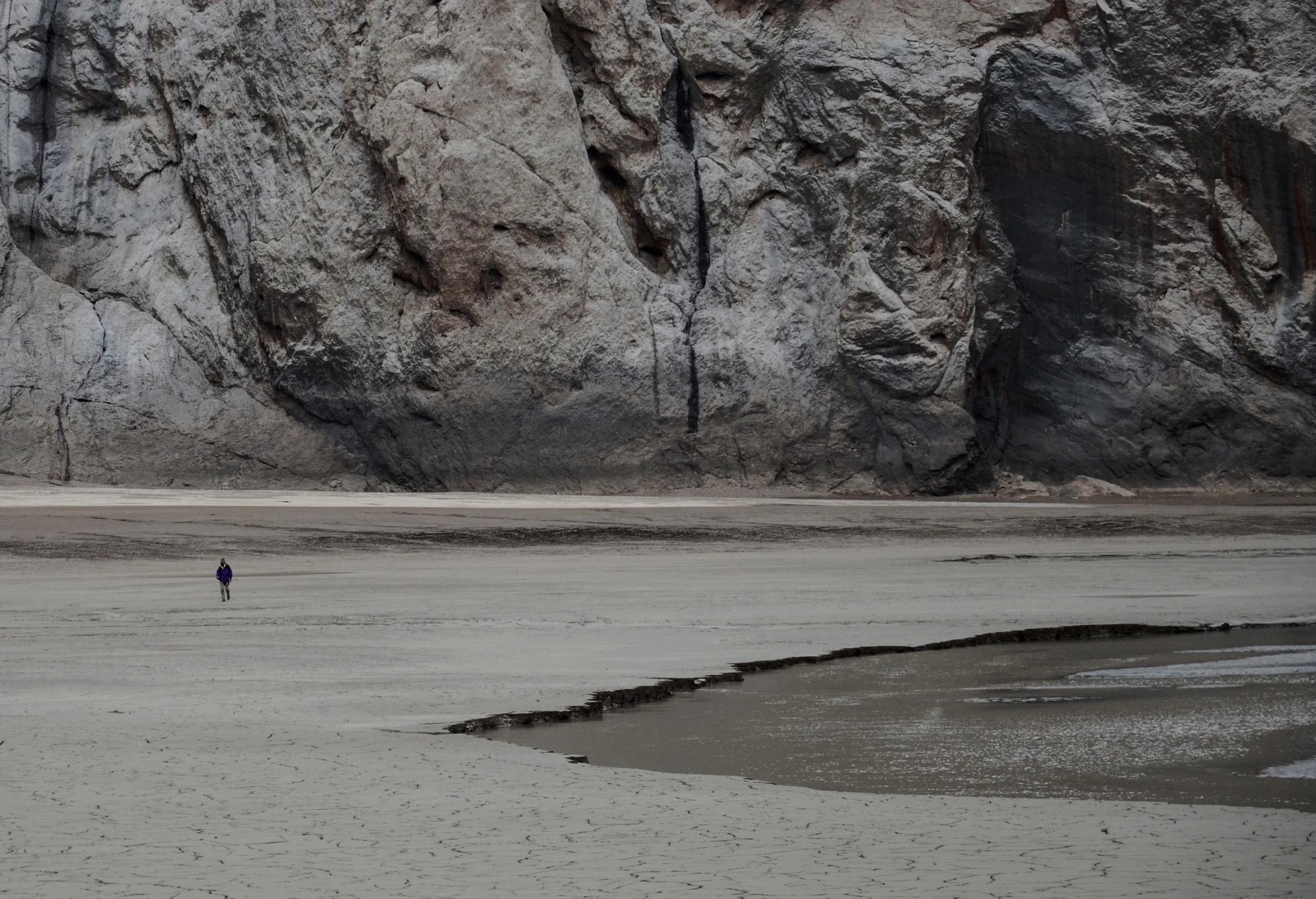
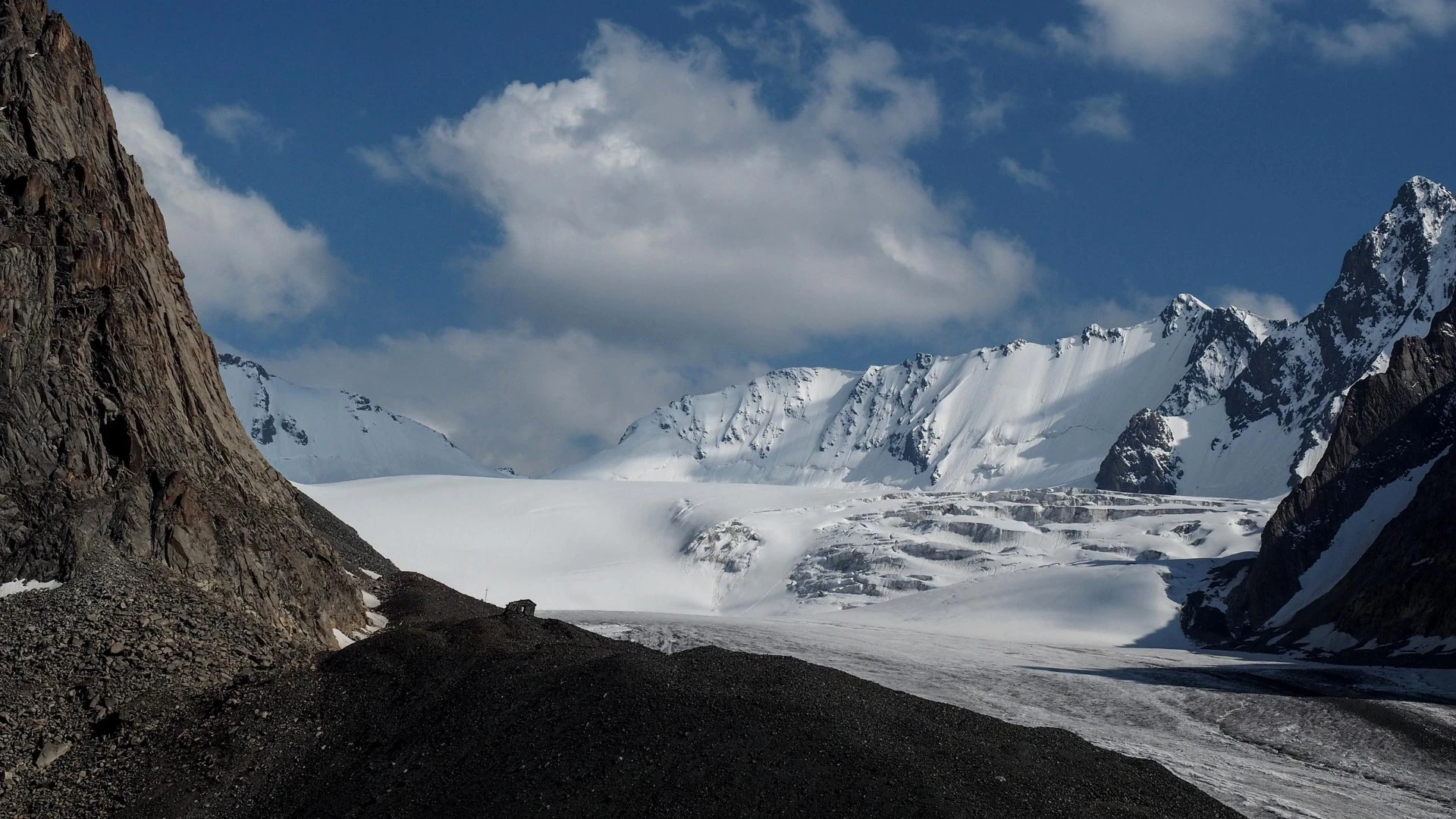
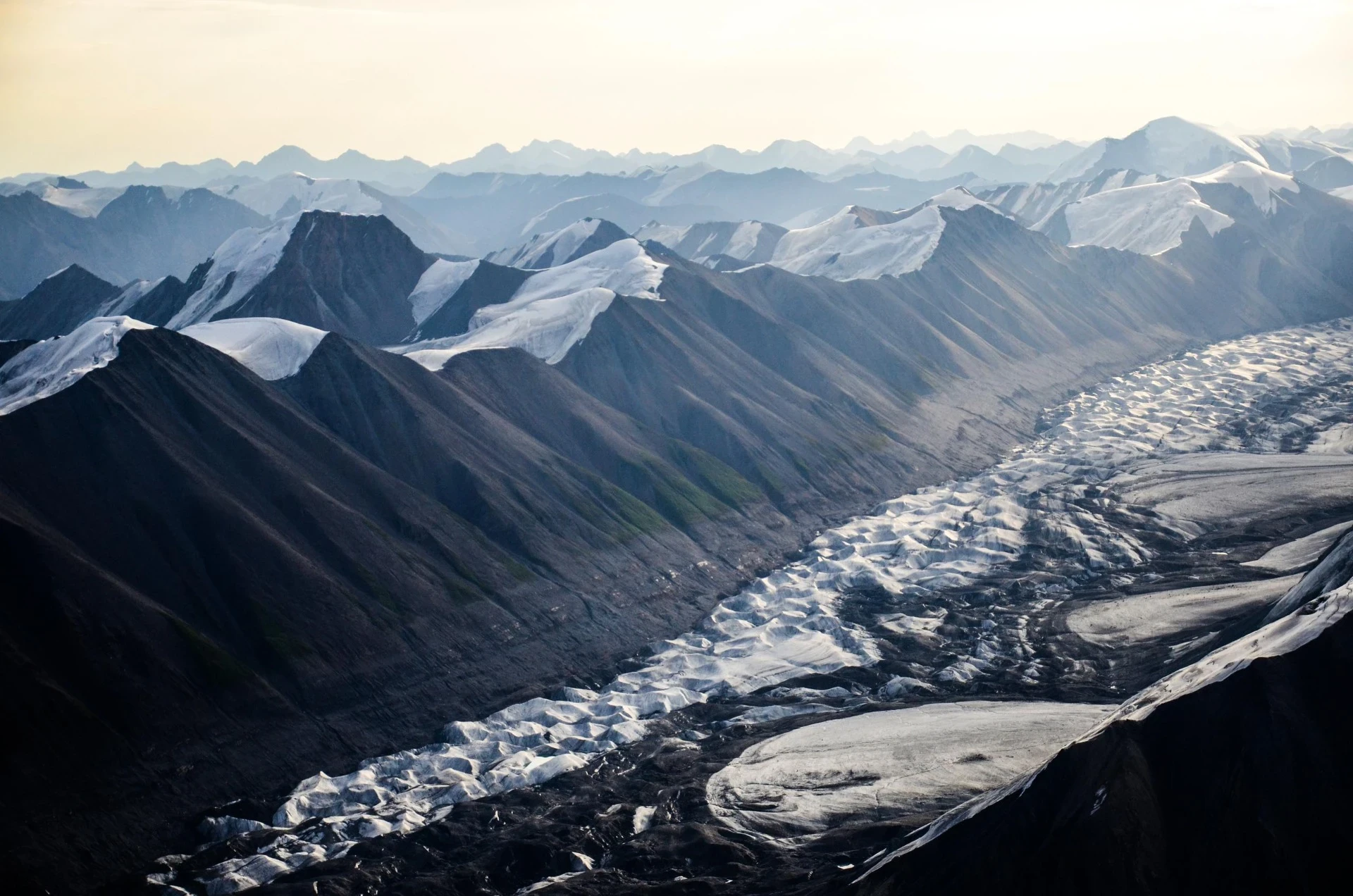
Currently, Elmira is working on an ambitious project — she intends to traverse part of the route of the German traveler Gottfried Merzbacher and document changes in glaciers over more than a century. In the early 20th century, he paved the way to the foot of Khan-Tengri, a sacred peak known in Turkic tradition as "father of the heavens."
Having studied archival photographs by Merzbacher, Elmira was struck by the scale of changes in the glacial landscape.
“It was shocking to see how much we have already lost,” she admits.
The Human Footprint
The exhibition is the result of collaboration between the museum and art enthusiasts from Western countries and represents an experiment at the intersection of culture and ecology. As part of the ecological program, a project has been organized that combines documentary works dedicated to the impact of humans on nature.Documentary photographer Danil Usmanov presented a series of works reflecting human impact on the environment. Despite the visual differences, they are all united by a common theme — the presence of humans.
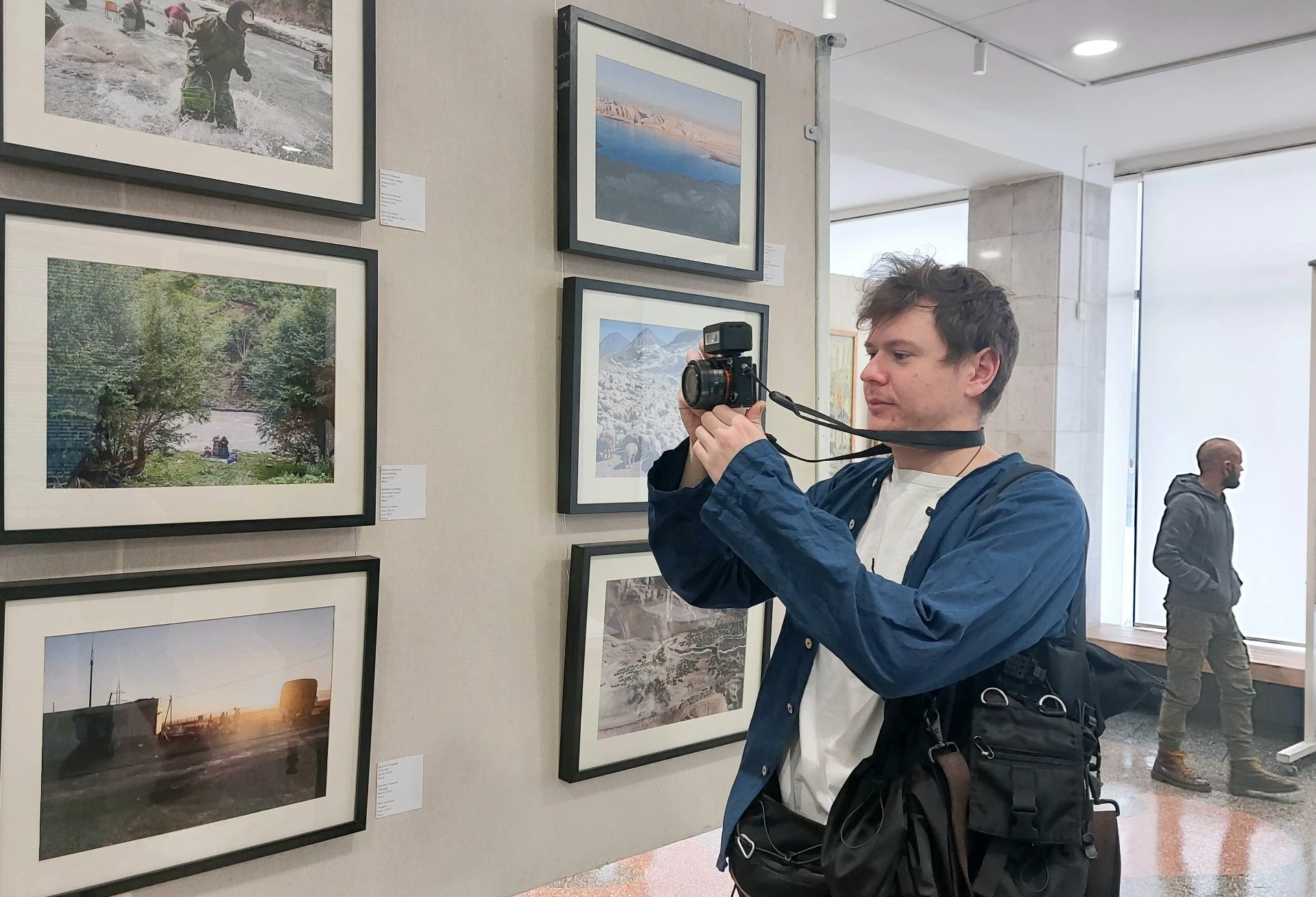
These are photographs of nature taken at different times. But even if people are not in the frame, their influence is felt.
Danil Usmanov
In the photos, one can see the consequences of gold mining in rivers, destroyed bridges after glacier collapses, and the effects of global warming. Danil recalls how shortly after the glacier collapse, he went to the site to document the changes.
The exhibition also features photographs of the Toktogul Reservoir with a reduced water level — another testament to climate change. The ecological situation in the capital is examined separately, where photos of smog coexist with images of the city dump.
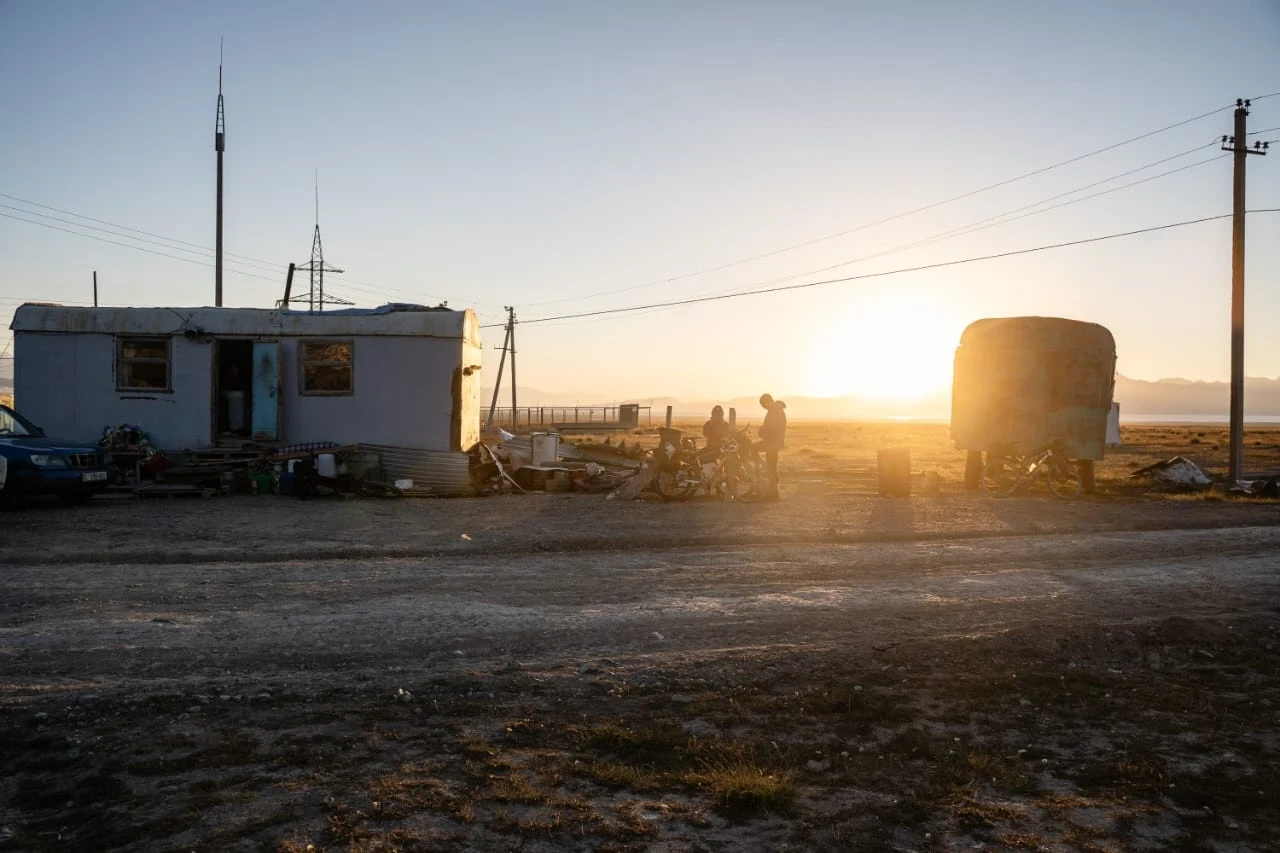
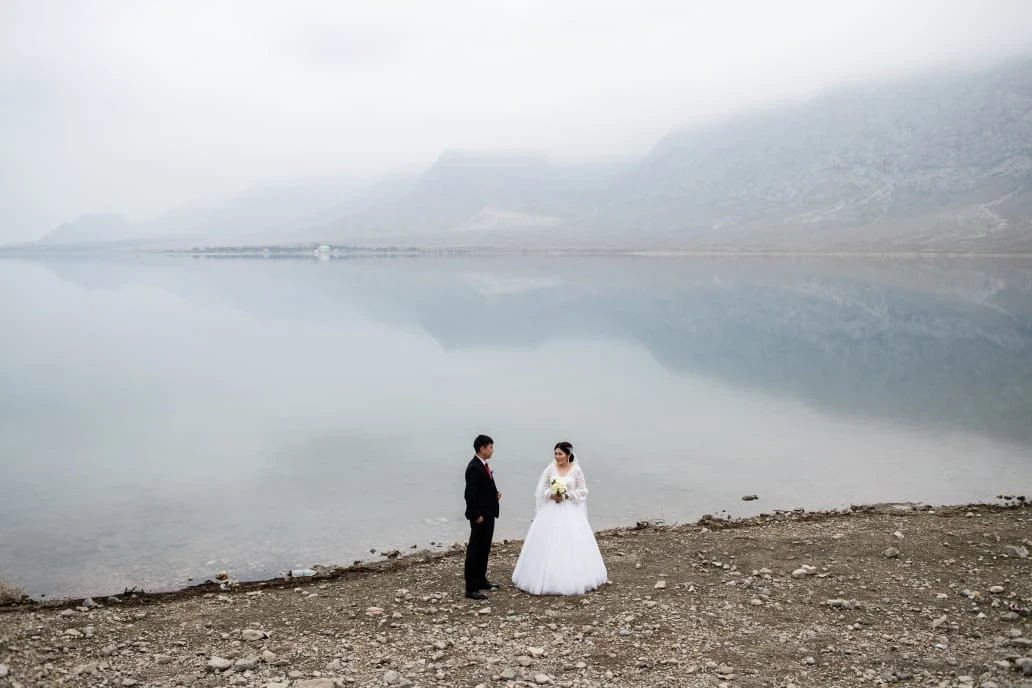
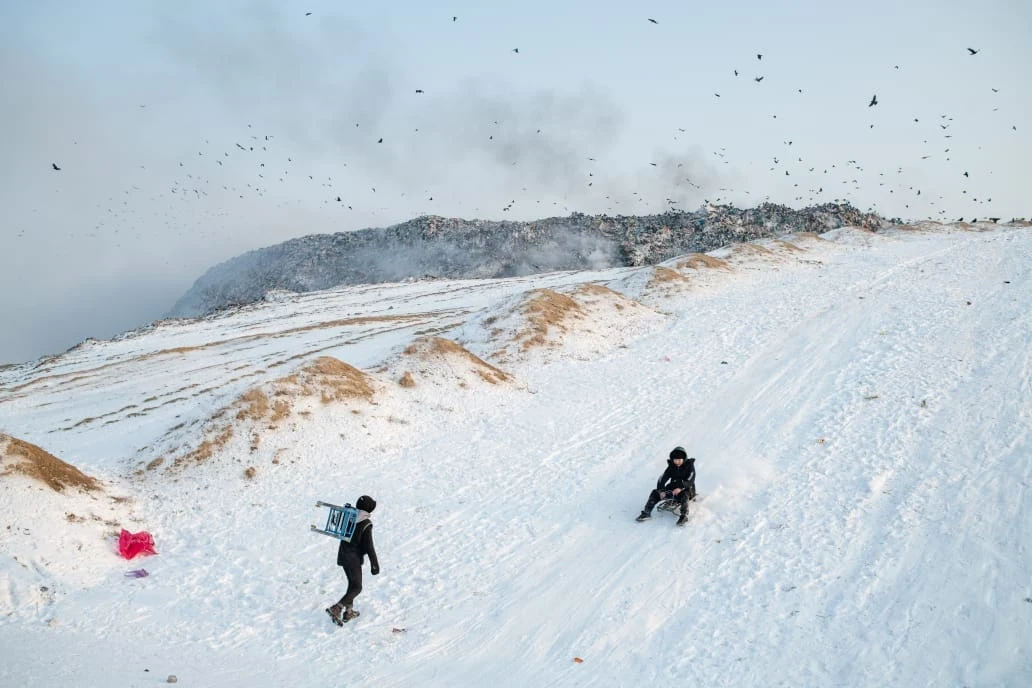
“Today, on the site of the dump, there is already an incineration plant, whereas life once thrived here. It was a unique community, with its own rules and dynamics,” shares Danil.
This series became not just a documentary reflection but an attempt to show the social and ecological reality without embellishment — as it was before its disappearance.
Landscape as a Witness to Change
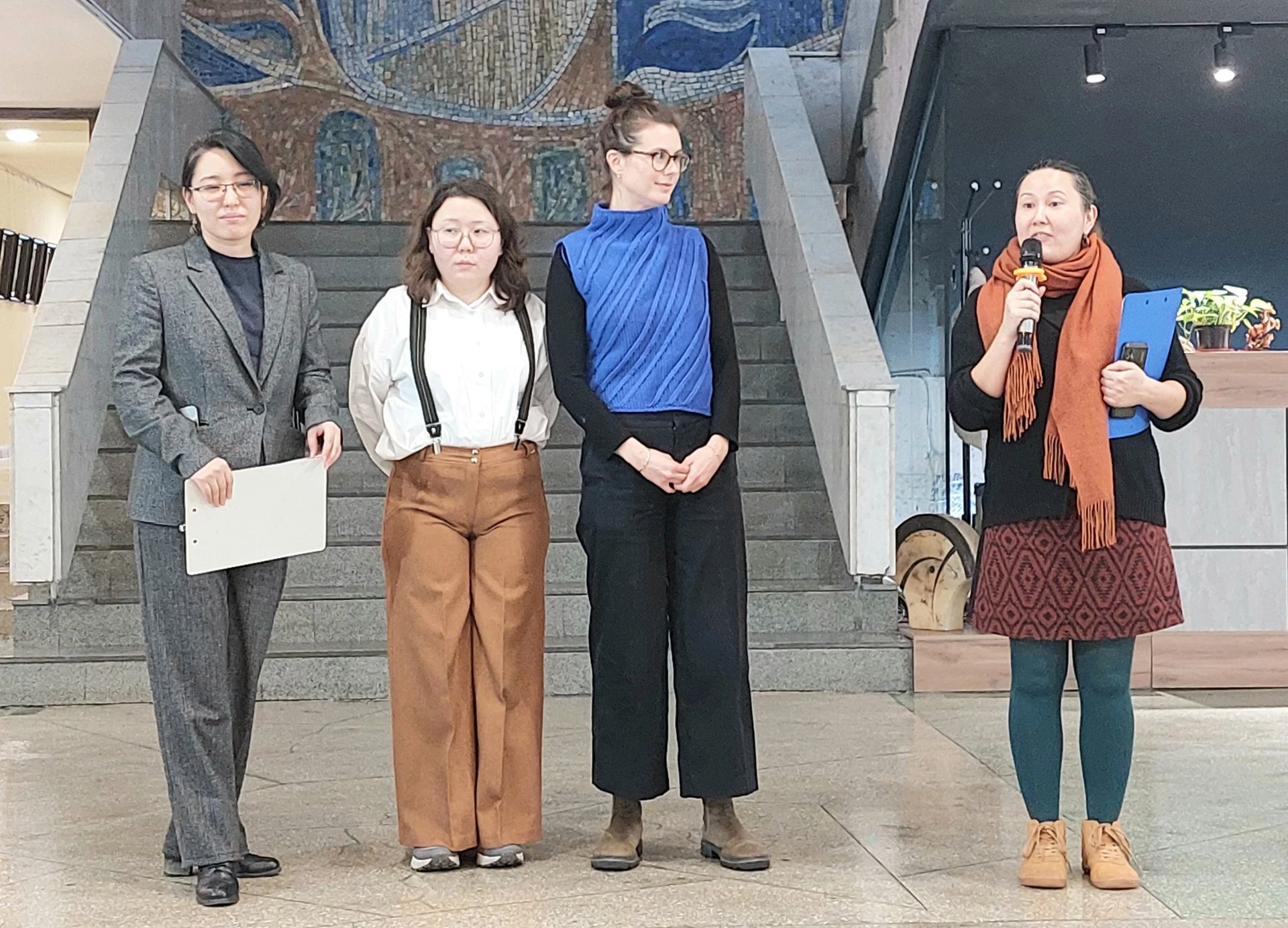
According to the curator of the exhibition, Alima Tokmergenova, the museum actively collaborates with foreign researchers who come here for scientific work. As part of this collaboration, Stephanie Dvoretskaya, a researcher from Massachusetts and Chicago universities, specializing in the art of Kyrgyzstan, visited the museum.
During the exchange of ideas between Stephanie, Alima Tokmergenova, and co-author of the exhibition Meerim Emil kyzy, the idea of creating a new exhibition emerged.
We thought, what if we create an exhibition that shows the landscape from different angles — not just as an image of beautiful places, but as a witness to changes in the landscape from the 1930s to the present?
Alima Tokmergenova
Contemporary artists strive to speak about reality openly, unlike their predecessors, who often romanticized nature. The curator notes that even in alarming documentary photographs, there remains hope for a better future.
The exhibition features works from museum collections that are usually kept in closed funds and are accessible to the public only during exhibitions.
“Looking at these photographs, there is hope that people will start thinking about nature and ecology,” concludes Alima Tokmergenova.
The exhibition "Another Landscape. Art, History, Ecology" will be open to visitors until February 25.