Economy of Kyrgyzstan

{title}
Entrepreneurship
{title}
Agriculture
{title}
Finance
{title}
Construction
{title}
Industry
{title}
Transport and communications
Devices and Weapons for Hunting by the Kyrgyz in the 19th - Early 20th Century.
Agriculture

Devices and Weapons for Hunting by the Kyrgyz in the 19th - Early 20th Century.

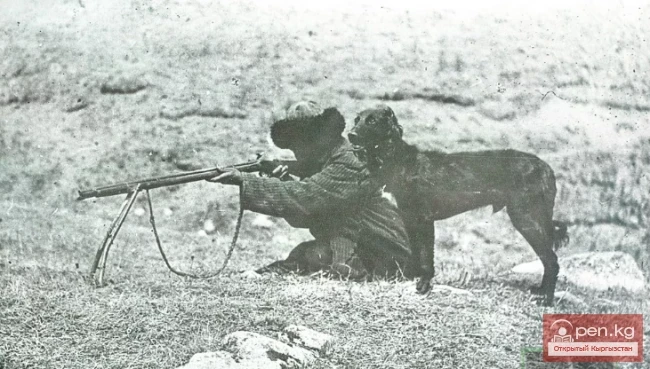
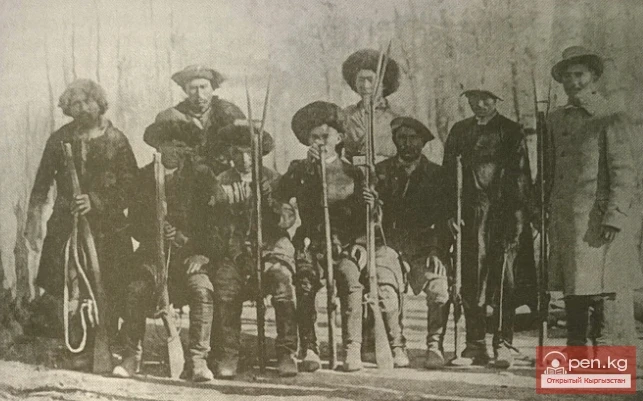
Hunting Tools and Weapons. Since ancient times, the Kyrgyz have used both "active" and "passive" forms of hunting. The former involves searching for, pursuing, and capturing game by an armed hunter, as well as group hunting. The latter involves capturing animals using pre-set traps. One of the early forms of "passive" hunting was the use of pit traps (or) with vertical walls. Typically, a camouflaged pit was made, over 2 meters deep and 1.5-2 meters in diameter,

23.11.2019, 21:41
Hunting Techniques and Division of Spoils among the Kyrgyz from Ancient Times to the Early 20th Century.
Agriculture

Hunting Techniques and Division of Spoils among the Kyrgyz from Ancient Times to the Early 20th Century.

Hunting Techniques and Division of Game. The Kyrgyz hunted both on horseback and on foot. In deep snow, they wore special stepping skis called zhapka, which significantly eased movement. They hunted large herbivores living high in the mountains either collectively using ambush methods known as bukturma or individually. The bukturma or tosot method (in Aksy and Chatkal) was carried out as follows. Participants were divided into two groups; the first group, aidakchylard, consisted of riders

20.11.2019, 04:53
Commercial Animals of Kyrgyzstan in the Early 20th Century.
Agriculture

Commercial Animals of Kyrgyzstan in the Early 20th Century.

Commercial Animals. Sources from the 19th to early 20th centuries contain information about wild animals and their distribution areas. Typical representatives of the fauna of the Tien Shan mountains included tigers and leopards, which inhabited the bushes and reeds along riverbanks, wild boars, bears, lynxes, wolves, foxes, martens, badgers, squirrels, wild cats, ferrets, stoats, marmots, kulan (wild horses), wild goats, mountain rams (argali), marals, as well as birds: vultures, eagles,

17.11.2019, 17:16
Hunting - An Important Component of the Kyrgyz Economy from Ancient Times to the Early 20th Century.
Agriculture

Hunting - An Important Component of the Kyrgyz Economy from Ancient Times to the Early 20th Century.

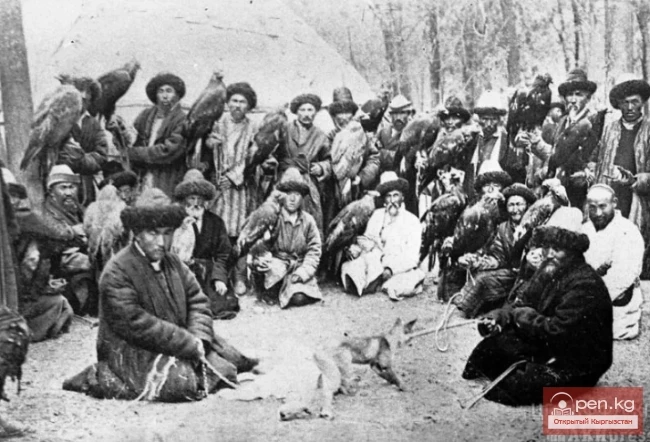
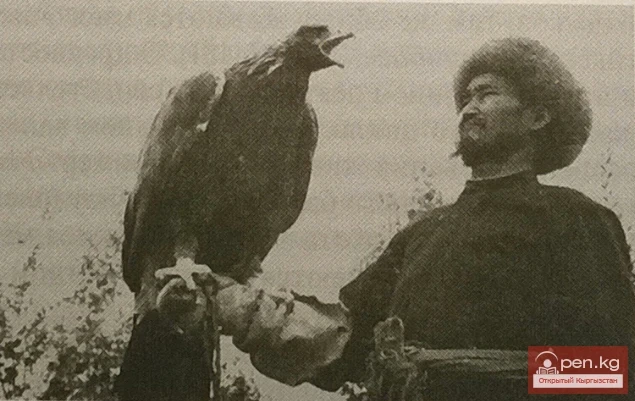
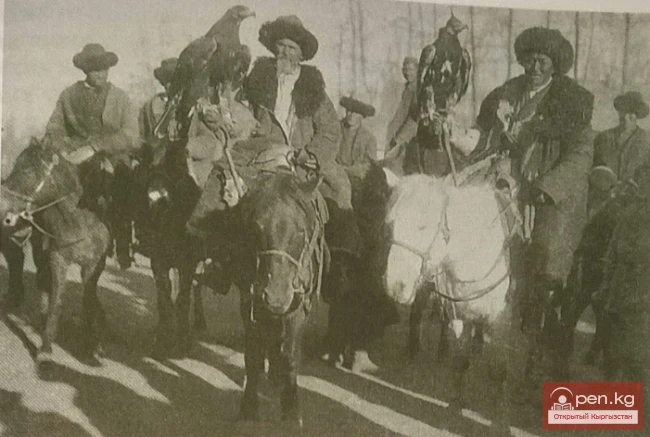
Hunters with Golden Eagles. Mountain Semirechye, Kyrgyzstan. 1926. HUNTING Hunting has been an important component of the complex economy of the Kyrgyz from ancient times until the early 20th century, complementing livestock breeding and agriculture (Abramzon, 1971; Aitbaev, 1959, p. 82; Petrov, 1961, pp. 81, 82; Zhapparov, Toktakunova, 2006, p. 43). The meat of wild animals was consumed as food, and valuable fur was used as a means of payment, exchanged for food products and other goods

13.11.2019, 16:01
Kyrgyz Irrigation Technique - Irrigation
Agriculture

Kyrgyz Irrigation Technique - Irrigation

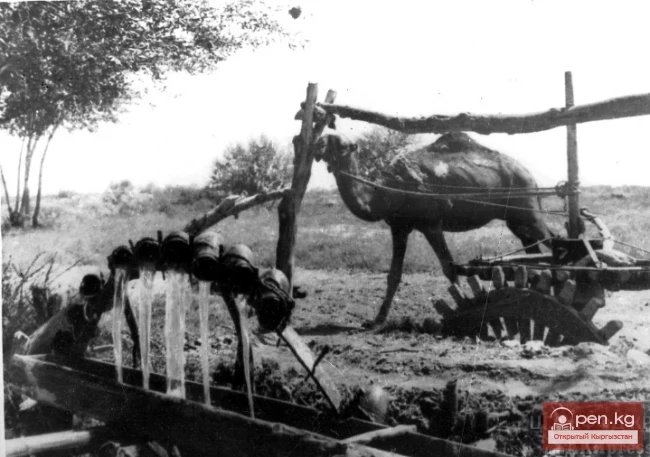
Irrigation The Kyrgyz used techniques and methods of irrigation developed over many centuries, adapted to both the flat landscapes of lowlands and the high-altitude conditions. Irrigation channels were often laid at great heights, across slopes and rugged areas with rocky soil. Simple tools were used in the construction of ditches, such as tyapka ketmen, kayla, chukuldak, choku, lom, lopata kurok, as well as the horns of mountain goats kiyiktin muyuzy - with their help, they deepened the

05.11.2019, 11:48
Agriculture among the Kyrgyz
Agriculture

Agriculture among the Kyrgyz

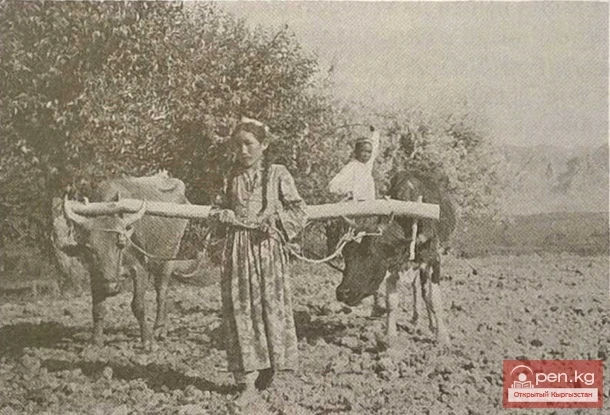
AGRICULTURE Agriculture was an important area of economic activity for the Kyrgyz, ranking second after livestock breeding. This was facilitated by the climatic conditions: the amount of precipitation in most of the country exceeds the minimum of 400 mm per year necessary for agricultural activities, and this culture has existed since at least the Bronze Age (Ivanov, 1957; Zadneprovsky, 1997, p. 4). From the mid-16th century, during the final settlement of the Kyrgyz in the Tian Shan,

01.11.2019, 15:04
Cattle Breeding Among the Kyrgyz in the 20th to Early 21st Century
Agriculture

Cattle Breeding Among the Kyrgyz in the 20th to Early 21st Century

Migration near the village of Troitskoye. Kara-Kyrgyz. Syrdarya region. 1902. Animal Husbandry in the 20th - Early 21st Century By the beginning of the 20th century, animal husbandry continued to be the leading sector of the economy among the Kyrgyz. According to various sources, the number of settled households by 1914-1916 ranged from 15 to 30% in the Pishpek, Przhevalsk, and Namangan districts (in particular, in the Talas Valley, their share was especially small in the adjacent mountainous

28.10.2019, 17:28
Cattle Breeding Cults of the Kyrgyz in the Early 20th Century.
Agriculture

Cattle Breeding Cults of the Kyrgyz in the Early 20th Century.

Forage Preparation Forage preparation became widespread in the late 19th century due to a lack of pasture lands and the processes of sedentarization. Wealthy livestock owners harvested up to 10-15 thousand bundles of hay. Sometimes family members participated in this, or they worked as ashars - using collective mutual assistance, while some purchased hay from others (Manuscript fund of the Ch. Aitmatov Institute of Language and Literature of the National Academy of Sciences of the Kyrgyz

25.10.2019, 15:11
Annual Cycle of Nomadic Herding among the Kyrgyz
Agriculture

Annual Cycle of Nomadic Herding among the Kyrgyz

Ail before migration. Osh region, Alai valley. 1930. Annual Cycle of Pastoral Livestock Breeding All pastures were divided into summer (jailoo), autumn (kuzdov), winter (kyshtoo), and spring (zhazdoo). The most intense and responsible period was the wintering of livestock. The harsh, prolonged cold period with severe frosts, winds, frequent and heavy snowfalls, as well as the constant need for tebenevka (snow digging) required efforts to maintain the herd, especially since the nutritional

24.09.2019, 14:12
Composition of the Kyrgyz Herd
Agriculture

Composition of the Kyrgyz Herd

Composition of the Herd Kyrgyz people raised horses, sheep, yaks, goats, camels, and cattle. For normal grazing in vertical herding, an average of at least one horse is needed for every six sheep (Akmoldoeva, 1983, p. 121). Overall, horse breeding was the leading branch of livestock farming, as horses were less prone to winter mortality than other animals—they could relatively easily find feed under the snow and moved more easily in the mountains. Horses were used as the main means of

22.09.2019, 14:45
Cattle Breeding among the Kyrgyz
Agriculture

Cattle Breeding among the Kyrgyz

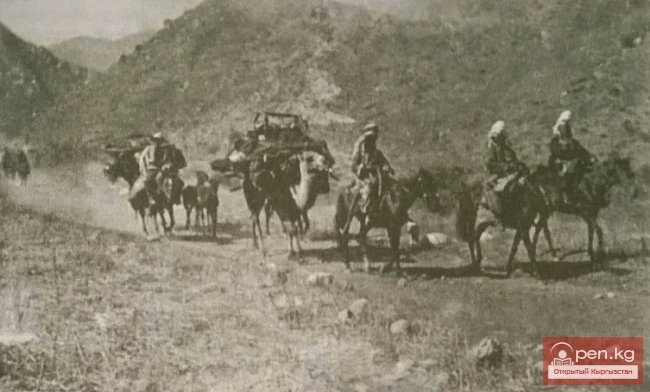
Migration in the Alai Range. Early 20th century. Kyrgyz SSR HERDING The leading sector of the traditional economy of the Kyrgyz was extensive animal husbandry, which belonged to the mountain-steppe Central Asian subtype, a cultural-economic type of herders in Eurasia. This primary sector was combined with equally significant ones—agriculture and hunting. The historically established dominant type of economy absorbed the rich experience accumulated by both ancient and medieval inhabitants of

19.09.2019, 15:38
Metallurgy of Kyrgyzstan
Industry

Metallurgy of Kyrgyzstan

Ancient Metallurgy. The mastery of metal smelting in human history was a great discovery that led to the accelerated growth of productive forces in agriculture, woodworking, and metalworking; an increase in the combat capability of weaponry; the durability of household tools and weapons; and progressive economic and social changes in society. Based on archaeological sources, it has been revealed that some of the first metallic tools used by humans in 8-6 thousand BC were: awls with

09.04.2019, 09:21
Housing Conditions and Construction in Kyrgyzstan
Construction

Housing Conditions and Construction in Kyrgyzstan

Decision-making in the housing sector remains fragmented. Housing-related issues are divided among various government bodies at both national and local levels. Since gaining independence, the housing system has undergone a process of decentralization, starting with the transfer of ownership rights to the existing housing stock, housing-related services, and financial responsibility for housing to the local population. Despite decentralization, addressing housing issues, apart from housing

31.01.2019, 20:52
Development of the Mining Industry in Kyrgyzstan
Industry

Development of the Mining Industry in Kyrgyzstan

Kyrgyzstan has deep traditions in the exploration of mineral resources. As early as the beginning of the 20th century, industries for coal, oil, lead, mercury, antimony, and copper were operational. During World War II, more than 20 enterprises were engaged in the extraction of lead, antimony, mercury, gold, tungsten, arsenic, and coal. Later, the mining and metallurgy sector of Kyrgyzstan played a significant role in the raw material economy of the USSR. The share of mineral product

29.08.2015, 15:55
Mineralogy and Mining
Economy of Kyrgyzstan

Mineralogy and Mining

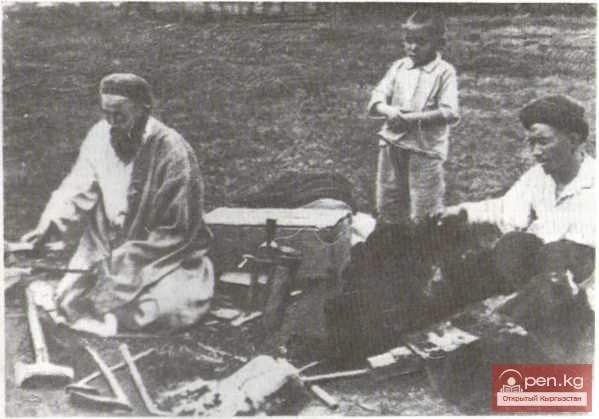
The forge of the zergers. Mid-19th century. The photo is kept in the State Historical Museum Animal husbandry as the main occupation of the Kyrgyz defined the entire way of their life, which is why crafts compatible with a nomadic lifestyle developed and spread among them. This factor significantly determined the uniqueness of the development of the material and spiritual culture of the Kyrgyz people. The influence of the nomadic way of life also reflected in the primitive forms of mining that

27.08.2015, 18:13
Indicators of the Population's Standard of Living
Economy of Kyrgyzstan

Indicators of the Population's Standard of Living

Over the past five years, there has been a noticeable increase in the main indicators of the standard of living of the population in the social sphere of the state. Thus, from 2009 to 2013, the average per capita monetary income of the population, according to the sample survey of household budgets, increased by 1.4 times. In 2013, the monetary income of the urban population exceeded that of rural residents by 1.3 times, amounting to 3978.85 and 3002.5 soms per month per capita, respectively.

16.06.2015, 13:39
Building Materials
Economy of Kyrgyzstan

Building Materials

Before 1917, there were 6 semi-artisanal brick factories in Kyrgyzstan, mostly operating seasonally, and one lime burning factory. In 1922, the brick production amounted to only 0.4 million pieces, and in 1924 — about 1 million pieces. A small amount of tiles and lime were produced. In 1927, the construction materials industry in the republic was represented by a brick factory that was part of the "Kyrgyzstroyobedineniye," and artisanal production within the system of the industrial

15.06.2015, 11:29
Market of Services and Trade
Economy of Kyrgyzstan

Market of Services and Trade

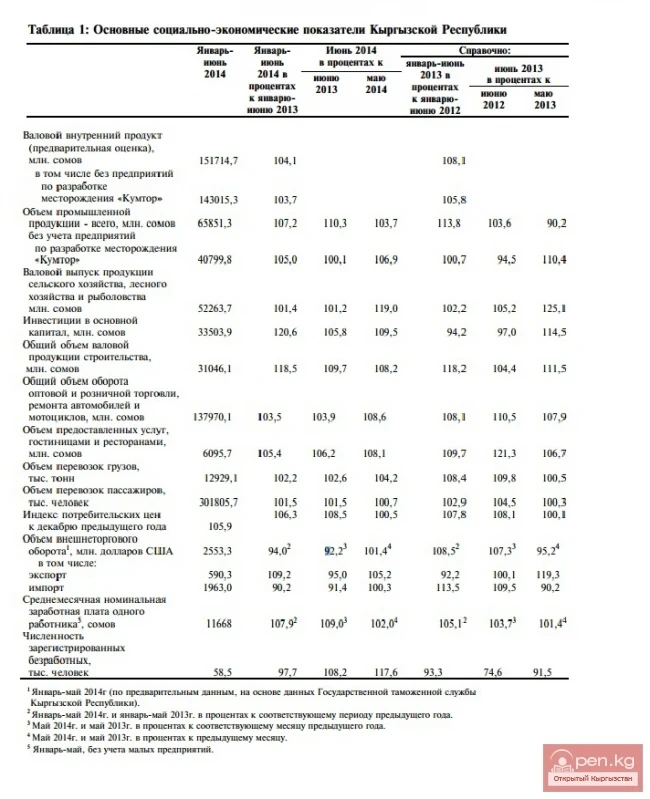
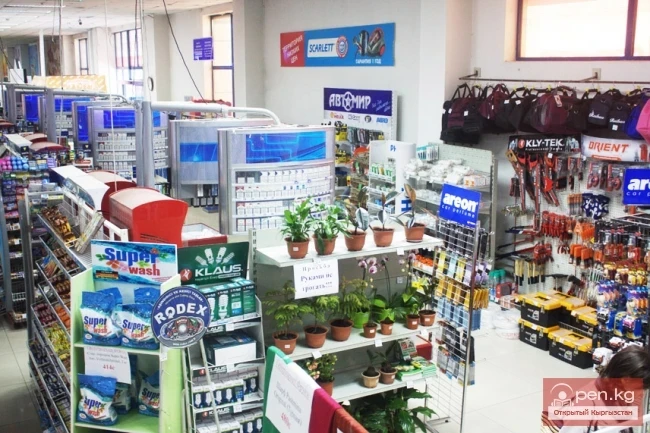
The volume of market services provided by economic entities in January-June 2014, according to preliminary estimates, amounted to 191.2 billion soms, which is an increase of 3.3 percent compared to January-June 2013. Overall, the turnover of wholesale and retail trade per capita in the republic in January-June of this year amounted to 18,045 soms. However, while in Osh city the turnover exceeded the average republican indicator by 2.4 times, in Bishkek by 2.1 times, and in Chui region by 1.2
15.06.2015, 11:12
Agriculture of the Southern Kyrgyz in the 19th - Early 20th Centuries.
Agriculture

Agriculture of the Southern Kyrgyz in the 19th - Early 20th Centuries.

The second half of the 19th century and the beginning of the 20th century were filled with significant historical events. The Kyrgyz population repeatedly rose against the oppression of the Kokand Khanate. After its fall, the territory of Southern Kyrgyzstan became part of Russia (1876). Gradually, patriarchal-feudal relations began to break down, and the seeds of capitalism emerged. Trade intensified, and industrial enterprises appeared, particularly coal mines. Cotton cultivation began to

15.04.2015, 13:15
Production of Livestock Products as of March 1, 2015
Agriculture

Production of Livestock Products as of March 1, 2015

Meat Production. During the reporting period of 2015, economic entities of all categories in the republic produced 55.6 thousand tons of meat in live weight, which is 888 tons or 1.6% more than the corresponding period of the previous year. The increase in meat production occurred mainly due to an increase in the number of agricultural animals, except for pigs, as well as due to the provision of preferential loans to the livestock sector in 2014 amounting to 4,177.0 million soms, which

14.03.2015, 06:41
Water Management
Agriculture

Water Management

In the system of water use and water consumption, intra-economic and inter-state water relations, the Law of the Kyrgyz Republic "On Water," adopted on January 14, 1994, with some amendments and additions made in 1995, has been approved and is in effect. Its main feature is that it established the payment for natural resource use rights, as well as for water supply services and for discharges of pollutants into water bodies and water management structures, within the established

03.11.2014, 14:11
Agriculture
Agriculture

Agriculture

Grain farming is one of the main sectors of agriculture. Economic difficulties in agriculture over the past few years have also affected grain farming. Agriculture has not been adequately supplied with machinery, and the number of tractors and grain harvesters has decreased. To develop grain farming, the use of mineral and organic fertilizers is necessary, which contributes to increased yields. Due to the worsening economic situation, most farms were unable to purchase the now expensive

03.11.2014, 13:46
Woodworking Industry
Industry

Woodworking Industry

The share of the forest, woodworking, and pulp and paper industry of the republic in 2000 was: by the number of employed workers 1.0%; by product output — 0.6%; by the value of fixed assets — 0.7%. Despite this, the industry is of great importance as it provides the population with essential items made from wood, widely used in everyday life.

30.10.2014, 21:04
Food Industry
Industry

Food Industry

The food industry of pre-revolutionary Kyrgyzstan was represented by several small artisanal enterprises: mills, oil presses, and breweries, as well as salt mines. By the time the Kara-Kyrgyz Autonomous Region was established, there were only 28 enterprises here. Before the war, the food industry of the republic grew significantly. New sectors emerged: meat, dairy (14 butter and cheese factories), sugar, winemaking, baking, and others.

29.10.2014, 21:43
Light Industry
Industry

Light Industry

The light industry of Kyrgyzstan encompasses its three sectors: textile, garment, and leather-footwear. It accounts for 24% of the industrial workforce and 30% of the gross output of all industries, which ensures its priority in the economic potential of the republic. Before the October Revolution, there were only a few private semi-handicraft enterprises in Kyrgyzstan for the primary processing of agricultural raw materials—wool washing and cotton cleaning points. During the pre-war five-year

29.10.2014, 21:27
Machine Engineering and Metalworking
Industry

Machine Engineering and Metalworking

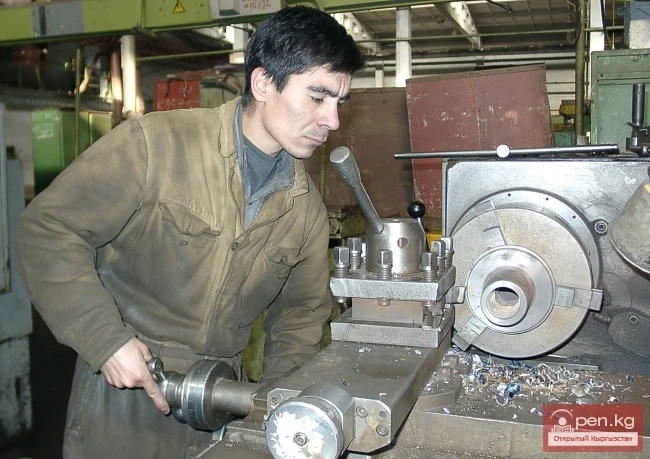
In Kyrgyzstan, among metalworking enterprises, a repair and mechanical plant was commissioned in Bishkek in 1931. In the 1930s, the metalworking industry developed at an accelerated pace. From 1928 to 1940, the gross output of the industry increased by 10.4 times, while that of metalworking increased by 26.1 times. During this period, the foundation of domestic machine engineering was formed. Machine engineering developed particularly rapidly during the Great Patriotic War based on evacuated

29.10.2014, 16:35
Mining Complex
Industry

Mining Complex

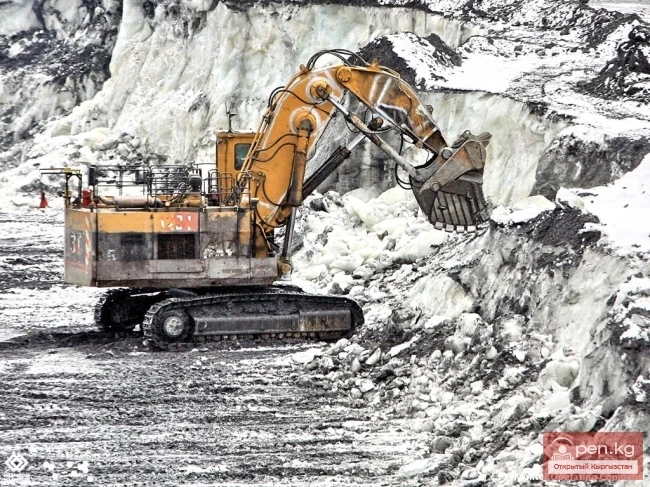
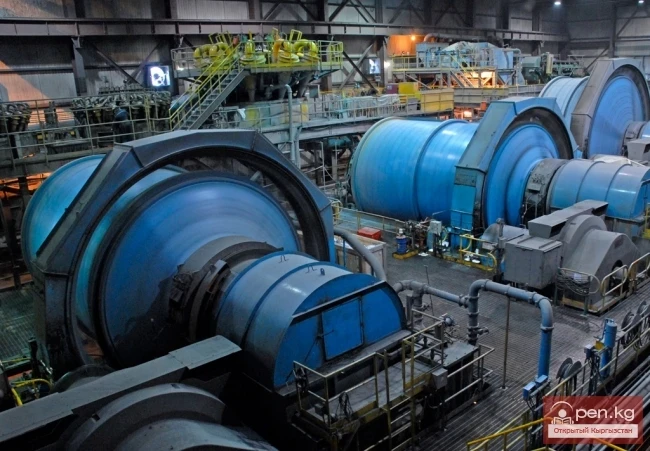
The traces of ancient mining operations in the territory of Kyrgyzstan indicate that mercury, lead, zinc, gold, copper, etc. have been extracted here since ancient times. The volume of extraction of certain minerals speaks to a significant level of work during those times (for example, at the lead mines of Kana and Guta). Gold was historically mined in the Turkestan Range, in Chatkal, Uzun-Akmate, Talas, Suusamyr, Issyk-Kul, and other places. Before the collapse of the USSR, Kyrgyzstan was

26.10.2014, 00:00
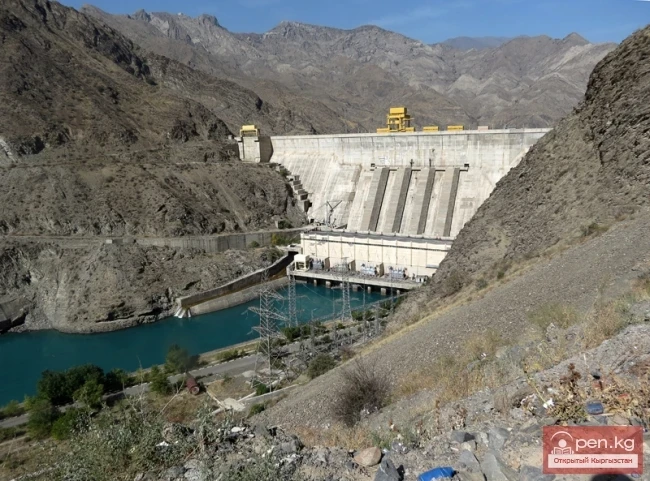
Electric Power Industry
Industry

Electric Power Industry

Before 1917, the electric power industry in Kyrgyzstan, as a separate branch of industry, hardly existed. In 1913-14, only 5 small power plants operated with a total capacity of 265 kW: the thermal station of the Kyzyl-Kyisky coal deposit (121 kW), two hydropower plants in the city of Osh (120 kW), the Bishkek diesel power station (16.5 kW), and the Karakol diesel power station (7.5 kW).

25.10.2014, 23:40
Fuel Industry
Industry

Fuel Industry

The Republic has a significant amount of diverse fuel and energy resources. Involving them in production allows for gradually addressing the issues of reducing the import of energy carriers from other countries and increasing the efficiency of the fuel and energy complex, which consists of two major sectors: fuel production (coal, oil, gas extraction) and electric power generation. The fuel and energy complex represents an inter-industry system for the production of fuel and energy, including

24.10.2014, 22:57
The Industry of Kyrgyzstan
Industry

The Industry of Kyrgyzstan

The development of Kyrgyzstan's industry began even before the October Revolution. In 1913, the share of industrial production was 3%. Before the revolution, compared to Russia, industrial output per capita in Kyrgyzstan was 16 times lower. The industry, based on artisanal production, was engaged in the processing of agricultural raw materials (86.5% of total industrial output). Before the revolution, there was 1 artisanal candy factory, 2 breweries, and 2 tanneries operating in

24.10.2014, 22:41
Labor Market in Kyrgyzstan
Economy of Kyrgyzstan

Labor Market in Kyrgyzstan

Wages and Labor Market. In January-May 2014, the average monthly nominal wage of one employee (excluding small enterprises) amounted to 11,668 soms, increasing by 7.9 percent compared to January-May 2013, while its real value, calculated taking into account the consumer price index, rose by 1.9 percent.

14.08.2014, 14:53
ABDRAKOV Kubanychbek Kasmakunovich. Architect of the city of Cholpon-Ata
Construction / Famous personalities of Kyrgyzstan

ABDRAKOV Kubanychbek Kasmakunovich. Architect of the city of Cholpon-Ata

ABDRAKOV Kubanychbek Kasmakunovich Architect. Born in 1951 in the village of Bosteri, Issyk-Kul region of the Kyrgyz SSR. In 1975, he graduated from the architectural and construction faculty of the Frunze Polytechnic Institute. After graduation, he began his career as an architect in the production and economic group of the Issyk-Kul District Executive Committee, then worked as the head of the production economic group of the Cholpon-Ata City Executive Committee. Later, he was the architect

14.08.2014, 12:00
Tasks for the Development of Villages and Rural Settlements at the End of the 20th Century
Construction

Tasks for the Development of Villages and Rural Settlements at the End of the 20th Century

An architect in the field of management is a socially active individual, programming activities in their industry. The State Construction Committee of the Kyrgyz SSR is the body regulating the activities of design organizations and construction. The range of issues is diverse — this includes the creation of district planning projects, master plans for cities, district centers, settlements, villages, construction projects, individual building projects, expertise of project solutions, selective

14.08.2014, 11:24
Volume of Gross Construction Output in the First Half of 2014
Construction

Volume of Gross Construction Output in the First Half of 2014

The total volume of gross construction output in January-June 2014 amounted to 31,046.1 million soms, which is 18.5 percent more than in January-June 2013. In June of this year, compared to June of last year, its volume increased by 9.7 percent and amounted to 6,923.2 million soms. In January-June 2014, compared to the corresponding period in 2013, the volume of investments in fixed capital increased by 20.6 percent (in comparable prices) and amounted to 33,503.9 million soms, in June of this

13.08.2014, 21:13
Volume of Industry for the First Half of 2014
Industry

Volume of Industry for the First Half of 2014

In the first half of 2014, industrial enterprises produced goods worth 65,851.3 million soms, with a physical volume index of 107.2 percent compared to the first half of 2013. Excluding enterprises involved in the development of the Kumtor deposit, the figure was 40,799.8 million soms, or 105 percent, with a 103.7 percent index as of May 2014. In June 2014, industrial production amounted to 11,357.5 million soms, with a physical volume index of 110.3 percent compared to June 2013. Excluding

13.08.2014, 19:58