Chips, Electronics, and Control
Rare earth metals, consisting of 17 chemical elements, are rarely found in large quantities. Their demand is explained by their use in the production of smartphones, electric vehicle batteries, weapons, and alternative energy. Therefore, for many countries, access to these resources is becoming strategically important.As of today, about 44 million tons of rare earth metals are located in China, which controls a large portion of global supplies. This is followed by Brazil with 21 million tons, Canada — 14 million, Russia — 10 million, India — 6.9 million, Australia — 5.7 million, and the USA — 3.6 million tons. Meanwhile, the Russian Federal Agency for Subsoil Use estimates reserves in Russia at 28.7 million tons.
According to Investing News Network, global production of rare earth metals in 2023 increased by 84% over the past five years, reaching 350 thousand tons (compared to 190 thousand tons in 2018). The majority of this production also belongs to China. This year, the PRC limited the export of several heavy rare earth metals and magnets necessary for the automotive industry.
“The USA is interested in cooperating with countries that have rare earth metal reserves. China remains a monopoly in both reserves and supplies. Due to tariffs and sanctions, as well as recent statements from China about halting supplies to the USA and Europe, America is seeking alternatives,” said Kaktus.media Duishenbek Kamchybekov, head of the board of the Association of Miners and Geologists.
Central Asia in the Spotlight of Europe and the USA
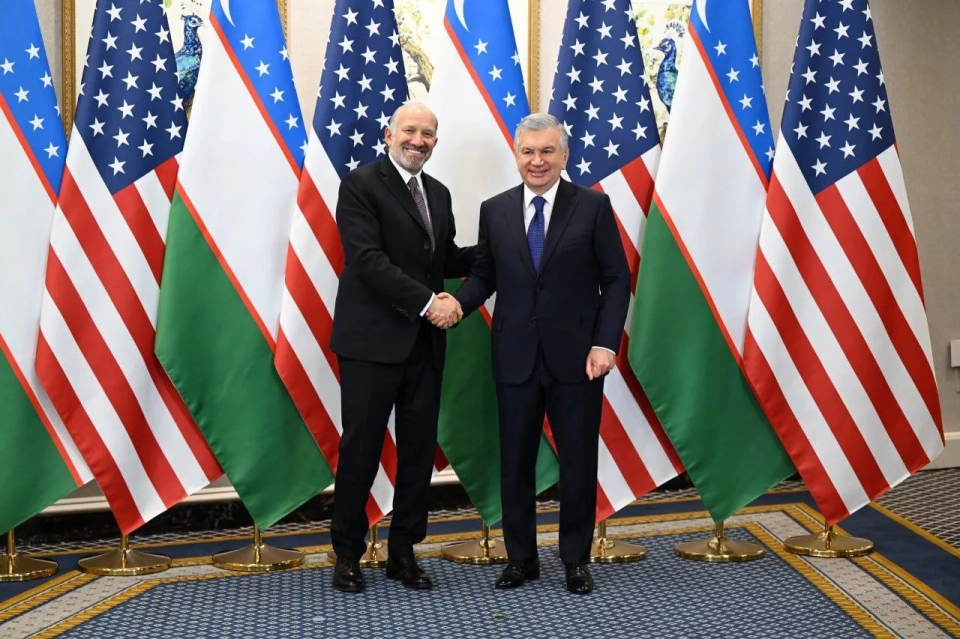
Why have rare earth metals attracted special interest from the USA and Europe? The answer lies in long-calculated economic benefits. In 2012, the US Geological Survey began studying the mineral potential of rare earth elements in Central Asia, completing it in 2016 with an update scheduled for November 2025. The final list included 384 deposits, of which 160 are in Kazakhstan, 75 in Kyrgyzstan, 60 in Tajikistan, 2 in Turkmenistan, and 87 in Uzbekistan.In November 2016, the presidents of Central Asia met at the invitation of US President Donald Trump at the “C5+1” summit. As a result, Trump announced the beginning of “new wonderful relations” between the USA and Central Asia.
“The USA seeks to reduce dependence on China, actively establishing supply chains for lithium from Canada, Australia, and other countries, and is also looking for new sources of raw materials. This explains the friendly attitude of the American president towards our countries, which can diversify the supply of necessary resources,” emphasized analyst and political scientist Kalnur Ormushev.
Kyrgyzstan's Opportunities
Kyrgyzstan has resources that may interest the global market. The country intends to develop its mining sector in this direction. In January 2024, President Sadyr Japarov signed a decree “On the Implementation of the National Project for the Extraction of Polymetals and Rare Earth Elements for the Dynamic Development of the Economy of the Kyrgyz Republic.” Under this document, the government was tasked with creating a specialized scientific and production organization based on “Kyrgyzgeology,” conducting detailed studies of promising deposits, and establishing cooperation with technology companies to implement modern technologies in the extraction and processing of metals.Ruslan Kalilov, Deputy Director of the Kyrgyz Geological Service, reported on plans to attract investments in the critical minerals sector, noting that a development strategy for this area is being developed.
Kyrgyzstan has the following rare earth metals:
- cerium (Ce);
- lanthanum (La);
- neodymium (Nd);
- yttrium (Y);
- samarium (Sm);
- gadolinium (Gd).
Kyzyl-Ompol is currently being explored for rare earth metals. “Kyrgyzgeology” is actively working on recalculating reserves.
Northern Akbash (antimony-fluorspar ores) continues geological exploration, with estimated antimony reserves of 16.7 thousand tons and 655 thousand tons of fluorspar.
Zardalek and Katranbashi are two promising sites with bauxite reserves that can be used for supplies to aluminum plants in Tajikistan.
“Critical minerals are of immense importance for the modern economy and technology. They are used in low-carbon technologies such as solar panels, wind turbines, and electric vehicles. However, there is a risk associated with limited reserves and disruptions in supply chains,” noted Ruslan Kalilov.
The Need for Exploration and Investment
“In the past, during the Soviet era, we actively developed the Kutessai I deposit located in the Kemin district. Kyrgyzstan was the only country supplying elements such as yttrium, terbium, and samarium. However, after the collapse of the USSR, the enterprise faced serious problems, leading to its closure,” said Duishenbek Kamchybekov.The deposit was developed by open-pit mining and reached a depth of 250 meters. Economic impracticality led to its closure.“There were attempts to resume operations, foreign investors showed interest, but unsuccessfully. Currently, the reserves on the balance are about 50 thousand tons, the development license belongs to 'Kyrgyzgeology,' which is looking for a potential investor. There is interest, but how to realize it — time will tell,” added Kamchybekov.
At the moment, we have no other well-explored deposits.“There are manifestations in the regions, but financing and exploration are needed to determine real reserves,” concluded Duishenbek Kamchybekov.