The First Experience Was Rushed
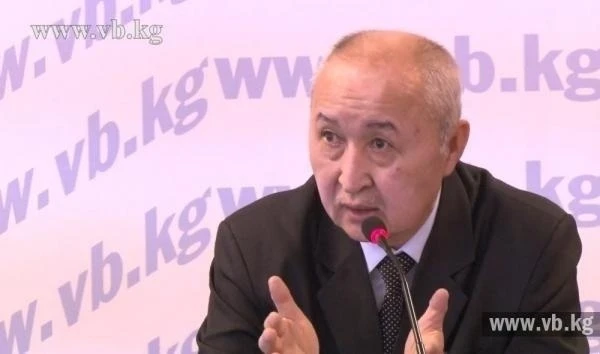
Nurguyl Salieva, Deputy Director of the State Enterprise "Salyk Service," noted in a conversation with business representatives that the first version of the system was developed under tight deadlines and without prior experience. "At that time, we did not have sufficient knowledge, and taxpayers often could not reach a consensus. Now we understand the mistakes, and we want to hear the opinions of businesses at the very beginning of the development," she added, emphasizing that all stakeholders can submit their proposals.Access Issues with the System
One of the main complaints about the current version of the EIS is the excessively short session time. Users lose access to the system after a few minutes of inactivity, which creates difficulties for companies with a high volume of operations, where accountants process numerous invoices in a row. In the "Taxpayer Cabinet," this problem does not exist, as sessions can last much longer.Representatives of "Salyk Service" explained that fixing this in the current version is impossible, but in the new version, they plan to integrate the EIS into the "Taxpayer Cabinet," which should eliminate the issue of users being "logged out." This will also help reduce the time required for registration in the EIS, which currently must be waited for after submitting applications to the tax office.
Issues with Advance Payments
Entrepreneurs also expressed dissatisfaction with the need to issue a large number of EIS invoices, especially in large companies, where up to 10,000 invoices are processed daily. This requires constant verification of who has paid and closed documents, placing a significant burden on accountants.Since the beginning of the year, a requirement has been introduced for single tax payers to pay tax on advances, but the reporting is organized in such a way that all information is consolidated into one cell, complicating data reconciliation. Businesspeople proposed eliminating the need to issue separate EIS invoices for each advance and adding a separate line for "Advances" in reports.
Non-standard Situations and Tax Regimes
Additionally, businesses suggested that the tax service take on the role of an arbitrator in non-standard situations. For example, there was a case where a company issued an EIS invoice for an advance and paid taxes, but the counterparty inexplicably rejected the document. Later, the seller switched to a "simplified" regime, and the buyer could not obtain the document for VAT offset, as the system blocked the actions.To address such cases, businesses proposed the following measures:
- the issuance of a special "tax invoice" by the tax service confirming the payment of taxes;
- the ability to change the status of the document from "Rejected" to "Accepted" upon mutual request of the parties.
The Need for Service Unification
A separate problem has been the lack of convenient automation for large companies. Accountants have to work with several systems simultaneously, such as the "Taxpayer Cabinet," EIS, and electronic signature services, entering the same data on different platforms.Business representatives were interested in when a unified system would be developed to combine all services. Shamsybek Kachkynbai uulu, Director of the State Enterprise "Salyk Service," reported that work on the new system is already underway. "Taxpayers will receive one platform where all functions related to invoices and tax reporting will be available, as well as support for all officially verified types of electronic signatures," he added.