Kaktus.media publishes the full text of the appeal:
“Dear Sadyr Nurgozhoevich!
On behalf of the business community, we express our respect and gratitude for your openness to dialogue and support in matters of developing the investment climate, and we hope for further cooperation.
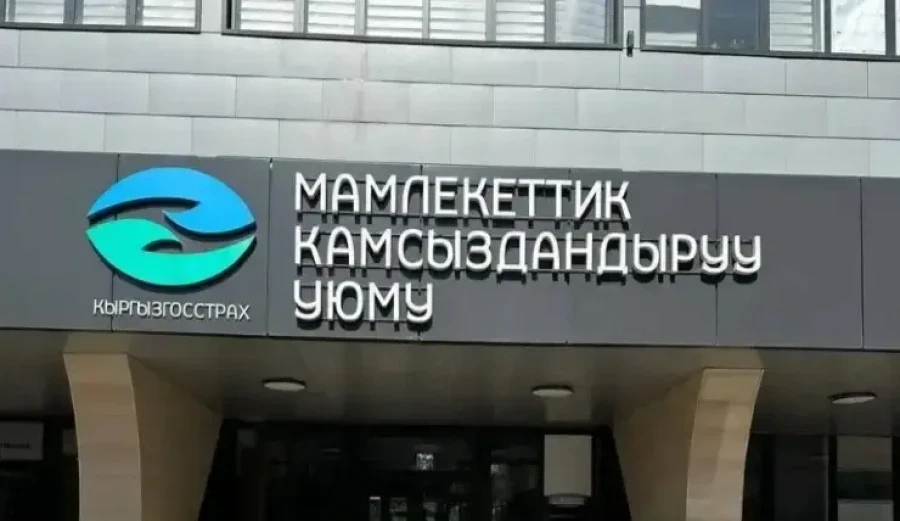
We express our concern regarding the current discussion of the draft resolution of the Cabinet of Ministers of the Kyrgyz Republic “On the designation of JSC ‘State Insurance Organization’ as the national operator for reinsurance.” Despite the stated goals of developing domestic reinsurance and reducing the outflow of insurance premiums, the project raises serious doubts regarding its support for the economic security of the Kyrgyz Republic.
The proposed structure effectively creates a quasi-monopoly reinsurance institution, which increases regulatory risks and heightens the insurance market's dependence on a single state participant.
1. Contradictions between the stated and actual goals of the project
One of the main goals of the national operator for reinsurance is to reduce dependence on international markets and improve financial stability. However, the mechanisms provided in the project do not support these goals.For example, paragraph 10, subparagraph 12 of the project establishes that the national operator will interact with international reinsurance companies, which effectively maintains dependence on external markets.
2. Risks of structural limitation and dependence
The project creates a narrow “bottleneck” for the entire insurance market, concentrating all reinsurance operations with one state operator.This means that insurance organizations become dependent on the decisions of the national operator, creating systemic risks and threats to business.In the event of delays or failures in the national operator's operations, this will negatively affect all insurance companies and their clients.
3. Problems of reinsurance capacity concentration
There are concerns about the goal of ensuring reinsurance capacity through the concentration of risks with one operator, which may increase systemic risks.Risk diversification is a fundamental principle of insurance, and concentration contradicts this principle.In the case of natural disasters or other major events, the entire market will depend on payouts from one operator, which could lead to delays and a loss of trust in the system.
4. Conflict of interest in the State Insurance Organization
The national operator for reinsurance also functions as a direct insurer, creating a conflict of interest and unequal competitive conditions.5. Functions of the supervisory authority over the economic entity
The national operator will receive powers to oversee the activities of insurance companies, which may undermine competition principles.6. Problems with fronting projects
Mandatory risk redistribution through the national operator creates difficulties for fronting projects and may lead to a loss of clients.7. Timelines for risk assessment
The established timelines for risk assessment (5 working days) raise concerns, as decisions in international practice are made much faster.8. Unacceptability of borrowing experience from other countries
The project borrows the experience of countries under sanctions, which is impractical for the Kyrgyz Republic, which has access to international markets.9. Conclusion
In light of the above, the business community considers the draft resolution to be inconsistent with the stated goals and creating serious risks for the insurance market.The system proposed in the draft may lead to administrative dependence and the displacement of private insurance companies.These factors may negatively impact the economic security of the country and the standard of living of its citizens.
The development of reinsurance capacity is impossible through administrative measures and monopolization. Market mechanisms and a competitive environment are necessary for the sustainable development of the insurance market and the Kyrgyz Republic as a whole.
Respectfully,
- National Alliance of Business Associations (NABA) (on behalf of 89 members of the alliance) - M. B. Satarov;
- International Business Council - A. K. Sydykov;
- Union of Entrepreneurs of Kyrgyzstan - M. B. Satarov;
- Association of Markets, Trade Enterprises, and Services of Kyrgyzstan - S. V. Ponomarev.
- Association of Communication Operators - S. Ormoshev;
- Union of Electric Transport Users "ELTRANS" - I. Sharshiev;
- Association of Small Hydropower Plants - E. Borombaev;
- Business Association JIA - G. Satybaldieva;
- Association of Cross-Border E-Commerce and Logistics of the Kyrgyz Republic - M. Salakhunov;
- Association of Light Industry Enterprises of the Kyrgyz Republic "Legprom" - S. Asanov;
- Association of Customs Brokers of Kyrgyzstan - I. Geletyuk;
- Association of Suppliers of Kyrgyzstan - G. Uskenbaeva;
- Association for the Development of the Agro-Industrial Complex of the Kyrgyz Republic - R. Baltabaev;
- Union of Jewelers and Entrepreneurs of the Kyrgyz Republic - S. Akmatov;
- Union of Small and Medium Business Entrepreneurs of Tokmok - B. Sydygaliev.