According to local legends, this area is full of stories. In June 1976, artists visited here for a concert, and the locals greeted them with respect and hospitality. The guests, impressed by the beauty of nature, stayed overnight. In the morning, the improvisational akyn Estebes Tursunaliev, a renowned People's Artist of the USSR, exclaimed: "Here, a person probably does not die," reflecting the first impressions of many who visit this region for the first time.
Rahman Karabaev, a retired police lieutenant colonel, shared details about the history and notable figures of this aimak. It is known that the Nookat district was founded in 1928, and in December of the same year, the Kok-Bel dairy farm was established. According to the elders' memories, about 500-600 people lived here, and at the time of the farm's establishment, there were only four farms. After the revolution, the resettlement of Russians began.
State support provided the farm with access to new equipment. Horses were bred for agriculture and cows for dairy products, and purebred animals were brought in from other regions. By the 1930s, tractors, threshers, and mowers were arriving at the farm, which were quickly mastered by the locals.
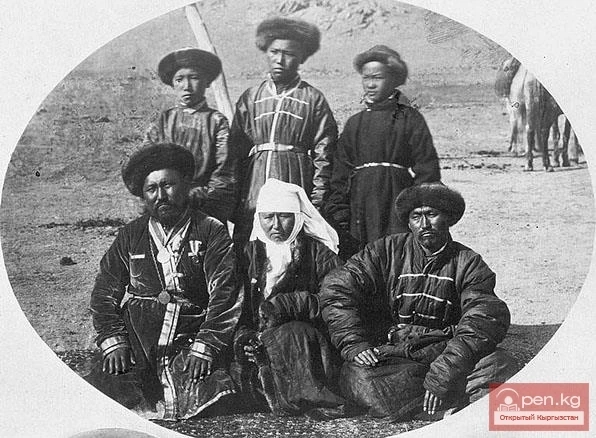
Shermat Kebekov, a well-known communist and progressive worker, became one of the first Kyrgyz to master this equipment. He worked in this field for about 50 years and was even elected chairman of the village council during the war, continuing his agricultural activities.
In the park by the farm club stood a monument to I. Stalin, which was removed by Shermat ake in 1961 and placed in his stable, where he took care of it.
In the past, the Kok-Bel farm was famous for its high yields due to favorable agricultural conditions. The black soil and the availability of equipment contributed to the successful cultivation of wheat, barley, and other crops. Despite the hardships during the famine and war in the 1930s, the farm residents did not experience food shortages, as they used the remaining grain for their own needs.
During these difficult times, residents from various regions began to resettle in the farm, including Balkars who were evacuated from the Caucasus in 1944. Their hard work and friendliness helped strengthen ties with the local population. In the 1930s, Kazakhs also resettled, but many of them soon returned to their homeland, while some stayed.
Kazakh Khoshtay Agibaev, who worked as an accountant, remained in Kok-Bel and got married. He lived here until the age of 90 and became the father-in-law of the famous Kyrgyz statesman Nasirdin Isanov.
In 1946, the farm was transformed into Horse Breeding Farm No. 44, followed by other horse breeding farms in the country. The focus was on breeding racehorses. With the increase in the number of horses, competitions began to be held on the farm, in which local jockeys participated.
In the 1950s, horses such as Zunay and Geography won major prizes at races. In 1969, at the races in Tashkent, a black stallion named Zapret took third place, and in the 1980s, Sary-Tash set a record for Kyrgyzstan.
A nurse named Maria Averyanovna Lebedova also worked in the village, and her contribution to the health of the population was immense. She continued her work even after retirement, remaining in Kok-Bel until her death.
In 1956, after rehabilitation, Balkars began to return to their historical homeland. Their departure was a cause of sorrow for the locals, who remembered their kindness and humanity. Only those who married Kyrgyz and started families remained in Kok-Bel.
____________
In 2018, Turmush reported how Chyngyzbek from Nookat is engaged in breeding purebred horses, which cost over a million soms. To this day, the Nookat district remains known for its local horse breeders, who continue to buy and breed thoroughbred horses.