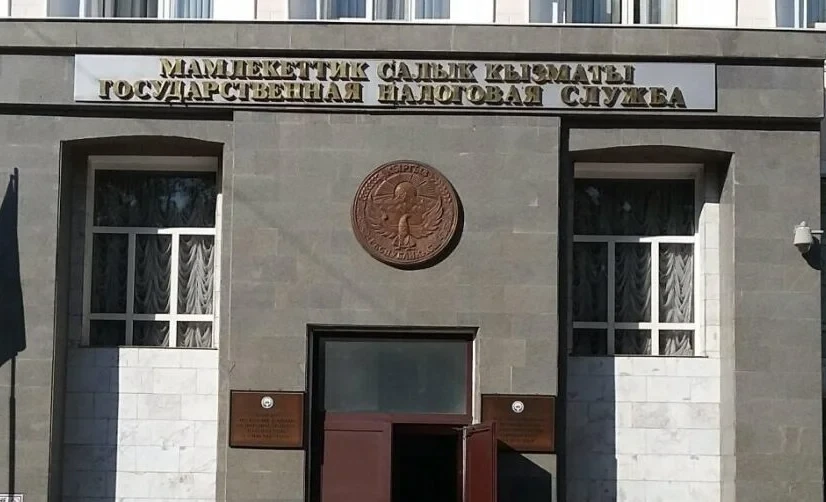
The State Tax Service of the Kyrgyz Republic announced the launch of an analytical system called "Salyk Kuzot," which aims to enhance the transparency of tax administration, reduce corruption risks, and create fairer conditions for businesses.
At a press conference, the Deputy Chairman of the GNS KR, Jienbekov Bakyt Muratovich, noted that this system was developed in response to long-standing systemic issues faced by tax authorities.
He added, "Previously, a significant portion of analytical work was done manually, and information was scattered across various systems, making it difficult to form a complete picture. This created opportunities for abuses and collusion between unscrupulous businessmen and certain employees. We aimed to find a technological solution to minimize the human factor," he emphasized.
According to Jienbekov, "Salyk Kuzot" is aimed at reducing the burden on businesses by decreasing the number of inspections and minimizing direct interactions with inspectors.
The system integrates data from the State Customs Service, electronic invoices, waybills, and other state resources, eliminating the possibility of manipulation with disparate information.
"Kuzot does not make decisions and is not a tool for punishment. It is an analytical tool that identifies signals and discrepancies in data that inspectors should respond to," he noted.
The Director of the State Enterprise "Salyk Service," Shamsybek Kachkynbay uulu, explained the principles of the system's operation.
"This is a platform that automatically matches data from various state systems. We designed it so that the system itself 'speaks' — it raises questions about discrepancies and notifies specialists," he added.
According to him, with the right analytical settings, "Salyk Kuzot" can monitor economic trends in real-time, identify new tax evasion schemes, and respond promptly to emerging risks.
Particular attention was paid to the function of monitoring the actions of inspectors. If the reporting appears correct at first glance, but actual payments do not match the declared data, the system records such discrepancies.
The head of the analytical work department of the GNS KR, Mamadaliev Bek, noted that the use of machine data processing significantly speeds up analysis and allows for a shift from reacting to consequences to preventing violations. "Kuzot" does not make decisions but only provides hints for inspectors, and in some cases, can act as a deterrent, preventing tax concealment by businesses.
The GNS KR emphasized that the implementation of the "Salyk Kuzot" system is aimed at creating a transparent, competitive, and fair tax environment in which honest businesses will have sustainable advantages.