In Kyrgyzstan, where more than 90% of the territory consists of mountain ranges, there are about 10,000 glaciers. Only a small group of scientists, just eight people, is engaged in the study of these glaciers, among whom Gulbara Omorova stands out as the only woman on the team. She shared with Azattyk Asia her efforts to protect the glaciers from disappearing.
For Gulbara, spring and summer are times of special activity. During the season, she needs to study 10 glaciers and several dozen lakes that pose a risk of flooding.
“We monitor glaciers and natural disasters, conducting expeditions to collect data,” Gulbara shares about her work.
She is pursuing a PhD in hydrology, water resources, and hydrochemistry, and has completed an international climate protection program named after Alexander von Humboldt in Germany. Currently, Gulbara works at the Institute of Water Problems and Hydroenergy of the National Academy of Sciences of Kyrgyzstan, where she studies the impact of global climate change on the glacial system.
“The glacier has retreated almost a kilometer”
“For several years, the glaciers we study have not accumulated snow,” she reports. “In some places, their area has decreased by 30%, and in the Talas Ridge, by 40%. Talas will be the first region to face water shortages due to glacier melting, followed by Batken,” the scientist predicts.
Previously, Gulbara conducted expeditions alone, but realizing the risks, she formed a team of students who share her passion for the mountains.
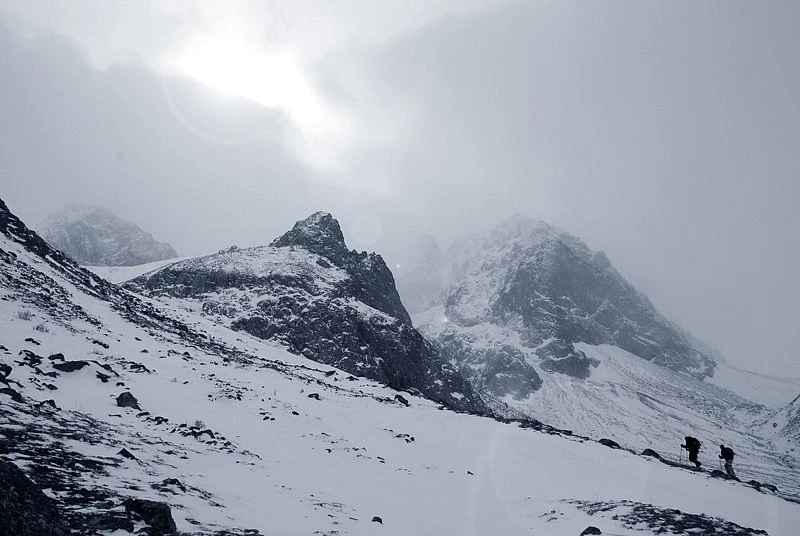
Expeditions are conducted at altitudes of over 3,700 meters. In her backpack, in addition to the necessary items, there is a 10-kilogram ice drill and other tools. Despite the challenges of climbing, Gulbara continues her scientific work.
“We analyze the snow cover of glaciers to understand what water supply can be expected in spring,” says Gulbara Omorova. “We conduct continuous monitoring of the Adygene glacier, the first studies of which began in 1964. Markers have been set up on the glacier, and according to current data, by 2024 it will retreat almost a kilometer. This is a serious indicator, as it loses about 15-16 meters each year,” the scientist adds.
The condition of the glaciers affects the groundwater level in the lowlands, the researcher says. In recent years, there has been a decrease in this level, which raises concerns.
“In the future, we may face a shortage of drinking water, as Bishkek is growing, while the infrastructure remains weak, and the climate continues to change,” Gulbara suggests.
The Adygene station, according to the researcher, is one of the two remaining research bases in Kyrgyzstan where conditions for work are still preserved. A few years ago, Czech specialists helped equip it, and now local scientists are maintaining it themselves.
In addition to glaciers, the team of scientists also monitors mountain lakes that may pose a risk of flooding. In the event of a disaster, water could reach Bishkek or flood nearby settlements, Gulbara warns.
“There are many mountain lakes in Aksai and Ala-Archa. We monitor their condition, as overflow can lead to serious consequences. Water can reach nearby villages, depending on the volume and nature of the flood,” she explains.
Lack of funding and an incident with vandals
For a long time, Gulbara's work remained out of the public eye, and she rarely shared the difficulties of her profession or the level of support from the government. The situation changed when vandals destroyed the Adygene research station.
“In April last year, we were informed that our station had been vandalized. When we arrived at the site, we saw a terrible picture. Words cannot describe how it feels. We sought help to restore everything that was destroyed. After I started talking about the problems and sharing photos from each expedition, help began to arrive: we were allocated 200,000 for the restoration of the station,” she shares.
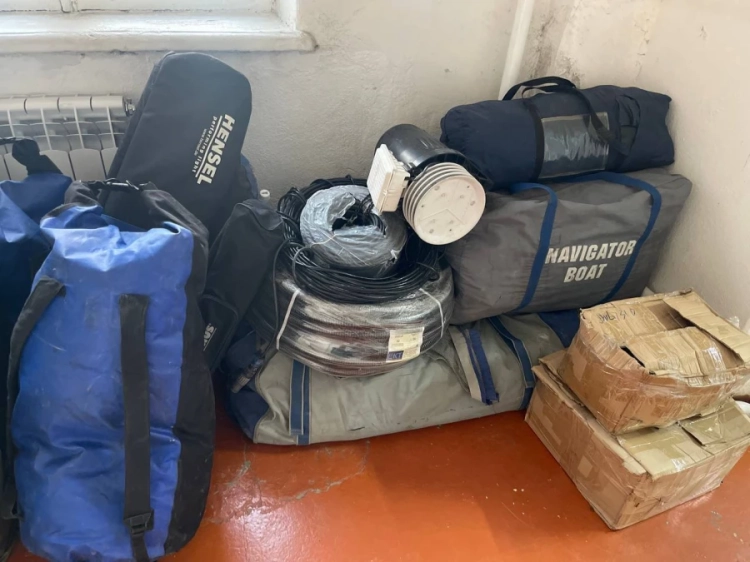
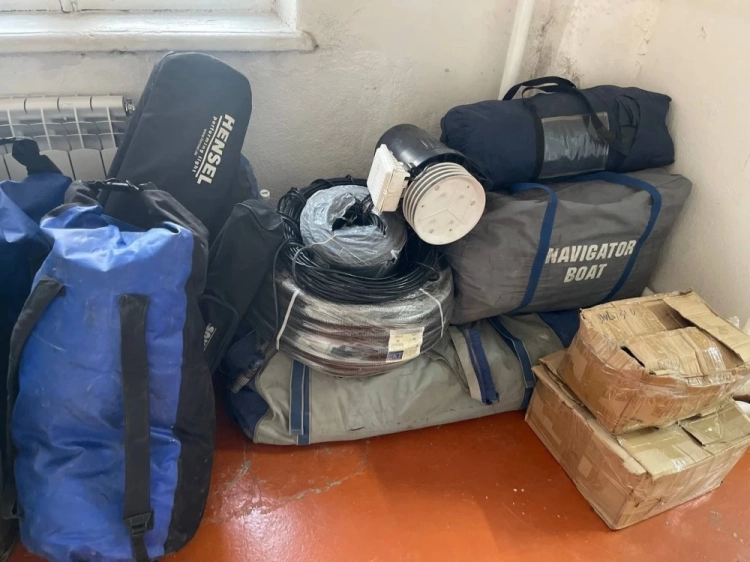
Gulbara's office in Bishkek is modestly styled, and according to her, there is no laboratory. Funding for scientific projects in the country remains low. The ice drill they use for research was acquired with the support of sponsors.
“We were able to obtain the ice drill from ‘Aiyl Bank,’ which became a sponsor. This is important for monitoring glaciers. I would like this to be noticed and for conditions to be created for us to work, as we also study flood-risk lakes at Adygene,” she adds.
“The problem requires attention”
The scientist believes that authorities at all levels should pay attention to the problem. Legislators should develop laws to protect the ecosystem, and the government should address the lack of personnel and funding.
“We cannot stop the natural process of glacier melting, but we can slow it down. It is necessary to create legislation on glaciers, stop deforestation, not build cable cars in mountainous areas, and protect reserves,” she is convinced.
Gulbara shares that she has been invited to work abroad many times, but she refuses to leave the country. Currently, she plans to write a dissertation on the glaciers and lakes of Kyrgyzstan, emphasizing that data from the 1970s is still used by scientists and authorities.
“In the 1970s, during the Soviet era, expeditions were conducted, and 8,164 glaciers were recorded at that time. However, the methodology was imperfect, and inventorying was difficult. We still rely on this data,” says Gulbara.
She also mentions that the team of scientists conducted landscape surveys ten years ago and found that many glaciers had collapsed. Today, about 10,000 remain, and they have significantly decreased in volume.
At the Academy of Sciences of Kyrgyzstan, where Azattyk Asia inquired about current work on glacier preservation, they responded that they cannot provide comments at this time.
“Glacier melting is a global problem, but our process is going faster. I participated in expeditions in Uzbekistan and Tajikistan. We share water with our neighbors, but we also experience shortages. We need to reconsider these issues. The losses are massive, and we urgently need to start improving monitoring and research,” the glaciologist is convinced.
The article “We cannot save the glaciers, but we can slow down their melting.” A female glaciologist from Bishkek on the scale of the tragedy first appeared on K-News.