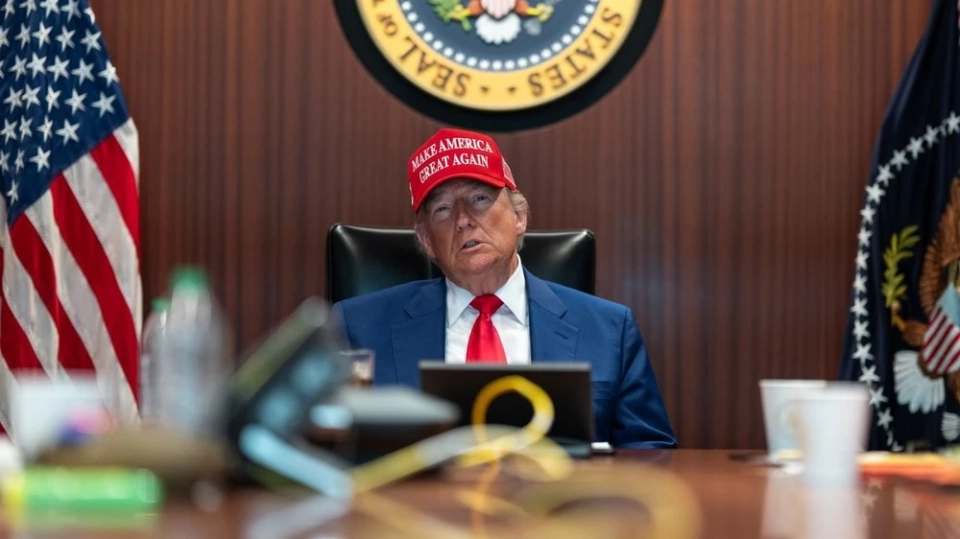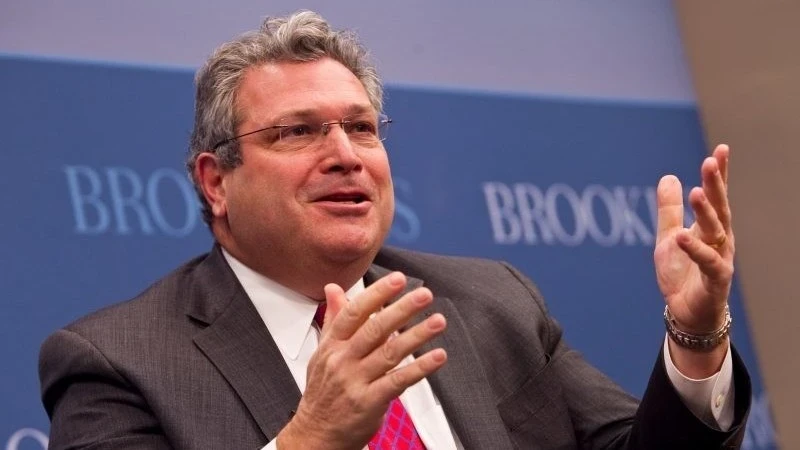
In an article set to be published in the March 2026 print issue of The Atlantic titled "Every Man for Himself," Kagan, a senior fellow at the Brookings Institution and author of the book "The Twilight of Democracy: The Seductive Lure of Authoritarianism," discusses the changes in American foreign policy that occurred during Trump's presidency.
- Kagan emphasizes that Trump's new security strategy officially marked the end of the American liberal world order, which was based on U.S. dominance. This happened not due to financial difficulties, but because the U.S. abandoned its role as a guarantor of global security.
Here is the translation of the article:
“In Trump’s new national security strategy, it is emphasized that the era of the American liberal world order has ended. The reasons lie not in the weakening of U.S. material power, but in the decision of the country itself to no longer fulfill its historical role as a protector of global security. The power of the United States, which has supported the world order for 80 years, is now being used to dismantle it.
Americans now face the most dangerous period since the end of World War II—a world that will resemble the situation before 1945, with several great powers and rising conflicts. In the absence of reliable allies, the U.S. will have to rely solely on its strength for survival. This will require an increase in military spending, as access to resources and markets, which was ensured by a system of alliances, is no longer guaranteed.
It is hard to imagine that Americans, both materially and morally, are ready for such a future. For eight decades, they have lived in a world where the U.S. played a dominant role. They have become accustomed to allies in Europe and Asia being largely compliant and passive, and cannot imagine that this could change.
Who can blame them? According to Francis Fukuyama, history "ended" in 1989 with the triumph of liberalism, and even the instinct for violence was "transformed." But why would a strong America be needed to protect what is already destined for success? Since the end of the Cold War, many critics have argued that American dominance is excessive and costly, and sometimes even dangerous.
Illusions of Multipolarity
Some analysts who support the concept of a multipolar world believe that the U.S. can maintain the advantages of its order if it learns to restrain its ambitions. They argue that multipolarity will lead to a more peaceful world and even consider the early 19th century as a model where great powers could effectively maintain peace.
From a historical perspective, this is a delusion. Even the most managed multipolar systems were more prone to violent conflicts than the world that has existed for the last 80 years. For example, between 1815 and 1914, Europe experienced numerous wars among great powers, resulting in enormous human casualties.
The modern equivalent of multipolarity is a world where major powers wage wars against each other, changing borders and threatening global stability. To believe that such a world cannot return is the height of naivety.
How the American Order Was Created
To avoid repeating cycles of conflict, Americans created a liberal world order after two world wars. They did this not to impose their rules, but because they understood that the modern world is so interconnected that the U.S. would inevitably become involved in conflicts among great powers.
No other country could take on the role that the U.S. played after 1945. Unique geography and power allowed America to maintain peace and security in Europe and East Asia. War-torn countries were able to focus on recovery and economic growth thanks to U.S. security guarantees.
Moreover, many great powers agreed to American dominance, even at the cost of their own power. After 1945, most countries involved in the world wars abandoned territorial ambitions and entrusted their security to the U.S.
This was anomalous behavior, contradicting all theories of international relations. Instead of perceiving the U.S. as a threat, many countries saw it as a partner. It was a great deal that allowed for the maintenance of peace and stability for many decades.
The End of the Great Deal
Now this deal is coming to an end. Trump marks the end of this order by asking European allies to take responsibility for their own security by 2027. His administration has unleashed tariff wars and threatens territorial aggression against allies, including Canada and Denmark.
Trump's security strategy views Russia and China not as adversaries, but as partners in the division of the world. This means that the U.S. is accepting a multipolar world where it will exercise dominance in its spheres of influence.
Trump and his allies seem confident that other countries will adapt to the new American approach. However, such a radical shift in strategy will force allies to reassess their positions.
What Will Europe Do?
Now, as Europe faces threats from both Russia and the U.S., what should it do? If history has taught us anything, it is rearmament. To protect themselves from aggression, Europeans will have to seriously reconsider their defense spending and strategies.
If Germany, Britain, France, and Poland decide to increase their military forces, they will be able to deter both Russia and the U.S. If they choose the alternative, they may face dire consequences.
The Turn of Asia
U.S. allies in Asia, in turn, also face a similar choice. Japan, for example, is beginning to doubt America's reliability. Trump's strategy, focused on the Western Hemisphere, may force Japan to reassess its defense strategies.
Recent elections of a new Prime Minister in Japan indicate the country's desire for greater independence in defense policy. South Korea and Australia are also reevaluating their strategic approaches in light of new threats.
This could lead to significant arms buildups among former U.S. allies who will no longer view America as a reliable partner. They will become independent powers, pursuing their own interests in a multipolar world.
The Return of "Normal" Germany
Germany, which today is a peace-loving democracy, may revert to a more aggressive foreign policy due to the loss of American security guarantees. Germany's neighbors may also reassess their positions, which could lead to dangerous consequences for all of Europe.
The problem with multipolarity is that everything is in question, and potential conflicts multiply. In the absence of American control, resources and spheres of influence will once again become objects of competition.
A world that was once under U.S. control may now become a battleground for conflicts. Spheres of influence will again become important, and new ambitions from Russia and China may lead to confrontations with other powers.
Thus, the future of multipolarity does not promise stability, but rather threatens new conflicts and challenges that the world may face in the coming years.