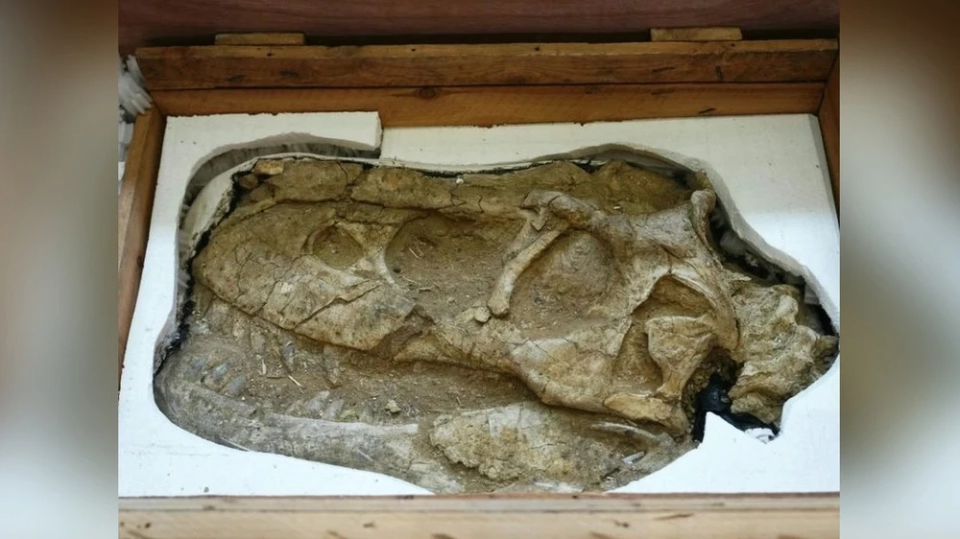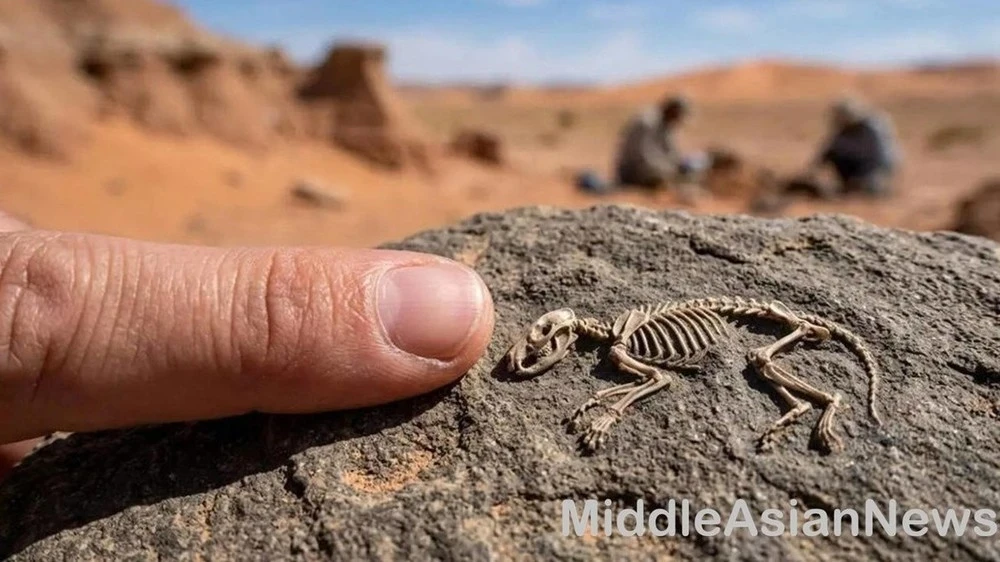
According to MiddleAsianNews, paleontologists made an exciting discovery in the Uhaa Tolgod area, uncovering an exceptionally well-preserved fossil skeleton that measures only 1 centimeter in length.
This fossil is believed to represent one of the earliest examples of so-called "micromammals" from the Late Cretaceous period.
The American Museum of Natural History (AMNH), which participated in the Mongolian-American Museum Expedition (MAME), noted that finding a complete and untouched specimen of such miniature size (about the size of a fingernail) is quite a rare event. While the teeth of such creatures are found more frequently, the discovery of whole fossils is challenging due to the fragility of the material.
The discovery of this miniature skull and limbs provides scientists with a unique opportunity to study the biodiversity of the Mesozoic era, allowing new insights into how these small ancestors coexisted with large dinosaurs. This finding sheds light on the evolution of early mammals and shows how specialized adaptations in skeletal structure allowed these tiny creatures to occupy ecological niches that were previously thought to be uninhabitable.
A fossil measuring just 1 centimeter has been found in Mongolia: this tiny artifact has been preserved since the time of the dinosaurs.
According to the American Museum of Natural History, the discovery of a fully articulated skeleton with untouched soft tissues measuring only one centimeter is an extremely rare event for the Late Cretaceous period.
The Gobi Desert is known for its large dinosaur fossil finds, and this discovery of a "micromammal" from the Late Cretaceous represents one of the few known cases, as fossils of such fragile creatures typically disintegrate under natural factors over millions of years.
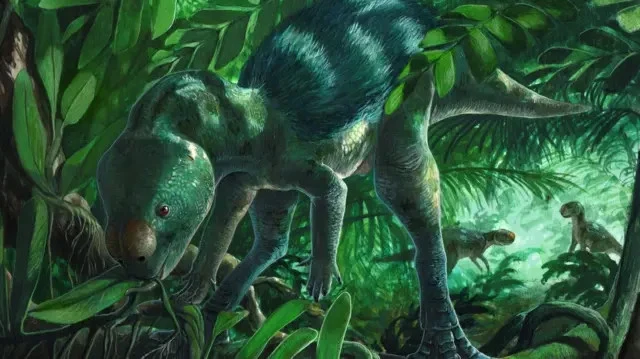
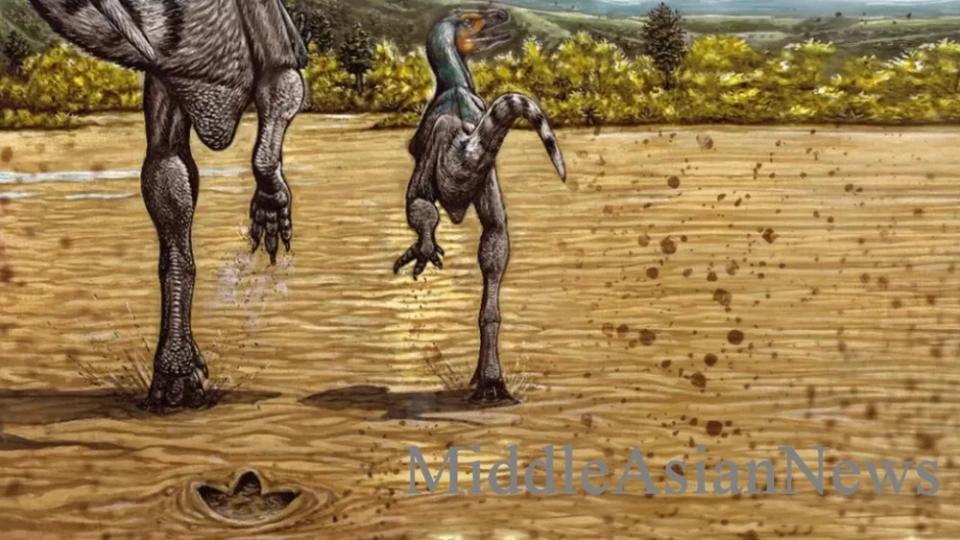
This unique creature resembles a shrew and belongs to a group of advanced Mesozoic insectivores, ancestral mammals that survived alongside velociraptors.
Reasons for Fossil Preservation
The only explanation for how such a fragile creature could be preserved is a process called "prolonged desertification."
Research shows that around 75-100 million years ago, intercontinental desertification occurred in the Gobi River basin due to the uplift of nearby mountains.
Remains of animals small enough to be buried under massive sandstorms were almost immediately covered by fine dry sand. The speed of these processes helped preserve the tiny bones from decay and washout, making them a kind of "time capsule" for nearly 100 million years.
Adaptation to Extreme Conditions
The 1-centimeter fossil is evidence of how living organisms adapted to the harsh conditions of the Gobi Desert, where a strong seasonal climate is observed. As this desert dried up, insectivorous animals were able to adapt and survive in this region without access to fresh water.
The eastern part of the Gobi basin has been identified as one of the "intercontinental" areas that experienced the most significant changes due to climate change, providing additional context for understanding how previous generations of mammals survived under conditions of extreme global warming, thanks to the found tiny fossil.
Methods for Studying the 1-Centimeter Fossil
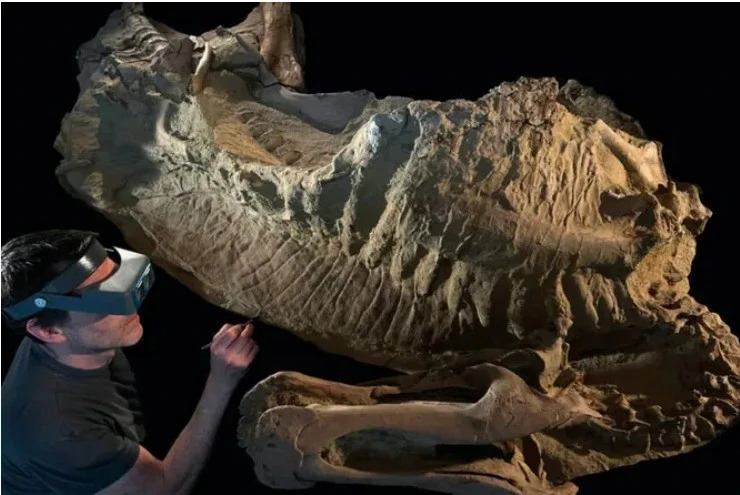
Due to its small size, scientists cannot use traditional hammers, and chisels are unsuitable due to the fragility of the skeleton.
High-resolution micro-computed tomography is used to study these specimens, allowing researchers to see through the rock and create a digital 3D model of the 1-centimeter skeleton, including all details related to the teeth and inner ear. This creates a "digital twin" of the fossil, enabling detailed study while preserving the original specimen.