The article highlights corruption in the ruling Mongolian People's Party, emphasizing the factors contributing to its decline. The author convincingly illustrates the extent of corruption that has engulfed the ruling party.
Mongolia has been facing a political crisis for the past year, characterized by a confrontation between the parliament and the president. This conflict indicates that the current state and economic model deprives citizens of the opportunity to enjoy the country's wealth, especially its mineral resources.
At first glance, Mongolia's economy shows growth: exports are hitting records, budget revenues are increasing, and the pace of economic development is impressive. However, the common people do not feel this. Six years after the winter protests that united discontent over pollution and corruption, the situation has only worsened.
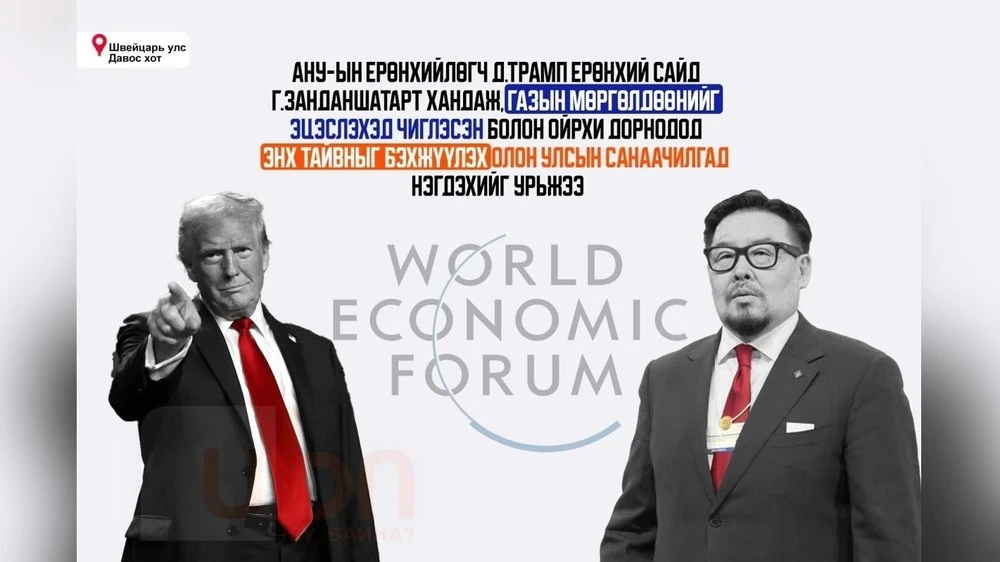
Since then, dissatisfaction with corruption in governance has led to an open constitutional crisis. In October of last year, the parliament voted to dismiss Prime Minister Zandanshatar Gombojav, just four months after he took office.
Only three days later, the president vetoed this decision, citing constitutional grounds. The Constitutional Court of Mongolia, "Tsets," confirmed the legality of the veto, pointing out violations of several procedural norms in the parliament's decision.
Western media typically cover such events in a simplified format. In early 2025, the British newspaper Times published an article about a president allegedly linked to Putin, who could organize a coup against the US-educated reformer Oyun-Erdene Luvsanamsrai, without delving into the essence of the problem.
However, the Mongolians perceive the crisis differently. They notice rising prices for food, fuel, and rent, while politicians flaunt their luxury cars and watches. Anti-corruption hearings usually end without addressing those who orchestrated the schemes.
If there was a coup, it did not happen suddenly in Ulaanbaatar. It was a slow process organized through coal contracts, logistics queues, and parliamentary lists.
From a Party-State System to a Financial Pyramid
Theoretically, Mongolia is a parliamentary democracy with a democratic constitution and separation of powers. But in practice, politics turns into what many call "nam-tör": a hybrid of a party system and state, where the ruling Mongolian People's Party controls the main levers of power.
"Dissatisfaction with the plundering of state resources in Mongolia has led to an open constitutional crisis."
Entry into the party list or appointment to a key ministry is perceived as a kind of "investment."
You finance the election campaign, demonstrate your loyalty, "carry the bag" for the faction leader, and in return, gain access to procurement, licenses, appointments, and shares in large projects. Official rules still apply, but alongside them exists an unwritten code of factional obligations and behind-the-scenes deals.
For this reason, many residents of Mongolia have stopped using the term "corruption" in its narrow sense. They understand that corruption means a deviation from the principles of a healthy system. Instead, society sees a system where the main principle is rent extraction, and patron-client networks penetrate bureaucracy and political parties, undermining formal power.
Cleaner Prices, Better Deals
A vivid example of this is coal contracts and procurement agreements. In a typical contract, the buyer commits to purchase a certain amount of coal before its actual extraction, ensuring stable income for resource-rich countries like Mongolia.
Recent revelations have shown that millions of tons of coal were sold to Chinese companies through opaque deals, primarily with the state-owned company Erdenes Tavan Tolgoi (ETT), signed by a narrow circle of trading and logistics firms. ETT manages one of the largest coal deposits in the world and plays a crucial role in the country's economy.
After the protests of winter 2022, triggered by "coal theft," the government announced its intention to bring order to this sector. The simple solution was to channel exports through an open auction platform on the Mongolian Stock Exchange (MSE) and establish transparent prices.
This worked to some extent: prices on the exchange approached those actually paid by Chinese buyers. A new law on the mining product exchange was adopted, and officials proudly presented it as a step towards transparency.
However, digging into the details, most of the coal never reaches this market. According to parliamentarian Zoljargal, about 80% of coal is still exported under long-term contracts.
At MSE auctions, mainly low-grade coal remnants with unpredictable volumes are offered. Society sees the price, but the real benefit remains out of sight.
Aggregator as a Switchboard
Supply contracts, especially those related to infrastructure projects or prepayment, allow for strategic maneuverability. At the center of many contracts is Bodi International. By examining the package of contracts related to Bodi and ETT, the overall picture becomes clear.
Many politicians and experts argue that deals through aggregators like Bodi have allowed coal to be sold at undervalued prices, with part of the revenue going to intermediaries for transportation and resale. Some contracts contain options for converting debt into equity.
If the state or state company cannot fully deliver coal supplies in the future, the creditor can exchange the unpaid amount for shares in the project company or infrastructure facility. This allows the buyer (consumer) to gain a stake in infrastructure projects, effectively securing state assets as collateral.
"Society sees the visible price, but the real benefit occurs out of sight."
Other state enterprises and their clientelist networks also strive to export as much coal as possible. This trend peaked when one faction began lobbying for the construction of a railway, while another pushed for a border port. This creates a downward spiral that freezes prices.
Considering barter financing of infrastructure projects paid for with coal, it becomes evident that a "coal mafia" system exists in the country.
Clientelism as an Infrastructure Force
During the COVID-19 pandemic, exports sharply declined, and the difference between rapid shipping and a two-week wait meant real profit. The prioritization of delivery granted to ETT effectively gave faction leaders and clientelist networks influence over the logistics queue.
One of the most complex issues was determining which cargo would pass through which border points and when. Reports confirm that customs officials, military personnel, and local administrators charged fees for their services or granted privileges to their associates. Freight companies linked to the political elite thrived, while ordinary truck drivers and businesses faced delays.
"The state does not disappear, but it disintegrates. Power still exists, fragmented into pieces that can be traded."
Sociologists like Michael Mann emphasize infrastructural power—the state's ability to "intrude" into citizens' lives through roads, railways, and electricity. In Mongolia, this power has been divided and leased out, or captured.
Railway lines and border points, such as Gashuun Sukhait, have become not just objects of communal infrastructure but trump cards in negotiations. There is a struggle for power: which faction will get a favorable plot for construction, which company will gain priority access, or which official will issue permits.
In this system, the state does not disappear but disintegrates. Power continues to exist, breaking into fragments that can be exchanged.
Two Budgets, One Shadow
To achieve results, the Mongolian government uses about a hundred state enterprises, such as ETT, bypassing bureaucracy. Coal supply contracts ensure future deliveries in exchange for advance payments. Infrastructure loans are financed not by general taxes but by specific streams of export revenue.
Abroad, there are escrow accounts where export revenues are held until they are transferred to the state treasury. In oil-exporting countries, dual tax systems often exist, and Mongolia is no exception.
"Citizens feel that the budget is growing, but essential services are still not provided."
This approach redistributes power away from the budget, creating parallel fiscal structures. The official structure appears normal and regulated, while the informal one is flexible, politicized, and largely unregulated.
With the sharp rise in global prices, the second set of channels becomes attractive. One can take a loan secured by future coal to cover current political needs. One can finance the construction of a new railway or conduct "populist" cash transfers before elections, avoiding the complex budget process.
Promises of long-term revenues secured in supply contracts may lead unaccountable governments to ignore these facts, promising benefits to clientelist factions, expanding the state budget, and effectively bribing voters. Citizens realize that the budget is growing, but key services are still absent.
Every new scandal confirms the dire situation. Political scientists speak of the erosion of legitimacy arising from the state's inability to address collective problems. Society realizes that the state has lost its moral significance.
Slow Violence, Not Sudden Collapse
The concept of slow violence, proposed by Rob Nixon, describes the gradual, often unnoticed harm inflicted over many years due to environmental pollution, climate change, and resource depletion.
In Mongolia, the coal economy has led to such consequences: dust and diesel emissions in border towns, destruction of ecosystems around mines, and loss of life from coal burning. Nixon notes that ecological disasters often occur in "time scales exceeding human perception," making it difficult to unite communities against long-term threats.
Violence has political, emotional, and ecological dimensions. The state promises universal education, but classes have fifty students because schools do not receive pay raises. Anti-corruption hearings are widely covered, but investigations typically cease when they involve close associates.
People lose faith in the possibility of justice long before they begin to abstain from voting. The poor and marginalized, who have no influence over decisions in Ulaanbaatar, suffer the most from slow violence.
"Laws change, cabinets are reformed, new anti-corruption bodies are created, but the main scheme remains the same."
On the ground, citizens perceive this not as democratic consolidation but as a strange form of manipulation of public opinion. Everything is "reformed," everything is "strengthened," but nothing works. The essence remains the same: the weakening of presidential power here, the strengthening of the prime ministerial system there, and the constant striving for the consolidation of power by the ruling party and its factions.
Laws change, cabinets are reformed, new anti-corruption bodies are created, but the main scheme remains the same. "If justice were applied consistently tomorrow," people joke, "there would be no one left in politics."
Protests as a Memory of Democracy
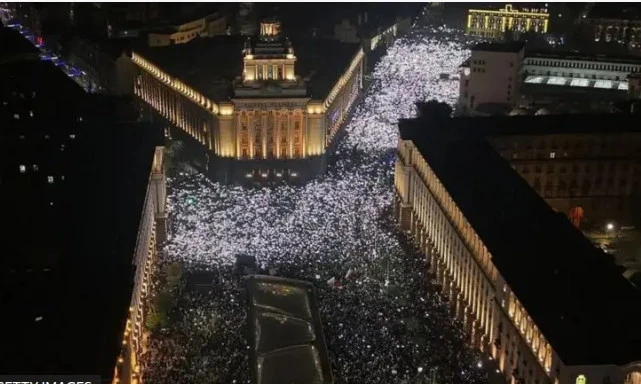
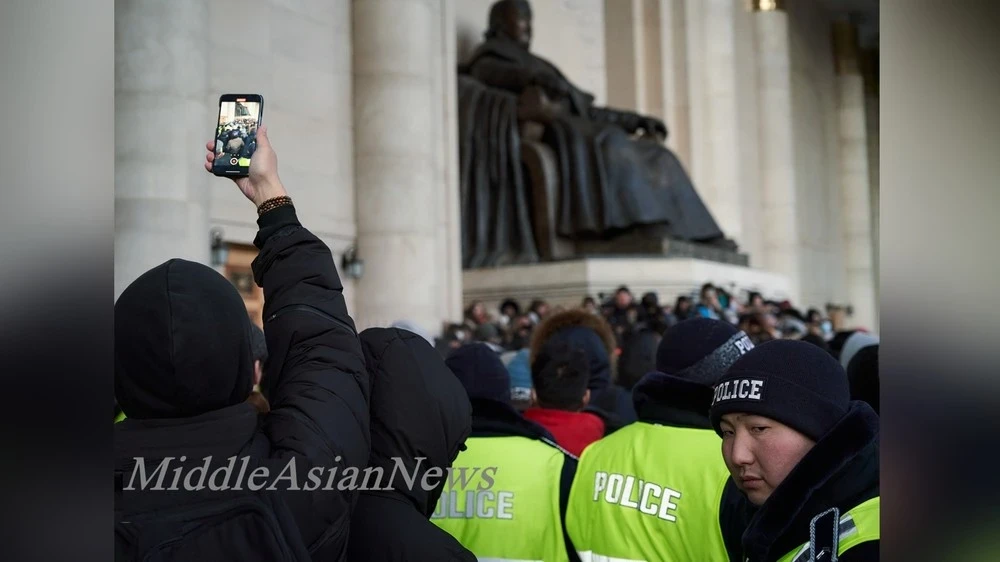
Despite all these difficulties, people do not remain indifferent. In 2019, winter protests against suffocating smog and corruption scandals took place in Ulaanbaatar. Youth took to the streets again in 2022, demanding justice in the coal theft case. Over the past two years, new demonstrations have erupted in response to changes in government, extravagant spending by politicians, and corruption.
Critics often view these protests as a result of manipulations by competing factions or as expressions of naive idealism among the youth. However, both perspectives ignore the key function of these protests.
Every protest, even if it ends in failure or a change of power, serves as a reminder of democratic values. It emphasizes that the primary goal of the state is to ensure public goods and justice. This sustains hope for the possibility of a better future and the inclusiveness of institutions.
Elite Brokerage Services in Conditions of Global Uncertainty
In such conditions, Mongolia's political economy functions through elite mediation. Politically influential figures act as intermediaries between national resources and global markets, profiting at every stage.
These brokerage services are not limited to coal. In the copper sector, scandals surrounding the Erdenet mine show how trading companies secured lucrative contracts for copper concentrate, allowing profits to be redirected.
"The state acts as a brokerage firm, not as a regulator that ensures maximum benefit for society."
Disputes over cost overruns at the giant Oyu Tolgoi copper-gold mine owned by Rio Tinto also highlight that contractors linked to the elite benefit. In these cases, the state behaves like a broker rather than a regulator, ensuring the interests of society.
This state of affairs has serious implications for democracy and development in Mongolia. In the parliamentary elections in June 2024, the opposition used "dissatisfaction with corruption and the economic situation" to achieve success in the legislature. Voter turnout was nearly 70%, indicating that Mongolians have not become apathetic. Voters associate unchecked one-party rule with corruption and the undermining of democratic accountability.
Devastation of Democracy
All these trends indicate a troubling tendency noted by Peter Meyer over a decade ago: the weakening of democracy. This occurs not due to a complete abolition of elections but as a result of the gradual erosion of their essence.
The situation in Mongolia vividly demonstrates what happens when an economy rich in natural resources is built on extraction without considering "inclusive" institutions. It is easy to say that Mongolia needs institutional strengthening, but the more complex question is which institutions need to be strengthened and in what order.
Prolonged pressure for reform will only be effective when people see real changes. This is the cruel paradox of slow violence: it not only harms but also undermines patience. Year after year, scandals without consequences condition people to stop hoping for change.
In this void, various problems arise: conspiracy theories, nationalist groups, politicization on the internet, and much more. However, the current crisis provides an opportunity for the masses to fill the resulting vacuum and demand a new voice. The success of ordinary Mongolians in this endeavor will determine the country's path to genuine accountability and democracy.
Author: Sanchir Jargalsaihan — Research Fellow at the University of Oxford.
Translation: Tatar S.Maidar
Source: MiddleAsiaNews