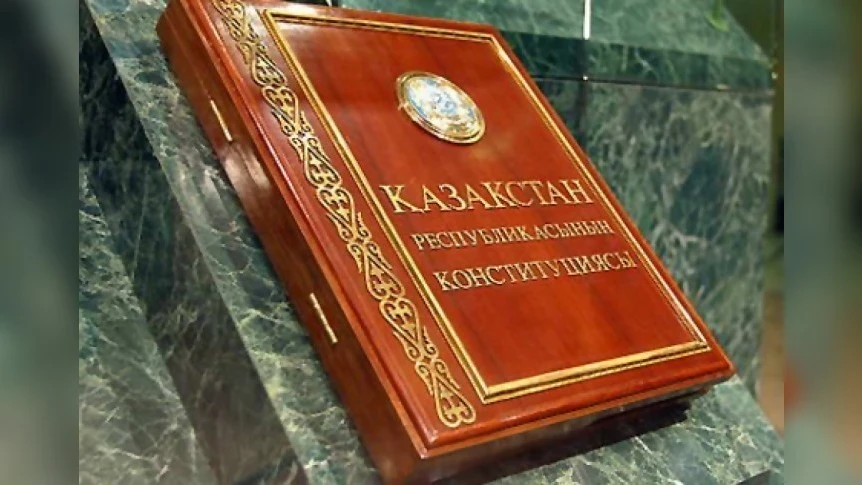
The Constitutional Commission has announced the key aspects of the draft new Constitution of the Republic of Kazakhstan, as reported by Tengrinews.kz.
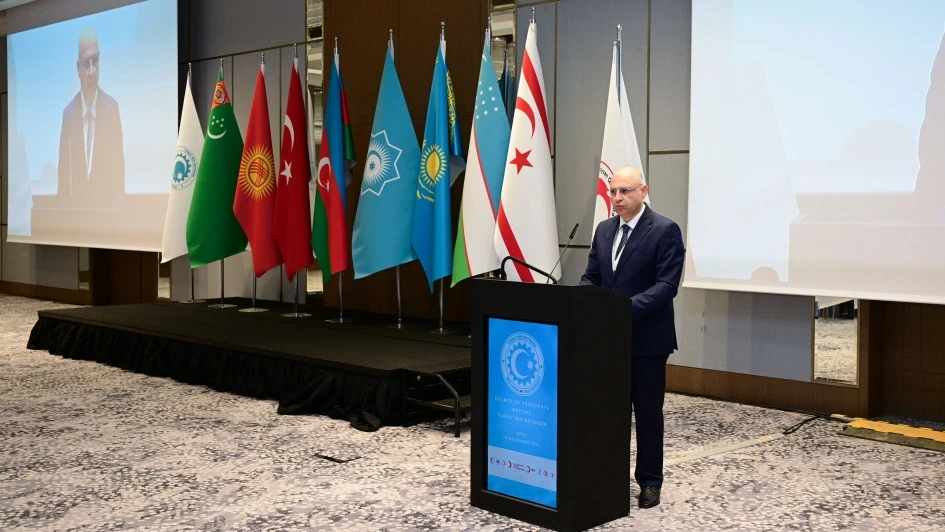
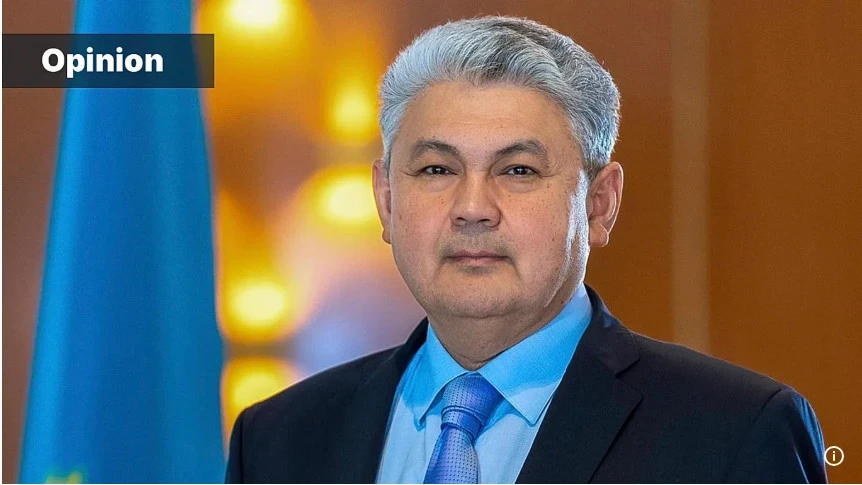
The presentation was conducted by Bakyt Nurmukhanov, Deputy Chairman of the Constitutional Court.
According to him, the draft includes a preamble, 11 sections, and 95 articles.
“The preamble of the Constitution has been completely revised. It reflects the common values that emphasize the history of the country and serve as a guide for the present and future. The draft enshrines new fundamental principles of the operation of the Republic of Kazakhstan,” noted Nurmukhanov.
In the new preamble, for the first time, human rights and freedoms are declared the primary priority of the state. Unity and solidarity, as well as interethnic and interfaith harmony, are defined as the foundation of Kazakhstan's statehood.
Unchanging values are also considered to be sovereignty, independence, unitarity, and territorial integrity.
For the first time, the principles of justice, legality, and care for nature are enshrined at the constitutional level.
The draft also clarifies that the people of Kazakhstan are the sole source of power and the bearer of sovereignty.
The Draft New Constitution of Kazakhstan
The Draft New Constitution of Kazakhstan
January 30, 2026
DRAFT
CONSTITUTION OF THE REPUBLIC OF KAZAKHSTAN
We, the united people of Kazakhstan,
strengthening statehood on the ancestral Kazakh land,
preserving the continuity of the millennia-old history of the Great Steppe,
confirming the unitary nature of the state, the inviolability of its borders and territorial integrity,
following the idea of a Just Kazakhstan and the principle of Law and Order,
declaring unwavering adherence to the rights and freedoms of citizens,
relying on the principles of unity and solidarity, interethnic and interfaith harmony,
orienting towards the values of culture and education, science and innovation,
recognizing the necessity of careful treatment of nature,
striving for peace and friendship with all countries,
being aware of the high responsibility to future generations,
adopt this Constitution – the Fundamental Law of the Republic of Kazakhstan.
Section I
Foundations of the Constitutional Order
Article 1
The Republic of Kazakhstan is a democratic, secular, legal, and social state. The highest values of the state are the individual, their life, rights, and freedoms.
Article 2
1. The Republic of Kazakhstan is a unitary state. The form of government is a presidential republic.
2. The sovereignty of the Republic of Kazakhstan extends over its entire territory. The state ensures the integrity, inviolability, and inalienability of its territory.
3. The administrative-territorial structure of the Republic of Kazakhstan is determined by constitutional law.
4. The capital of the Republic of Kazakhstan is the city of Astana. The status of the capital is determined by law.
5. The names Republic of Kazakhstan and Kazakhstan are equivalent.
6. Sovereignty, Independence, unitarity, territorial integrity, and the form of government of the Republic of Kazakhstan are unchanging.
Article 3
1. The main principles of the activity of the Republic of Kazakhstan: protection of Sovereignty and Independence; observance of human rights and freedoms; ensuring the supremacy of law and order; strengthening national unity; improving the welfare of the people; developing public dialogue; affirming the values of hard work, progress, knowledge, and forming a high ecological culture.
2. The Republic of Kazakhstan recognizes the development of human capital, education, science, and innovation as a strategic direction of its activity.
Article 4
1. The only source of state power and bearer of Sovereignty is the people of Kazakhstan.
2. The people exercise power directly through nationwide referendums and free elections, as well as delegating it to state bodies.
3. The appropriation of power in the Republic of Kazakhstan is impossible. Criminal liability is provided for such actions. The right to represent the interests of the people and the state belongs to the President of the Republic of Kazakhstan and the Kurultai within their constitutional powers. The Government and other state bodies act on behalf of the state within their powers.
4. State power in the Republic of Kazakhstan is unified and exercised based on the Constitution and laws, taking into account the principle of separation into legislative, executive, and judicial branches.
Article 5
1. The current law of the Republic of Kazakhstan includes the norms of the Constitution, corresponding laws, and other regulatory acts.
2. The Constitution has the highest legal force and is applied throughout the territory of Kazakhstan.
3. The procedure for the application of international treaties on the territory of the Republic of Kazakhstan is determined by legislation.
4. All laws and ratified international treaties must be published. Official publication of acts concerning the rights of citizens is mandatory.
5. Laws that impose new obligations on citizens or worsen their situation do not have retroactive effect.
6. Special legal regimes may be established for the accelerated development of certain regions, which are determined by constitutional laws.
Article 6
1. Ideological and political diversity is allowed in the Republic of Kazakhstan. The creation of political parties in state bodies is prohibited.
2. Public associations are equal before the law. The state cannot interfere in their affairs, nor vice versa.
3. The creation of associations aimed at violent change of the state order or undermining national security is prohibited.
4. The activities of parties and unions funded by foreign states are also prohibited.
5. Information about the financial flows of non-profit organizations must be accessible according to the law.
Article 7
1. Religion is separated from the state.
2. The activities of religious organizations are carried out in accordance with the law and may be restricted for the protection of the constitutional order and the rights of citizens.
Article 8
1. State and private property is protected by law.
2. The use of property must correspond to the interests of society and not harm the environment.
3. Land and natural resources belong to the people; exercising property rights on behalf of the people, the state regulates their use.
Article 9
1. The state language is Kazakh.
2. The Russian language has official status in state bodies.
3. The state creates conditions for the study of languages.
Article 10
The Republic of Kazakhstan respects international rights and conducts a policy of peace and cooperation.
Article 11
State symbols – the Flag, the Emblem, and the Anthem – must be established and protected by law.
Section II
Basic Rights, Freedoms, and Duties
Article 12
1. Citizenship of the Republic of Kazakhstan is acquired and terminated according to the law and is equal for all.
2. A citizen cannot be deprived of citizenship or expelled from the country, except in cases provided for by law.
3. Dual citizenship is not allowed.
Article 13
1. Citizens cannot be extradited to foreign states unless provided for by international treaties.
2. The Republic of Kazakhstan guarantees the protection of citizens outside its borders.
Article 14
1. Human rights are guaranteed by the Constitution.
2. Human rights and freedoms are inalienable and belong to everyone from birth.
3. Citizens have rights and duties.
4. Foreigners and stateless persons have rights and duties established for citizens in cases provided for by law.
5. The exercise of rights must not violate the rights of others.
Article 15
1. Everyone has the right to defend their rights by all legal means.
2. The right to judicial protection is guaranteed.
3. In Kazakhstan, the right to receive qualified legal assistance is recognized.
Article 16
1. All are equal before the law.
2. Discrimination for any reason is prohibited.
Article 17
1. The right to life is inalienable.
2. No one has the right to deprive another person of life.
3. The death penalty is prohibited.
Article 18
1. Everyone has the right to personal inviolability.
2. Restriction of freedom is possible only by court decision.
3. Detainees must be informed of the grounds for detention and their rights.
4. Detainees have the right to a lawyer.
Article 19
1. Every person is presumed innocent until proven guilty.
2. No one is obliged to testify against themselves or their close relatives.
3. Repeated prosecution for the same offense is prohibited.
Article 20
1. The honor and dignity of everyone are protected by law.
2. Torture and cruel treatment are prohibited.
Article 21
1. The right to privacy is guaranteed.
2. The secrecy of correspondence is protected by law.
Article 22
1. Everyone has the right to determine their national affiliation.
2. Freedom of choice of language for communication, education, and creativity is ensured.
Article 23
1. Freedom of speech and creativity is guaranteed.
2. Intellectual property is protected.
Article 24
1. Everyone on the territory of Kazakhstan has the right to freedom of movement.
2. Restrictions may only be applied in accordance with the law.
Article 25
1. Everyone has the right to freedom of conscience.
2. This right must not limit the rights of others.
Article 26
1. Citizens have the right to freedom of association.
2. Certain state officials may not be members of political parties.
Article 27
1. Everyone has the right to work and freely choose their profession.
2. The Republic of Kazakhstan guarantees safe working conditions.
3. The right to rest and paid leave is ensured.
Article 28
1. The home is inviolable. Deprivation of housing is not allowed without a court decision.
2. The state creates conditions for providing housing to its citizens.
Article 29
1. Citizens have the right to private property.
2. Property is protected by law.
3. Compulsory alienation is possible only on legal grounds and with compensation.
Article 30
1. Marriage and family are under the protection of the state.
2. Marriage is a voluntary union of a man and a woman.
3. Parents are obliged to care for their children.
Article 31
1. Citizens are guaranteed social security.
2. Voluntary social insurance is encouraged.
Article 32
1. Citizens have the right to health protection.
2. Access to medical care is ensured.
Article 33
1. Citizens have the right to education.
2. Primary and secondary education is compulsory.
Article 34
1. Citizens are obliged to protect nature.
2. The state ensures the protection of the environment.
Article 35
Citizens have the right to peaceful assemblies and demonstrations, which may be restricted by law.
Article 36
1. Citizens participate in the management of the state and have the right to vote.
2. Citizens have the right to access public service.
Article 37
1. Everyone is obliged to comply with the Constitution and laws.
2. Payment of taxes is the duty of every citizen.
Article 38
The defense of the Republic of Kazakhstan is the sacred duty of its citizens.
Article 39
Citizens are obliged to care for cultural heritage.
Article 40
Human rights may be restricted only by law.
Section III
The President
Article 42
The President of the Republic of Kazakhstan is the head of state, determining the main directions of policy.
Article 43
The President is elected on the basis of universal suffrage for a term of seven years.
The President may be elected only once.
Article 44
The President takes an oath before the people.
Article 45
The President may not hold other positions or be a member of a political party.
Article 46
The President has the right to appoint and dismiss key state officials.
Article 47
The President issues decrees and orders that are mandatory for execution.
Article 48
The President is not liable for actions within the scope of his powers.
Article 49
The Vice-President is appointed by the President with the consent of the Kurultai.
Article 50
The President may resign at will or due to health reasons.
Article 51
In the event of early dismissal, powers are transferred to the Vice-President.
Section IV
The Kurultai
Article 52
The Kurultai is the highest legislative body exercising legislative power.
Article 53
The Kurultai consists of 145 deputies elected for five years.
Article 54
Elections are held on the basis of universal suffrage.
Article 55
Deputies are obliged to participate in the work of the Kurultai.
Article 56
The Kurultai adopts laws and resolutions that are mandatory for execution.
Article 57
The Kurultai is headed by a Chairman elected from among the deputies.
Article 58
Sessions of the Kurultai are held at least once a year.
Article 59
The Kurultai forms permanent committees and commissions.
Article 60
The right of legislative initiative belongs to the President, deputies, and the Government.
Article 61
Laws are adopted by a majority vote.
Article 62
The President dissolves the Kurultai after consultations.
Section V
The Government
Article 63
The Government exercises executive power.
Article 64
The Government is formed by the President.
Article 65
The Government develops policy and presents the budget.
Article 66
The Prime Minister organizes the work of the Government.
Article 67
Members of the Government are responsible for their activities.
Article 68
The Government issues mandatory resolutions.
Article 69
The Government resigns before the new Kurultai.
Section VI
The Kazakhstan People's Assembly
Article 70
The Kazakhstan People's Assembly is the highest advisory body.
Article 71
The Assembly develops proposals on domestic policy.
Section VII
The Constitutional Court
Article 72
The Constitutional Court ensures the supremacy of the Constitution.
Article 73
The Court considers appeals regarding the compliance of laws with the Constitution.
Article 74
Decisions of the Constitutional Court are mandatory and take effect immediately.
Section VIII
Justice. Prosecutor's Office.
Article 76
Justice is administered only by the court.
Article 77
A judge is independent and subject only to the law.
Article 78
Courts may not apply laws that infringe rights.
Article 79
The judicial system includes the Supreme Court and local courts.
Article 80
Judges are appointed by the President.
Article 81
Funding for the courts is provided from the budget.
Section IX
Local State Administration and Self-Government
Article 87
Management is carried out by local authorities.
Article 88
Local authorities are elected by the population.
Article 89
Executive bodies implement national policy.
Article 90
Local authorities make decisions that are mandatory for execution.
Article 91
Local self-government is recognized.
Section X
Amendments and Additions to the Constitution
Article 92
Amendments are made by nationwide referendum.
Article 93
Amendments are subject to the conclusion of the Constitutional Court.
Section XI
Final and Transitional Provisions
Article 94
The Constitution comes into force upon its publication.
Article 95
Laws in force on the day of entry into force remain in effect unless they contradict the Constitution.