The Essence of the Incident
In the summer of 2024, Dolina sold her apartment in a prestigious residential complex in Khamovniki. After that, she revealed that she had fallen victim to fraudsters, losing over 100 million rubles and a residence of about 200 square meters. The artist characterized the actions of the scammers as "sophisticated and meticulously planned."After Larisa's appeal to law enforcement, a criminal case was initiated, and the damage was assessed by the Ministry of Internal Affairs at over 200 million rubles.
Problems began to arise when the new owner of the apartment, Polina Lurye, demanded that Dolina vacate the premises. At that time, it became known that Dolina did not plan to move out and considered herself the rightful owner, but she could not get her money back as it had been taken from her by third parties as part of a "special operation."
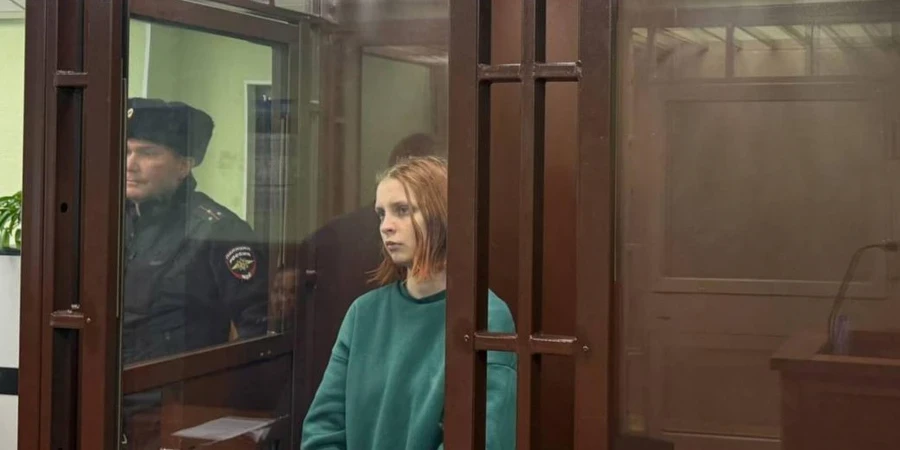
As a result, both women filed lawsuits, which were combined into one proceeding. Dolina sought to have the transaction declared invalid and to regain her apartment, while Lurye wanted to evict her and her family.
Court Decision
The district court ruled in favor of Larisa Dolina, declaring the sale of the apartment invalid. The court revoked Polina Lurye's ownership rights to the apartment and returned them to Dolina.The city court upheld this decision, rejecting Lurye's appeal.
Thus, Polina Lurye was left without both the apartment and the money. She plans to appeal this decision.
Reaction on Social Media
While the Supreme Court has not issued a final ruling, discussions have already begun on social media and among Dolina's colleagues. Users accused the singer of participating in dubious real estate sales schemes and began to "cancel" her en masse.The Sakhalin Philharmonic terminated its contract with the singer, which included a fee of 11 million rubles.
Additionally, Dolina was excluded from the New Year's program at the "Pushkin" restaurant, where her performance was replaced with a show featuring gypsies and greetings from Grandfather Frost and the Snow Maiden.
At Aztec-Cafe, it was also announced that Larisa Dolina would be removed from all lists, even those no one knew about. Now, to arrange for delivery, one must show a passport and prove that they are not Larisa Dolina. A prepayment rule was also introduced, implying a refusal of service after payment for her.
The sushi delivery network "Many Salmon" joked about the situation: "Set 'Dolina' - we take the money, deliver it, then take it back, and do not return the money."
In light of the scandal, a Wikipedia page dedicated to the "Dolina Effect" has appeared, describing cases of apartment returns through court decisions without compensation for buyers. The singer was criticized by her show business colleague Slava, but Dolina herself has not commented on the situation yet.
Reaction from Official Authorities
Not only social media users but also officials reacted to this incident.Sergey Gavrilov, head of the State Duma's property committee, called on the Supreme Court to consider a new ruling in Dolina's case.
He stated that it is important for the new court leadership to take the case seriously and provide a well-founded ruling, analyzing the refusal of bilateral restitution and comparing it with the norms of the Civil Code and the law on compensation for good faith purchasers, as reported by RIA "Novosti."
In his opinion, this case has become an indicator of risks in the secondary housing market. Gavrilov noted that even thorough checks of an apartment do not guarantee protection for the buyer.
He added that the position on such issues should be reflected not only in a separate act but also in an updated ruling of the plenary session, which will serve as a guideline for courts when considering cases related to secondary housing.
In the situation with Dolina's apartment, the buyer not only lost her home but also did not get her money back. Gavrilov pointed out that this contradicts the norms of the Civil Code, which stipulate that in the case of a transaction's invalidity, each party must return everything received under the transaction.
The protection of the rights of good faith purchasers can be implemented through a compensation mechanism from the treasury; however, in practice, the implementation of this norm requires a separate court process and strict evidence. "If the practice applied in Dolina's case becomes the norm, it will be much more difficult to use the compensation mechanism," the deputy emphasized.