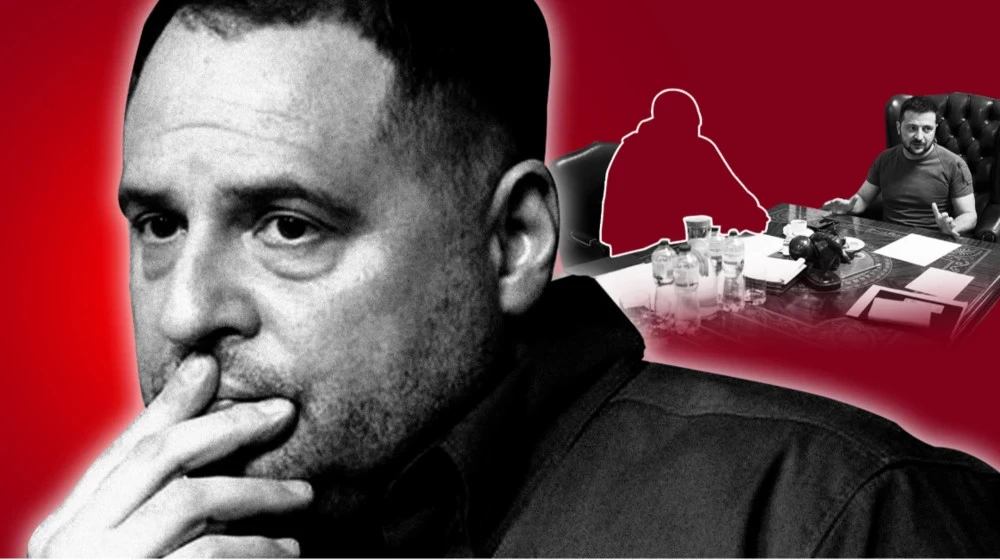
According to "Ukrainska Pravda," Andriy Yermak has become such an influential figure over nearly six years of work that even the President of Ukraine hesitated for a long time to dismiss him.
The first signal that Yermak could become the next target of an anti-corruption investigation came on November 12, when the "Mindycha tapes" were made public. At the moment these recordings began to be discussed, no one could have predicted that just two weeks later, investigators from NABU and SAP would be conducting searches in the government quarter, where the offices of key officials are located.
Apparently, the President was the last to believe in the possibility of such events.
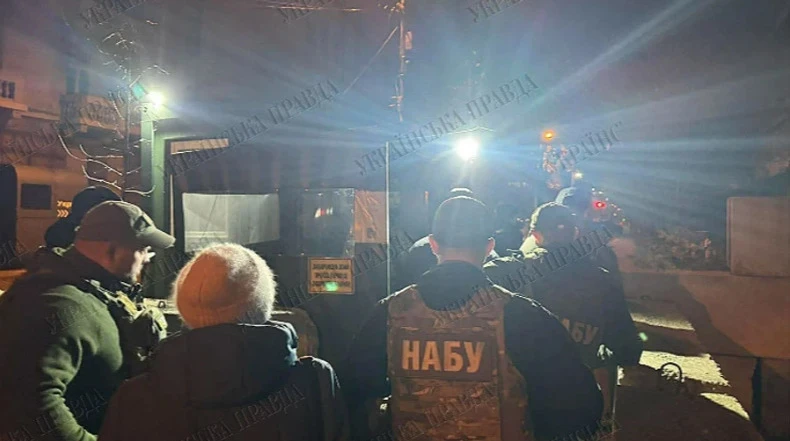
However, on November 28 at 6 AM, three cars with anti-corruption officers arrived at the checkpoint of the government quarter, and this could no longer be ignored. Zelensky, his team, and the entire government urgently needed to make decisions about further actions to avoid a potential crisis.
Searches at Yermak's
Andriy Yermak apparently did not realize that his salvation from the initial searches could have been ensured not by the leadership of the law enforcement agencies, but by one of the soldiers at the checkpoint.
When a group from NABU, SAP, and witnesses approached the concrete blocks on Shovkovychna Street, they encountered unexpected difficulties.
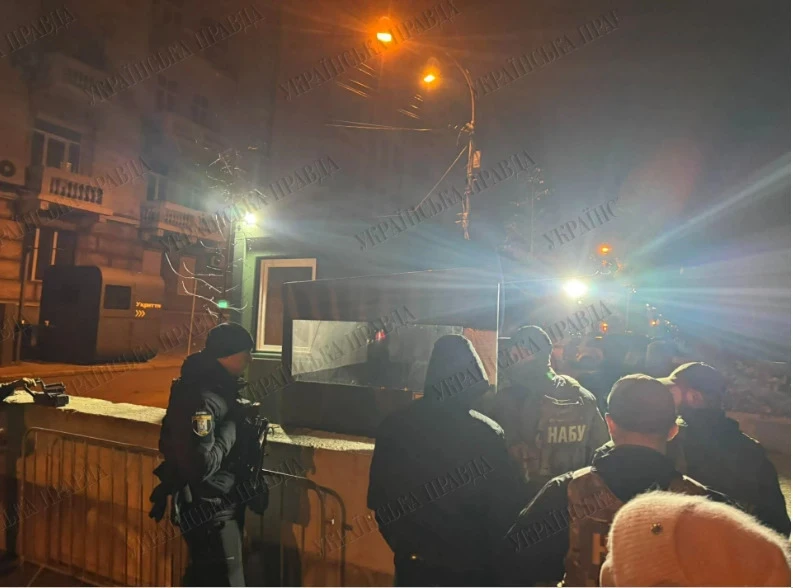
The law enforcement officers lacked identification and a court order dated November 21 to pass by the "Restricted Area" sign. The armed guard at the checkpoint began to call someone, blocking the way for the investigators.
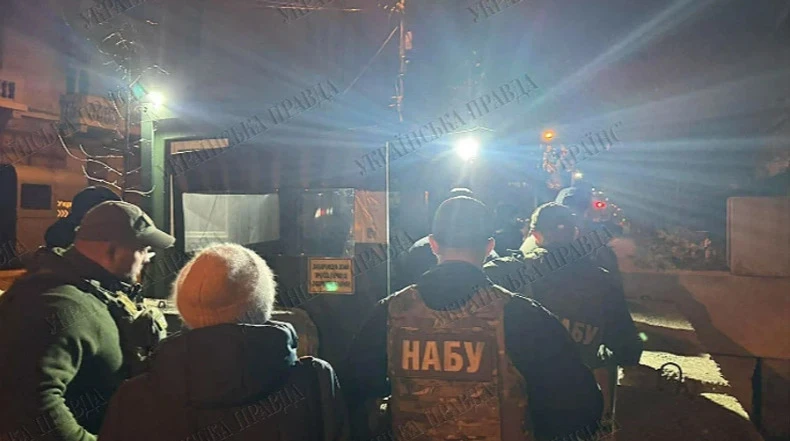
“We can ask someone from you to accompany us,” suggested a NABU detective.
Nevertheless, the guard continued to insist that a representative of the security should come to resolve the issue of passage.
“We cannot wait. This is an urgent investigative action,” the anti-corruption officers insisted.
“I understand, but I have certain responsibilities,” the guard replied.
“We believe that documents may be destroyed, and this violates the law,” the investigators added, and, having recorded everything on camera, managed to enter the government quarter despite the guard's resistance.
A journalist from "Ukrainska Pravda" witnessed the tense phone calls from the guard, who, apparently, was explaining the situation to his superiors and clearly was not receiving positive reactions.
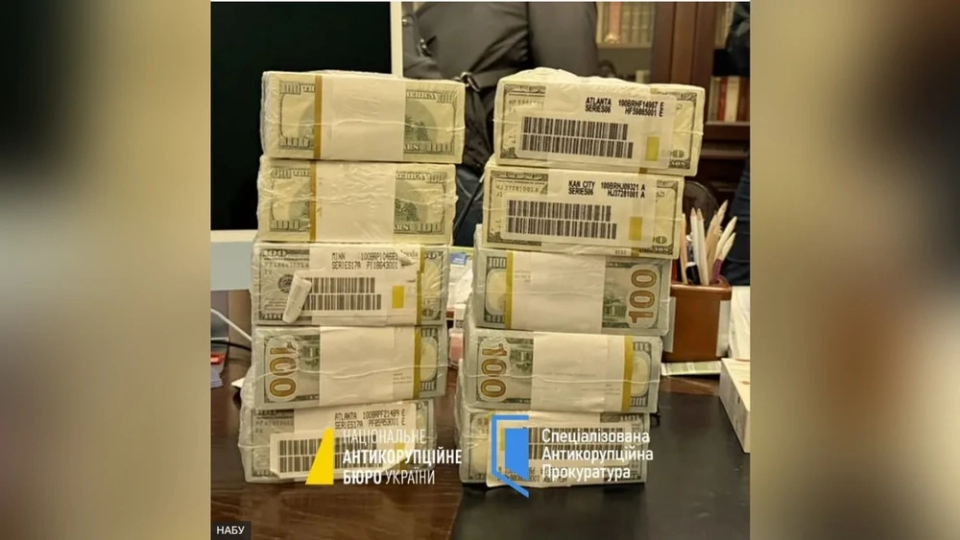
According to sources from "Ukrainska Pravda," the searches only took place at Yermak's residence, and his office on Bankova was not checked. Nevertheless, the anti-corruption officers seized two laptops and several mobile phones, which they began to examine the same day.
By 2 PM, the anti-corruption officers left the government quarter, and it became clear that at that moment Yermak remained without suspicion.
The order for conducting searches, dated November 21, confirms that President Zelensky had information about possible claims against his assistant, and he had at least a week to take action.
Despite the information attack on Yermak regarding his indispensability, NABU and SAP decided to act against corruption, not against the government itself in wartime conditions.
Sources from "Ukrainska Pravda" are confident: “Suspicion against him is just a matter of time.”
Apparently, Yermak decided not to waste time. He chose to hide from the criminal case instead of leaving the country.
The Last Hours of Yermak in Office
While investigators were conducting searches at Yermak's residence, active work was underway in the President's Office to reassess the political situation.
Operation "Midas," conceived as a demonstration of independence during the war, revealed deeper issues: the blow to Yermak's figure became a test for the President himself.
At 9 AM, Vice Prime Minister Mykhailo Fedorov, SBU Head Vasyl Maliuk, NABU Director Semen Kryvonos, and Head of the Specialized Anti-Corruption Prosecutor's Office Oleksandr Klymenko arrived at the President's Office.
Interestingly, Maliuk was not there by chance. Before his dismissal, Yermak had been trying to achieve his resignation, accusing him of failing to prevent Operation "Midas."
Zelensky, realizing that fighting on two fronts—both external and internal—threatens the stability of the state, began to cautiously listen to the arguments of his interlocutors.
According to sources from "Ukrainska Pravda," this was not the first meeting in the last two weeks. However, this time, Maliuk and Fedorov also joined the discussion.
The discussion focused on the importance of fighting corruption, which should not undermine diplomatic efforts and governance in the country.
Zelensky began to understand that the state should not depend on individual personalities who have lost touch with reality.
Other key figures in power, including technocrat Mykhailo Fedorov and Rada Speaker Ruslan Stefanchuk, also came to the conclusion that Yermak's dismissal was necessary.
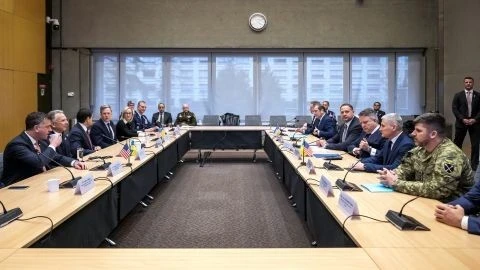
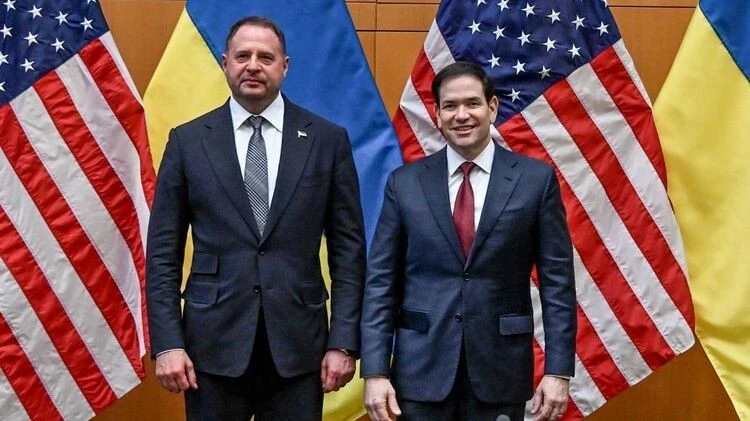
Although the President had previously hesitated, Yermak still headed the delegation for negotiations with American partners in Switzerland.
After an hour of discussions in Zelensky's office, the heads of NABU and SAP left the government quarter without announcing suspicion against Yermak. The President took a pause for reflection.
Ultimately, a few hours later, Zelensky made the decision to dismiss Yermak and asked Mykhailo Fedorov to prepare a video address to the nation regarding his resignation.
According to one of the participants in the process, “the understanding that this decision is supported by everyone—from MPs to international partners—outweighed.” Thus, it became a necessary step for rebooting key institutions of the country.
In the past six months, American partners had also persistently raised the issue of the need to change Yermak.
The First Day Without Yermak
“Nothing pleases as much as an empty chair to the right of the President.” This comment was made by one of the high-ranking officials in a secret “revolutionary” chat used to coordinate actions against Yermak.
Although the full composition of the participants in this chat could not be established, it is clear that they were influential members of the government.
“Yermak's resignation was inevitable. He united everyone against him,” notes one of the participants in the “revolution,” adding that the message about the “empty chair” received many likes.
Throughout his tenure, Yermak sought to appoint his people to key positions, but ultimately, at the moment of crisis, no one defended him.
Even those who received their positions thanks to him did not stand up for the former head of the Office.
Moreover, Yermak himself, when asked to write a resignation letter, threw a tantrum, which only confirmed the President's doubts about his management.
For Zelensky, the process of dismissing Yermak was not easy, but he already had experience in excluding other close people from his team. After the dismissal, sources report that Zelensky became more energetic and decisive.
Now the government faces important tasks that require solutions, and this will be the first test for the new team without Yermak.
The President must choose a new head of his Office, and this decision will show whether the changes were cosmetic or necessary for restructuring power.
Currently, several candidates for this position are being considered, including Mykhailo Fedorov, Denys Shmyhal, and Pavlo Palisa. It is also possible that Serhiy Kyslytsia will be proposed for this position.
Additionally, the authorities need to resolve the issue of a new Minister of Justice, as well as fill vacant positions in the government.
* * *
“The situation is still unstable. It's like with a rotten tooth: it has been pulled out, but no one knows if it has infected the others.” This is how one of the interlocutors in the Rada describes the current state of power.
Although the system quickly reacted to Yermak's dismissal, for qualitative changes, it is necessary to rethink the role of the President's Office and abandon the practice of pressuring those who cause discontent.
It is also important to address the President's conflict with independent media and understand that unity requires constant work and is not self-evident.