The golden artifact, along with two gold bracelets dating back to approximately 450 BC, was ceremoniously presented on Thursday as returned to the museum. They were displayed behind a glass case under the watch of two armed police officers, although one bracelet has not yet been recovered.
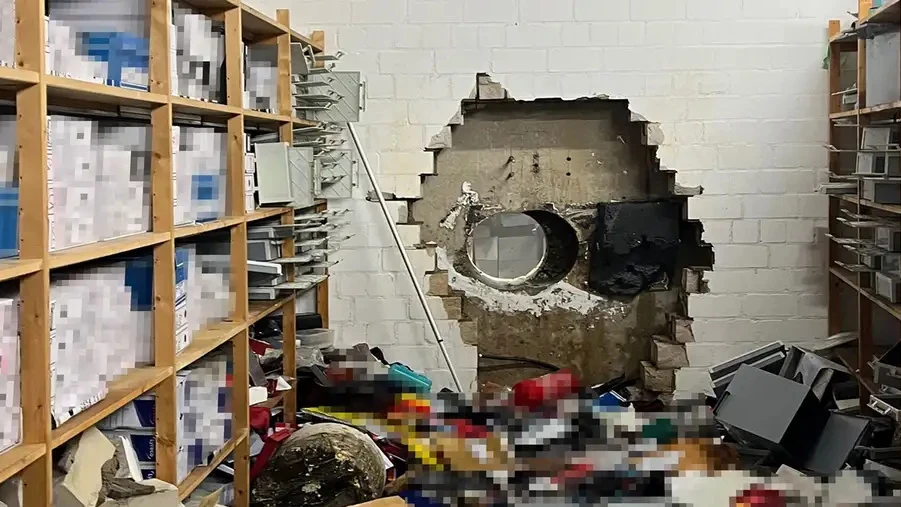
The robbery, during which the helmet of Coțofenești and the bracelets were stolen, occurred at the Drenthe Museum in Assen and caused a significant outcry in Romania, raising concerns about the safety of invaluable artifacts being transferred to other countries.
“We have been waiting for this event for a long time,” commented Romanian prosecutor Daniela Buruiană at a press conference.
She also added: “We are glad to see the return of Romanian artifacts.”
The exhibits were provided by the National History Museum of Romania for the exhibition “Dacia – Empire of Gold and Silver,” which was dedicated to the history of the civilization that inhabited the territory of modern Romania before the Roman conquest in 106 AD. The theft occurred during this exhibition.
The theft led to tensions between the governments of Romania and the Netherlands, resulting in the Dutch authorities reportedly paying Romania around 5.7 million euros in compensation.
Romanian officials declined to comment on the further fate of these funds.
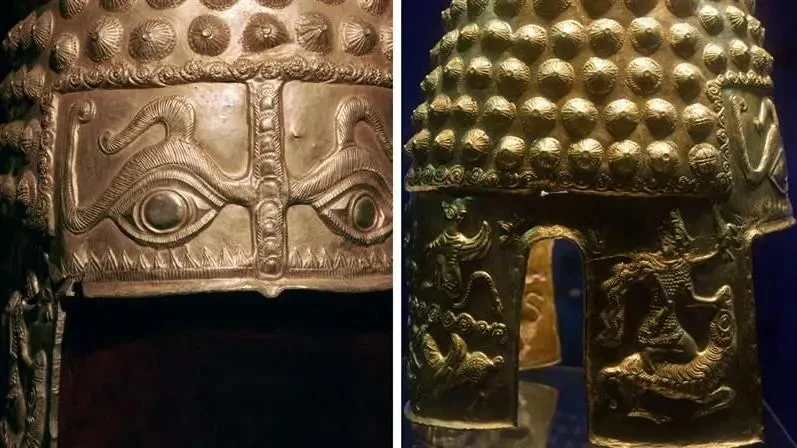
Drenthe Museum director Robert van Lang reported that the helmet sustained a small dent but can be restored. The bracelets, he said, are in excellent condition.
Prosecutor Rareș-Petru Stan noted that the theft caused significant resonance in Romania and expressed gratitude to his colleagues in the Netherlands for their “hard work and belief in a successful outcome.”
“We continue the investigation to find the last bracelet,” he added. “We are glad that we can return these treasures to the people of Romania.”
Dutch prosecutor Corien van der Meer stated that the helmet and bracelets were handed over to the authorities on Wednesday after negotiations with the lawyers of the three suspects.
Two men in their 30s and one 21-year-old will be tried this month. Van der Meer noted that the return of the treasures was part of a pre-trial agreement between the prosecution and the lawyers.
The criminals were arrested a few days after the robbery when they used explosives to break into the museum; however, by that time, the stolen valuables had already disappeared.
Experts believe that the artifacts were stolen on behalf of a criminal group.
Several Dutch museums have fallen victim to robberies in recent years, highlighting the difficulties in ensuring the protection of invaluable artifacts. The helmet and bracelets were in a glass case that failed to prevent the attack by an armed group.
In 2024, two works by Andy Warhol were stolen in the Netherlands, and in 2018, a painting by Frans Hals titled “Two Laughing Boys” was stolen from a small museum in Leerdam.
Ernest Oberländer-Tărnovanu, the former director of the National History Museum in Bucharest, faced criticism for transferring golden artifacts to other countries and was dismissed shortly after the theft. He expressed relief regarding the recovery of the helmet.
“This is a unique element of European and world cultural heritage,” he noted in an interview with RTL Nieuws. “The helmet is an important social and political symbol of the Dacian civilization.”
The legendary helmet was first discovered in 1926 in a pasture, where it was found by a peasant boy herding sheep in the Romanian village of Poiana Coțofenești. The child used the helmet as a toy for two weeks, which led to damage to some parts. Since the 1970s, the helmet has been kept in the National History Museum of Romania and, as researchers found out, belonged to an unknown local Dacian king or aristocrat.