"Your sensors are not working correctly"
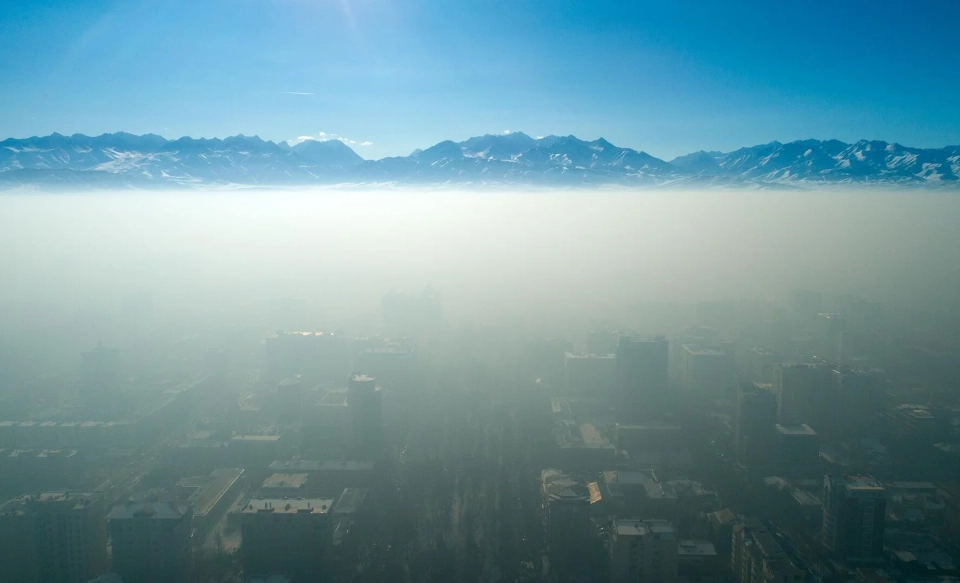
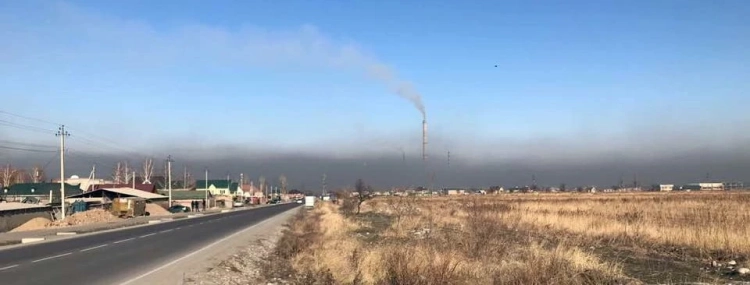
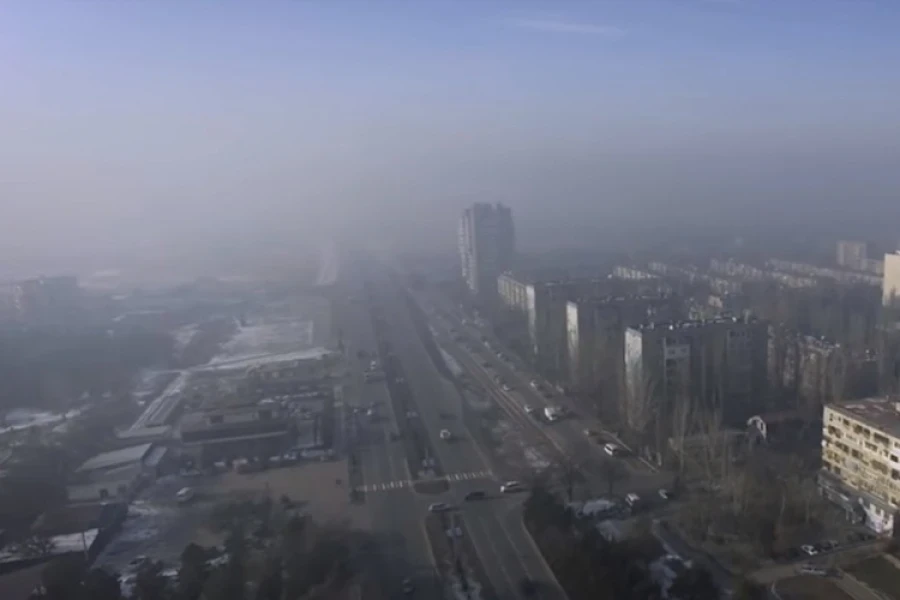
The air quality in the capital of Kyrgyzstan has become an escalating problem in recent winters. To confirm that the city is once again shrouded in smog, no applications or websites are needed — just a glance out the window or a breath is enough.Initially, the authorities tried to address this issue by proposing various measures: from banning the use of coal in private homes to restricting the entry of vehicles from other regions. However, most of these solutions were either never implemented or did not yield significant results.
In December of last year, employees of the Ministry of Natural Resources conducted an inspection of the sensors that recorded exceedances of atmospheric air standards. They stated that most of them did not meet the necessary technical standards.
The agency pointed out the following problems:
- the lack of installation and operation rules for such devices in the country leads to their inconsistency and inaccurate readings;
- many devices do not have safety certificates and do not undergo calibration;
- the sensors are installed in violation of methodological norms, which affects the accuracy of measurements;
- the use of uncalibrated sensors complicates the development of effective solutions to improve air quality.
Reduction in the number of sensors
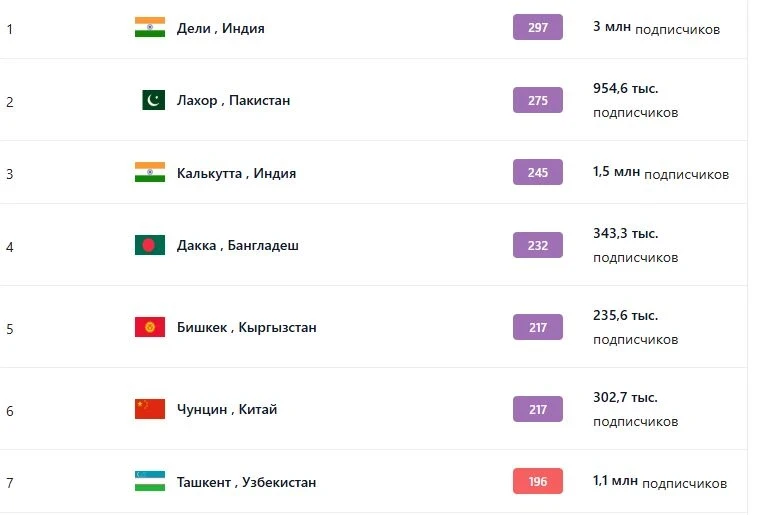
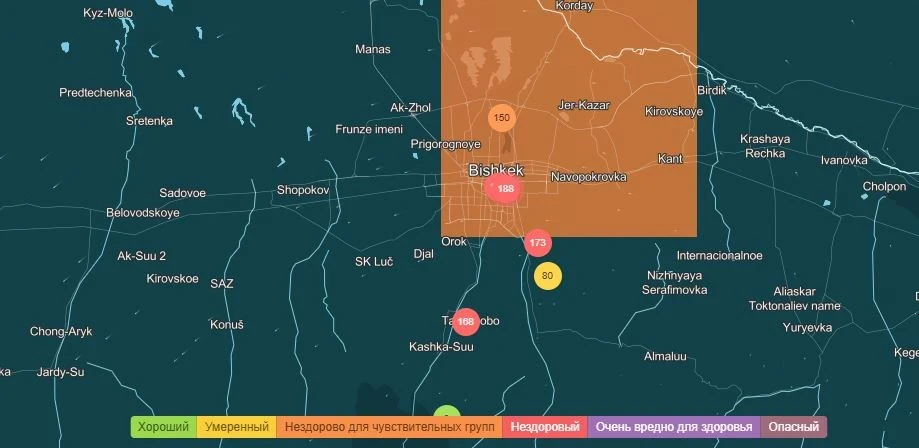
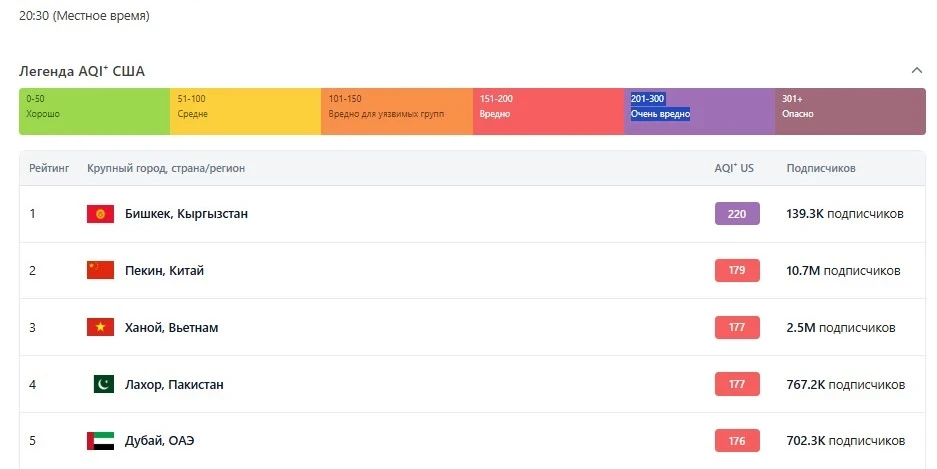
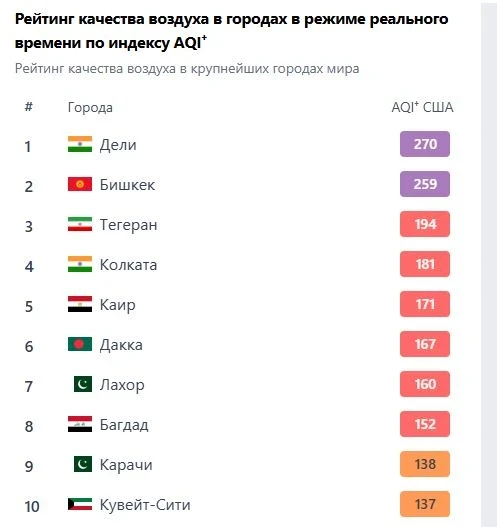
As a result, there has been a sharp reduction in the number of sensors. Initially, nearly 30 devices were operational in Bishkek, allowing not only for the assessment of pollution levels but also for identifying cleaner areas of the city.The latest example: according to World Air Quality data, on December 23, 2025, at 16:00, the pollution level in Bishkek reached the "very poor" mark with an air quality index (AQI) of 290, making the capital of Kyrgyzstan the most polluted city in the world at that moment.
Vice Mayor Ramiz Aliyev announced plans to install mobile stations for air quality monitoring at a conference held in August 2025. However, it is unclear whether these stations were installed, as there have been no reports on their operation.
While officials continue to reduce the number of sensors, the residents of Bishkek are keeping an eye on the weather conditions. Now they eagerly await wind, rain, and snow, which help to break down harmful particles and provide a safer breathing environment.