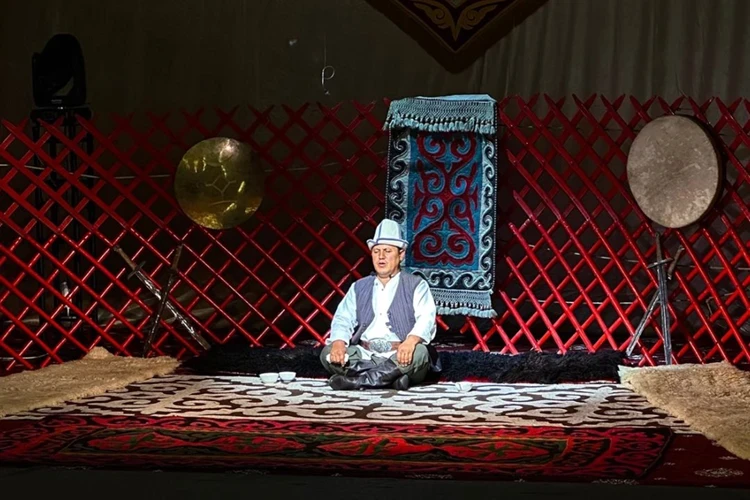
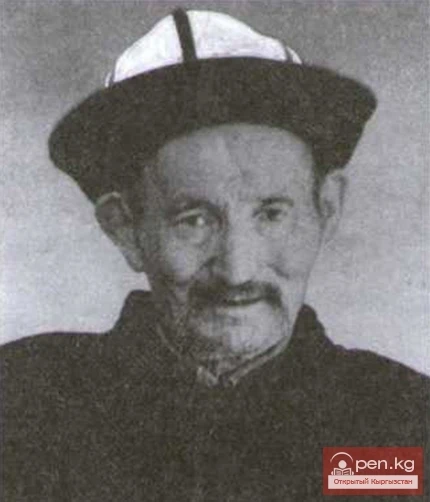
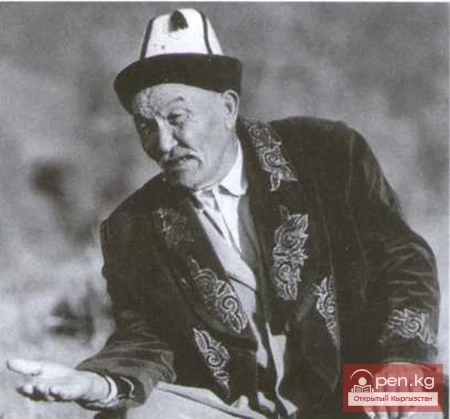
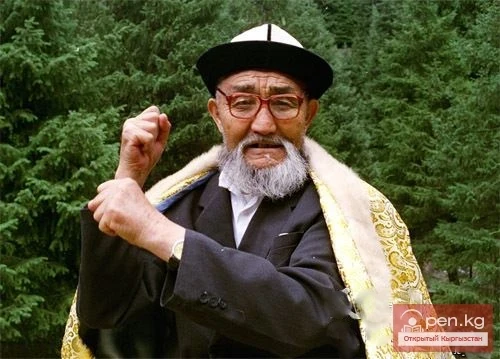
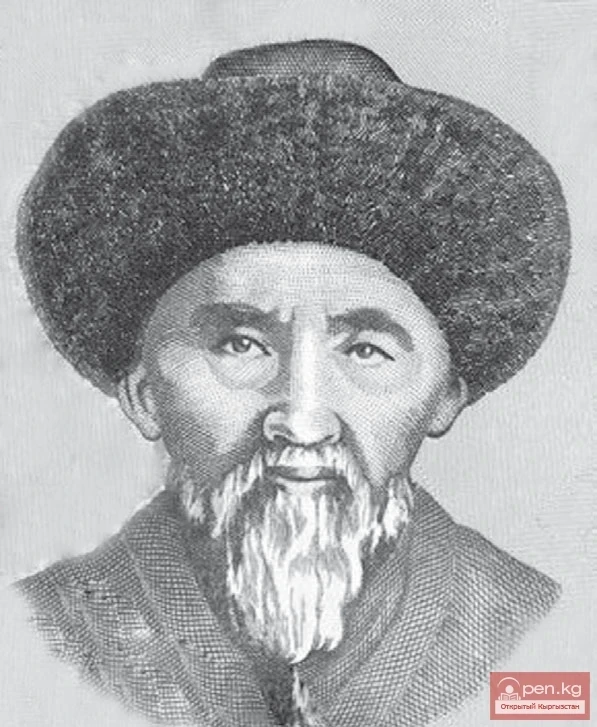
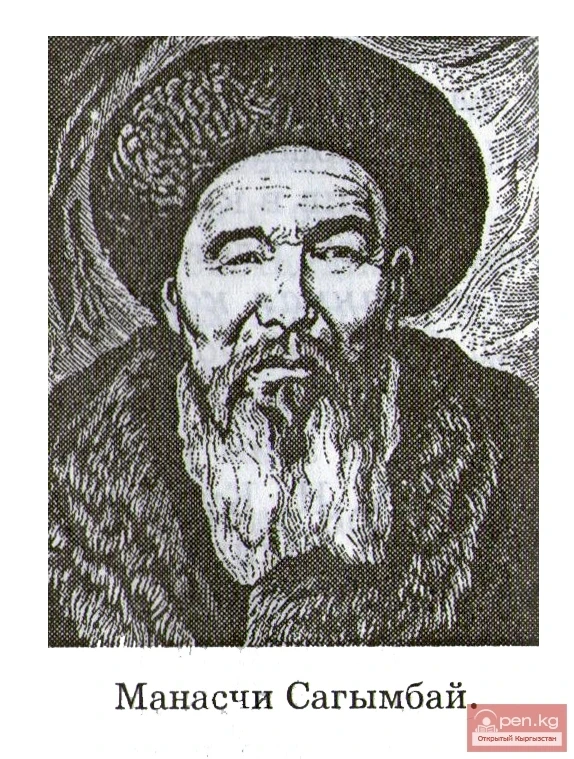
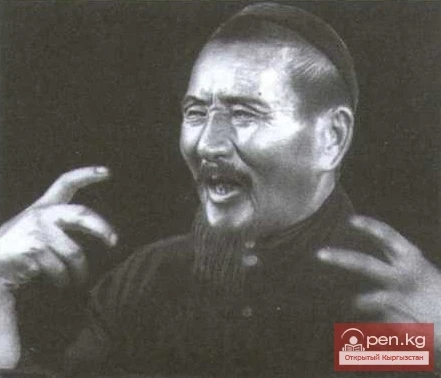
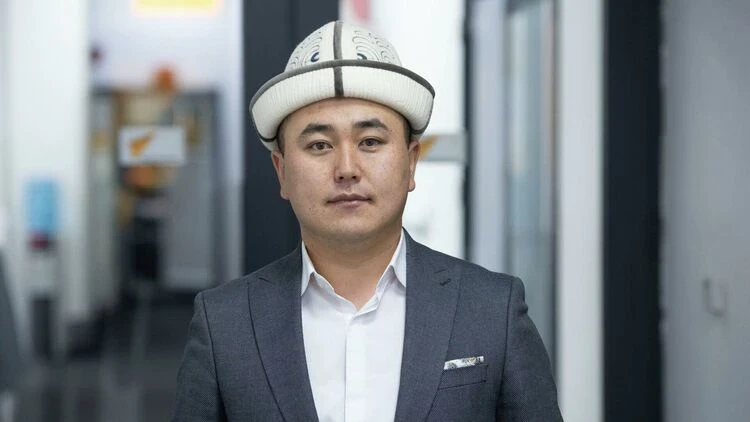
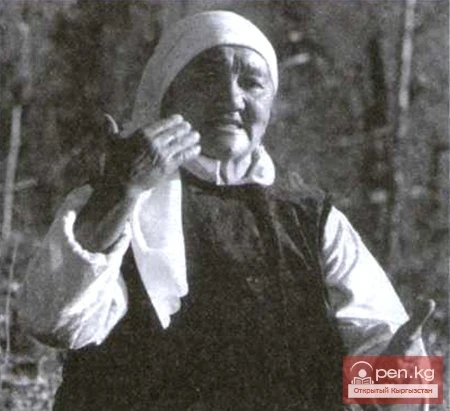
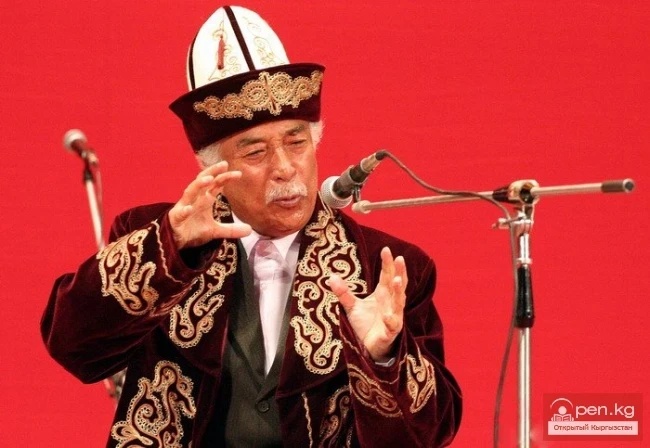
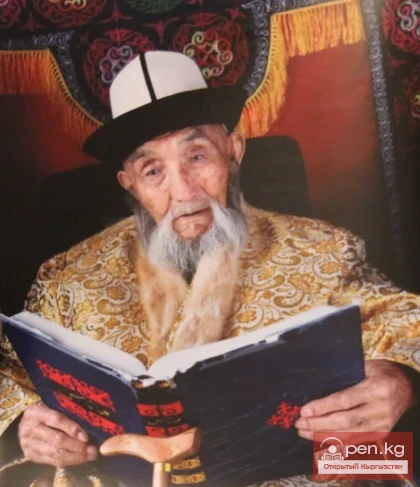
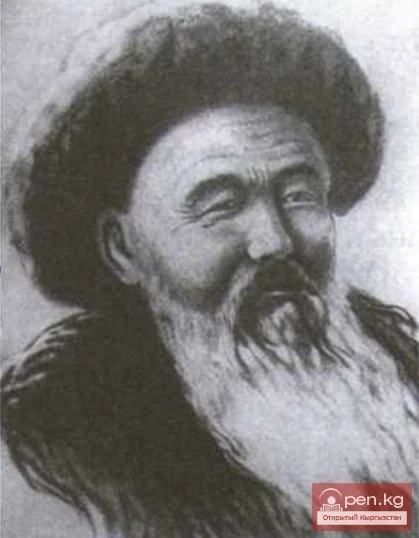
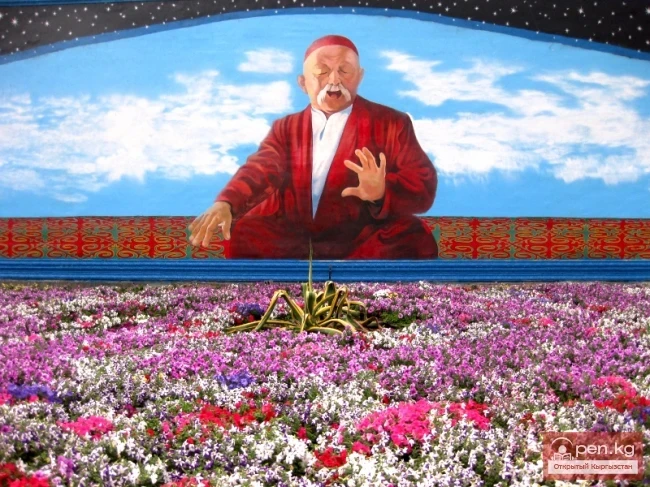
In the book, the manaschy are presented in chronological order, and the poems that complement their stories were written by manaschy Rysbay Isakov. Nurbek Talantbekov noted that manaschy is not just a form of art, but an important part of cultural tradition that is not limited to musical accompaniment.
How many names of manaschy have been preserved to this day, and how many remain unknown to history? To date, the public does not have accurate information about the number of existing manaschy.
According to the author, their main task is to convey the names of all manaschy to the people. The list will be updated in subsequent editions.
In the AKIpress section "History of Manaschy," we will tell the stories of each of the 150 manaschy.
Ashymbay uulu Mambetaly (Kökcheke) (1897–1969)
Mambetaly was born in the Sirt Valley of the Ak-Suy district, and his roots trace back to the Aryk clan of the Bughu tribe. His father, Ashymbay, was renowned for his masterful skills, while his mother was a well-known storyteller. From an early age, the boy showed an interest in music and singing, soon becoming a famous performer in his village, where he was eagerly invited to celebrations and festivities.
From a young age, he learned from his mother and the older residents of the village, absorbing legends, tales, and epics such as "Manas" from his compatriot Kaiduu and neighbor Zhuguru.
When Mambetaly reached 16-17 years old, a famous storyteller named Choyuke came to his village, performing "Manas" throughout the winter. Mambetaly, already familiar with the traditions, began to pay attention to Choyuke's teachings, joining him along with Sayakbay and delving into the profound mysteries of the epic.
Initially, he recounted the texts he had learned, but after 25 years, as he claims, he received a revelation from Alambet, which allowed him to begin performing the epic in a deeper and more original style. At the age of 26-27, he also received guidance from manaschy Shapaka, who lived in Kochkor.
With the onset of collectivization in the Soviet Union, Mambetaly became the first member of the artel, urging his fellow villagers to unite. In 1937, he joined the amateur art circle in the collective farm and soon began touring various regions. In 1939, he participated in the decade of Kyrgyz literature and art in Moscow, where he performed a fragment from the epic "Manas," dedicated to "The Tale of Alambet." Upon returning home, he was accepted into the Issyk-Kul Regional Drama Theater, where he worked until 1944.
In 1962, his versions of parts of the epic "Manas" were recorded, including "Manastyn Kanykeyge uylonushu," "Kökötöydün ashy," "Almambettin jomogu," "Kongurbaydyn chabuulu (Chon kazat)," and in 1967, the epics "Semetey" and "Seitek." These recordings were transferred to the manuscript fund of the Kyrgyz National Academy of Sciences. Mambetaly was also well-versed in folk tales, poems, and bylinas, which he masterfully passed on to future generations.
Rysbay Isakov left the following lines about Mambetaly in his book "Manaschylar":
Like a river flowing with a murmur,
Like a shield covering the storm.
The voice that bursts forth like thunder,
Like a melody that strikes with a beat.
Like an eagle soaring high,
Like a flame igniting at dusk.
They say he spoke with great strength,
Like a steed winning a prize.
Burning with passion like fire,
Never pausing, always moving.
They say Mambetaly would sing,
Always aiming for the front.
When he spoke with true strength,
His blood would gather in his eyes.
His eyes would shine brightly,
His blue forehead would glow.
Therefore, the nickname Kökcheke,
Is forever linked to his name.
With this rhythm, we too,
Have spoken his name in remembrance.