The Culture of the Kyrgyz in the 18th - Early 20th Century
The nomadic lifestyle and patriarchal-clan way of life left an indelible mark on the material culture of the Kyrgyz. Overall, the material culture of the Kyrgyz, including housing, clothing, and decorative applied arts, remained largely at the level of the Middle Ages. Under the influence of new conditions, changes in material culture began to occur slowly. In the early 20th century, with the population transitioning to a sedentary lifestyle, new forms began to emerge in both settlements and housing in Kyrgyzstan. The feudal nobility built large estates with spacious houses and numerous outbuildings.
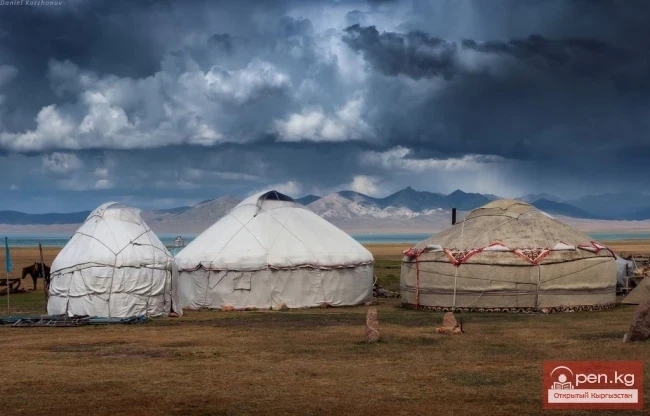
Their laborers settled nearby in yurts or adobe huts—shanties. In mountainous areas, the Kyrgyz's transition to a sedentary lifestyle followed ancient traditions: houses were built without any planning, in separate groups, chaotically. The street system of construction was observed only in certain cases. In the south, many villages were located on the slopes of foothills, resembling Tajik settlements.
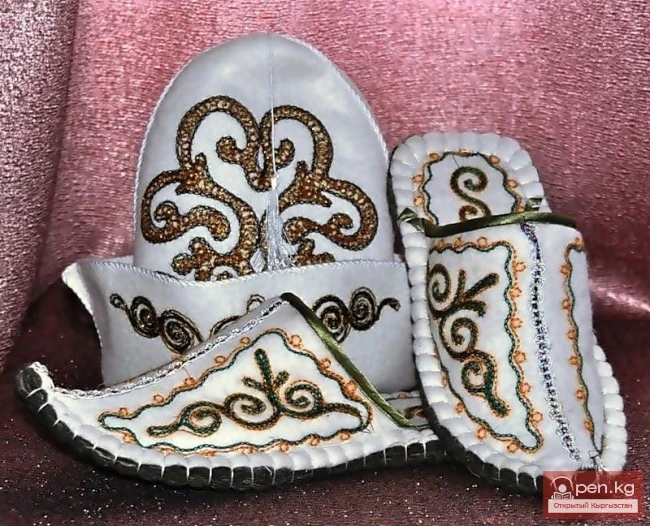
They often stretched along roads or along the banks of rivers. Changes in lifestyle led to a transformation in the style and cut of clothing. The diversity of clothing was influenced by neighboring settled peoples—Tatars, Uzbeks, Tajiks, Kazakhs. Factory-made fabric gradually displaced hand-made analogs. The poor wore clothing made from the cheapest fabric (mata). People with higher incomes bought ready-made clothing, which was very expensive in remote regions.
Spiritual Culture. In the 17th century, the expansion of the Dzungars forced some Kyrgyz from the Tien Shan Mountains to relocate to the Fergana Valley and its bordering areas. This contributed to the rapid spread of Islam among them. However, after the fall of the Dzungar Khanate, the Kyrgyz returned to their native places, and the process of Islamization slowed down again.
The widespread adoption of Islam among the Kyrgyz occurred during the period of the Kokand Khanate's dominance. The clergy served as a powerful support for the feudal lords in their exploitative policies. By preaching unquestioning obedience to religious tenets, they profited from the oppression and lack of rights of the people. The most significant influence of Islam was in the southern part of the country and partly in the Chui Valley. Islam initially spread among the bai, manaps, and other representatives of the feudal ruling elite, and only later among the common people.
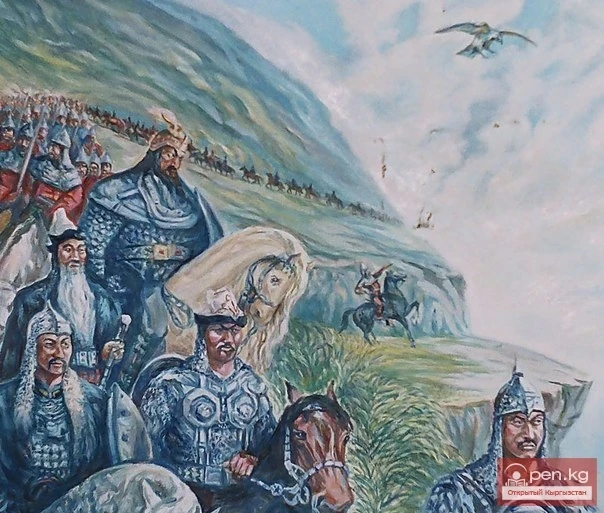
During the modern era, epics were refined, especially "Manas." According to Russian scholar V. V. Radlov, the Kyrgyz in the 19th century were at the height of epic creativity. This was confirmed in the art of manaschi—the storytellers of the epic "Manas," whose artistic content reached its peak through relentless improvement. The performance of the epic was particularly honored and popular among the Kyrgyz. The most prominent performers of this genre—Balik, Keldibek, Nazar, Chonbash, Teltai, Kalmyrza, Suranchy, Choo-dan, Zhandake, Tynybek, Sagymbay, Sayakbay, and others—were known among the people as "great manaschi" and enjoyed great respect. Thus, the historical and cultural significance of the epic "Manas" also lies in the fact that it has significantly influenced the formation of the national character, moral and ethical ideals and norms, and social behavior of the Kyrgyz people over the centuries. The smaller epics were divided into heroic and socio-domestic based on their content. Heroic epics include "Er-Toshtuk," "Kurmanbek," "Janış and Bayış," "Er-Tabyldy," "Janil-Myrza," "Er-Eshim," and others, created in the 16th-17th centuries, which, by reflecting real events, are close to historical legends—they narrate the struggle of the Kyrgyz against the aggression of Mongolian and Kalmyk feudal lords and the deep social contradictions in Kyrgyz society. Socio-domestic epics—"Olzhobai and Kishimzhan," "Sarinji-Bokoy," "Kozhozhash," "Kedeykan," and others—tell of love, the tragic confrontation between man and nature, and humanity's striving for social justice. Oral poetic creativity (lyrical songs, instructive songs, competitive songs, praise songs, mockery songs, lament songs, labor songs, ritual songs, farewell songs, laments, dirges, lullabies) held a significant place in the national culture of the Kyrgyz. It vividly and multifacetedly reflected the uniqueness of the historical fate of the people, their ancient culture, everyday life and way of life, dreams, and hopes.
The creative pursuits of the people found new expression in the works of akyns and national thinkers. Among them, for their highly artistic works and philosophical reflections on existence, the people held special respect for Jenijok (Ote Koke uulu, 1859-1918). The great akyn of the Kyrgyz people Toktogul Satylganov (1864-1933) earned wide recognition for singing about the hard fate of his people, celebrating the ideas of justice in his songs, and exposing existing class and social contradictions. The famous improvisational poet Barpy Alykulov (1884-1949) sang instructive songs distinguished by rich deep didactic and philosophical reflections. One of Toktogul's students was the improvisational poet Eshmambet Bayseit uulu (1867-1926). His songs were always characterized by imagery, philosophical depth, and sharp polemics.
Great poetic and improvisational mastery was vividly expressed in the works of akyns—Zhanibay, Kurman, Naimanbay, Kalik.
The rich spiritual culture of the people found expression not only in epics, oral folk creativity, or in the songs of improvisational akyns but also in the legacy of folk thinkers.
Kalygul Bay uulu (1785-1855) stood out for his oratory skills and philosophical thoughts, while Arstanbek Builash (Boylosh) uulu (1824-1878) created the poetic discourse "Tar zaman" ("The Violated World") about society, politics, and existence in connection with specific historical conditions.
Read also:
Attractions of Jalal-Abad Region
Nature Parks and Reserves: Relict Walnut-Fruit Forests of Arslanbob Sary-Chelek Biosphere Reserve...
Ordo Sakhna Music from Kyrgyzstan of the Folk Ethnographic Theater
Ordo Sakhna – The Folk Ethnographic Theater. Biography. The folk ethnographic theater Ordo Sakhna...
Kyrgyz-American Hip-Hop Fest 2015
From May 28 to June 5, 2015, a youth festival "Kyrgyz-American Hip-Hop Fest 2015" will...
Ibraimov Abyt Ibraimovich
Ibraimov Abyt Ibraimovich (1948), Doctor of Biological Sciences (1985), Corresponding Member of...
Kyrgyz Republic - This is Our Land
The Kyrgyz Republic is a country of Heavenly Mountains, stunning nature, and hospitable,...
Annual Clothing Fair "Made in KG - 2014"
In anticipation of the new school year, from August 21 to August 30, 2014, the annual fair of...
Chon Kojo - An Ancient Dish of the Kyrgyz People
Chon Kojo - an ancient dish of the Kyrgyz. It is prepared for Nauryz. On this day, everyone...
Tagai Bi (Muhammed Kyrgyz)
In the history of the 16th century, Tagay Bi was celebrated under the name of the great figure...
Aktagan tea (Kyrgyz tea)
Aktagan-chai In Kyrgyzstan, it is customary to drink tea not from regular cups, but from bowls...
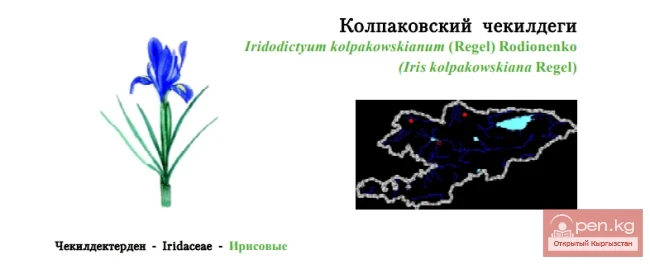
Kolpakovski's Blueflag
Iridodictyum Kolpakovski Status: VU. A species with a reducing range and population. It deserves...
The presentation of the Regulations on the national award "KYRGYZ TOURISM AWARDS" took place.
On April 16, 2014, a press conference was held at the "Kabar" news agency regarding the...
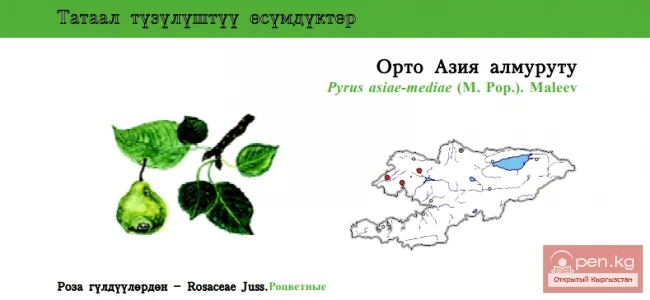
Middle Asian Pear
Middle Asian Pear Status: EN. The species is little-known and narrowly localized, endemic to the...
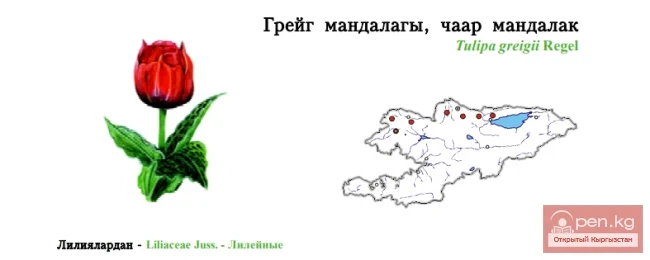
Greig's Tulip, Variegated Tulip / Greig Mandalagy, Chaar Mandalak / Greig’s Tulip
Greig’s Tulip / Тюльпан Греига, тюльпан пестролистный Status: EN. A species with declining numbers...
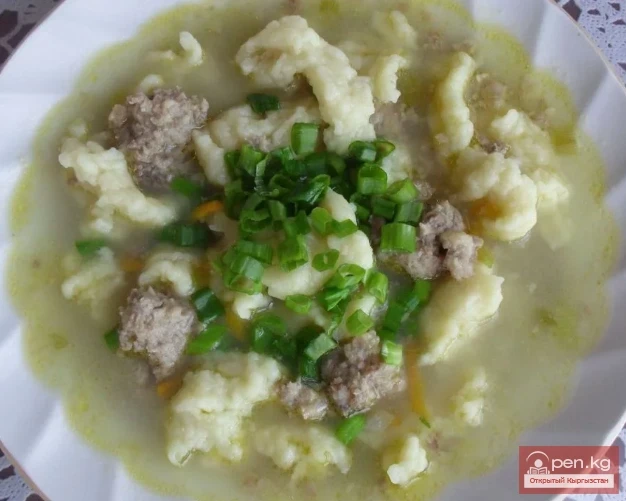
Umach ash (soup-thickener) in Kyrgyz style
Umach ash (soup-zatirukha) Ingredients: 2 liters of broth, 300 g of meat, 300 g of wheat flour,...
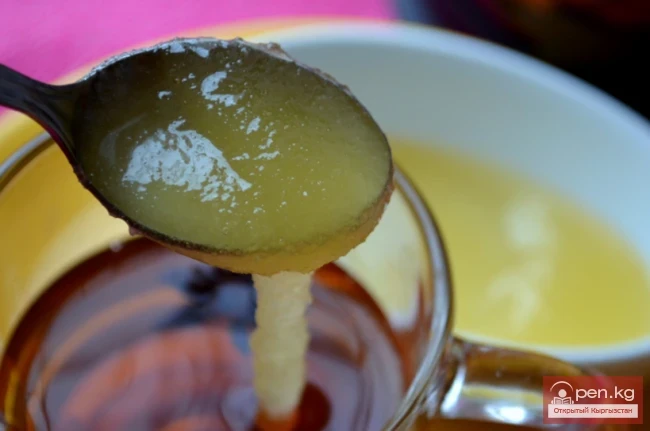
Bal - a Sweet Drink among the Kyrgyz
Bal (sweet drink) Popular among the Kyrgyz, bal is a sweet hot drink made from honey with the...
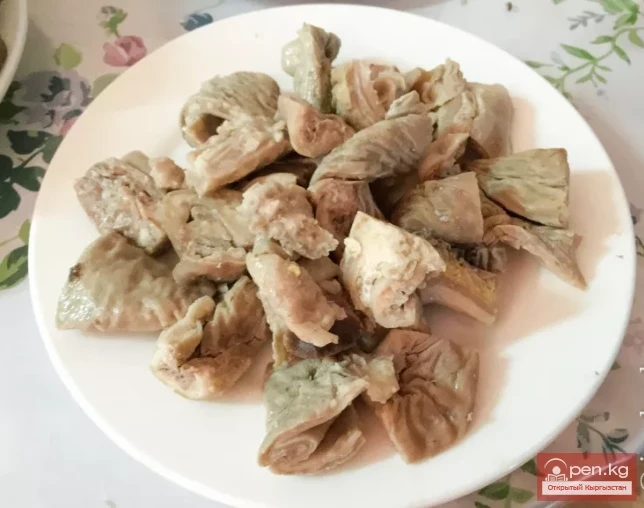
Karyn - A Dish for Special Guests
Karyn (horse stomach) This dish is for special guests. Its name comes from the stomach (karyn). It...
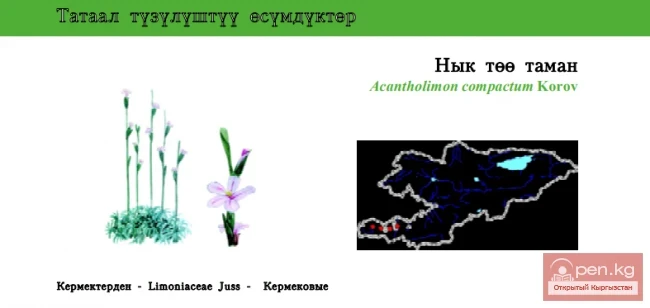
Acantholimon Dense / Nyk Työ Tamán / Dense Prickly-thrift
Acantholimon compactum Status: VU. A very rare narrowly endemic species....
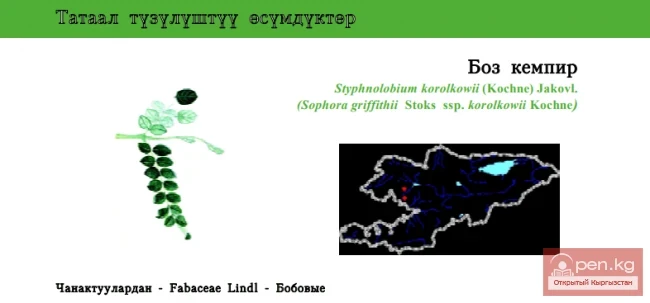
Sofora Korolkova / Boz Kempir / Korolkov’s Pagoda-tree
Korolkov’s Pagoda-tree Status: CR. The only species of the genus found in Kyrgyzstan....
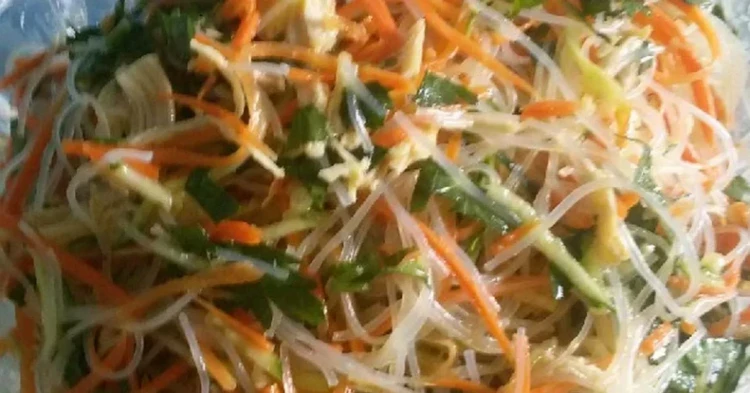
Salad "Yrakhat"
Ingredients: Starch noodles - 120g, carrot - 130g, radish - 200g, vegetable oil - 100g, garlic -...
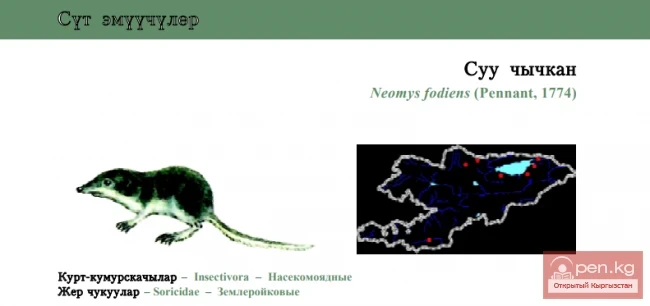
Common Water Shrew / Eurasian Water Shrew
Common Water Shrew Status: Category VI, Near Threatened, NT: R. A rare species for Kyrgyzstan,...
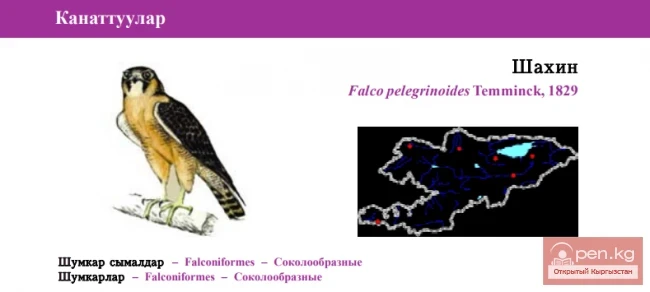
Red-headed Falcon / Shaheen / Barbary Falcon
Barbary Falcon Status: Category III, Critically Endangered, CR: R. Kyrgyz ornithologists believe...
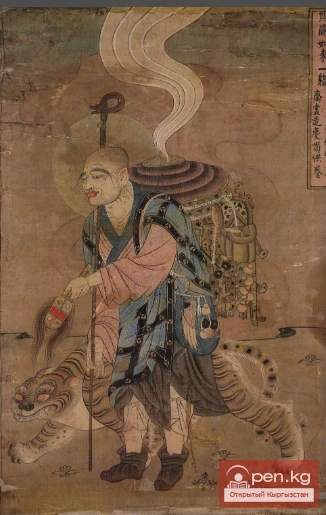
The Legend of the Journey of Xuánzàng
THE JOURNEY OF XUANZANG In the early 7th century, one of the remarkable travelers of the Middle...
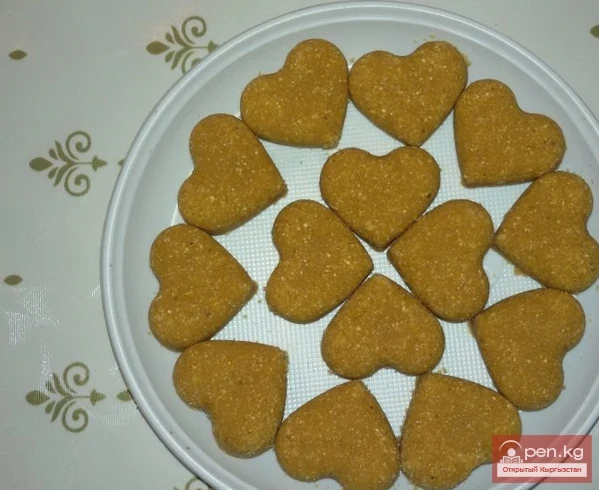
Zhansak - a sweet treat for tea
Zhansak Any feast for Kyrgyz people begins and ends with tea, and it is customary to serve sweets...
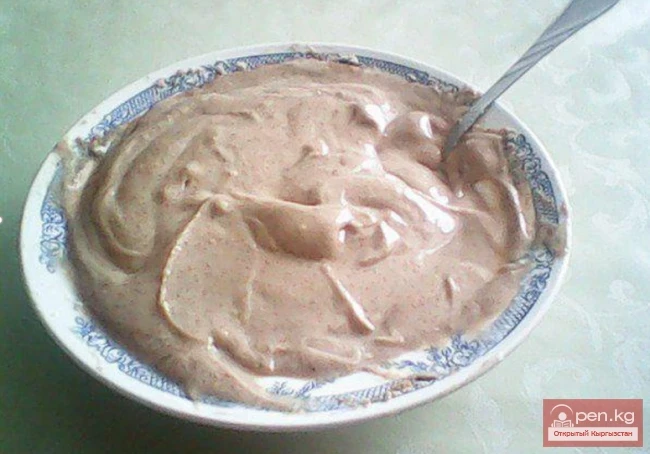
Aş-ayran
Ash-airan This dish is known in folk medicine as a dietary option. It is suitable for those who...
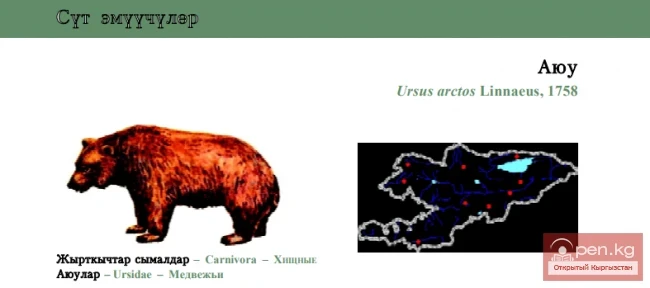
Brown Bear \ Ayyu / Brown Bear
Brown Bear Status: VII category, Lower Risk/least concerned, LR/lc. A rare subspecies of bear...
Dish of Kyrgyz cuisine — lamb stuffed with tail fat
Lamb Stuffed with Tail Fat Ingredients lamb 180 g garlic 5 g jussai (Chinese chives) 10 g tail fat...
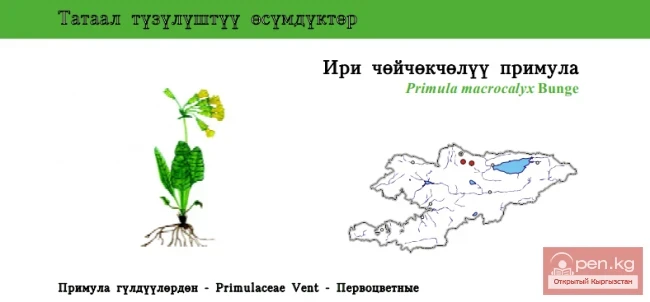
Large-calyxed Primrose
Large-calyxed Primrose Status: VU. In Kyrgyzstan, it is a very narrowly distributed, rare,...
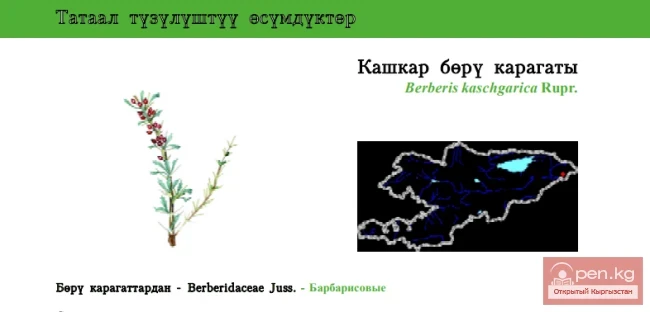
Kashgarian Barberry
Kashgarian Barberry Status: VU. Rare species....
The State of the Yenisei Kyrgyz
Resettlement of the Kyrgyz to the Yenisei. The early medieval population of the Yenisei was...
Map – a popular dish in Kyrgyzstan.
Karta. Karta – a popular dish in Kyrgyzstan. To prepare the meat delicacy karta, we will need the...
Kyrgyzstan will be represented at the "International Heritage" festival in New Jersey.
On May 31, the "International Heritage" festival will take place in New Jersey (USA)....
Maro Chuchvara
This dish was mainly prepared by southern Kyrgyz tribes closer to autumn. At this time, the seeds...
Zhenmomo - Recipe of Kyrgyz Cuisine
Zhenmomo (dough balls) The basis of various flour dishes is dough. The Kyrgyz people have long...
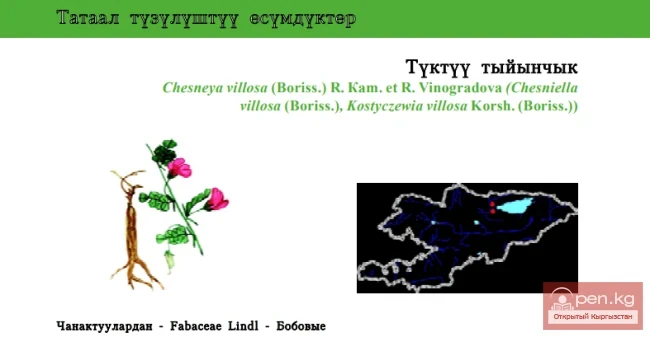
Chesneya Woolly / Tuktuk Coin / Kostyczewia, Pilose Chesneya
Chesneya villosa Status: EN. One of the three very rarely encountered species of this genus in...
Narrow Yurt or Spacious? (A Parable)
A very sad young man approached the wise elder. - Help me, elder. I have a yurt, but my family is...
Salad "Susamyr" - cold appetizer
SALAD "SUSAMYR", cold appetizer — a dish of Kyrgyz cuisine. Susamyr is a very tasty and...
Noble Deer (Tien Shan subspecies), Maral / Bugu (male), Maral (female) / Asiatic Red Deer, Tien Shan Maral, Tien Shan stag
Noble deer (Tien Shan subspecies), Maral Status: Category IV, Endangered, EN C2a(i): R. A sharply...
Persian Rowan \ Persia Alma-Chetini \ Persian Rowan
Persian Rowan Status: VU. Endemic, ornamental species....
Salad "Ozgeche"
Salad "Ozgiche" Ingredients: Chicken liver or stomach 48 Fresh or pickled cucumbers 10...
The Tale of the Ungrateful Owl
HAWK AND OWL Once upon a time, there was an owl. One day, she fell seriously ill and could not fly...
Khalvaitar – Kyrgyz Sauce for Flour Dishes
Halvaitar — a liquid halvah-like mixture. Ingredients: 100 g of lamb fat or melted butter 100 g of...
Sweet flour, roasted flour, dried flour
Talcan Reference: talcan - coarse flour made from wheat or oats. One of the most beloved treats...
Nathaliella Alai / Alai Nathaliella / Nathaliella
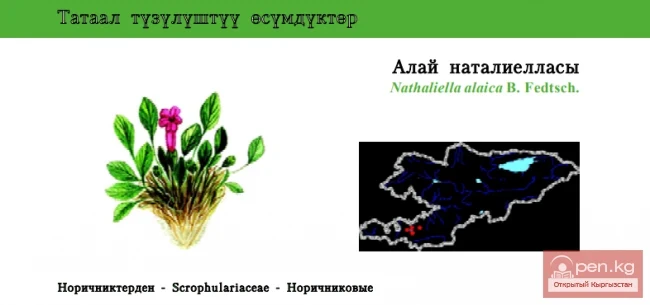
Nathaliella alaica Status: CR B2ab(iii). A rare, endemic species of a monotypic genus of Himalayan...
Oiled Wheat
According to the stories of the elders, each tribe kept the methods of preparing their warriors a...
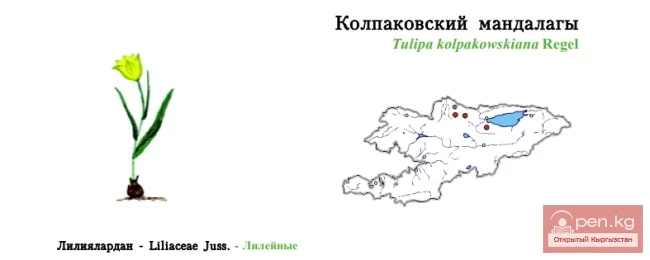
Kolpakovski's Tulip / Kolpakovski Mandalagy / Kolpakovski’s Tulip
Kolpakovski’s Tulip Status: VU. An endemic of the Northern Tien Shan with a decreasing population....
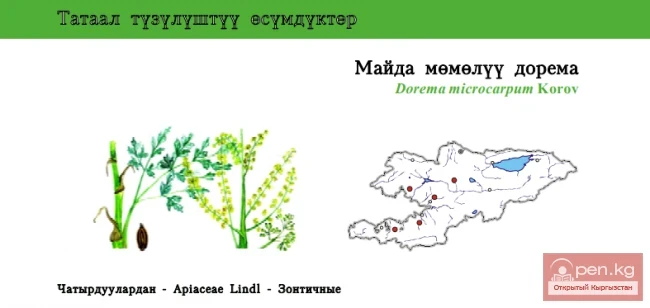
Dorema microcarpous \ Mayda myomyolu Dorema \ Microcarpous Dorema
Dorema microcarpum Status: VU. Rare endemic species....