
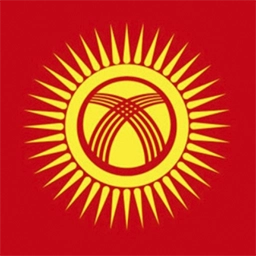
About Kyrgyzstan

{title}
State structure
{title}
National symbols
{title}
Government
{title}
Armed forces
{title}
National currency
{title}
Banknotes
{title}
Circulation coins
{title}
Collectible coins
{title}
Political organization
{title}
Domestic policy
{title}
Foreign policy
{title}
History
{title}
Kyrgyz in antiquity
{title}
Kyrgyz in the VI-XII centuries
{title}
Kyrgyz in the XIII—first half of XVIII century
{title}
The struggle for the independence of the Kyrgyz
{title}
Kyrgyzstan as part of Russia
{title}
Kyrgyzstan during the Soviet period
{title}
Kyrgyzstan — a sovereign state
{title}
Historical records
{title}
Kurmanjan Datka
{title}
Chagatai Ulus. Haidu State. Moghulistan
{title}
History and archeology of the ancient Tien Shan
{title}
Peoples movements of Central Asia in the XIX century
{title}
Kyrgyzstan during the Great Patriotic War
{title}
Kyrgyzstan in the 1920s
{title}
1937 in Kyrgyzstan
{title}
Shabdan Baatyr
{title}
Territory, geography and administrative division
{title}
Chuy Region
{title}
Attractions of Chuy Region
{title}
Issyk-Kul Region
{title}
Sights of Issyk-Kul
{title}
Naryn Region
{title}
Attractions of Naryn Region
{title}
Talas Region
{title}
Attractions of Talas Region
{title}
Osh Region
{title}
Attractions of Osh Region
{title}
Batken Region
{title}
Attractions of Batken Region
{title}
Jalal-Abad Region
{title}
Attractions of Jalal-Abad Region
{title}
Cities
{title}
Bishkek
{title}
Streets of Bishkek
{title}
Pishpek - Frunze - Bishkek
{title}
History of the capital of Kyrgyzstan in documents
{title}
Osh
{title}
Osh - 3000
{title}
Naryn
{title}
Jalal-Abad
{title}
Batken
{title}
Talas
{title}
Karakol
{title}
Tokmok
{title}
Cholpon-Ata
{title}
Uzgen
{title}
Kochkor
{title}
Kemin
{title}
Balykchy
{title}
Kyzyl-Kiya
{title}
Mailuu-Suu
{title}
Sulukta
{title}
Tash-Kumyr
{title}
Toktogul
{title}
Kara-Kul
{title}
Kara-Balta
{title}
Kara-Balta - Black Ax
{title}
Kant
{title}
Villages
{title}
Population
{title}
Language
{title}
Diaspora
{title}
Nature
{title}
Climate
{title}
Natural ecological complexes
{title}
Water resources
{title}
Rivers
{title}
Lakes
{title}
Secrets of Issyk-Kul Lake
{title}
Reservoirs
{title}
Waterfalls
{title}
Mineral waters
{title}
Flora
{title}
Fauna of Kyrgyzstan
{title}
Mammals of Kyrgyzstan
{title}
Birds of Kyrgyzstan
{title}
Fish of Kyrgyzstan
{title}
Amphibians and reptiles of Kyrgyzstan
{title}
Insects of Kyrgyzstan
{title}
Mountains and glaciers
{title}
Mountain ranges
{title}
Mountain peaks
{title}
Mountain passes
{title}
Glaciers
{title}
Caves
{title}
Gorges
{title}
National parks and reserves
{title}
Pastures and valleys
{title}
Soil and minerals
{title}
Red Book
{title}
Fungi and higher plants
{title}
Animals
{title}
Arthropods
{title}
Fish
{title}
Amphibians and reptiles
{title}
Birds
{title}
Mammals
{title}
Economy of Kyrgyzstan
{title}
Entrepreneurship
{title}
Agriculture
{title}
Finance
{title}
Construction
{title}
Industry
{title}
Transport and communications
{title}
Socio-economic resources
{title}
Tourism industry
{title}
Healthcare
{title}
Education
{title}
Sports
{title}
Science
{title}
Environmental science
{title}
Mass media
{title}
Art
{title}
Dances
{title}
Ballet
{title}
Decorative and applied arts
{title}
Musical instruments
{title}
Architecture
{title}
Painting
{title}
Music
{title}
Theater
{title}
Cinema
{title}
Sculpture
{title}
Circus
{title}
Literature
{title}
Photography
{title}
Culture
{title}
Epigraphy
{title}
Folklore
{title}
Kyrgyz heroic epic "Manas"
{title}
The epic "Manas" in prose
{title}
Poetic retelling of the epic "Manas"
{title}
"Semetey" - poetic story
{title}
"Semetey" in prose
{title}
Religion
{title}
Ethnography
{title}
National games
{title}
Customs
{title}
Myths and legends
{title}
Kyrgyz fairy tales
{title}
Kyrgyz cuisine
{title}
Meat and offal dishes
{title}
Soups of Kyrgyzstan
{title}
Main dishes of Kyrgyzstan
{title}
Sweet dishes of Kyrgyzstan
{title}
Drinks of Kyrgyzstan
{title}
Salads and appetizers
{title}
Flour products
{title}
Miscellaneous information about Kyrgyzstan
{title}
Historical and holiday dates of Kyrgyzstan
{title}
Famous personalities of Kyrgyzstan
{title}
Women of Kyrgyzstan
{title}
Historical figures
{title}
Heroes of Kyrgyzstan
{title}
Hero of the Kyrgyz Republic
{title}
Heroes internationalists
{title}
Heroes of Kyrgyzstan in World War II
{title}
Kyrgyzstanis — Full cavaliers of the Order of Glory
{title}
Writers of Kyrgyzstan
{title}
Inventors of Kyrgyzstan
{title}
Scientists of Kyrgyzstan
{title}
Architects of Kyrgyzstan
{title}
Artists of Kyrgyzstan
{title}
Musicians of Kyrgyzstan
{title}
Cinematographers of Soviet Kyrgyzstan
{title}
Actors of Kyrgyzstan
Payment of Kalym (or Kalyma)
Customs

Payment of Kalym (or Kalyma)

The payment of kalym - the bride price - openly reflects the attitude towards women as movable property of the husband and all his relatives. Kalym was an insurmountable barrier for men wishing to marry if they did not possess the required minimum of material wealth. The amount of kalym indicated the degree of respect for the bride's parents: the higher the kalym paid for the bride, the greater the honor for her parents. The kalym was fully at the disposal of the bride's father and,

07.03.2014, 21:05
The Right of Inheritance under Sharia Law
Religion

The Right of Inheritance under Sharia Law

Let us consider women's rights in the area of inheritance, where Islam clearly establishes inequality between women and men. Under Sharia, the right of inheritance is closely linked to marital and family legal norms. It is complicated by polygamy, temporary divorce, purifying marriage, and marrying a widow. The foundations of inheritance law date back to the pre-Islamic period, from which Muhammad, in particular, preserved the provisions of inheritance rights for males and through the

07.03.2014, 18:41
Marriage Conclusion and Dissolution under Sharia Law
Religion

Marriage Conclusion and Dissolution under Sharia Law

The inequality of the personal status of men and women was vividly manifested in the conclusion and dissolution of marriage according to Sharia. The marriage of a man and a woman, accompanied by the birth of children, was a religious obligation, while celibacy was considered a regrettable state. In Muslim society, there were practically no "old maids," which was due to the order of concluding and dissolving marriages. Adultery was considered a sin (zina). Barriers to marriage for

07.03.2014, 18:34
Norms of Adat and Sharia
Religion

Norms of Adat and Sharia

Sharia originated in Arabia as a more developed system of feudal law and evolved as a confessional law, organically linked to the theology of Islam, infused with its religious-mystical concepts. Islam views legal provisions as a part of the unified divine law and order that governs the world. Sharia includes the normative part (fiqh), including legal norms that define the relationship of Muslims with Allah (ibadat). The importance of qualities such as patience, humility, and fulfillment is

05.03.2014, 22:05
Chakan Atmai (Chakan Tash)
National games

Chakan Atmai (Chakan Tash)

Chakan atmay (chakan tash) — a game for schoolchildren of younger and middle ages. It is played by up to 10 people or two teams of 5-6 players each.

01.03.2014, 22:35
Achakey-Zhumakey and Chaka Chapmay
National games

Achakey-Zhumakey and Chaka Chapmay

Achakey-jumakey. It is played by two participants. The goal of the players, by taking turns throwing their alchik, is to score 10 points. The order of throwing is determined by a draw.

01.03.2014, 21:27
The title translates to: "The Six Banners of Selkinchek and Dumpuldak."
National games

The title translates to: "The Six Banners of Selkinchek and Dumpuldak."

Alty bakan selkinchek. One of the most popular entertainments is swinging (selkinchek). In the past, during the nomadic lifestyle, swings were made from nearby trees in mountain pastures, and in treeless areas, poles (bakans) were used to raise the upper part of the yurt frame during its setup. Usually, 6 such poles were taken. Hence the name alty bakan selkinchek — swings made from 6 poles. A girl and a boy swing together. The rest of the youth, divided into two teams (girls and boys), hold

01.03.2014, 20:44
Toguz Korgol (Toguz Kumalak)
National games

Toguz Korgol (Toguz Kumalak)

Toguz Korgool (or Toguz Kumalak) — nine balls — is an ancient Kyrgyz tabletop game that somewhat resembles chess. It is played by two people. The game board, made of wood and oval in shape, has two small depressions in the middle (the cauldron) and 18 smaller holes located along the edges (nine on each side). Each of the 9 holes is numbered (from left to right). In ancient times, each hole had its own name:

01.03.2014, 11:56
Orda - Khan's Headquarters
National games

Orda - Khan's Headquarters

Ordo (literally "Khan's camp") is a two-sided team national game that exists only in Kyrgyzstan. Two teams play, each consisting of men aged 18 and older, with a team size ranging from 5 to 10 players.

01.03.2014, 10:46
Wrestling
National games

Wrestling

Kuresh — Kyrgyz waist wrestling — is one of the most popular national sports in Kyrgyzstan. This wrestling is similar to freestyle wrestling. Until recently, there were two variants of wrestling widely practiced among the people — southern and northern. The southern variant, prevalent in the Osh region, does not allow the use of leg hooks, trips, or sweeps. In the northern variant of kuresh, a variety of techniques are used; this makes it closer to freestyle wrestling.

28.02.2014, 23:02
Ulak-tartys (goat wrestling)
National games

Ulak-tartys (goat wrestling)

Ulak-Tartysh (goat wrestling) is a traditional equestrian sport where riders compete for the carcass of a goat (ulak). The competitions in ulak-tartysh are held on an open field, which is a rectangle measuring 500 to 1000 meters in length and 250 to 500 meters in width.

27.02.2014, 23:22
A Bit of History of the National Games of the Kyrgyz People
National games

A Bit of History of the National Games of the Kyrgyz People

The voluntary incorporation of Kyrgyzstan into Russia (1863) played an important role in the historical fate of the Kyrgyz people. The alliance with the Russian people allowed the Kyrgyz to free themselves from the yoke of the Kokand khans, from internal feudal wars, and to avoid enslavement by English imperialism. All further socio-political and economic development of the Kyrgyz occurred under the influence of the economy and culture of Russia.

27.02.2014, 22:39
Visual Arts of the Kyrgyz SSR
Painting

Visual Arts of the Kyrgyz SSR

Before the revolution, the Kyrgyz people knew visual arts only in its folk, applied form. The art of ornamentation was developed: it adorned felt and pile carpets, wooden, leather, and metal objects. The "ram's curl"—a stylized depiction of a ram's horn in various variations—was particularly widespread.

27.02.2014, 21:46
Kyrgyz Music in the Soviet Era
Music

Kyrgyz Music in the Soviet Era

Starting from the mid-19th century, progressive Russian travelers and scholars began to study and widely introduce the artistic creativity and material culture of the peoples of Central Asia to the European public. During this time, a relationship and mutual penetration of the musical cultures of the peoples of Russia and Central Asia began. Russian composers showed great interest in the music of the peoples of Central Asia. They recorded folk melodies, processed them, borrowing some elements.

26.02.2014, 23:15
Kyrgyz Folk Music
Music

Kyrgyz Folk Music

Kyrgyz folk music is a rich area of the national culture of the people, expressing their worldview, everyday life, history, ethical and aesthetic ideals. Its roots go deep into antiquity. The first written records of the musical past of the Kyrgyz are found in several sources. In 630 BC, the Chinese pilgrim Xuanzang, traveling through the territory of modern Kyrgyzstan, noted that a feast held in honor of his arrival began with the sounds of music that enchanted and delighted the ears,

26.02.2014, 22:53
The Formation of Kyrgyz Cinema
Cinema

The Formation of Kyrgyz Cinema

Until 1917, there was one cinema installation in Pishpek (now Bishkek). From the very first years of Soviet power, cinemas were built in the cities and villages of the republic.

26.02.2014, 22:17
The Theater of Kyrgyzstan in the 20s-80s
Theater

The Theater of Kyrgyzstan in the 20s-80s

Before the Great October Revolution, the Kyrgyz did not have a national professional theater. However, throughout their centuries-old history, the people created their rich, unique art, filled with theatrical elements. Performances by manaschis (epic storytellers) and akyns-improvisers resembled a one-man theater.

26.02.2014, 19:39
Kyrgyz Literature
Literature

Kyrgyz Literature

The monumental epic of the Kyrgyz people “Manas” is rightly recognized as an encyclopedia of the philosophical, ethical, and artistic views of many generations of the Kyrgyz people. In terms of its volume, “Manas” has no equal among the world-renowned epic tales. The Academy of Sciences of the Kyrgyz SSR has collected recordings of more than 40 versions of this monumental trilogy.

23.02.2014, 23:11
The History of Kyrgyz Printing
Mass media

The History of Kyrgyz Printing

Printing in Kyrgyzstan On November 7, 1924, the first issue of the newspaper "Erkin-Too" ("Free Mountains") was published. This is the first newspaper in the history of the Kyrgyz people in their native language. The first copies of the newspaper also served as the first alphabet through which the people learned to read and write. Initially, "Erkin-Too" was published twice a week with a total circulation of 3,000 copies. There were only 150 regular subscribers to

23.02.2014, 22:36
Healthcare in Kyrgyzstan: First Steps
Healthcare

Healthcare in Kyrgyzstan: First Steps

Healthcare in the Kyrgyz Republic Before the revolution, the residents of Central Asia were unaware of medical assistance. Throughout the territory of Kyrgyzstan, there was only one hospital with 23 beds, staffed by 5 doctors and 8 paramedics. Doctor of Medical Sciences, Honored Physician of the Kyrgyz SSR Isa Konoievich Akhunbaev (1908—1974) made a significant contribution to the development of Soviet medicine. He was the first in Central Asia to perform heart surgeries. I. K. Akhunbaev was

23.02.2014, 22:03
The History of the Development of Science in the Kyrgyz Republic
Science

The History of the Development of Science in the Kyrgyz Republic

Science in Kyrgyzstan The concept of science emerged in Kyrgyzstan only after the Great October Socialist Revolution. The scientists of the Academy of Sciences of the USSR played an important role in the establishment and development of research work. During the Great Patriotic War, scientists in Kyrgyzstan, along with researchers from the scientific institutions of the Academy of Sciences of the USSR, addressed important issues of defense and national economic significance. Thanks to their

23.02.2014, 21:39
The History of Transport and Communication Development in Kyrgyzstan
Transport and communications

The History of Transport and Communication Development in Kyrgyzstan

Transport and Communication of the Republic of Kyrgyzstan It seems that just recently only bumpy roads and narrow paths connected Kyrgyz villages, and the most urgent news spread among the ails at the speed of a galloping horse. Now the republic has all types of modern transport — rail, road, and air. Road transport is the most developed, being the most convenient in our mountainous region. It accounts for 97% of all cargo transported within the republic.

19.02.2014, 19:35
Wildlife of Kyrgyzstan
Nature

Wildlife of Kyrgyzstan

Increasingly, Western travelers and tourists are seeking exotic vacation spots located "off the beaten path."

17.02.2014, 11:39
Kara-Shoro
Natural ecological complexes

Kara-Shoro

In the upper reaches of the Yassy River, on its right bank, there is a whole series of mineral water springs. Kara-Shoro is the most famous among them, known for its carbonated water springs. There are more than twenty of them, with pure cold water that bubbles with gas, rivaling the taste and healing qualities of the most renowned springs in Europe and Asia.

16.02.2014, 21:58
Resort and Climate Resources of the Suburban Area of Bishkek
Bishkek

Resort and Climate Resources of the Suburban Area of Bishkek

The suburban area of Bishkek, adjacent to the northern slopes of the Kyrgyz Range, is of the greatest interest for tourism development, where diverse landscapes, climatic and microclimatic conditions allow for the wide development of resort and skiing tourism. The characteristics of the facilities in this area are presented in the table.

16.02.2014, 21:54
City of Bishkek and Surroundings
Cities

City of Bishkek and Surroundings

Usually, when you ask about the tourist resources of the city of Bishkek, it tends to lead to a slight confusion. This is because there is a common belief that resources primarily refer to beautiful natural objects: mountains, lakes, peaks, or historical buildings, and what could there be in a city that is just over a hundred years old.

16.02.2014, 21:38
The Valley of Chichkan
Pastures and valleys

The Valley of Chichkan

The Chichkan River flows from the north into the Toktogul Reservoir. It is a small river with clear water. It runs through a picturesque gorge with steep slopes and whimsical rock formations. Along the banks of the river runs the main road of the country, connecting the city of Bishkek with the city of Osh. The road gently descends from the Ala-Bel Pass (3184 m), from which the Chichkan River begins. Two ridges loom over the river: the Talas and Suusamyr ridges. The gorge is open to air

16.02.2014, 21:11
Natural Park "Besh-Tash"
National parks and reserves

Natural Park "Besh-Tash"

Besh-Tash Nature Park is located south of the city of Talas on the northern slopes of the Talas Ala-Too and includes the gorges: Kolba, Besh-Tash, Urmaral, and Kumush-Tag with their branches. In these gorges, rivers of the same name flow with a widely branched network of tributaries. The territory is cut by deep ravines. In summer, the gorges look very beautiful. Juniper thickets are scattered along the slopes. In the upper reaches of the gorges, on the right slopes, there are sparse forests

16.02.2014, 20:06
Talas Region
Talas Region

Talas Region

The Talas Region is located in the northwestern part of the Kyrgyz Republic. It was established on June 22, 1944. The region consists of 4 districts (Talas, Bakai-Ata, Kara-Buura, Manas), 1 city - Talas, and 90 villages, united into 35 ayil okmotu. It borders Kazakhstan to the northwest, Uzbekistan to the west, Jalal-Abad Region to the south, and Chui Region to the east. The area is 11.4 thousand square kilometers (5.7% of the republic's territory), with a population of 199.9 thousand

16.02.2014, 19:34
The Cave of Kan-i-Gut
Caves

The Cave of Kan-i-Gut

Kan-i-Gut Cave is located on the southern slope of the Djaman-Chul range, approximately 18 km west of the village of Samarkandyk in the Shadymir area. The local name is Zauk-Kur. It was formed by fissure-like separations of layers and active manifestations of ore karst processes. There are almost no dripstone formations. The cavity consists of numerous grottoes, deep pits (up to 40 m), chimneys, narrow interwoven passages, and corridors. Based on random archaeological finds, scientists

16.02.2014, 17:43
The title "Сох" translates to "Sokh" in English.
Rivers

The title "Сох" translates to "Sokh" in English.

Narrow echoing gorges, through which in the gloomy depths flows a river bound by rocky jaws; tributaries falling into it, hanging villages clinging to the terraces, autumn-blazing orchards of wild apricots, fortresses and burial mounds where once warriors in chainmail and bright cloaks walked, armed with swords and spears - all this is Sokh. Caves, winding paths above the boiling river, rickety bridges, and finally, one of the largest waterfalls, not far from the hidden village of Zardaly

16.02.2014, 17:37
Dugoba
Rivers

Dugoba

This area is located 40 km from the village of Kadamjay, where the best antimony in the world is produced. Kadamjay is situated along the banks of the Shakhimardan River, which flows down from the northern slopes of the Pamir-Alai. The Shakhimardan River is formed by the tributaries Ak-Suu (on the left) and Kok-Suu (on the right). Below their confluence rise two cliffs: Kala-Choku and Uzun-Choku. In ancient times, these cliffs served as natural fortresses. Many tools of primitive man and

16.02.2014, 17:21