About Kyrgyzstan

{title}
State structure
{title}
National symbols
{title}
Government
{title}
Armed forces
{title}
National currency
{title}
Banknotes
{title}
Circulation coins
{title}
Collectible coins
{title}
Political organization
{title}
Domestic policy
{title}
Foreign policy
{title}
History
{title}
Kyrgyz in antiquity
{title}
Kyrgyz in the VI-XII centuries
{title}
Kyrgyz in the XIII—first half of XVIII century
{title}
The struggle for the independence of the Kyrgyz
{title}
Kyrgyzstan as part of Russia
{title}
Kyrgyzstan during the Soviet period
{title}
Kyrgyzstan — a sovereign state
{title}
Historical records
{title}
Kurmanjan Datka
{title}
Chagatai Ulus. Haidu State. Moghulistan
{title}
History and archeology of the ancient Tien Shan
{title}
Peoples movements of Central Asia in the XIX century
{title}
Kyrgyzstan during the Great Patriotic War
{title}
Kyrgyzstan in the 1920s
{title}
1937 in Kyrgyzstan
{title}
Shabdan Baatyr
{title}
Territory, geography and administrative division
{title}
Chuy Region
{title}
Attractions of Chuy Region
{title}
Issyk-Kul Region
{title}
Sights of Issyk-Kul
{title}
Naryn Region
{title}
Attractions of Naryn Region
{title}
Talas Region
{title}
Attractions of Talas Region
{title}
Osh Region
{title}
Attractions of Osh Region
{title}
Batken Region
{title}
Attractions of Batken Region
{title}
Jalal-Abad Region
{title}
Attractions of Jalal-Abad Region
{title}
Cities
{title}
Bishkek
{title}
Streets of Bishkek
{title}
Pishpek - Frunze - Bishkek
{title}
History of the capital of Kyrgyzstan in documents
{title}
Osh
{title}
Osh - 3000
{title}
Naryn
{title}
Jalal-Abad
{title}
Batken
{title}
Talas
{title}
Karakol
{title}
Tokmok
{title}
Cholpon-Ata
{title}
Uzgen
{title}
Kochkor
{title}
Kemin
{title}
Balykchy
{title}
Kyzyl-Kiya
{title}
Mailuu-Suu
{title}
Sulukta
{title}
Tash-Kumyr
{title}
Toktogul
{title}
Kara-Kul
{title}
Kara-Balta
{title}
Kara-Balta - Black Ax
{title}
Kant
{title}
Villages
{title}
Population
{title}
Language
{title}
Diaspora
{title}
Nature
{title}
Climate
{title}
Natural ecological complexes
{title}
Water resources
{title}
Rivers
{title}
Lakes
{title}
Secrets of Issyk-Kul Lake
{title}
Reservoirs
{title}
Waterfalls
{title}
Mineral waters
{title}
Flora
{title}
Fauna of Kyrgyzstan
{title}
Mammals of Kyrgyzstan
{title}
Birds of Kyrgyzstan
{title}
Fish of Kyrgyzstan
{title}
Amphibians and reptiles of Kyrgyzstan
{title}
Insects of Kyrgyzstan
{title}
Mountains and glaciers
{title}
Mountain ranges
{title}
Mountain peaks
{title}
Mountain passes
{title}
Glaciers
{title}
Caves
{title}
Gorges
{title}
National parks and reserves
{title}
Pastures and valleys
{title}
Soil and minerals
{title}
Red Book
{title}
Fungi and higher plants
{title}
Animals
{title}
Arthropods
{title}
Fish
{title}
Amphibians and reptiles
{title}
Birds
{title}
Mammals
{title}
Economy of Kyrgyzstan
{title}
Entrepreneurship
{title}
Agriculture
{title}
Finance
{title}
Construction
{title}
Industry
{title}
Transport and communications
{title}
Socio-economic resources
{title}
Tourism industry
{title}
Healthcare
{title}
Education
{title}
Sports
{title}
Science
{title}
Environmental science
{title}
Mass media
{title}
Art
{title}
Dances
{title}
Ballet
{title}
Decorative and applied arts
{title}
Musical instruments
{title}
Architecture
{title}
Painting
{title}
Music
{title}
Theater
{title}
Cinema
{title}
Sculpture
{title}
Circus
{title}
Literature
{title}
Photography
{title}
Culture
{title}
Epigraphy
{title}
Folklore
{title}
Kyrgyz heroic epic "Manas"
{title}
The epic "Manas" in prose
{title}
Poetic retelling of the epic "Manas"
{title}
"Semetey" - poetic story
{title}
"Semetey" in prose
{title}
Religion
{title}
Ethnography
{title}
National games
{title}
Customs
{title}
Myths and legends
{title}
Kyrgyz fairy tales
{title}
Kyrgyz cuisine
{title}
Meat and offal dishes
{title}
Soups of Kyrgyzstan
{title}
Main dishes of Kyrgyzstan
{title}
Sweet dishes of Kyrgyzstan
{title}
Drinks of Kyrgyzstan
{title}
Salads and appetizers
{title}
Flour products
{title}
Miscellaneous information about Kyrgyzstan
{title}
Historical and holiday dates of Kyrgyzstan
{title}
Famous personalities of Kyrgyzstan
{title}
Women of Kyrgyzstan
{title}
Historical figures
{title}
Heroes of Kyrgyzstan
{title}
Hero of the Kyrgyz Republic
{title}
Heroes internationalists
{title}
Heroes of Kyrgyzstan in World War II
{title}
Kyrgyzstanis — Full cavaliers of the Order of Glory
{title}
Writers of Kyrgyzstan
{title}
Inventors of Kyrgyzstan
{title}
Scientists of Kyrgyzstan
{title}
Architects of Kyrgyzstan
{title}
Artists of Kyrgyzstan
{title}
Musicians of Kyrgyzstan
{title}
Cinematographers of Soviet Kyrgyzstan
{title}
Actors of Kyrgyzstan
Ashimov Kaarman
Cinematographers of Soviet Kyrgyzstan

Ashimov Kaarman

Ashimov Kaarman An analysis was conducted of the most significant documentary and feature films of the republic's film studio from 1939 to 1967. This same period in the development of Kyrgyz cinema has been covered in articles by film scholars published in volumes 3 and 4 of "History of Soviet Cinema" (Moscow, "Art", 1975, 1977) and in "History of Kyrgyz Art" (Frunze, "Ilm", 1971). K. Ashimov's book "Cinema - the Magical Art" (Frunze,

10.05.2018, 20:13
Akhmadeeva Khapisat Omarovna
Cinematographers of Soviet Kyrgyzstan

Akhmadeeva Khapisat Omarovna

Akhmadeeva Khapisat Omarovna Sound operator. Born on February 11, 1945, in the city of Makhachkala, Dagestan ASSR, in a family of civil servants. In 1963, after graduating from high school, she entered the Leningrad Institute of Cinema Engineers in the electrical engineering faculty. Since 1968, Kh. Akhmadeeva has been working as a sound operator at the "Kyrgyztelefilm" studio. She has provided sound for more than 30 documentary and feature films, concert films, and essays. The sound

10.05.2018, 20:04
The Secret of Chon-Tash. A Daughter Searches for Her Father
Historical records

The Secret of Chon-Tash. A Daughter Searches for Her Father

Search for Father The telegram reached Ak-Olen immediately, and Aiganish-ezhe began to prepare for the journey. She put on her best dress, tied a scarf tightly, the most beautiful kerchief. The bus was moving quickly, and Issyk-Kul was gradually left behind, only the sun was blinding her eyes painfully, to tears. The telegram was from Klara, the daughter of her brother Omor: tomorrow, on July 31st, Aiganish Jumayeva is invited to meet with President Akayev.

07.05.2018, 19:48
Akhmadeev Ali Agapovich
Cinematographers of Soviet Kyrgyzstan

Akhmadeev Ali Agapovich

Akhmadeev Ali Agapovich Sound engineer. Honored Worker of Culture of the Kyrgyz SSR (1979). Born on May 30, 1941, in the city of Frunze. In 1958, he graduated from a secondary boarding school in the village of Kalininskoye, Moscow District. From 1958 to 1961, he worked as a film technician in the settlement of "Cement Plant" in the Tyup District. From 1961 to 1966, he studied at the Leningrad Institute of Film Engineers. Since 1967, A. Akhmadeev has been working as a sound engineer
02.05.2018, 20:17
Oleg Borisovich Artyukhov
Cinematographers of Soviet Kyrgyzstan

Oleg Borisovich Artyukhov

Artyukhov Oleg Borisovich Film critic. Born on January 14, 1937, in Tashkent. In 1954, he graduated from high school in Frunze and enrolled in the philological faculty of Kyrgyz State University. After graduating from KSU in 1961, he worked until 1966 as an educator and seriously engaged in journalism. Since 1963, he has regularly published reviews, overview articles about Soviet and foreign films, reports from the sets of new films, and creative portraits of directors and actors of Kyrgyz

02.05.2018, 20:05
Nestorian Monuments of Kyrgyzstan from the 12th to 14th Centuries
Epigraphy

Nestorian Monuments of Kyrgyzstan from the 12th to 14th Centuries

Findings of Nestorion Epitaphs Syrian and Syro-Turkic Nestorion epitaphs form the most numerous group of epigraphic monuments in the territory of Kyrgyzstan. Currently, about 700 such monuments are known. The overwhelming majority of them were found in the late 19th century. Unfortunately, only a small part of these epitaphs has survived to this day. They are kept in the State Hermitage, in museums in Almaty, Frunze, Tashkent, and some other cities. A significant portion of the epitaphs has

02.05.2018, 19:40
The Secret of Chon-Tash
Historical records

The Secret of Chon-Tash

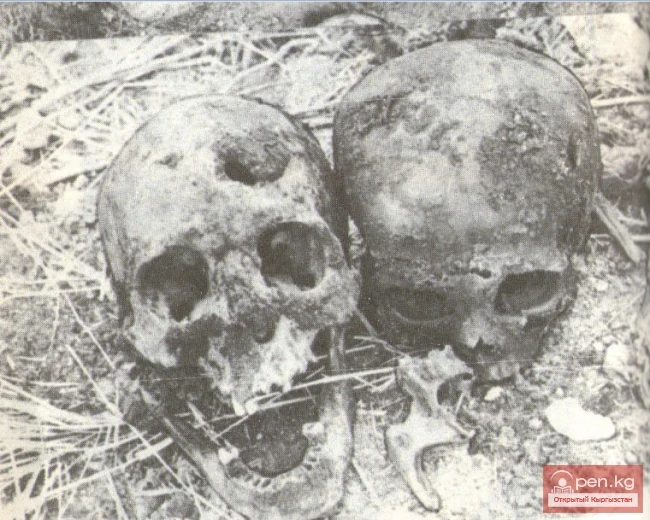
QUESTIONS WITHOUT ANSWERS The morphological department of the medical institute is not a cheerful place. In the basement, there are two morgues; in the classrooms, students study anatomy. Having lost my way in the desolate labyrinths of the upper floors, I carelessly entered one of these classrooms...

02.05.2018, 19:17
Alimbaev Alimkul
Cinematographers of Soviet Kyrgyzstan

Alimbaev Alimkul

Alimbayev Alymkul Film director. Born on May 9, 1931, in the town of Kok-Yangak in the Jalal-Abad region (now Osh region) in a peasant family. In 1947, after finishing 7th grade of secondary school, he continued his education at the Frunze Vocational School, and then in 1948, he entered the acting faculty of the Tashkent Theater and Art Institute. After graduating in 1953, he became an actor at the Kyrgyz Drama Theater. Since March 1957, A. Alimbayev moved to the film studio as an assistant

30.04.2018, 21:23
Mikhail Georgievich Aksakov
Cinematographers of Soviet Kyrgyzstan

Mikhail Georgievich Aksakov

Aksakov Mikhail Georgievich Film dramatist. Member of the Communist Party of the Soviet Union since 1952. Born on November 4, 1912, in the city of Voronezh to a family of civil servants, died on December 22, 1974, in the city of Frunze. After finishing school, he studied from 1929 to 1932 at the Central Asian Polytechnic Institute of Water Management.

30.04.2018, 21:16
Akmataliev Kiridin Sartbaevich
Cinematographers of Soviet Kyrgyzstan

Akmataliev Kiridin Sartbaevich

Akmataliyev Kiridin Sartbaevich Film director. Born on April 18, 1947, in the village of Temirovka, Issyk-Kul region, in a peasant family. After graduating from high school, from 1965 to 1967, he worked as an electric locomotive driver and later as a tunneler in the Uch-Koshkon search and exploration party (Jeti-Oguz district, Kyrgyz SSR). After serving in the Soviet Army, he worked from December 1969 to April 1970 as a driver in the Northern Production Auto Trust. In May 1970, K. Akmataliyev

30.04.2018, 21:02
Ancient Turkic Inscription on a Stone Portrait
Epigraphy

Ancient Turkic Inscription on a Stone Portrait

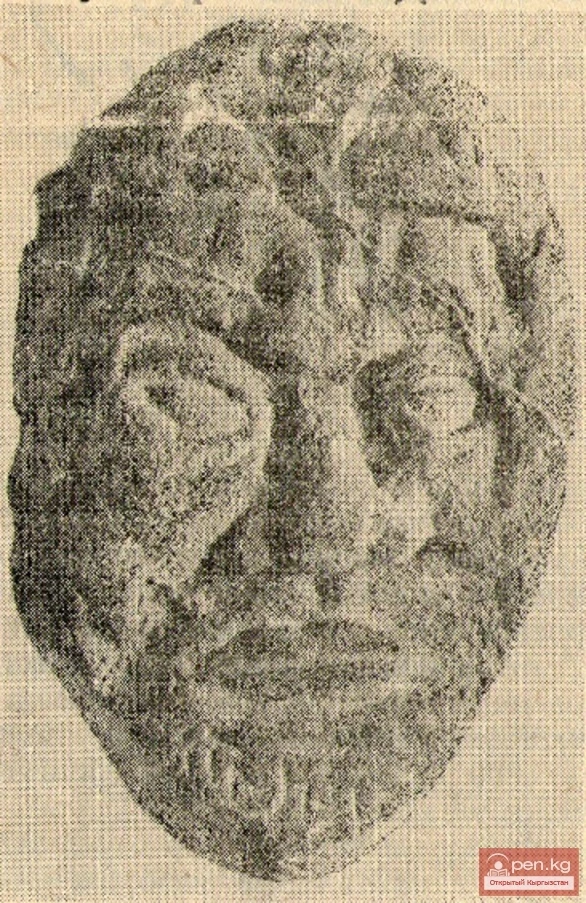
Ancient Turkic inscription on a stone portrait Among the finds made in recent years, a particular interest is aroused by the image of a male face on stone, on the chin of which an inscription consisting of seven letters is carved. The monument was discovered by teacher V. D. Serdyukov on the territory of the dairy farm of the Lenin collective farm, located on the western outskirts of the city of Talas. The stone lay near a destroyed burial mound on the bank of a ditch. Unfortunately, no

30.04.2018, 20:52
Repressions of the 1930s in Kyrgyzstan
Historical records

Repressions of the 1930s in Kyrgyzstan

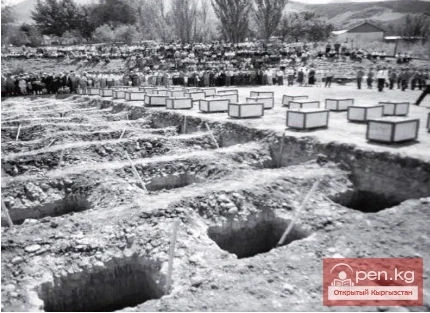
The Mystery of the Mass Grave. For many years, Bubuyra Kydyralieva could not share her secret. No one wanted to listen; she was not taken seriously. Yet she wanted to find someone who could investigate the tragic story she had remembered since she was 10 years old. Everything changed with her acquaintance with a young careerist from the KGB. Bolot Abdrakhmanov knew how to listen to the end. "I met with Bubuyra-ezhe at a time when Gorbachev began to implement democratic reforms. She said

29.04.2018, 23:17
Chinghiz Aitmatov
Cinematographers of Soviet Kyrgyzstan

Chinghiz Aitmatov

Chinghiz Aitmatov Screenwriter. Hero of Socialist Labor (1978). People's Writer of the Kyrgyz SSR (1968). Laureate of the Lenin Prize (1963) and State Prizes of the USSR (1968, 1977). Laureate of the State Prize of the Kyrgyz SSR named after Toktogul (1976). Academician of the Academy of Sciences of the Kyrgyz SSR (1974). Honorary Corresponding Member of the Academy of Arts of the GDR (1978). Member of the Communist Party of the Soviet Union since 1959. Born on December 12, 1928, in the

29.04.2018, 22:11
Ancient Turkic Rock Inscriptions in the Kuru-Bakayir Gorge
Epigraphy

Ancient Turkic Rock Inscriptions in the Kuru-Bakayir Gorge

Discovery of Ancient Turkic Rock Inscriptions in the Kuru-Bakayyr Gorge In the autumn of 1981, a joint expedition of the Institutes of History and Language and Literature of the Academy of Sciences of the Kirghiz SSR discovered previously unknown ancient Turkic rock inscriptions in the Kuru-Bakayyr gorge, in the western part of the Talas Valley, approximately 15 km south of the village of Bakayyr. As one ascends the gorge, it becomes apparent that the right side is rocky. In some places, there

29.04.2018, 21:46
The Twelfth Talsk Monument
Epigraphy

The Twelfth Talsk Monument

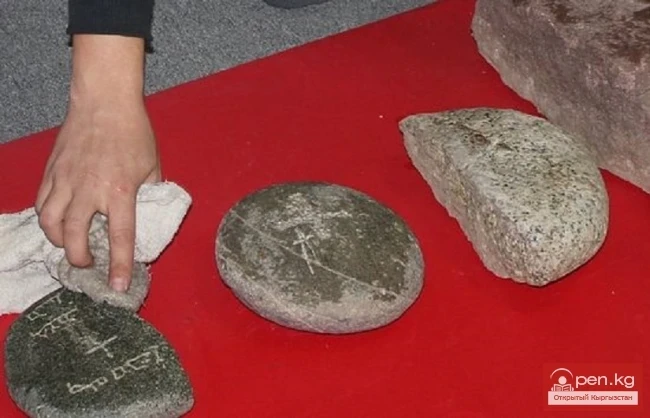
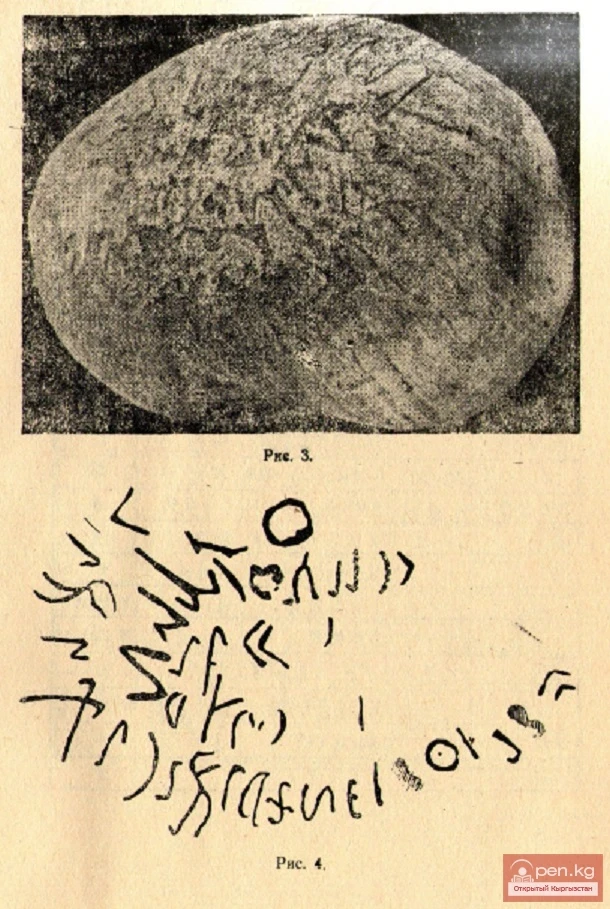
Large Boulder with Runic Inscriptions In 1962, archaeologist D. F. Vinnik discovered another large boulder with runic inscriptions in the same area of the Talas Valley where ancient Turkic inscriptions on boulders had previously been found. The stone was transported to Frunze, to the historical museum. In the upper, flatter part of the stone, there is a poorly preserved inscription. To this day, it remains unreadable. As can be seen from the drawing (fig. 3, 4), some letters have a distinctive

29.04.2018, 20:39
Abdyldaev Bekesh
Cinematographers of Soviet Kyrgyzstan

Abdyldaev Bekesh

Abdyldaev Bekesh Film director. Honored Artist of the Kyrgyz SSR (1979). Member of the Communist Party of the Soviet Union since 1974. Born on January 1, 1933, in the village of Tegermet in the Kemin district to a peasant family. After completing a seven-year rural school, he continued his education at boarding school No. 5 named after A. S. Pushkin in Frunze. In 1953, he entered the Tashkent Theater and Art Institute named after A. I. Ostrovsky in the acting faculty and graduated in 1957. B.

28.04.2018, 16:03
Abdykulov Karel Aydarbekovich
Cinematographers of Soviet Kyrgyzstan

Abdykulov Karel Aydarbekovich

Abdykulov Karel Aydarbekovich Cinematographer. Born on May 31, 1940, in the collective farm "Alga" of the Kant district. After graduating from a seven-year rural school, he entered an agricultural technical school in the agronomy department and graduated in 1959. Soon he began working at the Frunze studio as a worker, a crane operator on the film "The Girl of Tien Shan" (1961) by A. Ochkina, then as a lighting technician on "The Pass" (1961) by A. Sakharov, an

28.04.2018, 15:46
Abdykulov Imankul Abdykulovich
Cinematographers of Soviet Kyrgyzstan

Abdykulov Imankul Abdykulovich

Abdykulov Imankul Abdykulovich Organizer of film production. Member of the Communist Party of the Soviet Union since 1963. Born on October 13, 1932, in the village of Kara-Bulak, Kemin District, in a peasant family. After completing seven years of schooling, he studied at the Frunze Pedagogical College. In 1950, he was assigned as a primary school teacher to a seven-year school in the village of Kalininsky. From 1952 to 1958, he taught at the Beishikenskaya seven-year school in Kemin District.

28.04.2018, 15:40
Abdiev Musa
Cinematographers of Soviet Kyrgyzstan

Abdiev Musa

Abdiev Musa Costume designer. Born on February 23, 1934, in the collective farm named after Karl Marx in the Suzak district of the Osh region, in a peasant family. After graduating from the Jalal-Abad boarding school, he studied at the Frunze Art College from 1951 to 1954, then was drafted into the army. He completed his studies in 1959 and was accepted as an assistant production designer at the Frunze Film Studio. Since 1962, he worked at "Kyrgyzfilm" as a costume designer. He

28.04.2018, 15:34
The Fourth Talas Monument
Epigraphy

The Fourth Talas Monument

The Fourth Talas Monument In the summer of 1982, on Lenin Street (formerly Zhany-Chek) at the 1st section of the "40 Years of October" state farm, near the barn of the dairy farm, a boulder with an ancient Turkic runic inscription was discovered while leveling a pit. The stone had apparently been lying with the inscription facing down for a long time. As previously noted, between 1896 and 1898, in the vicinity of the village of Dmitrievskoye (now the city of Talas), local historian

28.04.2018, 15:13
The Path of Kyrgyz Cinema
Cinema

The Path of Kyrgyz Cinema

Kyrgyz Cinema The first founding congress of the Union of Cinematographers of Kyrgyzstan opened on October 24, 1962. At that time, it had 33 members. Today, two decades later, the group of Kyrgyz cinematographers has tripled in size. The very emergence of Kyrgyz cinema is inextricably linked to significant milestones in the socialist construction in the USSR.

27.04.2018, 18:29
From the History of the Discovery and Study of Ancient Turkic Runic Monuments in Kyrgyzstan
Epigraphy

From the History of the Discovery and Study of Ancient Turkic Runic Monuments in Kyrgyzstan

The Kyrgyz are one of the ancient peoples of Central Asia. Together with other Turkic peoples and tribes, they used ancient Turkic runic writing during the early medieval period, which was replaced by Old Uyghur script in the 10th-11th centuries. The runic monuments are unique texts that have preserved many common features of the dialects of the tribes living in the areas where this script was used. As early as the late 17th century, Russian cartographer, geographer, and historian of Siberia,

27.04.2018, 14:19
Osh. The Development of the City in Soviet Times
Osh

Osh. The Development of the City in Soviet Times

Osh — the oldest city in Kyrgyzstan. Findings of lifted ceramics and stone artifacts from the Bronze Age in the territory of the city, followed by excavation work on the terraces of Suleiman Mountain, have shown their affiliation with the Chust archaeological culture, dated to 3000 years ago. The archaeologically documented age of the oldest settlement in Osh is evidence of the first stable economic development by primitive humans of the territory of the modern city. Thus, the previously held

21.04.2018, 20:43
Osh. Events in Southern Kyrgyzstan in February 1917
Osh

Osh. Events in Southern Kyrgyzstan in February 1917

February Bourgeois-Democratic Revolution of 1917 in Osh. The overthrow of the tsarist autocracy on February 27 (March 12), 1917, in Petrograd, and soon in Moscow, by the uprising workers and soldiers — mostly peasants dressed in soldiers' overcoats — led to the widespread victory of the second Russian bourgeois-democratic revolution across the country by March. The most characteristic feature of this revolution, both in the center of the country and in the national outskirts, including

19.04.2018, 21:14
Osh. The Uprising of 1916.
Osh

Osh. The Uprising of 1916.

The Uprising of 1916 in Southern Kyrgyzstan Deep dissatisfaction with the tsarist government and its anti-people foreign and domestic policies manifested itself, in particular, in spontaneous anti-war protests in Central Russia and the Central Asian outskirts of the country immediately after the first mobilizations of reserve soldiers. Among these was the protest on July 21-22, 1914, at the Andijan assembly point of peasants and townspeople called up to the army, who left behind unprotected

16.04.2018, 21:05
Osh. Revolutionary Events of 1905-1907.
Osh

Osh. Revolutionary Events of 1905-1907.

The revolutionary protests of workers, townspeople, and peasants in southern Kyrgyzstan in 1905-1907 were an integral part of the first popular revolution in Russia during the period of imperialism. After the events of Bloody Sunday—January 9, 1905, in St. Petersburg, influenced by the revolutionary upsurge sweeping the country, the growing national liberation movement flowed into the overall stream of democratic forces. Together with their Russian brothers, the workers and peasants of Central

15.04.2018, 11:23
Features of Kyrgyz Carpet
Decorative and applied arts

Features of Kyrgyz Carpet

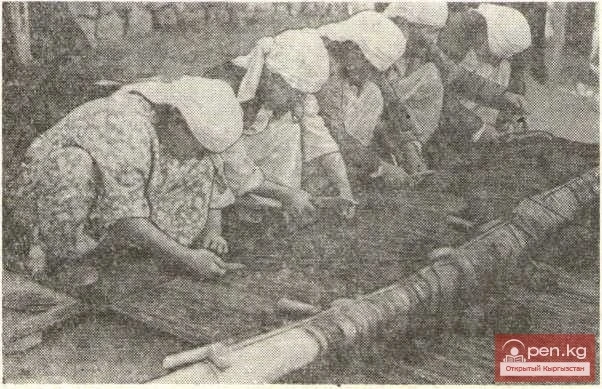
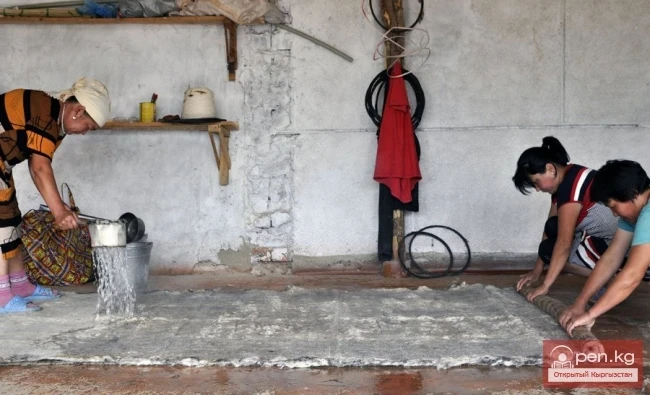
The loom for producing pile carpets, under the drawing of the weaving loom, is schematically represented in a horizontal cross-section, explaining the formation of the shed. Batken District. A feature of the Kyrgyz carpet is the presence of fringe, consisting of warp threads (20—25 cm) braided together.

13.04.2018, 11:19
What material are Kyrgyz carpets made from?
Decorative and applied arts

What material are Kyrgyz carpets made from?

The main stages of carpet making are the preparation of yarn, then the carpet's foundation, and the weaving process. All these types of work in manual production, on which carpet weaving has been based for centuries, are very labor-intensive. Kyrgyz people predominantly wove carpets from wool. However, there was also carpet production based on cotton with the same weft. Cotton yarn, as the artisans say, has been used since ancient times and was bought at the market. Among the Kyrgyz group

13.04.2018, 11:09
The Art of Kyrgyz Carpet Weavers
Decorative and applied arts

The Art of Kyrgyz Carpet Weavers

During the years of imperialist and civil war, and during the basmachi uprising in southern Kyrgyzstan, carpets were not produced. Only after enduring hardships did the artisans take up their production again, but carpet weaving took on different forms. The production of small pile items ceased, as they lost their value in the new living conditions. The main pile item became the carpet. Starting from the 1930s, the Soviet government undertook a series of measures to develop Kyrgyz carpet

13.04.2018, 11:01
Osh. Popular Uprisings in the Late 19th Century
Osh

Osh. Popular Uprisings in the Late 19th Century

The uprisings of the townspeople of Osh and the rural residents of the district in the 1880s and 1890s were part of the popular unrest in the Fergana region. They were caused everywhere by the same socio-economic reasons, directed against the intensification of colonial oppression and the oppression of the local exploitative elite. The religious coloring or involvement of some feudal elements in leading them did not change their overall anti-colonial and anti-feudal orientation. Following the

12.04.2018, 13:50
"Osh. Monuments of Osh"
Osh

"Osh. Monuments of Osh"

Cult Structures of the City Pre-revolutionary Osh was not very rich in historical and architectural monuments; nevertheless, some of them, even those that have not survived to this day, deserve at least a mention, if not a description. Mainly, these are cult structures. We can name the dome of Kurbandzhan-dakhi, built at the foot of Suleiman Mountain in 1907; the mosque of Muhammad Yusupa-Baykhodji, erected in 1909-1910, next to which was the domed mosque of Sydykbay from the 19th century, the

08.04.2018, 18:41
Osh. Taxes and Levies
Osh

Osh. Taxes and Levies

Tax Exploitation in Pre-Revolutionary Osh After the fall of the Kokand Khanate on February 17, 1876, the Turkestan administration established the "Commission for Clarifying Tax Obligations and State Property of Fergana," which presented a report with its proposals on March 11 of the same year "on the method of revenue collection and the abolition of certain revenue items that do not comply with our laws." Lieutenant General Kolpakovsky imposed a resolution on the report:

07.04.2018, 11:32
Osh. Economic Activities
Osh

Osh. Economic Activities

Coat of Arms of the City of Osh Agriculture and farming have always played an important role in the economy of Osh during the pre-revolutionary period. This is similar to other late feudal cities in Central Asia, whose populations were equally closely tied to the land. Most of the Osh farmers were residents of the old ("indigenous") part of the city, which was even designated as a separate tax district within the Osh county. Its lands were located around the city. In 1903-1905, the

04.04.2018, 14:45
Mobile and Cellular Communication in Kyrgyzstan
Mass media

Mobile and Cellular Communication in Kyrgyzstan

Mobile and Cellular Communication In a small mountainous country, where the population has just surpassed five million people, competition in the field of Internet and mobile communication is quite developed (this fact is relative when compared to larger countries).

03.04.2018, 21:26
Osh. Population
Osh

Osh. Population

Growth of the Population of Osh “Although the colonial path of development that Central Asia took after its annexation to Russia and its transformation into a raw material appendage of the metropolis hindered industrial development, during this period, more favorable conditions were created than before for the deepening of social division of labor, increasing the commodity nature of the economy, and developing economic specialization in certain areas, which led to significant urban growth,”

02.04.2018, 21:11
Internet Providers of Kyrgyzstan
Mass media

Internet Providers of Kyrgyzstan

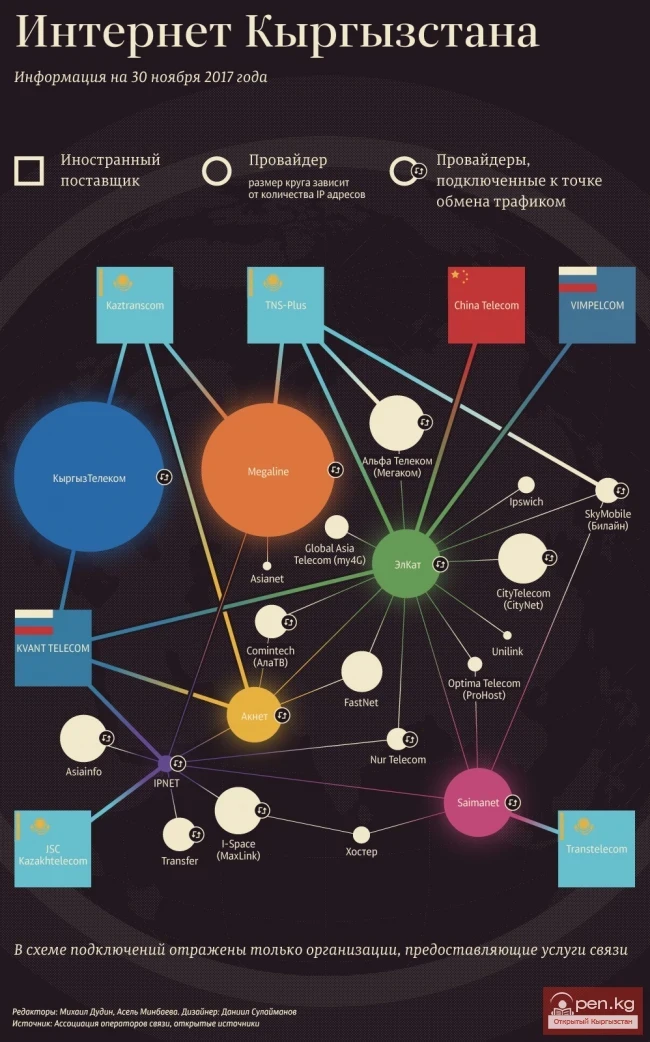
Internet Providers of Kyrgyzstan In recent years, Kyrgyzstan has become a leader among CIS countries in the number of Internet users. The priority goal of the ICT sector (Information and Communication Technologies) is the implementation of new technologies and rapid growth of providers.

01.04.2018, 15:43
Osh. City Management
Osh

Osh. City Management

Police Administration in the City City management particularly vividly reflects the discriminatory and exploitative orientation of the tsarist government's policy in Turkestan towards the local, non-Russian population. Unlike other county centers in the Fergana region, where city management and its economy, including budget preparation, were entrusted to county chiefs with symbolic participation from city deputies, in Osh, where the majority of the city's residents were indigenous to

01.04.2018, 11:55
Osh. District Center
Osh

Osh. District Center

Descriptions of Osh by Russian and Foreign Travelers After the dissolution of the Kokand Khanate, the Fergana region was established in its territory as part of the Turkestan General Governorship. The sizes of the new administrative units—districts—were initially determined by the borders of the former vilayets with their bekstans and sarkerstans. In the Osh district, the Bulak-Bashinsk bekstan and the Osh sarkerstans initially remained, but later they were replaced by volosts. The city of Osh

31.03.2018, 16:17
Osh. Terrible Years
Osh

Osh. Terrible Years

Mass Popular Movements in the Kokand Khanate Particularly significant events took place in Osh in the first half of the 1870s. They are associated with the largest popular movement — the Kokand Uprising and the liquidation of the khanate itself. In a brief official note titled "Regarding the Disturbances in the Kokand Khanate," the Orientalist N. F. Petrovsky noted that the cause of the uprising boiled down to "the cruel, extremely despotic rule of the khanate by its former

28.03.2018, 21:30
Osh. Tax Oppression
Osh

Osh. Tax Oppression

Tax Burdens on the Working Population of the City Taxes were levied on grain crops from the townspeople — kharaj, on melons — tanap, on livestock — zyaket, on trade — also zyaket, taxes were collected from handicraft production, for legal transactions, for inheritance of property, for gathering firewood, etc. It is no wonder that the Russian orientalist A. L. Kun, who collected tax records after the fall of the Kokand Khanate, wrote about the tax burden: “It seemed that only air remained, for

27.03.2018, 14:21
Osh. Monuments and Manuscripts
Osh

Osh. Monuments and Manuscripts

Cult Monuments of Osh It is particularly difficult to characterize the culture of the population of Osh during the Kokand period, not only due to the scarcity of sources. The Kokand Khanate was at such a stage of development that there are no grounds to speak of cultural progress: the culture of the preceding Timurid period was much higher. Moreover, very few sources on the history of culture from the Kokand period have survived. We can only affirmatively speak about those architectural and

25.03.2018, 22:27
Osh. The Madrasah and Its Waqf
Osh

Osh. The Madrasah and Its Waqf

Archives of Unknown Documents on the History of Osh Having become a prominent Kokand dignitary, Datka Alay, the hakim of the Andijan province, and finally, for a short time, the chief vizier of the Kokand Khanate, Alymbek continued to regard the Alay pastures almost as his ancestral estate, while the city of Osh became the base for the Kyrgyz nomads. It was in Osh that Alymbek built a madrasah at his own expense, which, according to contemporaries, rivaled the khan's madrasah in Kokand in

23.03.2018, 15:21
Osh. Economic Activities of the Urban Population
Osh

Osh. Economic Activities of the Urban Population

The Transfer of Land Relations Practices from the Kokand Khanate to Southern Kyrgyzstan The majority of Osh's residents were engaged in agriculture, many in transportation and trade, and a significant portion in crafts. The branches of agricultural production remained traditional from the late 18th century until 1875: irrigated farming ("the city is surrounded by fertile land," "the fields are watered by canals," reported Murtaza Faizulin and other informants of G. F.

20.03.2018, 21:30
Osh. The City and Its Inhabitants
Osh

Osh. The City and Its Inhabitants

Stories of Individual Traders and Other Russian People about Osh Documentary sources from the time of Kyrgyzstan's dependence on the feudal despotic Kokand Khanate, both Kokand and Russian, contain very few factual and reliable details for describing the city of Osh, as well as other settlements in Eastern Fergana. However, from the sparse accounts of individual traders and other Russian people — "involuntary travelers," like F. Efremov, notes sent to Kokand by representatives

19.03.2018, 20:33
Osh. Kurbandzhan-Datka
Osh

Osh. Kurbandzhan-Datka

The Emir of Bukhara Appoints Kurbandzhan as Datka — Ruler of Alay After the death of Alymbek, political power and the leadership of the clan were inherited by his widow, Kurbandzhan-datka. In 1862, Khudoyar Khan, with the help of the Bukharan army, once again occupied Kokand and seized the throne. However, the eastern regions of Fergana, the Kyrgyz and Kipchaks, remained the most rebellious. A Bukharan detachment sent by Emir Muzaffar reached Osh and besieged the fortress of Mady. There is a

19.03.2018, 10:49
Osh. Alimbek-Datka
Osh

Osh. Alimbek-Datka

Alymbek — ruler of Alai. The city of Osh and the village of Kara-Suu were considered by the southern Kyrgyz feudal lords as their own stronghold. Here they owned real estate, and through Osh maintained contact with the Kokand governors and the central authorities of the khanate. The largest feudal lords who left a significant mark in the history of the city were Alymbek-datka and his wife Kurbandzhan, who outlived him by almost half a century. Therefore, we will briefly focus on their

17.03.2018, 01:26
Osh. Under the Oppression of the Kokand Khanate
Osh

Osh. Under the Oppression of the Kokand Khanate

In the Struggle Against the Kokand Rulers Starting from the 1760s, the rulers of the Kokand feudal domain (later a khanate), seeking to expand its territory at the expense of southern Kyrgyz lands, turned their greedy eyes towards the city of Osh. Even at that time, Osh played a significant role in the political history of the Kokand Khanate. Narrative sources briefly mention that its ruler was the feudal lord Hadji-biy, considered the head of the large Kyrgyz clan Adygene within the tribe of

15.03.2018, 16:04
Osh. Against the Dzungar Conquerors
Osh

Osh. Against the Dzungar Conquerors

Osh at the End of the 17th — Beginning of the 18th Century In 1638, Abdallah Khan seized supreme power in Moghulistan (with its center in Yarkand) and, in order to strengthen his position in the state, decided to conquer the neighboring mountainous regions of Kyrgyzstan adjacent to Eastern Turkestan. After campaigns to Pamir (in Bolor and Badakhshan), Abdallah Khan directed his troops to raid the city of Osh. The Kyrgyz successfully repelled the invasion twice but were soon forced to surrender

15.03.2018, 14:34