About Kyrgyzstan

{title}
State structure
{title}
National symbols
{title}
Government
{title}
Armed forces
{title}
National currency
{title}
Banknotes
{title}
Circulation coins
{title}
Collectible coins
{title}
Political organization
{title}
Domestic policy
{title}
Foreign policy
{title}
History
{title}
Kyrgyz in antiquity
{title}
Kyrgyz in the VI-XII centuries
{title}
Kyrgyz in the XIII—first half of XVIII century
{title}
The struggle for the independence of the Kyrgyz
{title}
Kyrgyzstan as part of Russia
{title}
Kyrgyzstan during the Soviet period
{title}
Kyrgyzstan — a sovereign state
{title}
Historical records
{title}
Kurmanjan Datka
{title}
Chagatai Ulus. Haidu State. Moghulistan
{title}
History and archeology of the ancient Tien Shan
{title}
Peoples movements of Central Asia in the XIX century
{title}
Kyrgyzstan during the Great Patriotic War
{title}
Kyrgyzstan in the 1920s
{title}
1937 in Kyrgyzstan
{title}
Shabdan Baatyr
{title}
Territory, geography and administrative division
{title}
Chuy Region
{title}
Attractions of Chuy Region
{title}
Issyk-Kul Region
{title}
Sights of Issyk-Kul
{title}
Naryn Region
{title}
Attractions of Naryn Region
{title}
Talas Region
{title}
Attractions of Talas Region
{title}
Osh Region
{title}
Attractions of Osh Region
{title}
Batken Region
{title}
Attractions of Batken Region
{title}
Jalal-Abad Region
{title}
Attractions of Jalal-Abad Region
{title}
Cities
{title}
Bishkek
{title}
Streets of Bishkek
{title}
Pishpek - Frunze - Bishkek
{title}
History of the capital of Kyrgyzstan in documents
{title}
Osh
{title}
Osh - 3000
{title}
Naryn
{title}
Jalal-Abad
{title}
Batken
{title}
Talas
{title}
Karakol
{title}
Tokmok
{title}
Cholpon-Ata
{title}
Uzgen
{title}
Kochkor
{title}
Kemin
{title}
Balykchy
{title}
Kyzyl-Kiya
{title}
Mailuu-Suu
{title}
Sulukta
{title}
Tash-Kumyr
{title}
Toktogul
{title}
Kara-Kul
{title}
Kara-Balta
{title}
Kara-Balta - Black Ax
{title}
Kant
{title}
Villages
{title}
Population
{title}
Language
{title}
Diaspora
{title}
Nature
{title}
Climate
{title}
Natural ecological complexes
{title}
Water resources
{title}
Rivers
{title}
Lakes
{title}
Secrets of Issyk-Kul Lake
{title}
Reservoirs
{title}
Waterfalls
{title}
Mineral waters
{title}
Flora
{title}
Fauna of Kyrgyzstan
{title}
Mammals of Kyrgyzstan
{title}
Birds of Kyrgyzstan
{title}
Fish of Kyrgyzstan
{title}
Amphibians and reptiles of Kyrgyzstan
{title}
Insects of Kyrgyzstan
{title}
Mountains and glaciers
{title}
Mountain ranges
{title}
Mountain peaks
{title}
Mountain passes
{title}
Glaciers
{title}
Caves
{title}
Gorges
{title}
National parks and reserves
{title}
Pastures and valleys
{title}
Soil and minerals
{title}
Red Book
{title}
Fungi and higher plants
{title}
Animals
{title}
Arthropods
{title}
Fish
{title}
Amphibians and reptiles
{title}
Birds
{title}
Mammals
{title}
Economy of Kyrgyzstan
{title}
Entrepreneurship
{title}
Agriculture
{title}
Finance
{title}
Construction
{title}
Industry
{title}
Transport and communications
{title}
Socio-economic resources
{title}
Tourism industry
{title}
Healthcare
{title}
Education
{title}
Sports
{title}
Science
{title}
Environmental science
{title}
Mass media
{title}
Art
{title}
Dances
{title}
Ballet
{title}
Decorative and applied arts
{title}
Musical instruments
{title}
Architecture
{title}
Painting
{title}
Music
{title}
Theater
{title}
Cinema
{title}
Sculpture
{title}
Circus
{title}
Literature
{title}
Photography
{title}
Culture
{title}
Epigraphy
{title}
Folklore
{title}
Kyrgyz heroic epic "Manas"
{title}
The epic "Manas" in prose
{title}
Poetic retelling of the epic "Manas"
{title}
"Semetey" - poetic story
{title}
"Semetey" in prose
{title}
Religion
{title}
Ethnography
{title}
National games
{title}
Customs
{title}
Myths and legends
{title}
Kyrgyz fairy tales
{title}
Kyrgyz cuisine
{title}
Meat and offal dishes
{title}
Soups of Kyrgyzstan
{title}
Main dishes of Kyrgyzstan
{title}
Sweet dishes of Kyrgyzstan
{title}
Drinks of Kyrgyzstan
{title}
Salads and appetizers
{title}
Flour products
{title}
Miscellaneous information about Kyrgyzstan
{title}
Historical and holiday dates of Kyrgyzstan
{title}
Famous personalities of Kyrgyzstan
{title}
Women of Kyrgyzstan
{title}
Historical figures
{title}
Heroes of Kyrgyzstan
{title}
Hero of the Kyrgyz Republic
{title}
Heroes internationalists
{title}
Heroes of Kyrgyzstan in World War II
{title}
Kyrgyzstanis — Full cavaliers of the Order of Glory
{title}
Writers of Kyrgyzstan
{title}
Inventors of Kyrgyzstan
{title}
Scientists of Kyrgyzstan
{title}
Architects of Kyrgyzstan
{title}
Artists of Kyrgyzstan
{title}
Musicians of Kyrgyzstan
{title}
Cinematographers of Soviet Kyrgyzstan
{title}
Actors of Kyrgyzstan
Genealogy of the Bashkir Tribe of Kyrgyz
Ethnography

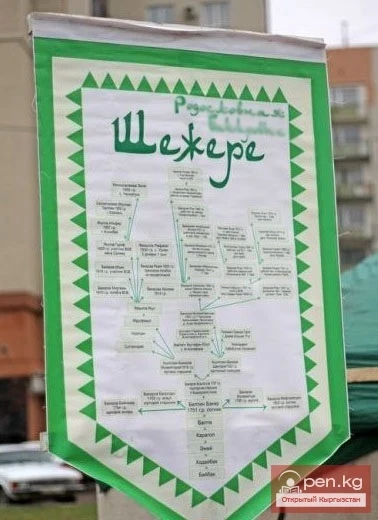
Genealogy of the Bashkir Tribe of Kyrgyz

According to the genealogy (shézhere) preserved from the time of our ancestors, the progenitor of the Kyrgyz Bashkirs (in the sense: Bashkirs of the Kyrgyz clan), living in the village of Tashly in the Alexandrovskaya volost of the Bugulminsky district, was called "Kurkod-ata," (originating) from the Kyrgyz yurt, a descendant of Sayd (from the clan of Muhammad); (he lived) on the Bukhara road, by the Sea of Syr. His (Kurkod-ata's) son was Akhmed bi, from him Mukhammad bi, from

02.11.2014, 20:20
Eastern Tien Shan, Pre-Tien Shan, and Priirtyshye - Historical and Genealogical Connection with Kyrgyz Tribes
Ethnography

Eastern Tien Shan, Pre-Tien Shan, and Priirtyshye - Historical and Genealogical Connection with Kyrgyz Tribes

The next territory of interest in terms of historical and genealogical connections with Kyrgyz tribes is the Eastern Tian Shan and Pre-Tian Shan (we primarily mean the territory of Dzungaria and Kashgaria), as well as Priirtyshye. In his time, A. N. Bernsham noted that historical documents (Tibetan documents published by F. Thomas) contain mentions of Kyrgyz tribes in the pre-Tibetan areas and in the territory of Eastern Turkestan, dating back to the 8th to early 9th centuries. S.E. Malov, in

02.11.2014, 19:26
Woodworking Industry
Industry

Woodworking Industry

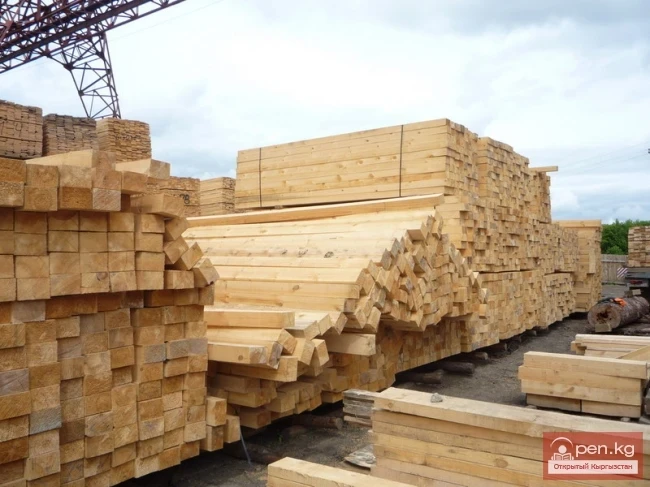
The share of the forest, woodworking, and pulp and paper industry of the republic in 2000 was: by the number of employed workers 1.0%; by product output — 0.6%; by the value of fixed assets — 0.7%. Despite this, the industry is of great importance as it provides the population with essential items made from wood, widely used in everyday life.

30.10.2014, 21:04
Genres of Kyrgyz Labor Songs
Music

Genres of Kyrgyz Labor Songs

In pre-class and class societies, when the ancient Turkic-speaking ancestors of the Kyrgyz lived a nomadic pastoral life, song folklore was inseparable from their labor activities.

30.10.2014, 17:56
General Characteristics of Vocal Genres of the Kyrgyz
Music

General Characteristics of Vocal Genres of the Kyrgyz

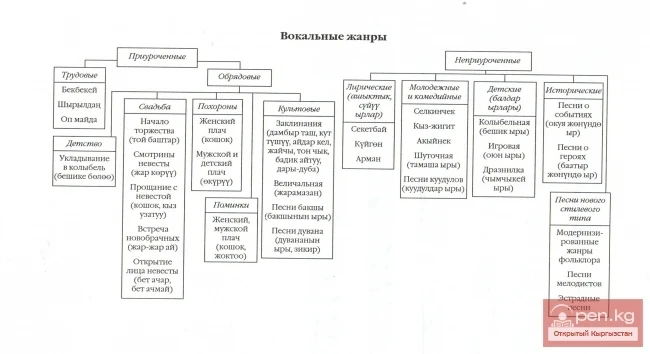
The vocal creativity of the Kyrgyz people reflects their rich history, social and domestic relationships, spiritual and labor experiences. Song accompanies the Kyrgyz constantly and daily, and the love for singing has a truly mass character. The vocal culture of the oral tradition has formed, developed, and improved over thousands of years, resulting in its artistic-expressive and logical-constructive principles and means.

30.10.2014, 17:10
MULYAVIN German Stepanovich
Architects of Kyrgyzstan

MULYAVIN German Stepanovich

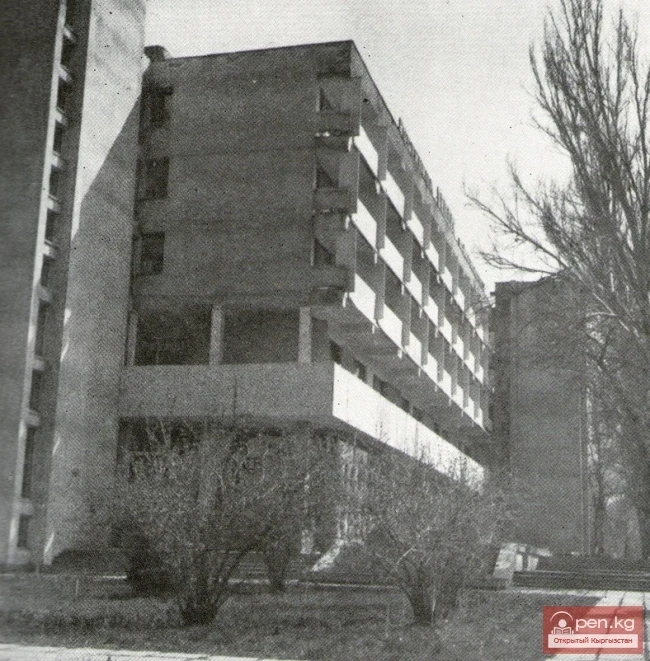
MULYAVIN Herman Stepanovich (1936—1981) Architect. Born in 1936 in the city of Barnaul, Altai Krai. In 1972, he graduated from the architectural and construction faculty of the Frunze Polytechnic Institute. He worked at the "FrunzeGorProject" institute as the chief architect of the workshop from 1972 to 1981. Member of the Union of Architects of the USSR since 1974. After graduating from the Frunze Polytechnic Institute, Herman Stepanovich joined the "FrunzeGorProject"

30.10.2014, 17:08
On the Subject of Kyrgyz Musical Folkloristics
Music

On the Subject of Kyrgyz Musical Folkloristics

The concept of folk music (traditional music, musical folklore) is relative in its genesis. It emerged only when, in the process of societal evolution and its artistic culture, highly professional forms of individual creativity developed, gaining the status of academic art. In European countries, these forms were established by a number of social institutions, including specialized educational establishments (conservatories, academies). From the need to relate these professional and

29.10.2014, 22:01
Food Industry
Industry

Food Industry

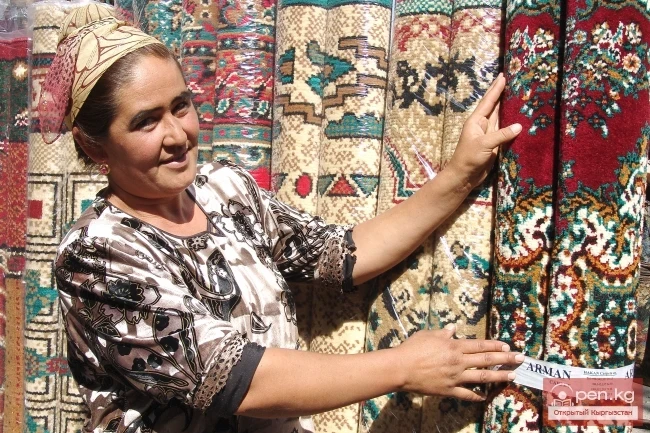
The food industry of pre-revolutionary Kyrgyzstan was represented by several small artisanal enterprises: mills, oil presses, and breweries, as well as salt mines. By the time the Kara-Kyrgyz Autonomous Region was established, there were only 28 enterprises here. Before the war, the food industry of the republic grew significantly. New sectors emerged: meat, dairy (14 butter and cheese factories), sugar, winemaking, baking, and others.

29.10.2014, 21:43
Light Industry
Industry

Light Industry

The light industry of Kyrgyzstan encompasses its three sectors: textile, garment, and leather-footwear. It accounts for 24% of the industrial workforce and 30% of the gross output of all industries, which ensures its priority in the economic potential of the republic. Before the October Revolution, there were only a few private semi-handicraft enterprises in Kyrgyzstan for the primary processing of agricultural raw materials—wool washing and cotton cleaning points. During the pre-war five-year

29.10.2014, 21:27
Machine Engineering and Metalworking
Industry

Machine Engineering and Metalworking

In Kyrgyzstan, among metalworking enterprises, a repair and mechanical plant was commissioned in Bishkek in 1931. In the 1930s, the metalworking industry developed at an accelerated pace. From 1928 to 1940, the gross output of the industry increased by 10.4 times, while that of metalworking increased by 26.1 times. During this period, the foundation of domestic machine engineering was formed. Machine engineering developed particularly rapidly during the Great Patriotic War based on evacuated

29.10.2014, 16:35
The History of Kyrgyz Journalism
Mass media

The History of Kyrgyz Journalism

Kyrgyz journalism has gone through a rather fruitful, yet at the same time, a thorny path from the day the first printed publications were established in Kyrgyzstan to the present day. This was related to the contradictory and complex nature of the very era in which it existed and functioned.

28.10.2014, 23:09
Journalistic Activities of K. Ukaev, D. Mukambetova, and L. Dyadyuchenko
Mass media

Journalistic Activities of K. Ukaev, D. Mukambetova, and L. Dyadyuchenko

Journalist, publicist, and literary critic Kymbatbek Ukaev (1932-1989) was born in the village of Dzhanay-Alysh in the Kemin district of Chui region. From 1948 to 1952, he studied at the Kyrgyz Pedagogical Institute. From 1952 to 1954, he was in graduate school. In 1954, he began working at the editorial office of the magazine "Soviet Kyrgyzstan" as the head of the criticism and bibliography department. Since 1955, he served as a literary consultant for the Union of Writers of

28.10.2014, 19:37
Media of Kyrgyzstan during Perestroika (1985-1991)
Mass media

Media of Kyrgyzstan during Perestroika (1985-1991)

In mid-1985, under the initiative of M. S. Gorbachev, the course for perestroika was proclaimed in the USSR. The ideas of perestroika were discussed at the April (1985) Plenary of the Central Committee of the Communist Party of the Soviet Union, then at the XXVII Congress of the Party and the XIX All-Union Party Conference. This was undoubtedly a positive step, the beginning of a new political course. New economic and political thinking began to be talked about everywhere. However, at that

28.10.2014, 17:03