According to the ILO, cases of forced labor and forced marriages have significantly increased over the past five years. In 2021, the number of people living in conditions of modern slavery rose by 10 million compared to 2016, leading to a total of 50 million people suffering from slavery. Women and children remain more vulnerable compared to men.
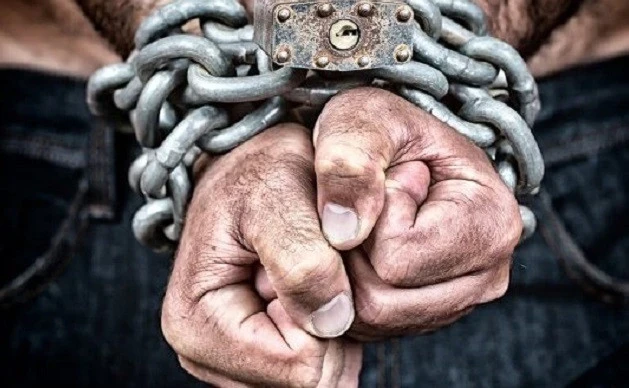
Although modern slavery does not have a precise legal definition, the term encompasses practices such as forced labor, debt bondage, forced marriages, and human trafficking. This phenomenon is associated with exploitation from which a person cannot escape due to threats, violence, coercion, deception, or abuse of power.
Modern slavery exists in virtually every country in the world, crossing ethnic, cultural, and religious boundaries. More than half (52%) of all cases of forced labor and a quarter of all cases of forced marriages occur in high- or middle-income countries.
The ILO adopted a legally binding Protocol that came into force in November 2016, aimed at strengthening global efforts to eradicate forced labor.
Interesting Facts
- Approximately 50 million people are victims of modern forms of slavery, including 28 million affected by forced labor and 22 million who have fallen victim to forced marriages.
- One in eight workers in forced labor conditions is a child, and more than half of them are subjected to commercial sexual exploitation.
- 86% of forced labor cases are recorded in the private sector.
- Nearly 80% of victims of commercial sexual exploitation are women or girls.
Brief Information
Every year on December 2, the International Day for the Abolition of Slavery is observed, which is linked to the adoption by the General Assembly of the Convention on the Suppression of the Traffic in Persons and of the Exploitation of the Prostitution of Others (Resolution 317 (IV) of December 2, 1949).
The main goal of this day is to eradicate modern forms of slavery, including human trafficking, sexual exploitation, the worst forms of child labor, forced marriages, the sale of brides, inheritance of widows, and the forced recruitment of children for armed conflict.
Types of Modern Slavery
Slavery has changed and manifested in various forms over the centuries. Some traditional forms of slavery have persisted to this day, while others have taken on new forms. UN human rights bodies document old forms of slavery rooted in traditional beliefs and customs, which are the result of long-standing discrimination against vulnerable groups, including members of lower castes, ethnic minorities, and indigenous peoples.
Forced Labor
In addition to traditional forms of forced labor, such as serfdom and debt bondage, there are now more modern variants affecting, in particular, migrants who are subjected to human trafficking for economic exploitation in various sectors: domestic servitude, construction, food industry, garment industry, and agriculture.
Child Labor
It is estimated that one in ten children in the world is working. In most cases, child labor is used for economic exploitation, which contradicts the Convention on the Rights of the Child, which protects children from economic exploitation and work that threatens their health or hinders their education.
Human Trafficking
According to the Protocol to Prevent, Suppress and Punish Trafficking in Persons, especially Women and Children, "human trafficking" encompasses the recruitment, transportation, transfer, harboring, or receipt of persons for exploitation, using threats, violence, coercion, fraud, deception, or abuse of power. Exploitation includes, at a minimum, the prostitution of others or other forms of sexual exploitation, forced labor, slavery, and similar practices. The consent of the victim to the intended exploitation is not taken into account, and in the case of children, it is considered a crime even without the use of force.