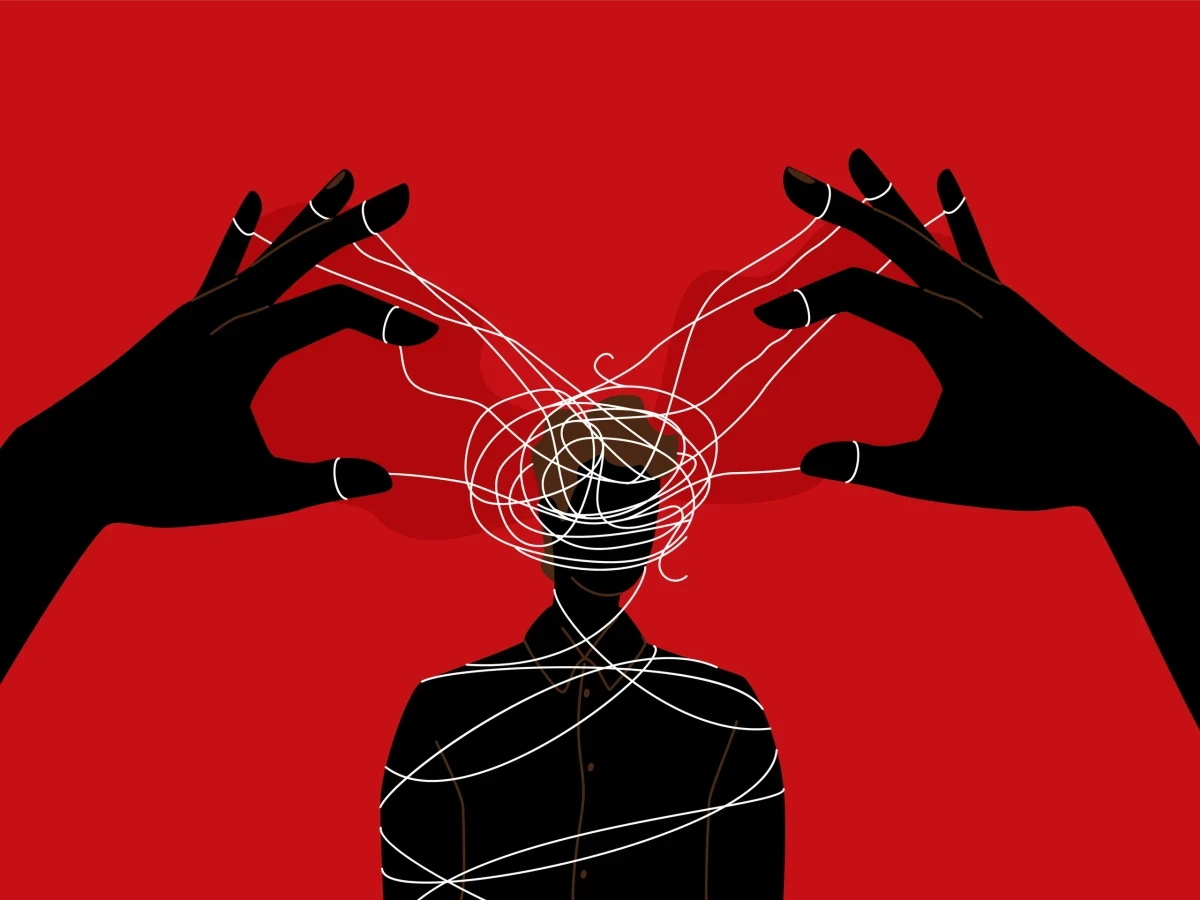
The problem of hallucinations in AI lies in the fact that they are not aware of their actions; they simply process and match data. Some experts argue that such errors arise from overtraining, when AI "remembers" information instead of generalizing. At the same time, other researchers point to flaws in algorithms and the influence of external malicious actors who can "poison" training data.
Ultimately, large language models act as prediction systems, generating the most probable sequences of words in response to queries. If the incoming data is incomplete or contradictory, they still provide an answer, as that is precisely what they were designed to do. Their coherence is based on the structural connectivity of sentences, rather than on adherence to reality or moral value. Unlike the human mind, AI cannot hold contradictory information or update its judgments, which leads to filling gaps with plausible but false statements when uncertainty arises.
This behavior can be compared to "narcissistic confabulation," where the human psyche creates a coherent but distorted narrative to protect its integrity. It is important to note that this is not about pathologizing people with narcissistic traits, but about understanding the reasons why both humans and machines can create convincing yet untruthful narratives.
Narcissism, often used as an emotionally charged term, actually represents a disorder of self-perception that leads to egocentrism and difficulties in relationships. People with narcissistic traits may exhibit confidence and arrogance to mask their vulnerability, creating a false self-image. This is not a malicious deception, but a defense mechanism that helps maintain a self-perception that is under constant threat. When they face uncertainty or doubt, they strive to demonstrate their power and confidence.
Sam Vaknin, an expert on narcissism, notes: "To compensate for deficiencies in memory, narcissists confabulate: they create plausible insertions that they sincerely believe in. Logic becomes a defense mechanism through which they conceal their insecurity and emptiness, characteristic of people with fragile self-perception."
While the concept of the "self" remains a subject of discussion, experts agree that a well-integrated "self" is capable of reflection and confronting contradictions. It can reconcile conflicting information and maintain identity without requiring constant external validation. People with a stable "self" can accept contradictory ideas, such as "I love my partner, but I am currently dissatisfied with them." In contrast, narcissists tend toward black-and-white thinking, seeking to eliminate contradictions, which limits their capacity for growth and integration. Thus, for them, coherence becomes more important than truth.
Recalling a personal experience, I remember driving in a car with my husband, who was telling a story that became increasingly convoluted. When I asked him if it really happened, he replied, "No, but it could have." Later, I realized that this was "narcissistic confabulation," an attempt to rewrite reality to protect his fragile self-perception.
This dynamic in human behavior provides insight into how AI functions under conditions of uncertainty. In both cases, contradictions are not accepted, and plausibility replaces truth. Both humans and AI strive to reinforce their responses, as the abandonment of a narrative threatens their internal integrity, whether psychological or algorithmic. This is concerning, as despite the apparent plausibility, internal verification is absent.
If hallucinations arise from a lack of structure akin to the "self," then one way to address the problem may be to create systems that better handle contradictions. This shifts the question from "Why does AI lie?" to "How can we enable AI to coexist with uncertainty?" Perhaps this means not creating an intelligent system, but developing an architecture capable of holding contradictory information without resorting to premature resolution.
For example, one might consider the possibility of adding persistent memory and self-checking mechanisms that allow AI to acknowledge uncertainty rather than ignore it. This would enable the system to retain unresolved tasks until new information is obtained, much like a psychologically healthy person who can say, "I am not sure yet."
The task of AI developers is to create systems resistant to the desire to rewrite uncomfortable facts. Exploring ways to ensure coherence without distortion in AI may also open new perspectives for helping people with narcissistic disorders, enhancing their ability to accept contradictions.
If the main risk of confabulation in a person or machine is not malicious intent but emptiness, then the pursuit of coherence is not a mere sentiment. It forms the basis of trust. In humans, this may manifest as strengthening memory or language to support internal identity without resorting to rewriting history. In AI, this may be reflected in creating mechanisms that prefer accepted uncertainty over false certainty.
When discussing the "uncanny valley," we refer to the discomfort that arises when something looks almost human but not quite. In the case of artificial intelligence, the eeriness is psychological: our large language models and chatbots reflect the most vulnerable aspects of our existence with frightening accuracy. Thus, AI acts as a distorted mirror: without a rational "self," it imitates and reflects the narcissistic urge to fill voids with plausible but factually unfounded stories.
Our fear of AI may be related not to its differences from us but to its disturbing resemblance to the most fragile aspects of human psychology. If we can fill the void in machines with architectures capable of supporting competing possibilities, it may help us understand how to develop similar abilities in people. And if in the process we create approaches that allow both humans and AI to better cope with dissonance, the reflection we see may become less fragile and more complete.