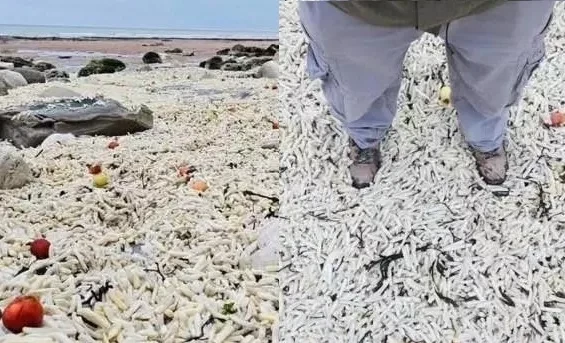
The areas where these products were found reached 75 centimeters in thickness, creating the effect of golden sand, which from a distance appeared to be an ordinary shore.
Recent severe storms in the English Channel dislodged dozens of containers from two cargo ships, resulting in at least 20 containers of frozen products ending up on the seabed. These products eventually washed ashore among other marine debris, such as foam and disposable masks.
Eastbourne resident Joel Bonicci shared his impressions: “I had to double-check what I saw as I walked along the beach. It was incredible — the beach looked like golden sand.”
The situation raises serious concerns for local wildlife. Many of the frozen products were packaged in plastic, posing a risk to seals and other marine animals that might swallow the bags or use them as toys. Bonicci called on volunteers through local Facebook pages to participate in the cleanup, noting that “removing plastic bags is a top priority.” Locals and volunteers have already begun work to clean the beach.
Some experts point out that this incident highlights broader issues of global ocean pollution that go beyond a single accident. According to Ocean Conservancy, approximately 11 million tons of plastic waste enter the oceans each year, most of which comes from land.
The problem of lost containers remains a significant source of marine environmental pollution. The International Maritime Organization reports that over the past decade, an average of more than 1,500 containers fall into the sea each year.
Experts say that the products, packaging, and industrial goods from these containers pose not only an immediate threat to marine life but can also break down into microplastics over time, harming ecosystems.