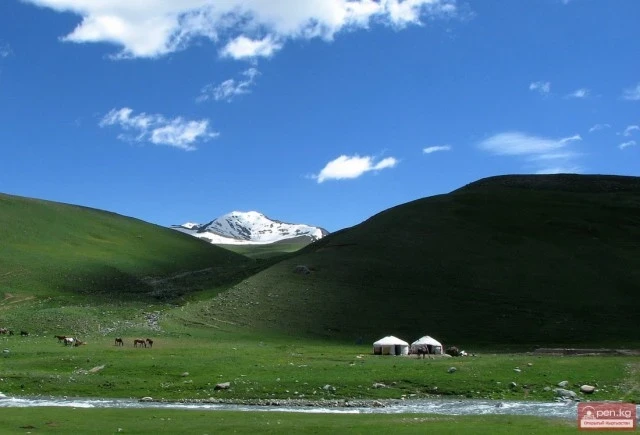
Previously, the spring that provided drinking water to the residents flowed freely to the city of Batken, but, as local residents note, today its water bodies are insufficient even for the needs of one village.
Abdillakim Abdurayimov, one of the locals, shared information about the spring, which is called Suu-Bashy. He explained: “This spring exists thanks to the higher located jailoo, although the water there is not enough. We also bring livestock to this spring for drinking. It is unknown when and by whom the chinar was planted, but it continues to bud in spring and turn green. Eight people are needed to embrace it. The water that comes from beneath it remains clean and cold year-round. Previously, the residents of Kara-Bulak, Buzhuma, Batken, and neighboring villages drank water from this spring. In those times, there were not even canals; it was a real full-flowing river. Although the water was absorbed into the ground, it was still enough for everyone. Today, however, there is a shortage of water in the village. This spring is a gift for our people, and every year people come to it to make sacrifices and pilgrimage,” he recounts.
Some residents suggest that the water from the spring may come from the jailoo Donmon in the Batken district, and they even conducted experiments to confirm this. They claim that when dye was added in Donmon, the water from the spring indeed took on the same color.
Despite attempts to increase the volume of water from the spring, work in this direction has not yet been completed.
Historian Aitunuk Kazakova noted that the chinar is located in the territory of Myktym-Gor, known for its findings, including a mummy from the National Historical Museum. She remarked: “There is an opinion that there was also a spring here. If Myktym-Gor dates back to the 2nd-4th centuries BC, then this tree could have been planted during that time. In those days, a person who cut even one branch of the chinar would be sentenced to death; this tree was considered sacred and miraculous, and people believed that embracing it could prolong life,” the historian added.
According to her, in 2007, there was an incident when red water flowed from the spring. “This happened because local residents Joro and Mamasharip added something to the water in Donmon. As a result, they discovered that the water sources coincide. Locals have been trying for many years to open the spring and increase its flow using the method of ashar, but the solution to this problem should be at the state level,” she emphasized.
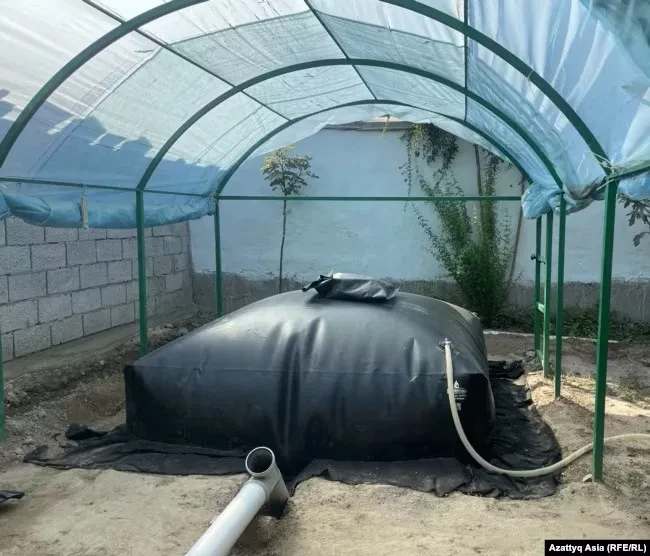
Next to this spring is Kara-Suu, which is also a source of drinking water for the village. A reservoir has been built here, and water is supplied to residents through pipes. This spring is what gave the village of Kara-Bulak its name.
Kara-Bulak is a village belonging to the Suu-Bashinsky ayil okmotu of the Batken district, where 3,760 people live. The village has 7 mosques, 2 kindergartens, and 2 secondary schools.
The historical significance of Kara-Bulak is confirmed by findings in the territory of Myktym-Gor. A mummified woman, likely the wife of a pharaoh, as well as other archaeological finds, have been discovered here. This area remains insufficiently explored to this day.
_________________
In early October 2017, in the vicinity of Myktym-Gor, located in the Batken region, a mummy of a girl was buried, which had been in the National Historical Museum for 60 years.
The mummy was found during excavations conducted by Leningrad archaeologists under the leadership of Yuri Baruzdin in 1956. It was discovered in a burial site in the village of Kara-Bulak and later transferred to the historical museum of the capital. This mummy dates back to the 1st-5th centuries AD.
Objects
Satellite
⛶