“Everyone perceives Saudi Arabia and its neighbors as oil powers. But I call them kingdoms of salty water,” asserts Michael Christopher Low, director of the Middle East Center at the University of Utah. According to him, these are achievements of the 20th century that create a particular vulnerability for countries dependent on fossil fuels.
Iran has already announced the creation of a “precedent” after an airstrike damaged a desalination plant and reduced water supply to thirty villages. On Sunday, there was also an accusation against Iran for damaging a desalination plant in Bahrain. Many plants in the Persian Gulf are physically connected to power stations, and strikes on energy infrastructure can further complicate water production processes.
The water supply crisis may be inevitable
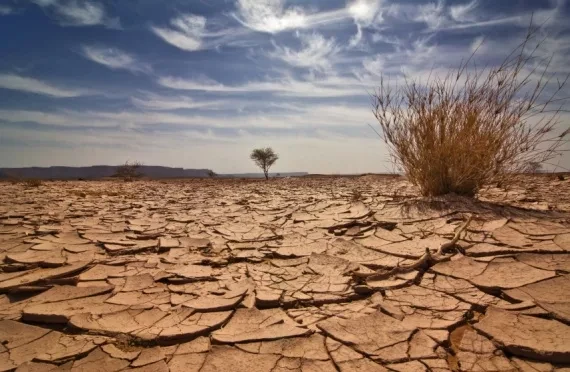
Although Iran is less dependent on desalination than its neighbors, much of its water resources have been depleted due to a five-year drought. The country is trying to expand its desalination capacity along the southern coast and pump water inland, but significant infrastructure limitations, high energy costs, and international sanctions threaten these efforts.
“Last summer, they were already considering evacuating the capital,” says Ed Callahan, Middle East editor at Global Water Intelligence. “I can’t even imagine what this summer will be like if the shelling continues amid economic difficulties and a serious water crisis.”
Disruption of oil supplies and transition to renewable energy sources
After devastating attacks on oil refineries and disruption of trade routes, oil-dependent economies are beginning to switch to more polluting fuel sources. An example is the return of some European countries to coal after Russia's invasion of Ukraine, while others have started paying for American liquefied natural gas.
The closure of the Strait of Hormuz by Iran, through which 20% of the world's oil supplies pass, forces tankers to seek alternative routes, leading to increased emissions from shipping and raising the risk of oil spills. The closure of the strait also threatens food supplies, as one-third of global fertilizer trade passes through this route, and rising oil prices lead to increased agricultural production and transportation costs.
Nevertheless, this crisis underscores the need for local food and energy independence. “Local renewable energy has never been so cheap and accessible,” asserts UN Secretary-General António Guterres. “Clean energy resources cannot be blocked or used as weapons.”
Environmental consequences of the conflict
Regardless of the choice of energy solutions, the war will lead to a significant increase in emissions. The conflict between Russia and Ukraine, now in its fourth year, is estimated to have resulted in the emission of over 311 million tons of CO2 equivalent.
According to reports, even before the invasion, the armed forces of the world were responsible for 5.5 percent (source in English) of annual greenhouse gas emissions on the planet, more than any individual country except China, the USA, and India. Neta Crawford, co-founder of the Costs of War project (source in English) at Brown University, notes that combat aircraft, which consume vast amounts of fuel, are just one of many factors.
“The emissions consequences of war far exceed any slow reductions that might be achieved through a transition to green technologies,” she concludes.
The post Serious threat to water resources: acid rains and attacks on desalination plants in the Middle East first appeared on K-News.