Uzbek workers employed in the "Karima" restaurant chain in Astana have filed complaints about the lack of payments and the confiscation of their documents. This is not the first time this chain has been accused of exploiting labor migrants. A human rights activist working with migrants describes a general scheme of labor exploitation that often goes unpunished in Kazakhstan, reports Azattyk Asia.
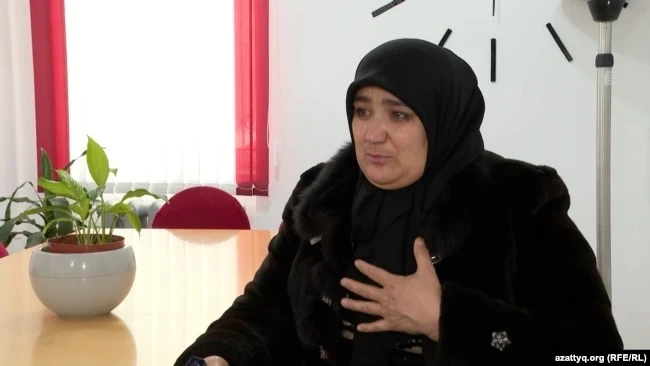
“Hello, welcome to slavery!” — this is how the administration of the "Karima" restaurant in Astana greeted Mavluda Khaitova when she came to apply for a job. This phrase, which sounded like a joke, soon became a bitter reality for her.
43-year-old Mavluda struggles to hold back tears as she recalls her experiences.
“If they take your documents and don’t pay you, isn’t that slavery?” — Mavluda poses a rhetorical question.
Mavluda Khaitova, a citizen of Uzbekistan who worked at the "Karima" restaurant in Astana
“YOUR MOTHER HASN'T DIED YET. SHE WILL DIE — THEN I’LL LET YOU GO”
At the beginning of this year, Mavluda got a job as a cold appetizers cook with a promised salary of 10,000 tenge a day (about 20 dollars). She planned to work for a month to gather money for her elderly mother’s treatment in Namangan, but after two and a half months, she was unable to leave.
“Every time I asked for permission to leave, the management said ‘no.’ When I asked again to return my documents, they told me I couldn’t leave. ‘As long as you are here, you can’t leave,’ the manager threatened me,” Mavluda recalls.
She claims she is not the only one who faced such treatment.
50-year-old Shavkat Tursunov, who worked at the same restaurant, said that his sister also worked at "Karima." When she decided to return home, she was told that someone had to replace her at work. His sister turned to Shavkat for help.
“I worked in Tomsk, but returned home for just a month to help my sister. She told me about the situation — how they take their documents supposedly for legalization and then don’t return them. If someone wants to leave, they are threatened with being handed over to the police. I came to help my sister,” Shavkat recalls.
In Uzbekistan, he has an 80-year-old blind father, a wife, and children. He says he didn’t expect to find himself in such a powerless situation in Kazakhstan, working 13 hours a day with delayed payments.

Shavkat Tursunov, a citizen of Uzbekistan who worked at the "Karima" restaurant in Astana
“On paper, my salary is 12,000 tenge, but in reality, payments are delayed by one and a half to two months. It is extremely important for us to receive money on time. If they don’t pay and take the passport, that’s wrong. Everyone has the right to leave whenever they wish. And there are many like me,” Tursunov says.
A sadbek Turdaliev also confirms that working conditions at the "Karima" restaurant are close to slavery. He started working there in October last year, hoping he could return home at any moment. The 27-year-old Asadbek intended to save for a wedding, but after the first two months, payments stopped, and his passport was not returned.
“In January, I was given 200,000 tenge after long negotiations. February and March went by without payments. I’m not asking for a loan, I just want to get my money,” he says.
Uzbek workers are convinced that no legalization of foreign workers was conducted at the restaurant. Documents were seized to restrict their movement around the city and tie them to their workplace.
“When an inspection came, the management hid us so that the inspectors couldn’t see us. After they left, we returned to work,” Asadbek recounts.
“THIS IS EXPLOITATION”
Azattyk reporters attempted to contact the management of the "Karima" restaurant, but representatives of the administration refused to speak with journalists. In a phone conversation, manager Saparbai Torekulov rejected all accusations.
“They have their passports when the police checks, they bring them to the cash register. No one took their documents. Let them come and collect their salaries, no one is pressuring them,” Torekulov stated.
He also claims that workers receive their salaries on time and in full, and that the information about migrants being hidden during inspections is false.
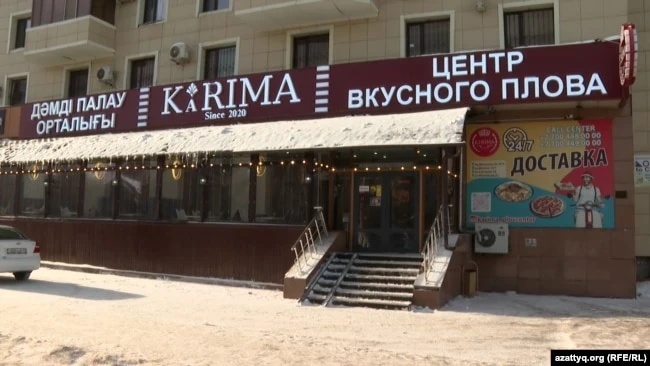
The "Karima" restaurant in Astana, whose workers reported labor exploitation
The "Karima" restaurant chain has also faced criticism for labor exploitation in the past. In 2023, several Uzbeks reported that they worked longer than expected and received less than promised. According to them, upon arrival in Kazakhstan, their passports were taken and not returned. Some victims claimed they were subjected to physical violence and threats.
With the help of the public fund "Qorgau," these Uzbeks turned to the police, but the investigation progressed slowly. The police reported the initiation of a criminal case under the article "Abuse of Power," but after the "Karima" administration returned the passports and paid the money, the victims left for their homeland.
Anna Ryl, head of the "Qorgau" fund, believes that human trafficking remains unpunished. She argues that the number of such cases could decrease if such cases were investigated as human trafficking rather than abuse of power or violations of migration laws, and if those responsible faced strict penalties.
“If they took your passport, that’s already a sign of human trafficking. Someone profits by forcing people to work — that’s exploitation. Our migration policy does not adequately protect the rights of migrants. It is assumed that the migrant is at fault by default. The president speaks of combating human trafficking, but in practice, such things happen,” comments Anna Ryl.
The "Qorgau" fund helped citizens of Uzbekistan file a complaint against the management of the "Karima" restaurant chain. According to Anna Ryl, police officers combating human trafficking met with the administration and returned the migrants' passports. Payment of salaries was also promised.
According to Kazakhstan's legislation, an employer is required to process the necessary documents when hiring foreign workers, provide a labor contract, register workers, and make contributions for them. The state fee for one foreign worker can range from 13,000 to 27,000 tenge. Working without the necessary permits is punishable by deportation with a five-year entry ban.
As of October 2025, there are 185,000 registered labor migrants in Kazakhstan, many of whom work in low-skilled and hard professions.
On March 17, Azattyk Asia published a video on social media featuring Uzbeks who openly spoke about their exploitation at "Karima." The Migration Agency under the government of Uzbekistan reported that five migrants working in this chain were paid their salaries, including Mavluda, Shavkat, and Asadbek.
The U.S. State Department report states that the government of Kazakhstan does not fully comply with the minimum standards for combating human trafficking, although it is making efforts. Despite the adoption of the National Action Plan for 2024-2026, authorities do not always investigate such cases. The State Department recommends that Kazakhstan align its definition of human trafficking with international norms, actively identify victims among vulnerable populations, including foreign citizens, and seek adequate punishment for the guilty.
The post Migrants from Uzbekistan reported exploitation in the restaurant chain in Astana first appeared on K-News.