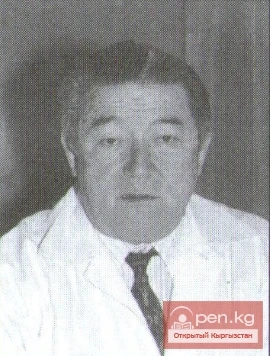
- Professor Pershukov heads the Department of Hospital Therapy with a course in Radiological Diagnostics and Oncology at Jalal-Abad State University.
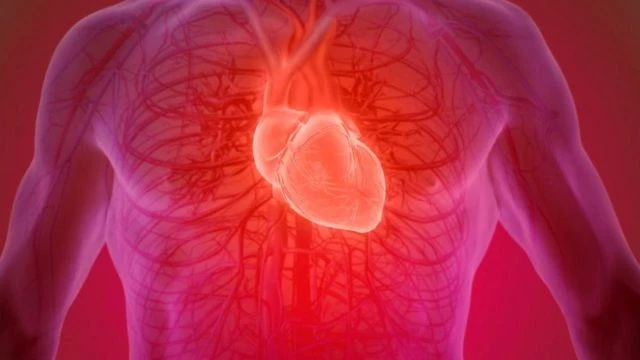
In the second half of the 20th century, significant research was conducted that changed the approach to cardiovascular medicine. One of these discoveries was the use of streptokinase for the treatment of myocardial infarction. This metal-containing enzyme, produced by β-hemolytic streptococcus, has demonstrated its effectiveness as a powerful fibrinolytic agent capable of breaking down clots that block blood vessels.
Thrombosis, which is one of the main causes of infarction, received a worthy solution, saving many patients.
However, it later became clear that thrombolytic therapy also has significant drawbacks. One of them is the risk of hemorrhagic stroke occurring as a result of thrombus breakdown. Although positive outcomes significantly outweigh negative ones, this method is not absolutely safe. The effectiveness of thrombolysis is about 60-70%, while the risk of hemorrhagic stroke is approximately 1% of cases.
Ischemic stroke (left) and hemorrhagic stroke (right)
Over time, the indications for the use of thrombolytic therapy have become more stringent, allowing for the avoidance of complications and fatalities in many patients.
Hemorrhagic stroke on multi-slice CT (left) and on 3D reconstruction of arteries and brain damage
Unfortunately, there continue to be cases of inappropriate use of thrombolytic therapy in patients with acute coronary syndromes for whom this method is contraindicated. Physicians lacking sufficient knowledge in hemostasis and fibrinolysis may prescribe thrombolysis based on indirect signs or the presence of a thrombus visible on angiography. This often leads to severe bleeding and brain edema, which can result in death.
For this reason, professional cardiology communities in the USA, Europe, and other regions have reached a consensus that thrombolysis should only be applied in acute myocardial infarction with ST-segment elevation on the ECG. It is also important to consider the strict time "window" for thrombolysis, which begins from the first minute of the infarction and ends 12 hours later. After this time, the use of this method may not only be ineffective but also dangerous, leading to hemorrhagic strokes instead of alleviating the patient's condition.
Even in the presence of a massive thrombus in the coronary arteries, if the ST segment is not elevated, thrombolysis should not be performed. Experts in this field have long concluded that in such cases, it only causes harm without providing any benefit. Incomplete occlusion of a vessel does not lead to improved reperfusion (restoration of blood flow).
It is extremely important that the algorithms for the use of thrombolytics are known to every emergency medical worker. Every paramedic or doctor must understand that correct actions can save a life, while mistakes can only worsen the patient's condition. It does not matter which thrombolytic is used — streptokinase, alteplase, pro-urokinase, or tenecteplase — the result will be the same.