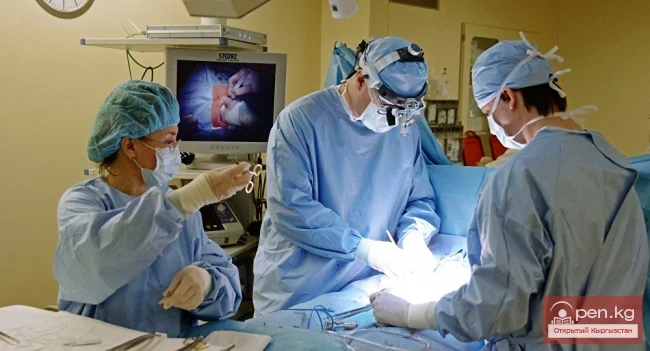
- Batyraliev also served as the Minister of Health of Kyrgyzstan.
We present to your attention the text:
“The decision to assist the patient is made by the patient themselves, which is recognized by all cardiology organizations worldwide. Even if a person is in a highly developed country, they may lack the means to purchase the necessary medications. What are the consequences if such a patient receives a coronary stent, which is one of the most common and effective technologies for saving lives during a myocardial infarction? If they miss taking ticagrelor within one or two days after being discharged from the hospital, they are likely to find themselves back in the hospital with a new infarction, as the stent can almost 100% thrombose within 1-3 days without this medication.
Another important component is the continuity of medical care. If the emergency doctor does not administer a loading dose of aspirin to the patient before hospitalization, even highly qualified specialists in the hospital may not achieve the expected results. The patient also needs an additional medication — clopidogrel or ticagrelor. However, in cases where coronary bypass surgery is the best solution instead of stenting, these medications can become a hindrance. Open surgery in such cases can lead to serious bleeding, which requires the availability of the correct type of whole blood — about 4 liters, which is not always easy to provide.
The third important aspect is the presence of a “cardio team” in the hospital, where angiography and coronary bypass surgery are available around the clock. Emergency coronary stenting of all affected arteries in cardiogenic shock is the fastest and most effective way to provide assistance, and time cannot be wasted on this process. If a patient arrives with a heart attack and ST-segment elevation is observed on the ECG, primary coronary stenting (which does not require thrombolysis) will be the optimal choice. In cases where there is a delay in getting to the hospital, thrombolysis in the ambulance followed by stenting becomes the most effective strategy. However, if the patient does not have ST-segment elevation on the ECG, is stable, and is not in shock, the “cardio team” has the opportunity to assess the situation and perform stenting within the first 24 hours after the onset of the infarction. The decision for coronary bypass surgery is made by the “cardio team” if it is evident that even with the installation of multiple stents, the lesions below their placement will still not allow for an optimal result. This process takes into account pre-prepared technologies and methods. Cardiothoracic surgeons must be prepared for surgeries on unstable patients; it is important not to prescribe unnecessary medications, and all surgical support can vary from routine intra-aortic balloon counterpulsation to extracorporeal membrane oxygenation (ECMO), which is critical in severe cardiac or respiratory failures.
In any case, the patient remains in the best situation. However, it is important to remember that it is easier to prevent a disease than to treat it. Medicine cannot guarantee results, and there is a risk present with any treatment method. The main thing is to minimize this risk with the optimally chosen approach for each patient, considering their preferences as much as possible.”