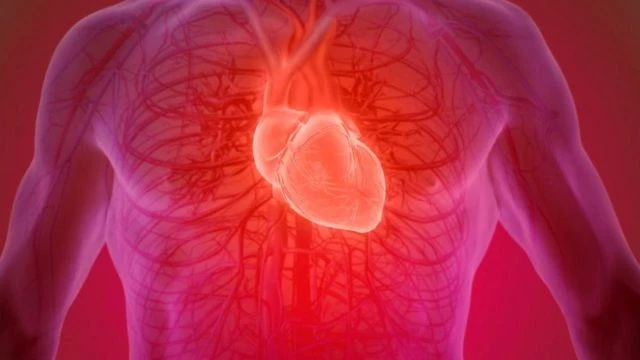
“The main symptom of a myocardial infarction is a sharp pain that is most often localized behind the sternum or to the left of it, and usually occurs suddenly. This pain is caused by ischemia and necrosis of the heart muscle due to the blockage of a coronary artery. The nature of the pain can be compressive, pressing, or burning and often radiates to the left arm, shoulder, or scapula, increasing to unbearable sensations,” noted Pershukov.
In the event that someone nearby or the victim themselves experiences such symptoms, the following is recommended:
- If the victim is conscious, they should be placed in a semi-sitting position, with pillows or rolled clothing under their head, shoulders, and knees;
- Administer an aspirin tablet (250 mg or more) and ask them to chew it;
- Loosen any clothing that constricts the neck;
- Immediately call for an ambulance;
- If the victim has lost consciousness but continues to breathe, lay them in a safe position;
- Monitor breathing and blood circulation; in case of cardiac arrest, immediately begin cardiopulmonary resuscitation.
According to the latest recommendations, the ambulance in case of suspected myocardial infarction should:
- Perform all the above actions that have not yet been carried out;
- Within 10 minutes of the first contact with the patient, conduct an ECG and interpret the results;
- If there are signs of acute infarction, transport the patient to the nearest hospital with angiographic services for urgent balloon angioplasty and coronary stenting.
Medical institutions dealing with the treatment of myocardial infarction, regardless of their organizational and legal form, must bear equal social responsibility.
Special attention should be paid to the specifics of mountainous areas, where the choice of specialized hospital and the speed of delivery are critically important. Every 60 minutes, about 10% of the myocardium in the damaged area is lost, so prompt assistance is vital for the prognosis of the patient's condition.
If the time to the nearest angiographic service exceeds 90 minutes, a patient with a myocardial infarction and ST-segment elevation on the ECG should begin thrombolytic therapy within the first 30 minutes after contact with a healthcare worker. This should be done before their transportation to the hospital for angioplasty.
Thrombolytic therapy can partially or completely dissolve the thrombus, restoring blood flow in the blocked vessel. It is important to remember that if the patient has had a myocardial infarction in the last two years, streptokinase should not be administered due to its antigenic properties, which can lead to serious complications. However, other medications that do not have such properties can be used again without the risk of anaphylactic shock.
Decisions regarding approaches to providing assistance and the timing of such assistance for myocardial infarction should be uniform across all medical institutions, both public and private. In the interest of the patient, it is extremely important to reach angiography as quickly as possible for comprehensive assistance, which usually concludes with the placement of a coronary stent.
When planning the opening of new medical centers, it is essential to carefully evaluate the potential of their equipment. It is important to actively utilize the capabilities of private institutions that have modern medical equipment, which sometimes avoid accepting critically ill patients, preferring more stable ones.
The organization of cardiology services for the treatment of acute myocardial infarction should meet modern requirements and scientific developments, using advanced technologies,” summarized the professor.