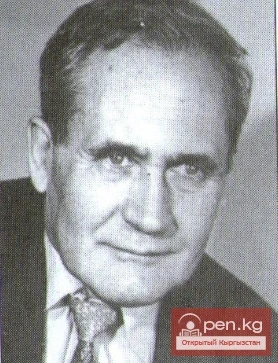
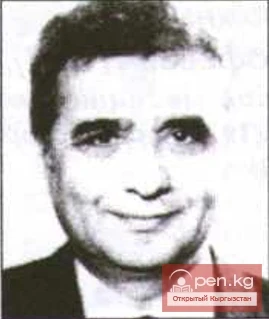
- I.V. Pershukov – professor and doctor of medical sciences, head of the Department of Hospital Therapy with a course in Radiological Diagnostics and Oncology at Jalal-Abad State University.
In 1977, a young doctor, Andreas Roland Grunzig, created the first balloon in his kitchen and performed coronary angioplasty by pushing aside the plaque in the coronary artery, ensuring normal blood flow. This breakthrough marked the beginning of a new era of percutaneous interventions on coronary vessels, freeing patients from angina.
The method proved to be quite successful and quickly gained popularity in various countries; however, it was not without complications. One of the most common was restenosis – the re-narrowing of the vessel at the treatment site. The high pressure in the balloon, necessary to crush the plaque, caused the vessels to actively build up their layers of muscle and intima (the inner lining) in response to the injury. As a result, the rate of restenosis reached 40-50%, meaning that six months later, every second patient required repeat treatment.
Despite active searches for solutions, many technologies, such as plaque drilling or cutting out sections, proved effective only in certain cases and could not be applied to all patients.
American cardiologist Richard Alexander Schatz proposed an innovative solution by connecting two 7-mm frames with a bridge. These frame-stents were developed by Argentine doctor Julio Palmaz to hold expanded bile ducts. Thus, the first truly effective stent was born, later named Palmaz-Schatz.
However, fate did not allow Schatz to meet Grunzig, who died in a plane crash the day before their meeting. The first stentings of coronary arteries were performed by two other doctors: Jacques Puel in March 1986 in Toulouse (France) and Ulrich Sigwart in Lausanne (Switzerland), who reported their successful procedures.
By the mid-90s, it became clear that balloon-expandable stents, the first of which was Palmaz-Schatz, most effectively reduced the rate of restenosis. However, the problem was not completely solved; after the introduction of stents, the rate of restenosis decreased by only 10-15%, which, although a significant achievement, still required further research.
According to data, in 1993, coronary angioplasty procedures in the U.S. equaled those of coronary artery bypass surgery, and this happened in Europe in 1994. After that, open surgeries for coronary artery bypass never again surpassed percutaneous interventions due to their lower invasiveness, lack of need for anesthesia, and the possibility of rapid patient recovery.
As the number of such procedures increased, so did the number of studies that helped answer practical questions. Scientists realized that stents in the coronary artery should not remain forever. However, the installation of the most effective balloon-expandable stents made their removal from the vessel virtually impossible.
Research in Japan in the 90s led to the idea of using biodegradable materials for stents, such as magnesium and poly-L-lactate. Initial trials showed that such stents could dissolve in vessels, but concerns arose regarding their safety, as they did not dissolve evenly, leading to a risk of thrombosis.
In 2012, one of the leading stent manufacturers released a model of a biodegradable stent – the Absorb scaffold. Initially, it generated great interest, but three years later, it became evident that the remaining fragments could cause late thrombosis, which became a problem for many patients.
Until the beginning of the 21st century, searches for solutions to the restenosis problem continued. Various coatings for stents were developed and their designs were studied, but significant successes in this area were not achieved.
In the laboratories of Johnson & Johnson, scientists Fallotico and Lanos began experiments with rapamycin – an anti-proliferative drug isolated from Easter Island. They discovered that if rapamycin was applied to a stent and then slowly released into the vessel wall, it prevented restenosis. Such stents became known as drug-eluting stents, and the first of them was the Cypher stent, which released rapamycin, quickly gaining a new prefix – sirolimus. With this, the 21st century ushered in a new era in the field of stenting.
Today, stents have been improved, and a new second generation with enhanced characteristics is available on the market. Although they are not without drawbacks, it is important to remember that prolonged suppression of cell division can lead to late thrombosis, as the stent remains on the vessel surface and does not integrate into its wall. This makes adherence to long-term antithrombotic therapy critically important.
Modern stenting technologies provide a restenosis rate of less than 10% within the first year after the procedure, and the rate of late thrombosis does not exceed 2%, which is an excellent result.
These achievements allow for an optimistic outlook for the future for patients suffering from ischemic heart disease and acute forms such as myocardial infarction and unstable angina. The "stent for life" program launched in Europe in the mid-2000s has demonstrated its effectiveness in saving lives during acute myocardial infarction. New technologies continue to evolve, saving millions of lives worldwide.
In the future, these technologies are likely to become less aggressive and safer for vessels. But for now, we should correctly perceive modern stents, recognizing their value and limitations, as well as the necessary therapy. This, as studies around the world have shown, is the key to long health, which for many of us is restored thanks to stents.
Perhaps in the future, these technologies will reach even cosmic heights, ensuring safety like in the best medical centers on Earth, where lives are saved every day.
Stay healthy!