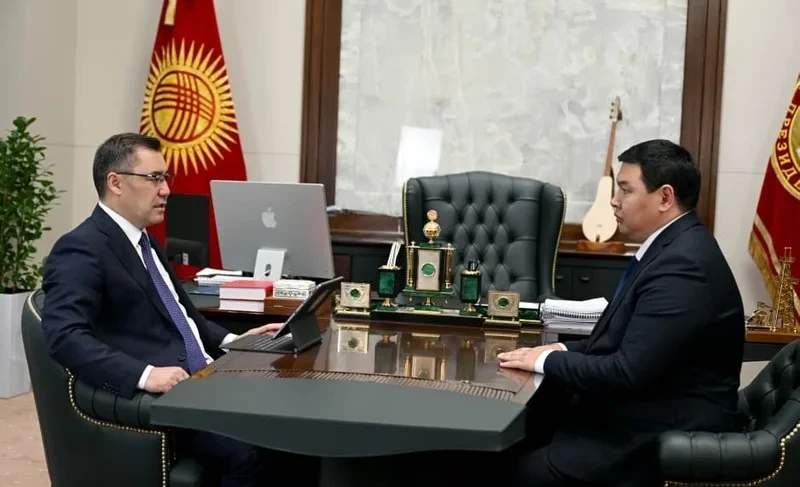
In November of this year, President Sadyr Japarov signed a decree that provides financial autonomy to a number of state medical institutions. Health Minister Kanbek Dosmambetov noted that 20 medical institutions will participate in the pilot project.
According to the proposed project, hospitals will be able to pool their financial resources, redistribute them based on priorities, and also independently establish organizational structures and staff numbers based on real data about their operations, patient numbers, and the range of services provided. Financial autonomy will allow unused funds at the end of the year to be preserved for the creation of a reserve fund, which can be used for modernization and the acquisition of high-tech equipment.
The Ministry of Health assures that the new tariff calculation methodology will not lead to unjustified increases in the prices of medical services. It will ensure fair pricing considering profitability, inflation, and rising utility costs. Currently, the cost of services in state institutions is two to three times lower than in private medical centers.
Preliminary estimates suggest that the price increase for paid services may range from 35% to 50%, but they will still remain approximately twice lower than in private institutions.
The tariff formation methodology, developed by the Ministry of Health in collaboration with the Ministry of Economy, will serve as the legal basis for state institutions to independently set and approve prices within established norms and taking into account differentiated costs.
The project also includes a new labor payment system and a performance-based incentive system, while guaranteeing a base salary. Heads of institutions will be able to set payment amounts based on employee effectiveness, which should enhance motivation and contribute to the professional development of healthcare workers.
To attract additional financial resources, it will be possible to use donor and sponsorship funds by opening accounts at "Eldik Bank." Institutions will be able to set tariffs for paid services, considering mandatory benefits for socially vulnerable groups of the population.
Main provisions of the project:
Organizational structure and staff: institutions will independently form their structure and determine staff numbers based on real needs and the volume of services provided.
Financial autonomy: organizations will have the opportunity to manage their revenues and freed resources, including funds from paid services, grants, and sponsorship assistance. Opening accounts at "Eldik Bank" is permissible for settlements. Unused funds will be carried over to the next financial year.
Paid services: institutions will be able to expand the list of paid services, create separate divisions for their provision, and set tariffs according to the approved methodology. Tariffs must be transparent, published for patients, and provide benefits for socially vulnerable categories.
Labor payment and incentives: a transparent system with guaranteed and incentive components, oriented towards results, will be implemented. Heads are responsible for the accuracy of calculations and the timeliness of payments.
Budget and reporting: institutions will form a consolidated budget, independently determine spending priorities, maintain accounting records, and provide reports to the Ministry of Health and the Mandatory Health Insurance Fund.
Monitoring and evaluation: the Ministry of Health will conduct quarterly assessments of the pilot project's results regarding quality, accessibility, and efficiency of resource use.
Temporary procedure for regulating the activities of state healthcare organizations in a pilot mode
Download document
Regulations on labor payment and financial incentives for healthcare organization employees in pilot mode
Download document