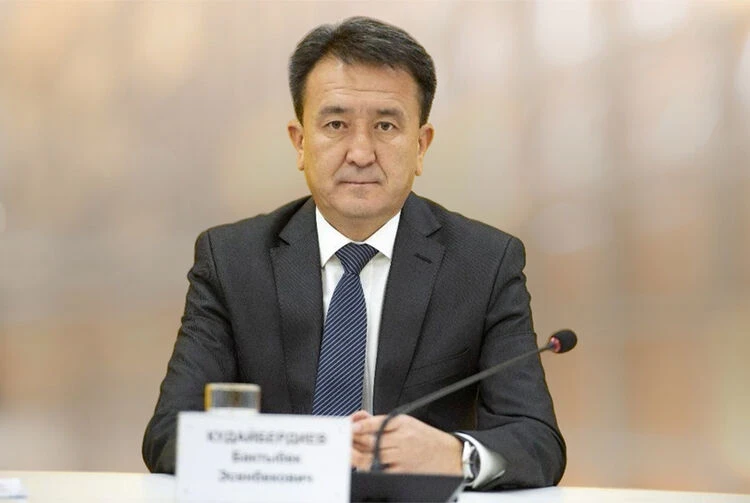
Every year, more and more Kyrgyz citizens are going abroad for legal work. In an interview with 24.kg, Baktybek Kudayberdiev, the director of the Center for Employment of Citizens Abroad under the Ministry of Labor, Social Security and Migration, shared information about available destinations, the selection process, challenges faced by labor migrants, and methods of protection against fraudsters.
— Which countries are open to Kyrgyz citizens in 2026? Where can one go to work?
— The main destinations remain South Korea and the United Kingdom. We have been working with Korea for eight years under a government program that has proven to be transparent and stable. Cooperation with the United Kingdom began in 2022 with a quota of 1,000 places, but in fact, we sent about 1,500 migrants. In 2025, more than 11,000 citizens of Kyrgyzstan found work on farms in the UK.
This indicates that Kyrgyzstan has become a reliable partner in the field of labor migration, and the migrants themselves play a significant role in this.
Working in the UK: what you need to know
— How did you manage to maintain the trust of the British authorities, given the strict requirements?
— The main factor is strict adherence to migration rules. Each contract requires the migrant to return home after completing their work, and our citizens fulfill this condition in 99.99% of cases. The remaining 0.01% are usually girls who request political asylum for various reasons related to family circumstances. The British side takes such applications seriously.
Throughout the entire period of cooperation, only 75-77 citizens of Kyrgyzstan remained in the UK. For comparison, in neighboring countries, this figure can reach 1%, which is considered alarming.
— Many say that the process of getting a job in England is fraught with great difficulties. How true is this?
— Yes, there are difficulties, but they are not excessive. Previously, the process was complicated: registration was offline, and people stood in long queues. Now registration is fully online, but there are nuances. Earlier, the system opened for only 10-15 minutes, which limited the opportunity for registration. We achieved that the website is accessible for several hours, allowing more people to submit applications.
As a result, about 79,000 applications were registered, of which approximately 6,000 passed the selection, and about half of them went to work.
— Do fraudsters become active at this stage?
— Of course. Intermediaries appear who "guarantee" registration for 20-30 thousand soms. We constantly emphasize that all government programs are free, and no one needs to pay. A strict rule has been established: one phone number — one IP address — one application, to avoid fraud.
— Is registration just the first stage?
— That's right, and it is far from the simplest. First, applications are checked automatically. Any errors and discrepancies are excluded. Then, it is necessary to provide video confirmation, where the person talks about themselves and their motivations. This is an important requirement for the British side.
— Is it necessary to know English to work in the UK?
— No, it is sufficient to speak Russian. There are foremen from Eastern Europe on the farms who speak Russian fluently.
— What requirements for candidates are considered the strictest?
— These are age, knowledge of the Russian language, and the ability to use a smartphone. Having a driver's license or a tractor operator's certificate is a big plus. There are farms that accept only women, for example, for mushroom picking, and conversely, there are jobs only for men. The optimal age for work is 25-30 years, as these are people physically and psychologically ready for the workload.
What is the salary in England?
On average, it is about 12 pounds per hour. With an eight-hour workday, this amounts to approximately 300,000 soms per month, and for six months — about 1.8 million soms. All travel expenses are paid by the migrant themselves.
— Are there cases of early return of migrants?
— Yes, the work is physically demanding. Sometimes workers move to other farms. If someone cannot cope with the workload or violates discipline, for example, consumes alcohol or refuses to work, the contract is terminated, and arrangements are made for their return home.
— Are there success stories that you share with migrants for motivation?
— I often talk about the "1+1" scheme. If one person proves to be a responsible worker, they are invited again, and they can bring someone else with them. I know of a case where a guy from the Aravan district found work for his entire family, including his mother, who cooked for the team. This increased productivity and employer satisfaction.
South Korea: the importance of knowledge
— Why does work in Korea remain popular?
— In Korea, one can combine work with study. The main requirement is knowledge of the Korean language and good health. Previously, we required certificates, but this led to fraud. Now the emphasis is on real knowledge.
Registration is done online, and there is a language test, a physical endurance test, and a color blindness test. Out of two thousand registered, about 200-250 pass.
Where do Kyrgyz citizens work in South Korea?
Mostly in manufacturing: packaging, harvesting products, working on machines. The salary starts from $1,500. Housing and meals are most often paid for by the employer.
— Is there any corruption in the employment process?
— Absolutely. The selection process is transparent: the employer sets the parameters, and the computer selects candidates from the database. Many migrants buy cars after work and send them to Kyrgyzstan for additional income.
Turkey: a sought-after destination
— Is Turkey still attractive for labor migration?
— Yes, especially in the hotel and tourism sector. Contracts are usually for six months. Previously, only private agencies actively worked, which took up to 50% of the first salary of the migrant. This year we launched a pilot project where registration is completely free, and the working conditions are similar to those of private agencies.
Knowledge of languages significantly increases income; for each additional language, the employer is willing to pay about $100 extra.
Control of private agencies
The center provides licenses to private agencies if their documents are in order. The main requirement is the existence of an agreement with the receiving party. The decision to issue a license is made by an interdepartmental commission. Private agencies have greater mobility and can quickly organize the selection of workers.
Work in the Persian Gulf, Slovakia, and Sardinia
— How is the situation with work in Qatar?
— Good knowledge of English is required, as the work involves communication with tourists. Competition in the market is high, but the earnings correspond to that.
— Opening a new direction — Slovakia. What is the program?
— On January 7, we sent the first 10 people to Slovakia under a direct contract. These are passenger transport drivers, and a total of about 100 people are planned to be accepted.
— How is the situation with work in Sardinia?
— This is agriculture, like in the UK. The Italian side conducted the selection, but there were problems with visas, as the employer did not meet the standards. Cooperation was suspended.
Japan: labor migration
— How is labor migration to Japan?
— Every year, 10-11 people leave, and knowledge of the Japanese language is required. In 2025, an agreement was signed with the Ministry of Health of Japan; the process of obtaining permits is complicated and lengthy. We launched a free Japanese language learning program, and all participants received certificates and submitted applications for testing.
Russia and labor migrants
— Is the situation with labor migration to Russia still relevant?
— We have more than 25 agreements with Russia. Despite high wages, many go based on recommendations from acquaintances. According to our estimates, about 300,000 Kyrgyz citizens work in Russia.
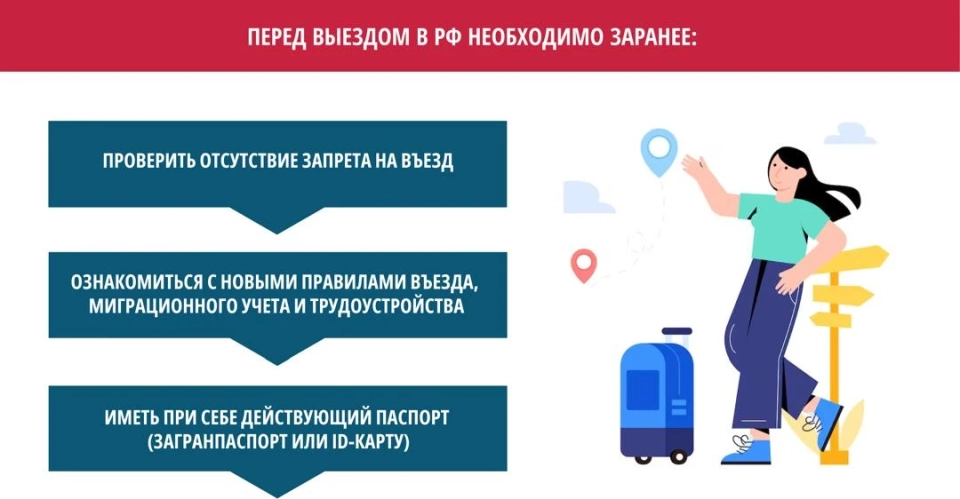
There is a problem with blacklists. Every day, 600-700 people contact us who face a ban on entry to Russia, the reasons being unpaid fines or administrative violations. We recommend checking the status before departure.
— Can you help get someone off the blacklist?
— We can only provide information. The exception is handled by our ministry's representative office in Russia, but the process of getting off the list is extremely complicated.
Educational initiatives
— How do you inform the population about safe migration?
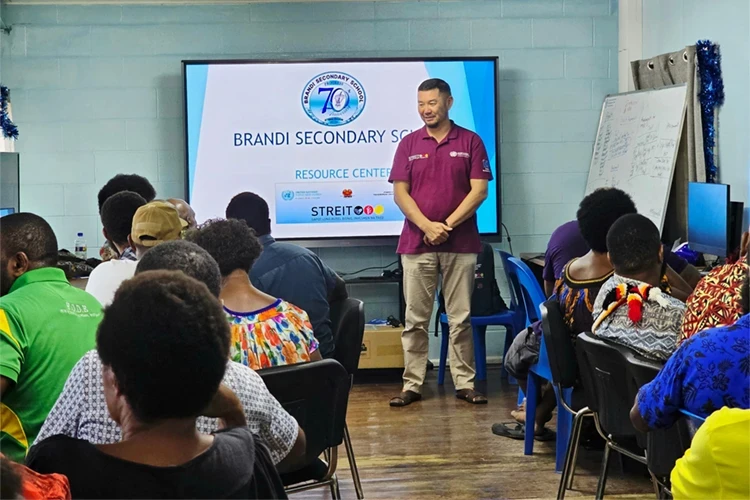
— We conduct a "Safe Migration Caravan," meeting with people and explaining how not to fall into the trap of fraudsters. We emphasize the need to return home. If migrants remain abroad, programs may be closed, and others will not be able to go.
We conducted an experiment where 10 out of 100 respondents were ready to pay $1,000 "to intermediaries" immediately. This vividly shows the level of trust in fraudsters.
— Have there been cases of misfortunes with migrants? How do you respond in such situations?
— Unfortunately, yes. In 2025, a girl who complained of feeling unwell died in the UK. The employer took on the organization of the repatriation of the body, and our department covers all expenses.
Where to get up-to-date information on registration for work abroad?
— Only on official resources, such as the website migrant.kg. We have upgraded the website and Instagram page, allowing for up-to-date information.
— What advice would you give to those planning to go abroad for work?
— Legal labor migration is a real chance to earn, support your family, and see the world, but only if the rules are followed. That is why Kyrgyzstan is trusted and new opportunities are opened for migrants.