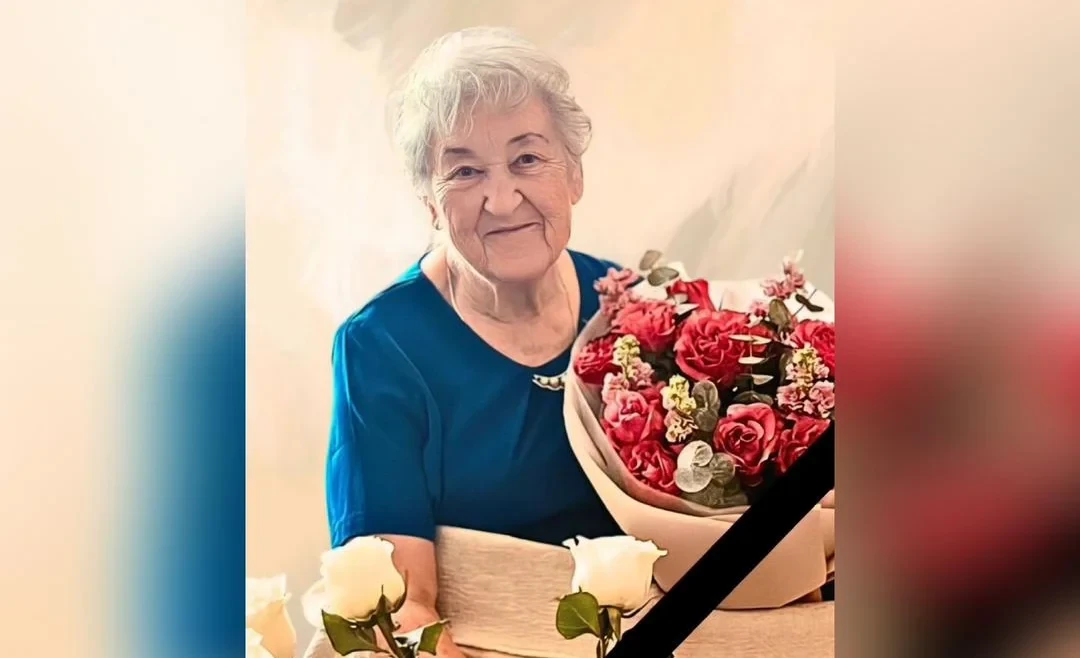
Maria Musalieva is one of those who managed to overcome these barriers. Born in a Kyrgyz village, she dreamed of a "male profession" and became one of the first parachutists in the country. However, after a tragic incident involving ala kachuu (bride kidnapping), she had to leave her beloved sport.
Maria dedicated almost 60 years of her life to medicine and was awarded the title of Honored Doctor of the Kyrgyz Republic. We spoke with her about her life path, the difficulties she faced, and what helped her not to give up on her dream.
"I wanted to live up to my father's expectations"
Maria Musalieva (née Sadykbaeva) was born on April 10, 1940, in the village of Oro-Bashi. In a family with eight children, she was the youngest.
Her mother was a housewife, and her father, Sadykbay Shopokov, graduated from a madrasah and worked as a mullah. He sought to provide education for all his children, but not everyone managed to complete it. Therefore, Maria particularly wanted to meet her father's hopes.
As a child, she dreamed of becoming a geologist, inspired by the arrival of geologists in her village. However, her relatives discouraged her, considering that profession unsuitable for women.
After finishing the 7th grade, Maria enrolled in a medical school, but to continue her studies at the institute, a three-year work commitment was required, established during Nikita Khrushchev's time: without practical work, graduates of vocational schools were not admitted to universities.
Thus, young Maria went to work in Batken, where she initially worked at a FAP (Field-Attending Post), then became a paramedic, administered vaccinations, and helped patients, gaining experience. At the age of 17, she was awarded a certificate of honor from the Supreme Council of the Kyrgyz SSR for her achievements. However, the path to higher education proved to be thorny.
I failed the entrance exam twice. First, I tried to enroll in the medical institute in the capital but couldn't. Then I went to Kochkor, tried again — and again failed. Then I decided that I wouldn't give up.
Maria Musalieva
She worked at a kindergarten during the day and studied at the Youth Workers' School in the evenings, preparing for admission.
"Perseverance and a sense of duty to my father helped me. After three years, I entered the medical institute. Initially, it was difficult for me due to my insufficient knowledge of the Russian language, but my desire to learn was stronger. Soon I adapted and began to achieve success," she recalls.
"I never thought I would fly"
The story of one of the first Kyrgyz women parachutists began in her third year at the institute. During military training classes, students were informed about recruitment for the parachute section of DOSAAF. Of all the girls in the course, only three signed up, including Maria.
"My desire for knowledge and new experiences always opened new horizons for me. I became interested in seeing Kyrgyzstan from above. When my family learned of my decision, they reacted sharply — they considered this activity unsafe and unfeminine. But I chose this unusual path," Maria recounts.
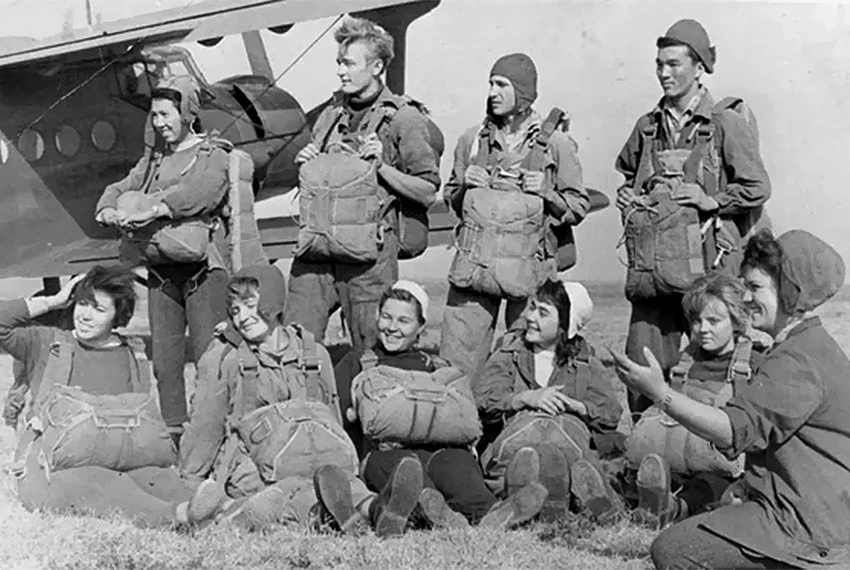
Before the first jumps, the trainees practiced for a long time. There was a parachute tower in the park about 500 meters high for training jumps, where future parachutists practiced techniques and overcame their fears.
Photo from Maria Musalieva's archive. Far left in the second row
First successes and publications in Moscow publications
Maria made her first jump in 1963 at the airfield in Kara-Balta, where she and her comrades were lifted to an altitude of about 1000 meters in an An-2 aircraft.
"The first jump was the hardest. I remember that summer day when my heart was pounding with excitement. I stood at the door of the plane and thought: am I really going to fly? It was a real test. When the parachute opened and I saw the ground, the feelings were indescribable," she shares.
This jump marked the beginning of a new stage. During her training, she made 49 jumps.
After each landing, I had bruises and contusions on my body, but the desire to fly was stronger than anything.
Maria Musalieva
Her successes did not go unnoticed — she was written about in newspapers, and her photograph appeared on the front page of the Moscow aviation magazine "Wings of the Motherland."
Marriage as an obstacle to the sky
Maria was just one jump away from obtaining her parachutist certification when she was kidnapped for marriage. The person she met on the bus became her kidnapper. At that time, ala kachuu was common, and after the wedding, he forbade her from engaging in her beloved sport.
"Returning home after being kidnapped was considered a disgrace, so I had to put up with it. He said that this sport was dangerous. I was upset and angry, but he supported me in my profession as a doctor. Now I understand that this was my fate," Maria Musalieva recounts.
Although this happened in the 1960s, much has not changed since then. In 2024, according to the "Country Gender Equality Review in the Kyrgyz Republic," over 20% of marriages in the country are concluded through ala kachuu. Bride kidnapping continues to threaten women's right to choose their own destiny.
Born to heal
In 1966, Maria graduated from medical institute. Due to a shortage of specialists, she was assigned to work as an obstetrician-gynecologist in At-Bashi, where she worked for 12 years. Then she spent three years as a dermatologist-venereologist in Kochkor, and later became the head of the maternity ward. In her profession, Maria helped thousands of children be born and earned the respect of colleagues and patients, receiving the title of Honored Doctor of the Kyrgyz Republic.
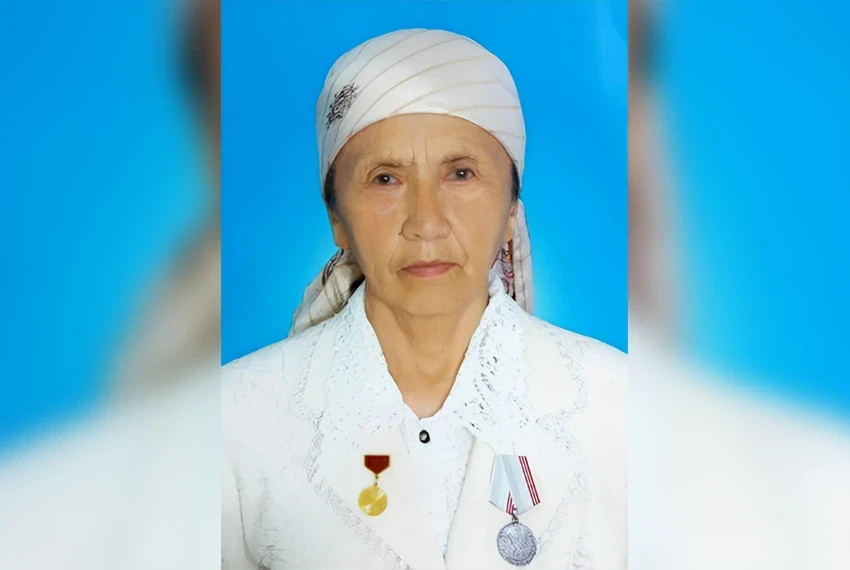
After retiring in 2014, she continued to work as a family doctor for another 5 years, thus dedicating almost 60 years to medicine and working until the age of 80.
"You need to love your work and work honestly. Then it brings joy. That's why I couldn't leave medicine even after retirement. It is my calling," she emphasizes.
Now Maria Musalieva is 86 years old. She has four sons, 15 grandchildren, and 24 great-grandchildren. Despite her age, she remains active and curious.
Everyone should find their calling and follow their dream. If you believe in yourself and don't give up, everything will definitely work out. If I could achieve success at a time when it was difficult for a woman to choose her path, then you can overcome any obstacles and stereotypes too.
Maria Musalieva