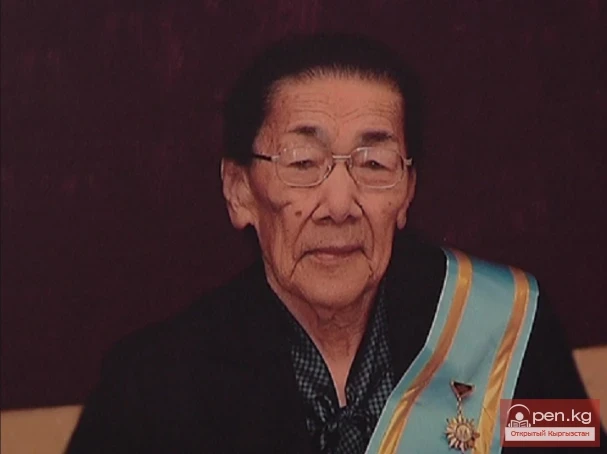
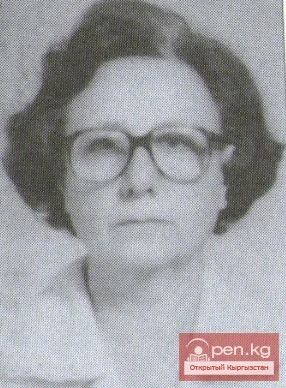
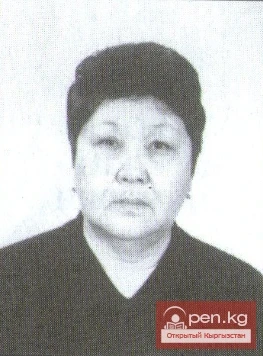
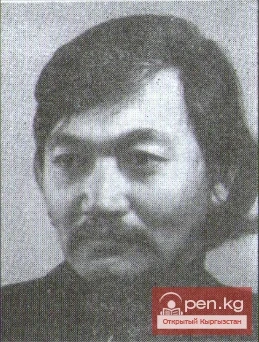
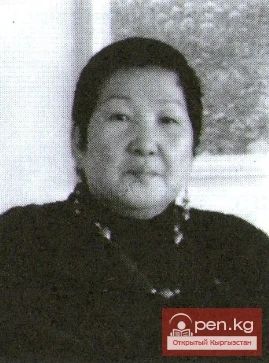
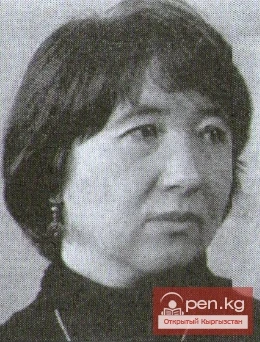
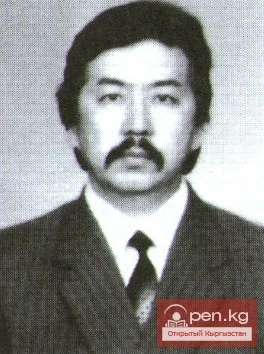
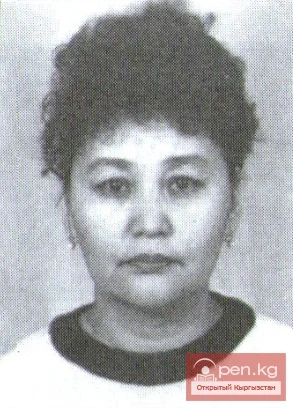
In 2019, a correspondent from Turmush managed to meet and talk with Sharipa apa, who shared her life story.
“After our wedding, my husband and I worked in the Ala-Buka district and the city of Kerben. My husband was also a teacher. From there, we were transferred to Suusamyr. My husband worked as the principal of the local school for 7 years. During that time, I worked at the school in the village of Chayek. In 1965, despite my refusal, the first secretary of the district party committee, Karybek Tynaliev, appointed me head of the Jumgal district culture department. Together with the poet and prose writer Shakin Esengulov, we organized a folk theater. It has now become one of the professional theaters in the country. Later, we opened the ensemble "Bekbekey," which quickly became popular. The ensemble's team traveled to Moscow 2-3 times. On one of the trips, we participated in an agricultural exhibition, where we won a bronze medal. We also visited Latvia and Lithuania. In an all-Union competition held in Vilnius, we took first place. With the "Bekbekey" ensemble, we toured as far as Germany. For my work, I received many awards. We raised many creative and successful individuals. For example, the director of the M. Kureneev Music College, Tenti Murataliev, and the rector of the Kyrgyz National Conservatory, Muratbek Begaliev, were our students. During our time, the Kuyruchuk Museum was opened. We collected all the exhibits and materials ourselves. In 1986, I was appointed director of film distribution. In 1989, we opened the museum of the hero Kaba uulu Kozhomkul. His wife was my father's sister. My father was a craftsman. He built the dome of Kozhomkul. Soon we went to the minister and opened a music school. They sent us a teacher, Stankievich, who contributed to the development of the school. Later, the school was named after Ch. Duyshieva. In addition, we opened the ethnographic museum named after Sh. Esengulov. I brought many exhibits from the Leningrad Ethnographic Museum. There is clothing belonging to Kozhomkul. After some time, we opened a park in the village of Chayek. We brought carousels and other necessary items from Russia by train,” she recounted.
Sharipa apa noted that during her time as head of the district culture department, she achieved many successes.
“In 1986, I was appointed director of film distribution. I worked in this field until 1992. With my team, we showed good results throughout the region. Then I worked as a methodologist in the district culture department and retired in 1993. In 1996, I began working as a research associate at the museum. I worked there until 2012. A park that I founded was named after me. In total, I worked in the field of culture for 47 years,” she says.
Sharipa Isabekova received the title of "Honored Cultural Figure of the Kyrgyz Republic" in 2003 from the hands of then-President Askar Akayev during an event at Son-Kul. She raised a son and a daughter. Now she has 6 grandchildren.
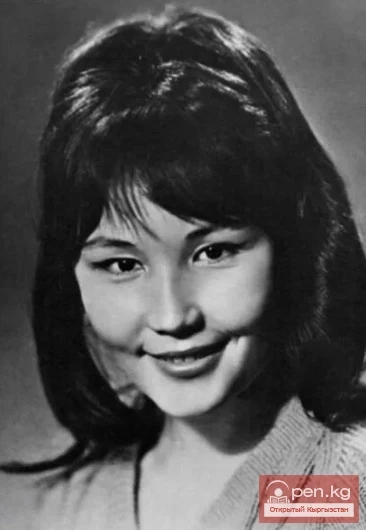
Sharipa apa, did you know the actress of theater and cinema Tatybubu Tursunbaeva?
- Tatybubu Tursunbaeva was born in the village of Chayek to a famous komuz player, dastanchy, and humorist Myrsaaly and the craftswoman Kalaybubu. She was the only girl in the family. She had four brothers. Nooruzbay and Tursunbay were her brothers. Tursunbay is Tatybubu's paternal grandfather. And Nooruzbay is my mother's father. We have family ties. Tatybubu is 11 years younger than me, but she is my "taizhe" (relative on the maternal side).
She grew up before my eyes. She was very beautiful, so she had many suitors. When she came to the village, all the boys talked only about her. Tatybubu's older brother, Ötkülbek, worked for many years in the editorial office. Another brother named Social was a komuz player. In 1967, he took first place in the republican competition among komuz players. But he died at a young age. There was also another brother, Nurkan, and a brother named Imamady who graduated from the Leningrad Art School. He was raised by a "taizhe" named Chokoy. After some time, he also died, and then Tatybubu passed away. Nurkan, Tatybubu, and my cousin Süünbek studied at the theater school. Imash Eshimbekov also studied with them. He married Tatybubu in 1966.
Their wedding took place at a relative's house on Soviet Street. All the relatives gathered. My husband and I were also present. I still keep the wedding invitation. Unfortunately, they only lived together for 10 years. They had a son and a daughter. I think they divorced due to jealousy. Tatybubu raised the children alone. Imash later married someone else and moved to Osh. I know that she gave him a daughter who later fell ill. Tatybubu's daughter Asel is known to everyone. She wanted to follow in her mother's footsteps, but unfortunately, she couldn't make it to the end. Her son Kanat studied to become a dentist. His sister's husband opened a workshop for him to produce windows and doors. As far as I know, he is still doing this.
Did you know the writer Chyngyz Aitmatov?
- Yes. In 1947, I graduated from school and entered a women's pedagogical college. After graduation, all graduates were assigned to schools. I was assigned to the O. Nogoybaev School in the Jumgal district. There, I worked as a primary school teacher. Then I studied for 2 years at a women's pedagogical institute. In 1953, a classmate named Zina married a guy from Issyk-Kul. Six girls went to the wedding. It turns out that Chyngyz (Aitmatov) and the groom studied together at the agricultural institute. Suddenly, a tall, broad-shouldered guy with black eyes approached us and said that his name was Chyngyz and he would be conducting the wedding. The wedding went well. Everyone was happy, singing, and dancing. I also sang, after which Chyngyz came up and said that I sang well. We were asked what we were drinking. We replied that we only had wine. But it turns out they mixed vodka into the wine. The wedding was fun. We returned to the dormitory at 6 in the morning. Chyngyz brought us back. He told the doorkeeper: “Oh, apa! Take care of your girls. There were six of them, right?” That’s how we met. Later, after the institute, we were sent to schools. I started teaching at the school in the village of Sheker in the Talas region. At that time, there were few families living in the village. A classmate named Asiya worked with me. We stayed there. In 1986, I was transferred to Jumgal. At that time, Chyngyz Aitmatov was the general director of the republican film distribution. He held a meeting, and after it, I stayed and approached him. I reminded him of the wedding, to which he replied: “Oh, how could I forget that wedding?! After I delivered all of you to the dormitory, my hands hurt for 6 months.” We talked about many things. I told him that I was working in the village of Chayek. Then he invited the director of the film distribution, Dunganova, and told him to give me good films. After that, we said goodbye. Many good films came to our village. Soon, for my good work, I was given a car.
It is said that Chyngyz Aitmatov called Tatybubu Tursunbaeva. Did this story happen in Jumgal?
- Tatybubu came to the village for a few days. During this time, Chyngyz called my work phone 2-3 times and asked about her. One day, Tatybubu came to my work and was waiting for a call from Chyngyz. But she didn't have much time because she was leaving for a tour in the Ak-Tal district. Soon, Aitmatov called. I told him that she had already left. After that, they did not get in touch again. The next time I saw Chyngyz was at the oncology institute. My husband was sick and in the hospital at that time. It turns out that Bүbüsara Beyshenalieva was also being treated there. Chyngyz was there all the time. Soon, Bүbüsara passed away. My husband also died. I returned to Jumgal. After that, I did not meet Chyngyz. Chyngyz's first wife was a doctor, and his second, Mariyam, was from the Jumgal district. She graduated from the Moscow Theatre Institute, an art historian. She lived in Japan. Chyngyz and Mariyam started a family. Chyngyz made her his secretary and assistant. Mariyam knows foreign languages. Chyngyz spent a long time in Europe (editor's note: from 1994 to 2006, Chyngyz Aitmatov was the ambassador of Kyrgyzstan to the Benelux countries). During this time, Mariyam supported his creativity. She helped translate his works into other languages. With his first wife, they raised 2 children. They now hold good positions. Mariyam gave him Shirin and Eldar.
Sharipa Isabekova, thank you for the conversation!