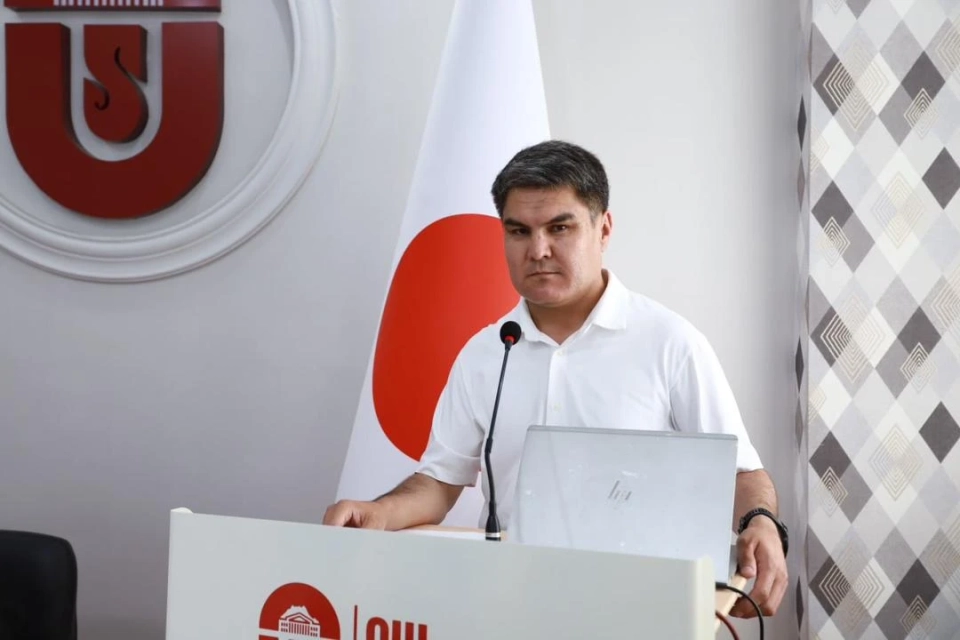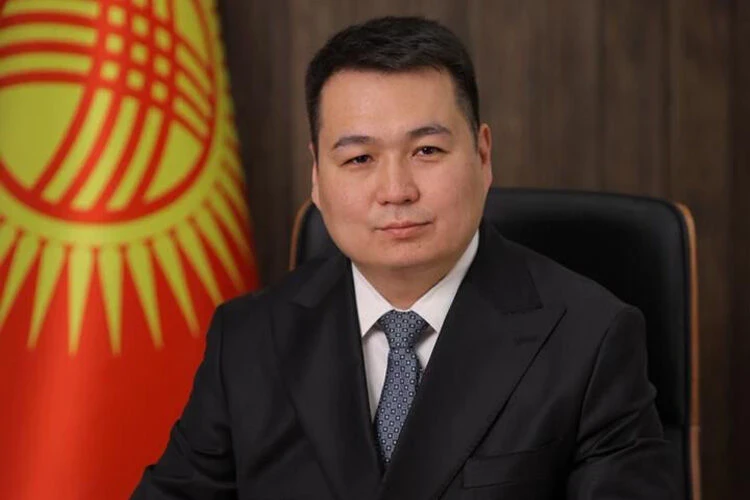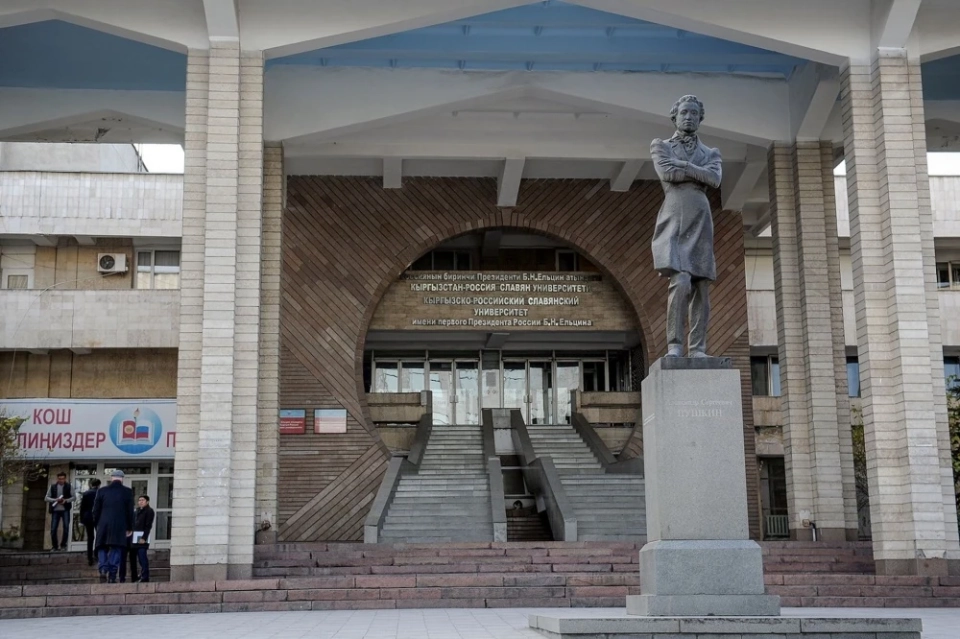
In an interview with the rector of Osh State University, Kudayberdi Kozhobekov, we discuss the features of higher education in Kyrgyzstan, including comparisons with the educational systems of neighboring countries such as Uzbekistan and China, as well as Russia. The main focus is on the evolution of the university: its autonomy, scientific activities, business partnerships, export of educational services, and the significance of OshSU as the flag bearer of southern Kyrgyzstan in global educational rankings.
What are the strengths and weaknesses of the Kyrgyz model of higher education compared to neighboring countries and Russia?
- The Kyrgyz model of higher education has its advantages and disadvantages, as well as unique features, especially in comparison with countries such as Uzbekistan, China, and Russia.
The strength of the system lies in its openness and flexibility. Kyrgyz universities quickly respond to changes in labor market needs by implementing a multi-level education system (bachelor's, master's, doctoral), academic mobility, and joint programs with foreign educational institutions. Multilingualism is another advantage: education is conducted in Kyrgyz, Russian, and partially in English, which enhances the mobility of graduates and their competitiveness in the Eurasian educational market. The accessibility of higher education for broad segments of the population, especially in the regions, also plays an important role.
However, among the weaknesses, it is worth noting the lack of financial and material-technical resources, which complicates the updating of infrastructure and scientific laboratories. Unlike Russia and especially China, funding for science and education in Kyrgyzstan is significantly lower, which affects the level of research activity and academic competitiveness. Additionally, there is a gap between theoretical training and the practical skills of students.
In comparison with Uzbekistan, it can be noted that there have been more centralized and large-scale efforts to modernize higher education in recent years, including attracting foreign universities and investments. China, in turn, demonstrates strict strategic management with significant state investments and a focus on high technologies and global rankings. The Russian system is characterized by strong scientific traditions and the integration of education with fundamental science.
In the coming years, we face the task of improving the quality of education and science, closer integration with the economy, and developing regional universities as centers of socio-economic growth.
Does it matter which university a specialist graduated from in Kyrgyzstan? Is there a difference between leading and regional universities?
- In Kyrgyzstan, the university from which a specialist graduated is still important for employment; however, this significance is largely based on reputation rather than formal criteria. There is a conditional division between leading universities and regional institutions. Here, decisive factors include the university's history, quality of education, human resources potential, international connections, and alumni activity.
Typically, leading universities are associated with stronger academic preparation, participation in international projects, and dual degree programs, which enhances the competitiveness of their graduates. This, in turn, affects employers' trust and career advancement opportunities.
Regional universities, including OshSU, play an important role in training practice-oriented specialists for the economy and social sphere. We actively maintain connections with the labor market, strive to ensure the accessibility of education, and promote regional development.
Thus, while the prestige of a diploma matters, the actual quality of graduate training and their professional skills are becoming increasingly important.
What recent reforms have had the greatest impact on OshSU and the higher education system in the country?
- One of the key reforms that significantly impacted higher education in Kyrgyzstan and OshSU was the granting of special status to several universities.
This status allowed universities to expand their academic, financial, and managerial autonomy, independently develop educational programs, engage more actively in science and international cooperation, attract external resources, and build long-term development strategies. For OshSU, this became a stimulus for institutional growth, enhancing research potential and the quality of personnel training.
Overall, the reform created conditions for the formation of strong universities as centers of education, science, and socio-economic development of regions, as well as facilitated the integration of Kyrgyz universities into the international educational space and their transformation into modern models.
How does the credit system of education function in Kyrgyzstan?
- In Kyrgyzstan, the credit system of education was implemented in accordance with international standards and is aimed at increasing the flexibility and quality of education. Education is based on educational credits that take into account the workload of disciplines and include both classroom and independent study by students.
The credit system allows students to form individual educational trajectories, choose elective courses, and transfer credits during academic mobility between universities both within the country and abroad. For OshSU, this is an important tool for integration into the international educational space and enhancing the competitiveness of graduates.
We have been successfully applying this system for several years. Overall, the credit system promotes a results-oriented approach to education, student responsibility for their education, and the comparability of Kyrgyz diplomas on the international stage.
What is the role of OshSU in the national system of higher education in Kyrgyzstan? What does it represent today?
- Today, Osh State University occupies a position as one of the leading universities in Kyrgyzstan and a university with special status. It is the largest multidisciplinary university in the south of the country, fulfilling a strategic mission in personnel training and scientific development.
OshSU serves as a model platform for implementing educational and managerial innovations: new forms of academic and financial autonomy, modern educational programs, digital solutions, as well as international projects. Our practices are used to disseminate successful ideas in other universities of the republic. For example, our experience in implementing the innovative system "science-education-production-commercialization" has been approved and recommended for application in other educational institutions.
Today, OshSU represents a modern open university that combines fundamental education with applied science and active international cooperation, focusing on quality and sustainable development, confidently stepping towards the model of a university 4.0.
How is OshSU transforming into a research and innovation university of global standards? What stages have you laid out in this process?
- The transformation process of Osh State University is phased and systematic, which we consider a long-term strategy.
The first stage involved creating an institutional foundation: obtaining special status, expanding autonomy, and updating management models. This allowed a shift from inert development to targeted management of results.
The second stage is associated with strengthening research potential: creating research centers, supporting research schools, involving students and young scientists in research projects, and developing master's and doctoral programs.
The third stage is innovative and entrepreneurial transformation. We are developing an ecosystem for knowledge commercialization, including startup platforms and partnerships with business, which allows for the implementation of research results into practical activities. Examples include a robotics center and projects on ecology.
The final stage is internationalization and reaching a global level: dual degree programs, publication activity, and attracting foreign faculty and students. OshSU actively participates in international rankings and alliances.
As a result of internationalization, today over 10,000 foreign students from various countries study at OshSU. In the 2024-2025 academic year, 41 faculty members from different countries will work at our university.
There is also an increase in publication activity: in 2025, 351 articles were published in international scientific journals, which is six times more than in 2021.
Thus, OshSU is moving from a classical university to a new type - a research and innovation university focused on quality and sustainable development.
How is OshSU integrating into the global educational space? What goals does it set for itself?
- Osh State University is actively working on integration into the global educational space through key areas.
Firstly, we are developing international cooperation: academic mobility programs and dual degrees with foreign universities.
We have over 300 bilateral cooperation agreements with foreign universities, including more than 100 from Russia and 54 from Uzbekistan. We implement dual degree programs in 22 specialties. Every year, over a thousand students participate in exchanges and study in other countries.
Secondly, we focus on improving the quality of education and science according to international standards: participation in rankings, publications in international journals, and the implementation of the credit system.
The university's goals are to ensure the competitiveness of graduates in the global labor market, strengthen scientific potential, and become a noticeable player in the international educational and research environment.
We strive for concrete results: growth in international programs, increased publication activity, and expansion of partnerships with leading universities worldwide.
Tell us about joint educational projects with Russian universities: what are the advantages of such cooperation?
Osh State University actively collaborates with Russian universities, implementing joint educational projects, dual degree programs, and scientific initiatives. We work with over 100 universities in Russia, including Lomonosov Moscow State University, RUDN University, and others.
Every year, about 100 students and faculty from OshSU participate in summer and winter schools, as well as in academic mobility and conferences in Russia.
Our Russian partners are interested in us due to our academic potential and historical ties: they help strengthen fundamental knowledge by exchanging scientific personnel and experiences. In turn, we represent an interest as a regional center for practical training and intercultural exchange.
Joint projects allow for improving the quality of education and integrating international standards, developing research directions, and forming competitive personnel.
What drives science in Kyrgyzstan today?
- Science in Kyrgyzstan is driven by several key factors.
One of the drivers is the National Idea "national spirit - global heights," proclaimed by the president. Joint efforts of universities are aimed at researching national priorities such as ecology and economy.
Science seeks to meet the needs for practical solutions for the economy and society, developing agriculture, ecology, and innovative technologies.
Moreover, international cooperation and grant programs contribute to the quality of research by involving students and young scientists in experience exchange.
The third factor is the active role of universities, such as OshSU, where science is integrated with education, creating research schools and startup platforms.
Thus, the drivers of science become a combination of practical necessity, international integration, and university support, creating a culture of research and innovation in the country.
How does the university help solve socio-economic problems in the region?
- Osh State University actively participates in addressing socio-economic problems in the city and region through a number of directions:
Training in-demand specialists - the university prepares specialists for key sectors of the economy and social sphere.Scientific research and partnerships with business - scientists develop solutions for agriculture and sustainable development.Social initiatives and educational programs - projects for upskilling and engaging youth in social programs.
Thus, OshSU serves as a center of strength for the region, uniting education, science, and practical influence on socio-economic development.
How is cooperation with business developing and how does it affect the content of educational programs?
- Osh State University actively develops interaction with businesses and companies in various sectors.
We collaborate through joint projects and internships, which allows us to prepare specialists who meet market demands. The university also accepts commercial orders for research and the implementation of innovative solutions.
For example, we are implementing environmental projects, such as creating a forestry initiative in partnership with local authorities. The OshSU business park actively collaborates with local businesses, supporting the best startups.
Enterprises and partners can influence the content of educational programs: their recommendations are considered in course development to ensure that graduates possess relevant skills.
This cooperation creates a synergy between education and the economy, improving the competitiveness of the university and its graduates.
OshSU has made it to the top of the QS World University Rankings for Sustainable Development for 2026. What are the advantages for the university?
- The year 2025 was significant for OshSU, which ranked 316th out of 1526 universities in the QS Rankings Asia 2026 and 22nd among universities in Central Asia. We also entered the QS World University Rankings for Sustainable Development, ranking 1251st for environmental impact and 1107th for governance.
Being included in international rankings brings real advantages.
Firstly, it leads to increased reputation and authority: the university becomes more visible on the international stage.
Secondly, the ranking stimulates improvements in the quality of education: the requirements of international standards encourage the enhancement of programs and intensification of scientific work.
Thirdly, it creates opportunities for funding and collaboration with international organizations.
Finally, it serves as motivation for students and staff: the ranking highlights the competitiveness of the university and enhances the prestige of the diploma.
Thus, participation in global rankings strengthens OshSU's position as a research and innovation university, opening new horizons for education and science.