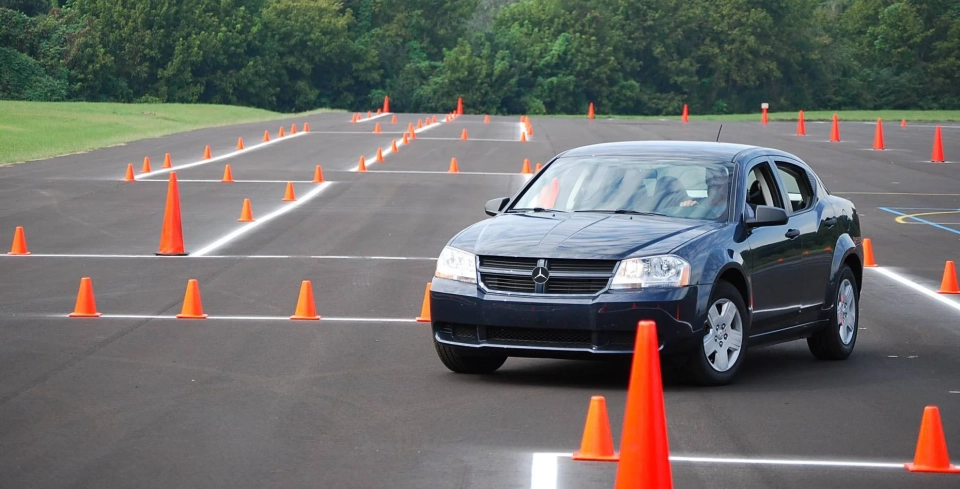
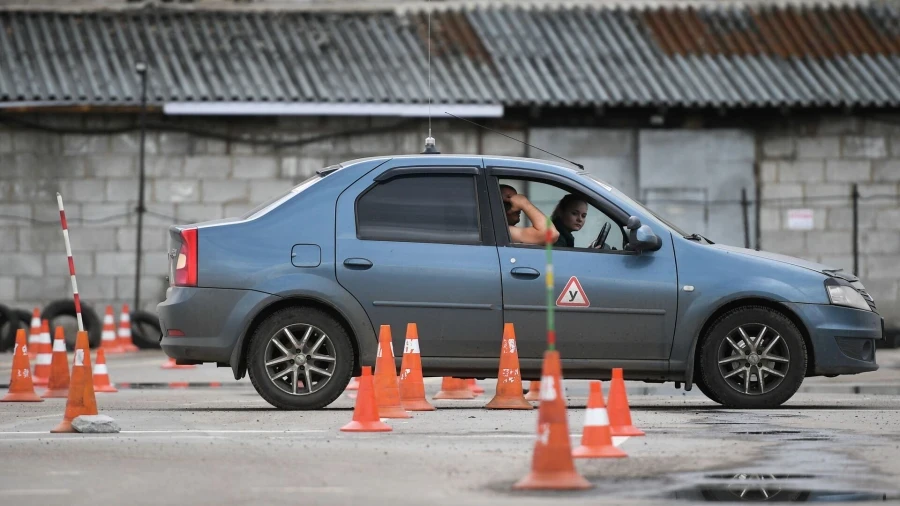
In connection with the introduction of a mandatory 10-month course for category B drivers in Kyrgyzstan, the editorial team of Kaktus.media decided to explore international experiences in driver training and investigate how the duration of training affects road safety.
Global Practices
USA and UK (exams are more important than formal training): In the United States, there are no unified federal requirements for training, as rules are established separately in each state. Typically, adult candidates can obtain a license simply by passing a written test on traffic rules and a practical exam, without the need to attend a driving school. The time frames for training are not fixed: some states only require a learner's permit and a certain number of hours of practical driving with an instructor for beginners, while adult drivers often manage without courses. In the UK, there is also no mandatory training, but it is important to obtain the necessary permits and successfully pass the exams. In practice, most beginners train with instructors, and on average, about 45 hours of theory and 20 hours of practice are required for successful completion, although there are no strict minimum requirements in Britain – the key factor is passing the exams successfully.Germany and other European countries (mandatory training in driving schools): Many European countries have strict requirements for mandatory training. In Germany, a candidate must complete a course at a certified driving school, which includes 14 theoretical classes of 90 minutes each and at least 12 practical lessons (including five trips on rural roads, four on the autobahn, and three at night). Training usually takes from 3 to 5 months before being allowed to take exams. Similar requirements exist in France, Spain, and other EU countries, where without a certificate of completion from a driving school, one cannot take the exams. Additionally, training includes a first aid course, for example, in Denmark – 7 hours of first aid and special classes on slippery roads. In Denmark, a minimum of 28 hours of theory and practical classes on special ranges is required before the exam. Thus, formal phased training is mandatory in many European countries.
Japan and South Korea (strict multi-stage exams): In Japan, the process of obtaining a license is known for its complexity. The minimum age for obtaining a license is 18, and candidates face a very strict practical exam: even a small mistake can lead to failure. As a result, successful completion on the first attempt occurs only in 35% of cases. Formally, training in a driving school is not mandatory, but most Japanese drivers take courses in accredited schools due to the difficulty of passing the exam independently. There are also special driving schools, after which graduates are exempt from the state practical exam (it is enough to pass the internal school exam and the theory at the licensing center). A full training course usually takes 2-3 months, although it is also possible to take an intensive program in a short time. South Korea also employs a multi-stage system: candidates undergo a mandatory traffic safety course, take a written exam, perform a test on a closed course, and then, after obtaining a temporary license, take the final exam in real road conditions. Training in driving schools in Korea is not strictly regulated by hours; however, without practice, it is extremely difficult to pass all stages. Thus, the models of Japan and Korea require phased skill acquisition and multi-stage verification, making the process of obtaining a license longer.
CIS Countries (mandatory training): Most post-Soviet countries imply mandatory training in driving schools with a set duration. For example, in Russia, a candidate must complete about 130 hours of theory and 56 hours of practical driving. Typically, the course lasts 3-4 months and ends with an internal exam, after which the student is allowed to take state exams. The examination process is also divided into stages: first a theoretical test, then a two-stage practical exam (the first stage – exercises on a driving range, the second – driving in urban conditions). A similar scheme is applied in Kazakhstan, Belarus, and other CIS countries.
Comparative table: duration of training and accident rate
We present a comparative table for various countries, reflecting the principles of training, approximate preparation times, and accident statistics (the number of fatalities per 100,000 residents per year – an indicator characterizing the level of accidents):
| USA | Exams; formal training not required (mandatory for teenagers during the first attempt to obtain a license) | Depending on the state: active training phase – from several weeks to 2 months, however, the "probation" period with restrictions lasts about a year | 14.2 |
| UK | Exams; formal training not required (but on average, a beginner driver takes ~45 hours of lessons) | 1-2 months | 2.6 |
| Germany | Mandatory driving school (14 classes of 90 min theory, minimum 12 practical lessons), after which access to the exam is granted | 3-5 months | 3.3 |
| Japan | Strict state exam (multi-stage); formal training not required, but due to the strict system, people undergo training | 2-3 months (intensive ~2 weeks) | 2.1 |
| South Korea | Multi-stage exams; training is not mandatory, but it is extremely difficult to pass all exams without preparation | 2-3 months (intensive ~1 month) | 4.9 |
| Russia | Mandatory driving school (over 130 hours of theory, 56 hours of practice); state exam consists of three stages | 3-4 months | 10.6 |
| Kazakhstan | Mandatory driving school (~100+ hours); after passing the state exam in several stages | ~3 months (standard course) | 12.7 |
Collapse
How does the duration of training affect safety?
Studying international experience, it can be observed that countries with stricter driver training systems (such as Germany, Japan, and South Korea) generally demonstrate lower road mortality rates. In contrast, in the USA, where the process of obtaining a license is relatively quick and less regulated, there is a significantly higher level of accidents per capita (about 14 per 100,000). This may indicate that quality driver training contributes to increased safety.However, the relationship between the duration of training and safety is not straightforward. The UK, in the absence of mandatory training hours, shows one of the lowest accident rates (2.6), which can be explained by other factors: a challenging exam, a culture of compliance with traffic rules, and effective enforcement. At the same time, in Russia and other CIS countries, lengthy training has not led to a reduction in accident rates – mortality figures remain high. This may be related to many factors: the quality of road infrastructure, adherence to rules, enforcement of sobriety checks for drivers, the condition of vehicles, etc.
Studies on the effectiveness of extended training programs show mixed results. In some European countries, two-phase training systems have been implemented (for example, mandatory additional training several months after obtaining a license in Finland and Austria), but their impact on reducing accidents has proven to be unclear – this experience has not provided convincing evidence that the second stage of training significantly increases the safety of young drivers. In some cases, even opposite effects were observed: for example, in Norway, the introduction of an extended course in the 1980s (with training on slippery roads) led to a 17% increase in accidents among young men, which was explained by overconfidence after training in extreme driving. As a result, Norway abandoned the mandatory second stage of training.
Thus, the duration of training is not the only factor influencing the reduction of accidents. The quality of training, the realism of exams, and a comprehensive set of measures are more important: gradually introducing beginners to complex conditions (Graduated Driver Licensing systems), strict enforcement of violations in the first years of driving, and fostering a culture of safe behavior. For example, a combination of moderately lengthy training (2-3 months) with supervised practice and a probationary period (restrictions for new drivers) has demonstrated greater effectiveness than simply increasing the number of training hours.