This initiative is supported by the Japan International Cooperation Agency (JICA) and the Japan Science and Technology Agency (JST).
To assess air quality in Osh, Bishkek, and other regions, special measuring devices will be installed both inside and outside residential buildings. The center will also study the impact of polluted air on public health.
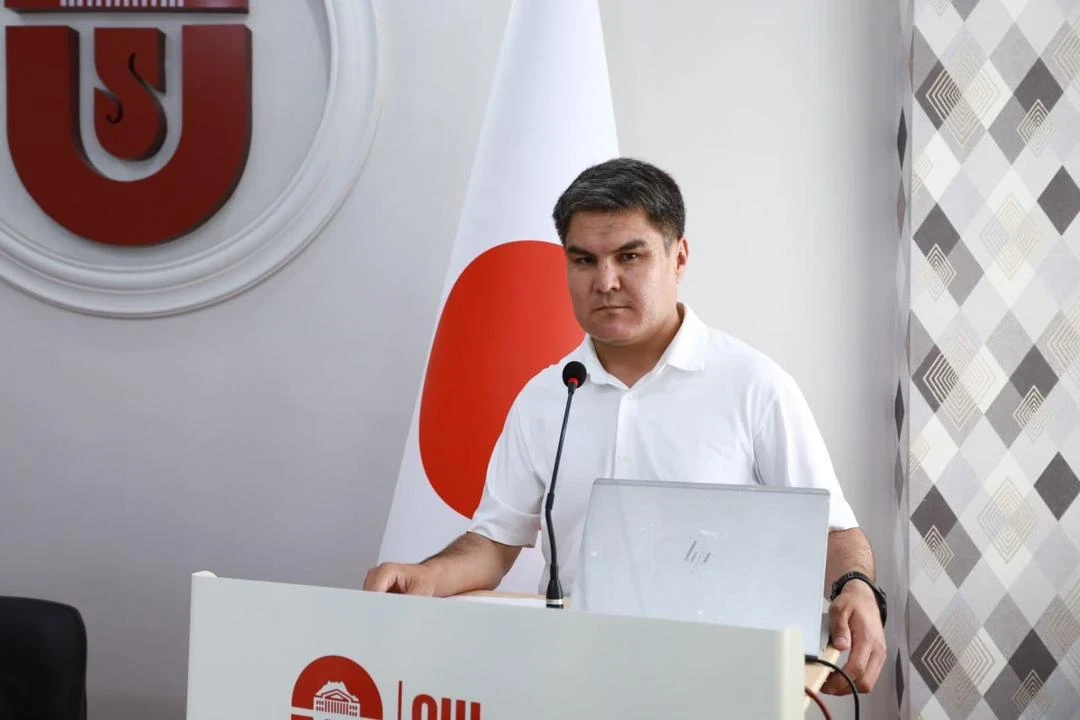
Roman Kalmatov, Doctor of Medical Sciences, Professor at OshSU and Director of the SATREPS project, shared with 24.kg information about the work of the new center and its potential benefits for the country.
Photo of the interlocutor. Roman Kalmatov
— What research will be conducted at the center? Will we be able to accurately determine the sources of smog (CHP plants, transport, or residential sector)?
— Within the framework of the SATREPS project, our research at IRCAPS can be conditionally divided into several interconnected areas.
Improving the atmospheric air monitoring system: installation of a reference station and other devices, integration of data from meteorological services and satellites, as well as the creation of a unified information processing center based at the university.
Development of a regional chemical-transport model and refinement of emission inventories for a more accurate assessment of pollutant volumes from various sources: residential sector, CHP plants, transport, and industry.
Assessment of the impact of air pollution on health and the economy, using both medical statistics and field research data.
Formulation of scientifically justified recommendations for public policy and working with the population to provide information.
The collected data on emissions and atmospheric modeling will help assess the contribution of major sources to air pollution levels by seasons and areas.
The goal is to determine the percentage ratio, for example, of household heating, transport, or large boiler houses in the concentration of PM2.5 in winter in Osh or Bishkek.
Although these will be model estimates with a certain margin of error, not absolute data for each block.
— We all know about PM2.5 (fine particles). But what exactly is contained in these particles in Kyrgyzstan? How many heavy metals, rubber, or microplastics are there?
— Currently, there is almost no systematic data on the chemical composition of suspended particles in Kyrgyzstan. One of IRCAPS's tasks is to fill this gap.
As part of the project, a component analysis of PM2.5 and PM10 will be conducted: filters with collected particles will be studied in the laboratory to determine their composition. Basic studies include the analysis of organic and elemental carbon, inorganic ions, as well as a number of metals associated with fuel combustion and transport.
This will help clarify what exactly citizens are breathing: combustion products from solid fuels, road dust, or secondary aerosols?
Heavy metals will be part of the standard analysis; however, the specific list and depth of analysis depend on the methods and capabilities of the laboratory. Some fractions, such as microplastics and rubber particles, require different sampling and analysis methods, and currently are not included in the basic plan, but may become the subject of special studies in the future if additional resources become available. In the first phase, our priority is to establish regular qualitative analysis of the main aerosol components.
— The center will conduct work to study the impact of polluted air on health. How will this be organized? What health aspects will be analyzed?
— In the health block, we plan to combine several approaches. First, this is the analysis of current data — official medical statistics and information on morbidity in the regions, compared with pollution levels and types of heating. Secondly, the project will include field studies where we will collect information about people's health and their living conditions in Osh, Bishkek, and other places, including data on what air they are breathing.
The main focus will be on diseases that are already linked to air pollution in global practice: respiratory diseases, cardiovascular diseases, as well as the health status of children, the elderly, and other vulnerable groups.
Based on the collected data, we will assess not only the medical consequences but also the economic aspects: additional hospitalizations, loss of work capacity, and the burden on the healthcare system.
— The announcement of the center's opening mentioned the purchase of equipment and the installation of measuring devices to assess air quality. How many devices will be installed in total and how will the installation locations be determined? Will the data be available in real-time?
— As part of the project, one reference air quality monitoring station will be installed in Osh, which will become key for the entire measurement system. A laboratory for component analysis is being created at the university, where the chemical composition of suspended particles will be studied. At the same time, a data center for processing and storing data will be developed: information from the reference station and other sources will be sent there.
The devices will also be used to measure air in residential premises of various types and areas. The specific number of devices and their installation locations are currently in the planning stage. When selecting measurement locations, we will strive to cover various types of construction and heating, as well as areas where residents particularly complain about smog.
Regarding data openness, we plan to publish measurement results and key analytical materials on the IRCAPS website, taking into account feedback from stakeholders. This system is under development.
Our goal is to make information about air quality accessible to all citizens in a convenient form.
— We are used to hearing about smog in Bishkek. What is the situation in Osh at the moment? Is there a risk that Osh will reach pollution levels similar to those in the capital?
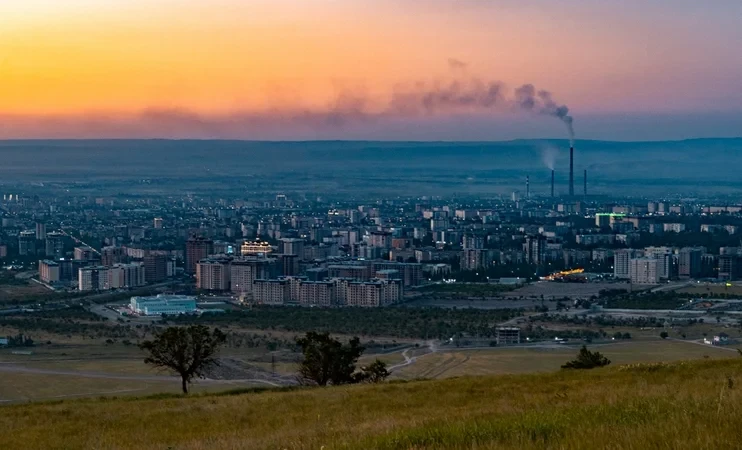
— According to available data, air pollution levels in Bishkek and Osh exceed the recommendations of the World Health Organization.
Both cities face a serious pollution problem, especially during the heating season.
The sources of pollution are similar: burning coal and wood for heating in private homes, the growing number of cars, and the topography that hinders the dispersion of harmful substances.
The risk that Osh will approach Bishkek in terms of pollution levels exists if the city continues to develop without systemic measures for clean heating and improving transport infrastructure.
Thus, it is important not to wait until the situation becomes critical, but to establish a monitoring system in advance and study the structure of emission sources to propose realistic measures. The creation of an interdepartmental center in Osh is a step towards directing the city's development towards improving air quality.
— Bishkek is already called unlivable in winter. What are your model forecasts for 2030? Is smog expected to become a permanent problem?
— One of the key tasks of the SATREPS project is to create a modeling system that will allow the development of scientifically justified scenarios for 2030 and beyond. This system includes refined emission data, meteorological information, and a regional chemical-transport model.
With such a tool, various scenarios can be analyzed: how the situation will change if the current heating and transport systems remain the same, and what changes will occur with the implementation of measures to reduce emissions.
At the launch stage of IRCAPS, this model is still being fine-tuned, so it is too early to talk about specific forecasts for 2030. It is important first to create a reliable scientific basis and then discuss future air quality scenarios based on actual data.
— Japan has gone through serious stages of pollution and managed to clean up the environment. What experience from Japan do you consider most important for application in Kyrgyzstan?
— The Japanese experience shows that even serious pollution can be significantly reduced if science, government, business, and society work together. In the post-war decades, Japan faced severe episodes of smog and its health consequences.
The key point was the adoption of strict environmental legislation, the creation of monitoring systems, and accountability for exceedances. At the same time, technologies for emission purification were developed, and requirements for vehicles were tightened, as well as the encouragement of cleaner fuel types and increased energy efficiency.
Public opinion also played an important role: victims of pollution sought recognition, and environmental issues became an important topic in politics.
As a result, over several decades, pollutant levels in Japanese megacities significantly decreased compared to the period of rapid industrial growth. This shows that a combination of scientific standards, compliance monitoring, and public participation can radically change the situation even in the context of severe pollution.
— The project is planned for five years. What are the plans for the further operation of the center and equipment after the funding ends?
— The SATREPS project was originally conceived as a sustainable interdepartmental center based at Osh State University. The equipment and infrastructure, such as the reference station and laboratory, will be transferred to the Kyrgyz side for further use after the completion of funding from Japan. The trained specialists will continue their work.
OshSU plans to support the operation of IRCAPS through its own resources and cooperation with national and international partners. Specific funding mechanisms are currently in the internal planning stage, but the strategic goal is clear: the center should become a long-term participant in air quality research.