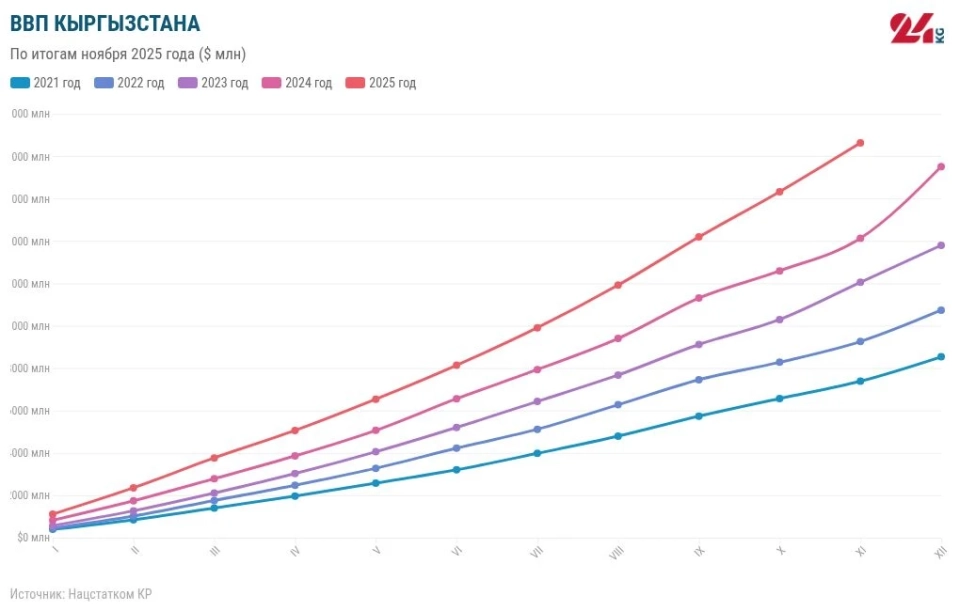
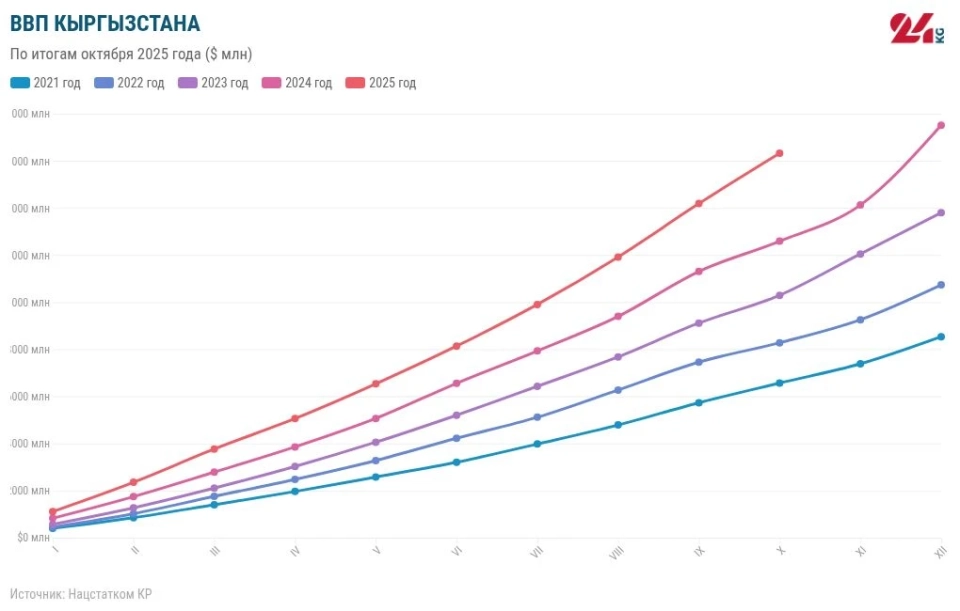
The main driving forces behind the economic growth have been a tourism boom, the development of the construction sector, increased domestic consumption, and the re-export of goods from China to neighboring countries.
Additionally, Kyrgyzstan, with a population of 7.3 million people, attracted $700 million during its first eurobond sale this year, indicating a growing interest from global investors in Central Asian countries.
Government bonds maturing in June 2030 have shown excellent results among dollar bonds from developing countries and reached their highest level since issuance in May.However, Kyrgyzstan continues to depend on Russia, which remains the main source of jobs for its citizens. As Turgunbaev noted, remittances from migrants to Kyrgyzstan increased by 16.4% from January to September, totaling $2.6 billion, with nearly 93% of these funds coming from Russia. At the same time, outgoing remittances from Kyrgyzstan during the same period decreased by 13.1%, amounting to only $300 million.
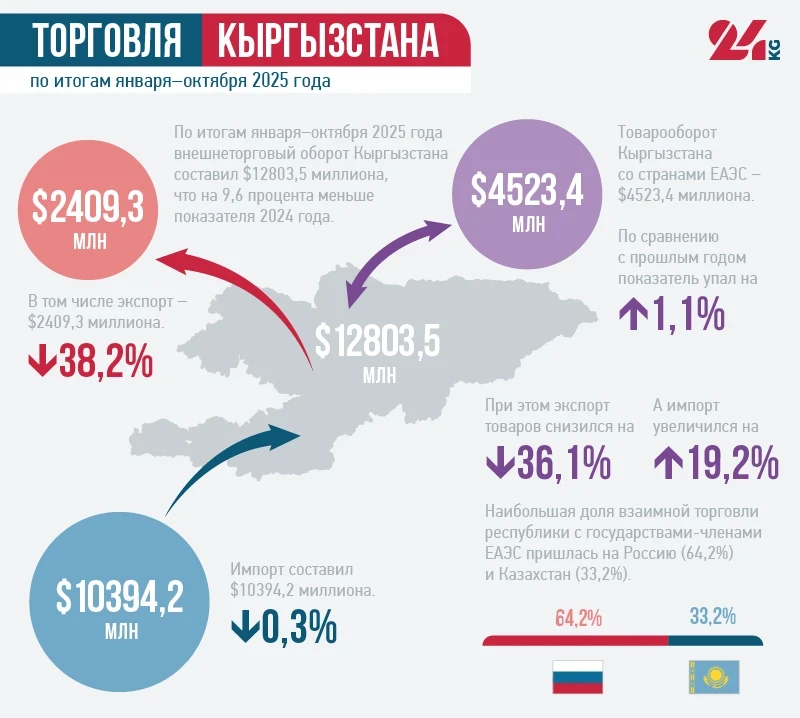
Goods from China often pass through Kyrgyzstan to Russia, as the country is part of a customs union led by Moscow, along with Kazakhstan.“There is also a significant increase in the number of Russian tourists, which positively impacts the economy,” Turgunbaev added.
However, not all changes are beneficial. In November, the National Bank of Kyrgyzstan was forced to raise the key interest rate by 100 basis points to 11% as inflation on imported goods from Russia exceeded 8%. The main factor behind the price increase was the rising cost of fuel, most of which also comes from Russia, Turgunbaev noted.
Bishkek is also facing the consequences of sanctions against Moscow. “Many Russian banks have been sanctioned, making it increasingly difficult for them to conduct transactions,” the head of the National Bank added.
Kyrgyzstan needs to maintain a balance between China and Russia while also competing for investments with larger neighbors like Uzbekistan and Kazakhstan. The IMF report from June emphasizes that the country’s economic prospects “largely depend on the geopolitical situation.”
Increased sanctions pressure on Russia could negatively affect remittances and economic growth due to the devaluation of the ruble and a slowdown in economic activity in Russia. A stable environment in the region could have the opposite effect, but it may also reduce some trade and financial flows that contributed to recent growth.Currently, Kyrgyzstan's economy remains shielded from external shocks thanks to gold reserves, which reached a record $8.3 billion as of December 1, accounting for about 70% of the total. As of the third quarter, gold reserves stand at 40.7 tons (1.3 million troy ounces).