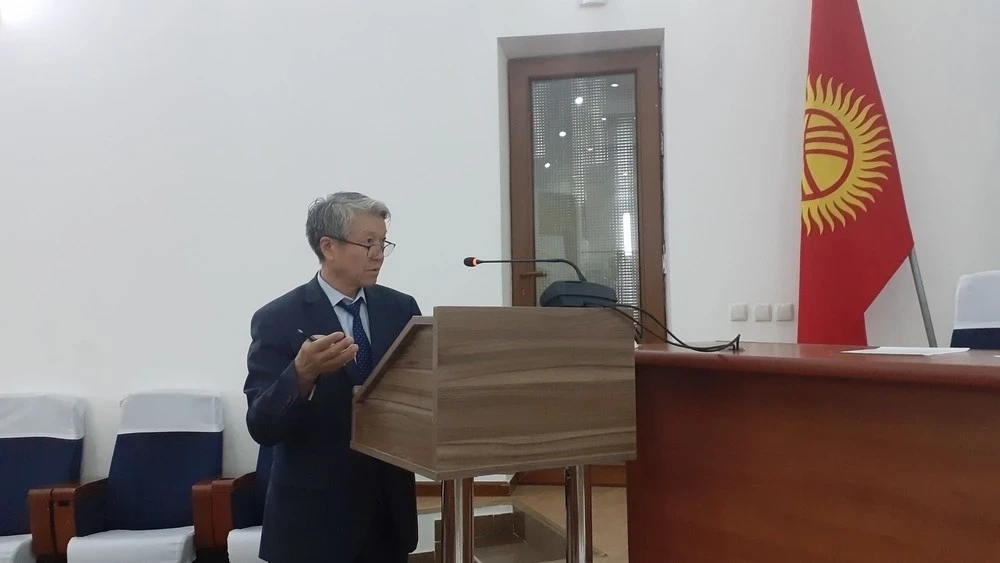
On February 1, Kubanychbek Kulov, former director of the Kyrgyz Scientific Research Institute of Irrigation, celebrates his 75th anniversary. In his reflections, he raises an important issue of the 21st century — the melting of glaciers and the future of water resources in Kyrgyzstan. This article is dedicated to his colleague Vitaly Shablovsky, an outstanding specialist in the field of water resource management automation, whose developments are attracting interest both in the CIS and beyond.
Foundations of Water Policy in the USSR
In 1973, the Kyrgyz Scientific Research Institute of Water Management was chosen as the leading scientific center for the automation of reclamation systems for the entire Soviet Union. As a result, it was renamed the All-Union Research Institute for the Comprehensive Automation of Reclamation Systems (VNIIKAMS) with subdivisions engaged in design and experimental design work. At that time, the institute employed over 800 staff members.
A school of programmers and system engineers began to form in the republic. Vitaly Shablovsky's laboratory worked on the development of microprocessor devices for the automation of pumping stations. In collaboration with programmers L. P. Geraschenko and L. S. Mikheeva, he created microchips for printed circuit boards that enabled the automation of the largest pumping stations in Kyrgyzstan, Crimea, and other regions of the USSR.
Automation for Food Security
After the collapse of the Soviet Union, VNIIKAMS became the Kyrgyz Research Institute of Irrigation and focused on developing automated systems for water accounting and distribution. In the arid climate of Kyrgyzstan, irrigation remains critically important, as 1 million hectares of irrigated land form the basis of the country's food security.
The first systems were tested in the Kochkor, Batken, and Panfilov districts. However, updates are necessary, and Shablovsky is currently working on the "ASUvod KR" system, based on modern software solutions and wireless technologies, allowing for a transition to intelligent autonomous systems. Since 2022, with the support of the Minister of Agriculture and the state order from the Water Resources Service, the implementation of the system has begun in the Chui region.
Development of Technologies in Central Asia
Shablovsky's developments are also in demand in neighboring countries. In 2018-2019, an automated system was implemented in Kazakhstan at the Baikadam hydro junction (Syr Darya River). In Turkmenistan, starting in 2020, the system has been functioning on the transboundary Murghab River, as well as on the Karakum Canal in 2022-2023. The software support is provided by the key programmer of the laboratory, Eva Hermanovna Polyak.
Prospects for Water Resources until 2100
Automation is becoming vital against the backdrop of climate change. It is expected that by the 2030s there will be a reduction in river flow, and by the 2050s a sharp decrease in water availability. Water scarcity will negatively impact various sectors:
Agriculture: a threat to food security.
Construction and light industry: requiring significant labor and energy resources.
Tourism: a decrease in the diversity of agricultural products will reduce the attractiveness of the service sector.
Gene pool: worsening nutrition will affect the health of future generations.
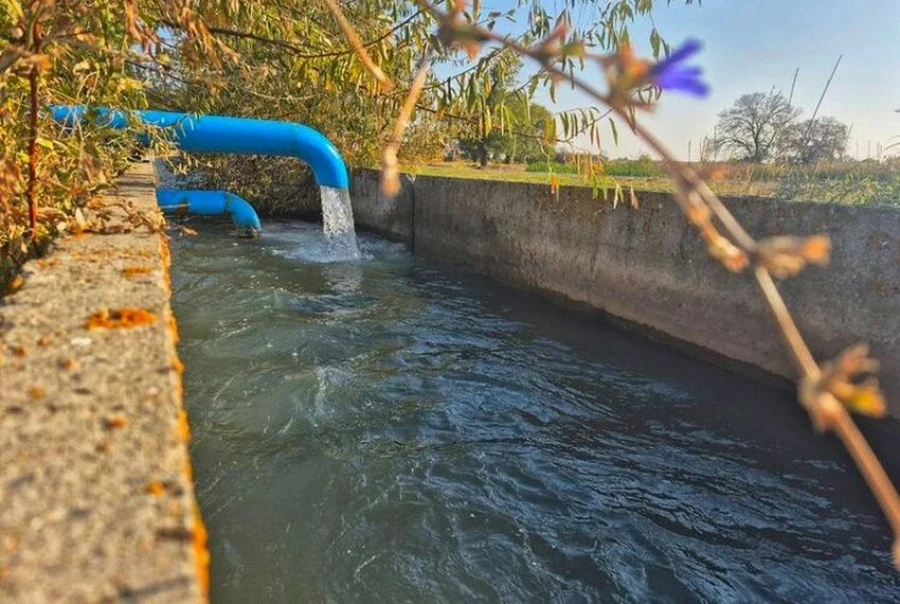
The only solution is Shablovsky's systems. Electronic sensors can monitor 28 thousand kilometers of canals around the clock and transmit data via a wireless network, allowing for the accounting of every liter and effective distribution of water among 450 thousand farms.
Precision Agriculture as a Solution for Increasing Yields
According to the ADB, temperatures in the region will increase by 3 degrees every 40 years, and by 2100 some rivers may completely dry up. Scientists aim to double the yields of wheat, potatoes, and sugar beets, which is only possible through "precision agriculture."
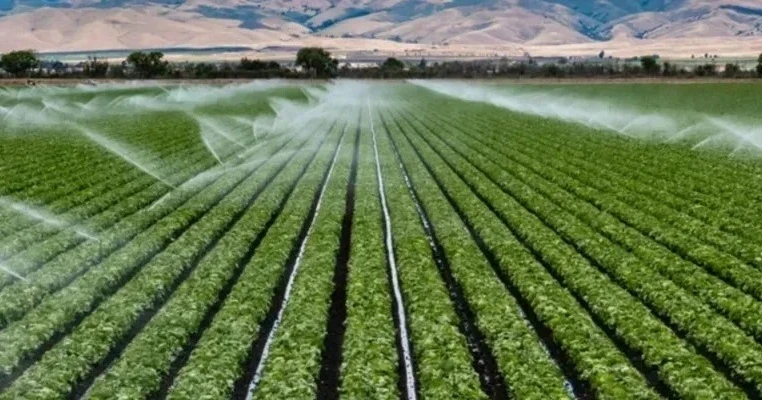
The world record for wheat yield is 170 centners per hectare, while the Kyrgyz Research Institute of Agriculture has achieved 110 centners per hectare, with the national average being around 30 centners per hectare. Transitioning to the "ASUvodPROD" system (irrigation based on sensor-signaling with simultaneous fertilizer application) will maximize the biological potential of plants.
Reform for Effective Management
For the successful implementation of ASU, it is necessary to consolidate fields from 1-5 hectares to 20-100 hectares. Irrigation systems were designed for large areas. This can be achieved by uniting small farmers around large agro-clusters and creating Scientific and Production Associations (NPOs). An example is the Israeli kibbutzim, where collective work and shared infrastructure helped overcome water supply issues.
Technological Sovereignty and New Approaches to Science
Vitaly Shablovsky is an example of a scientist in practice, for whom the implementation of prototypes is more important than publications in foreign journals. He keeps the secrets of his developments for Kyrgyzstan, supporting the technological sovereignty of the country.
It is proposed to revise the Science Law, establishing:
Granting a candidate degree for creating a "prototype."
Granting a doctoral degree for successful "production testing."
Priority allowances for technical and biological sciences.
The future of management should be based on digital models of water resources. The akim or minister should be able to see the current situation on a screen in real time and make decisions based on data, not paper reports.
Vitaly Iosifovich, thank you for your contribution! You are paving the way from theory to practice, ensuring a future for our descendants until 2100.