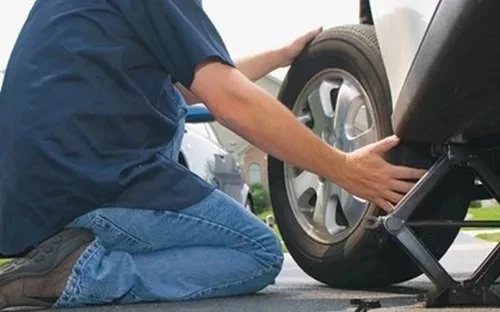
It should be remembered that the correct tire pressure is calculated by engineers taking into account the weight of the vehicle, load distribution, suspension type, and tire characteristics. Therefore, the operating pressure is usually significantly lower than the maximum value indicated on the sidewall. The required figure can be found on a sticker in the driver's door frame, which specifies the recommended pressure for the front and rear axles, sometimes considering full load or a trailer. This information is also duplicated in the vehicle's owner's manual.
If one relies on the maximum value, the tires may become overinflated. In this case, the tread will deform into a "house shape," leading to uneven wear: the central part of the tire will be more engaged, while the shoulder areas will barely touch the road. This not only reduces comfort but also worsens shock absorption, affecting handling. The vehicle becomes less stable and rigid on the road.
There is also a more serious threat. When overinflated, the tire's contact area with the road decreases, negatively impacting grip, especially on wet surfaces. This leads to an increased braking distance and reduced stability in turns. A stiff tire handles impacts from potholes and curbs worse, increasing the likelihood of a blowout. The higher the pressure, the easier it is for the tire to "burst" upon collision with an obstacle.
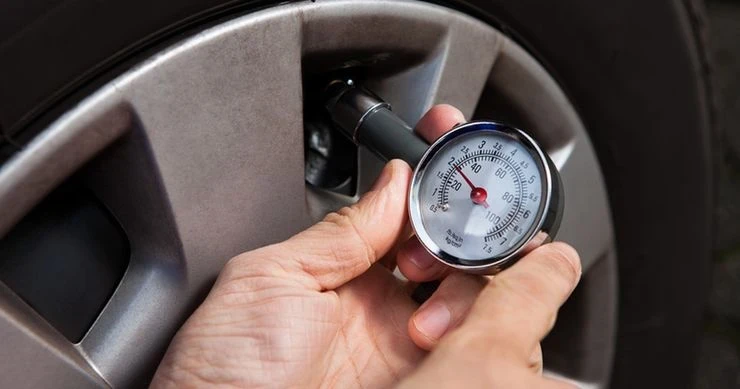
By following a simple algorithm, one should first familiarize themselves with the recommended pressure table, then set this value on the compressor and check it with a separate gauge. Many modern vehicles are equipped with Tire Pressure Monitoring Systems (TPMS), which display information about each wheel on the dashboard and signal a drop in pressure, but even such a system does not replace the manufacturer's basic recommendations.
Sometimes temporary changes in pressure are possible. For example, when towing a heavy trailer, it is advisable to slightly increase the pressure in the rear tires, but not exceed the values specified by the manufacturer, and certainly not go beyond the maximum on the tire. In soft ground or sand conditions, on the contrary, the pressure should be lowered to increase the contact area. However, for regular driving on asphalt, the only correct approach is to maintain the tires at the vehicle's recommended pressure and not to take the maximum values on the sidewall as operational.
Previously, there was a winter tip to "lower the pressure for better grip."
In winter, the recommendation to "lower the pressure for better grip" is actively discussed. Expert Dmitry Novikov noted that this method does work, but it is not suitable for all vehicles and not in all conditions.
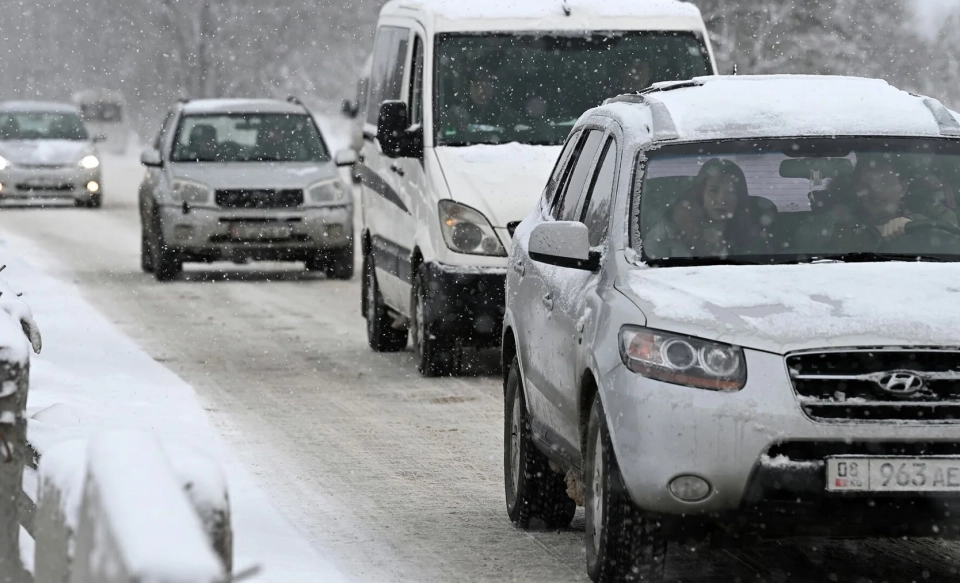
On loose snow off the roads, lowering the pressure can increase the contact area, allowing the tire to grip the surface better. At a pressure of 1.0–1.2 atmospheres, it can significantly ease getting out of a snowdrift or off a field path. However, it is important to remember that this is a temporary measure: at such pressure, one should not make sharp turns, accelerate, or brake suddenly. The lower the pressure, the higher the risk that the tire will spin on the rim or get damaged.
Extreme pressure values used by off-road vehicles require skills and adjusted speeds. On asphalt, packed snow, and ice, not only the tread but also the correct operating pressure are important. An underinflated tire loses its shape, worsening handling, increasing braking distance, and becoming unpredictable in turns. Additionally, the risk of sidewall damage from hidden potholes increases.
It should also be noted that after lowering the pressure, it needs to be restored immediately. Driving on deflated tires is a bad idea that not only does not improve grip but also shortens the lifespan of the tires, reducing safety.
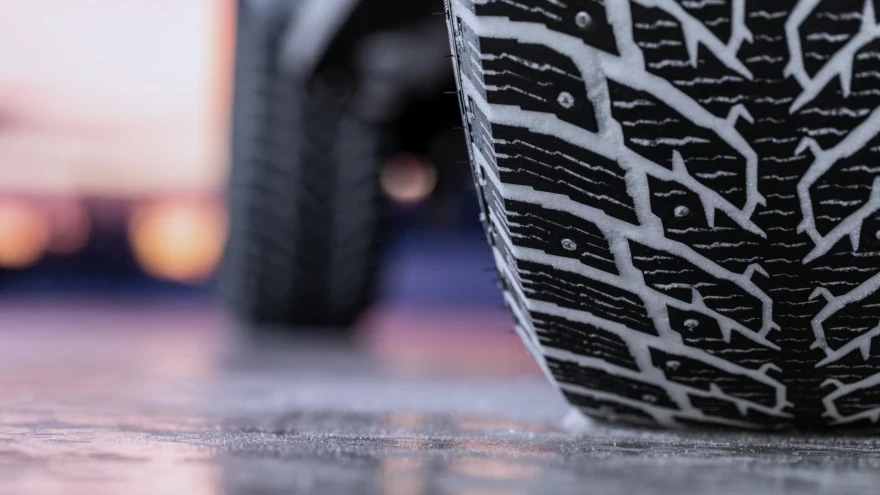
The conclusion is clear: this advice is applicable only on loose snow off the roads and for a short time. For urban and highway driving, it is more important to adhere to normal pressure and use quality winter tires — this is the key to safety in 2025.
Experiments with pressure are more suitable for off-road vehicles. For regular drivers, it is much more reliable to stick to the recommended values rather than risk in situations where the cost of a mistake can be too high.