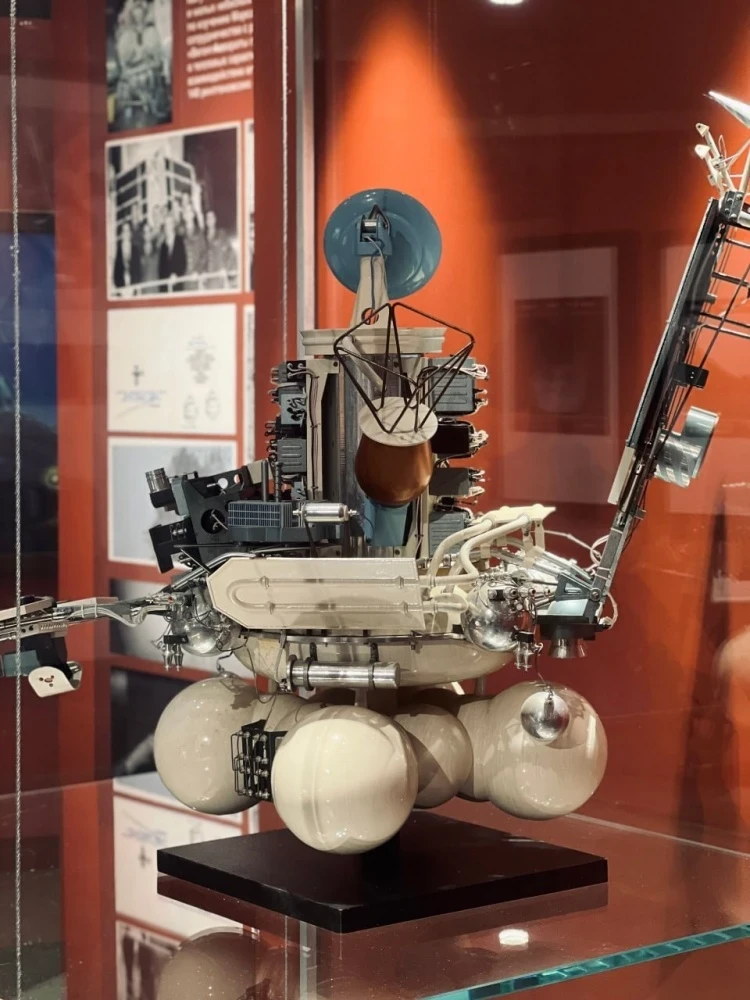
Kaluga, home to the State Museum of the History of Cosmonautics named after K.E. Tsiolkovsky, is preparing an extensive exhibition program for 2026. This year, the birthplace of cosmonautics will present over 30 unique projects covering significant historical events, achievements in art, and the technology of the future.
The city, rightfully considered the cradle of theoretical cosmonautics, will become a meeting place for scientists and tourists. In this museum, where the first stone was laid with the participation of Yuri Gagarin, exhibitions will be dedicated to the history of humanity from the first sketches of airships to modern unmanned aerial vehicles.
One of the central events will be an exhibition titled "So That Others May Live...", dedicated to the 60th anniversary of the Air Force's search and rescue service. Participants will be able to see rare photographs of rescue operations in the Arctic and unique exhibits, such as a full-size model of a descent vehicle and a backup parachute from the "Soyuz" spacecraft. This project will honor those who care for the safety of cosmonauts after their return to Earth.
In honor of the 65th anniversary of the "Vostok-2" flight, the museum will also organize an exhibition "German Titov - The 'Eagle' Takes to the Sky." Visitors will be able to see personal belongings of the second cosmonaut, as well as archival documents that will help re-evaluate his feat when he spent a whole day in space.
The project "Let's Go! Airship!" also promises to be impressive. The museum will present rare materials about the "golden age" of Soviet aeronautics, including fragments of the shell of a all-metal airship, a dream of Konstantin Tsiolkovsky.
Several exhibitions will be dedicated to the synthesis of science and culture:
"Camera! Action! Let's Fly!" - an exhibition organized in collaboration with the Museum of Cinema, will show how the image of pilots and cosmonauts has evolved in film, from children's cartoons to modern dramas.
"The Hero of the Russian Land" will demonstrate the evolution of the image of the defender of the Fatherland through decorative and applied arts - from epic heroes to modern conquerors of space.
For technology enthusiasts, an interactive area "Unmanned Aerial Vehicles" will be opened in Kaluga, where visitors can not only learn about the latest Russian drones but also try their hand as operators in a special flight zone.
Additionally, the museum plans traveling exhibitions in 2026 that will showcase the legacy of scientist Alexander Chizhevsky and the history of Soviet space in cities such as Tambov, Sergiev Posad, and Bryansk.
The museum's management emphasizes that such a rich program is aimed not only at preserving historical memory but also at inspiring a new generation of researchers who may begin their journeys to new worlds from this "space harbor" in Kaluga.